vegetable in zone 3b
Growing garlic in zone 3b
Allium sativum
- Zone
- 3b -35°F to -30°F
- Growing season
- 100 days
- Suitable varieties
- 2
- Days to harvest
- 240 to 270
The verdict
Garlic is genuinely well-matched to zone 3b, not a marginal case. Hardneck varieties require a sustained cold period for proper bulb development, and zone 3b winters (-35 to -30°F) reliably deliver that vernalization. Music and German Extra Hardy are both porcelain hardneck types with a documented track record in zones 3 and 4 across the northern prairies and upper Great Lakes; they are selected specifically for cold-climate performance.
The actual constraint in zone 3b is the 100-day frost-free window, not winter cold. After the soil warms in spring, garlic needs roughly 90 to 100 frost-free days to complete bulbing once scapes emerge. A shortened or late season compresses that window. Cloves planted too late in fall may not establish roots before hard freeze; planted too early, they risk sending up top growth that winterkills. Zone 3b is a workable zone for garlic, but timing and mulching discipline matter more here than in longer-season climates.
Recommended varieties for zone 3b
2 cultivars suited to this zone, with disease-resistance and zone-fit annotations.
| Variety | Notes | Zone fit | Disease resistance |
|---|---|---|---|
| Music fits zone 3b | Pungent-sweet, balanced, bright flavor; large white-skinned hardneck cloves (4-6 per bulb). Roasting, fresh, all-purpose cooking. Cold-hardy hardneck, stores 6-8 months. The home-grower's hardneck standard. | | none noted |
| German Extra Hardy fits zone 3b | Strong, robust, traditional garlic punch; tan-skinned porcelain hardneck. Roasting, fresh, raw applications. Very cold-hardy, stores 8-10 months, large cloves easy to peel. | | none noted |
Critical timing for zone 3b
Hardneck garlic produces a flowering scape rather than a true bloom. In zone 3b, scapes typically emerge in late June to early July. Removing them at curl stage, before they straighten, redirects energy to bulb sizing.
Fall is the planting window: cloves go in roughly 4 to 6 weeks before the ground freezes hard, which in zone 3b generally means September into early October. The goal is root establishment without significant top growth before hard frost. Harvest follows 90 to 100 days after the soil warms in spring. Expect pull dates in late July to early August, though a late spring pushes that later and shortens the curing window before fall frost closes in. Curing requires 3 to 4 weeks of dry, warm airflow, so leaving no margin between harvest and first fall frost is a real risk in this zone.
Common challenges in zone 3b
- ▸ Short season
- ▸ Winter desiccation
- ▸ Site selection critical for fruit trees
Disease pressure to watch for
Modified care for zone 3b
Winter mulching is the primary management variable in zone 3b. Apply 4 to 6 inches of straw or shredded leaves after the soil begins to cool but before it freezes solid, typically late October. This limits the freeze-thaw heaving that pushes cloves out of the ground and addresses winter desiccation directly, one of the defining challenges in this zone. Cloves exposed at the surface in February rarely recover.
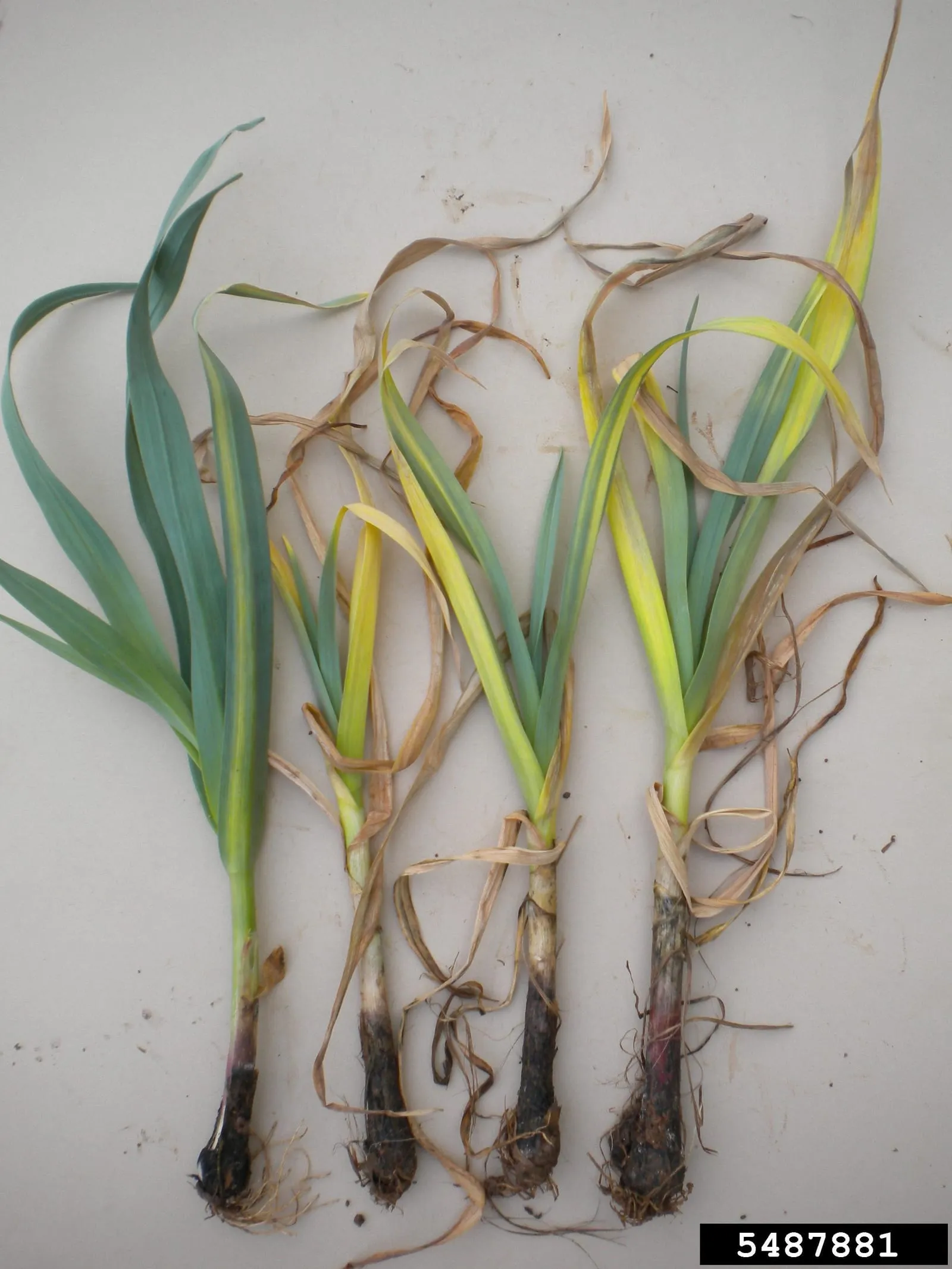
Onion White Rot (Stromatinia cepivorum) is the key disease risk. The pathogen persists in soil for 20 or more years and has no practical curative treatment once established. Use certified disease-free seed garlic from a reputable supplier, avoid moving soil between beds on tools or footwear, and maintain at least a 4-year rotation gap before returning alliums to any given plot. In zone 3b's short season, losing a planting to White Rot with no time to replant makes prevention the only viable strategy.
Garlic in adjacent zones
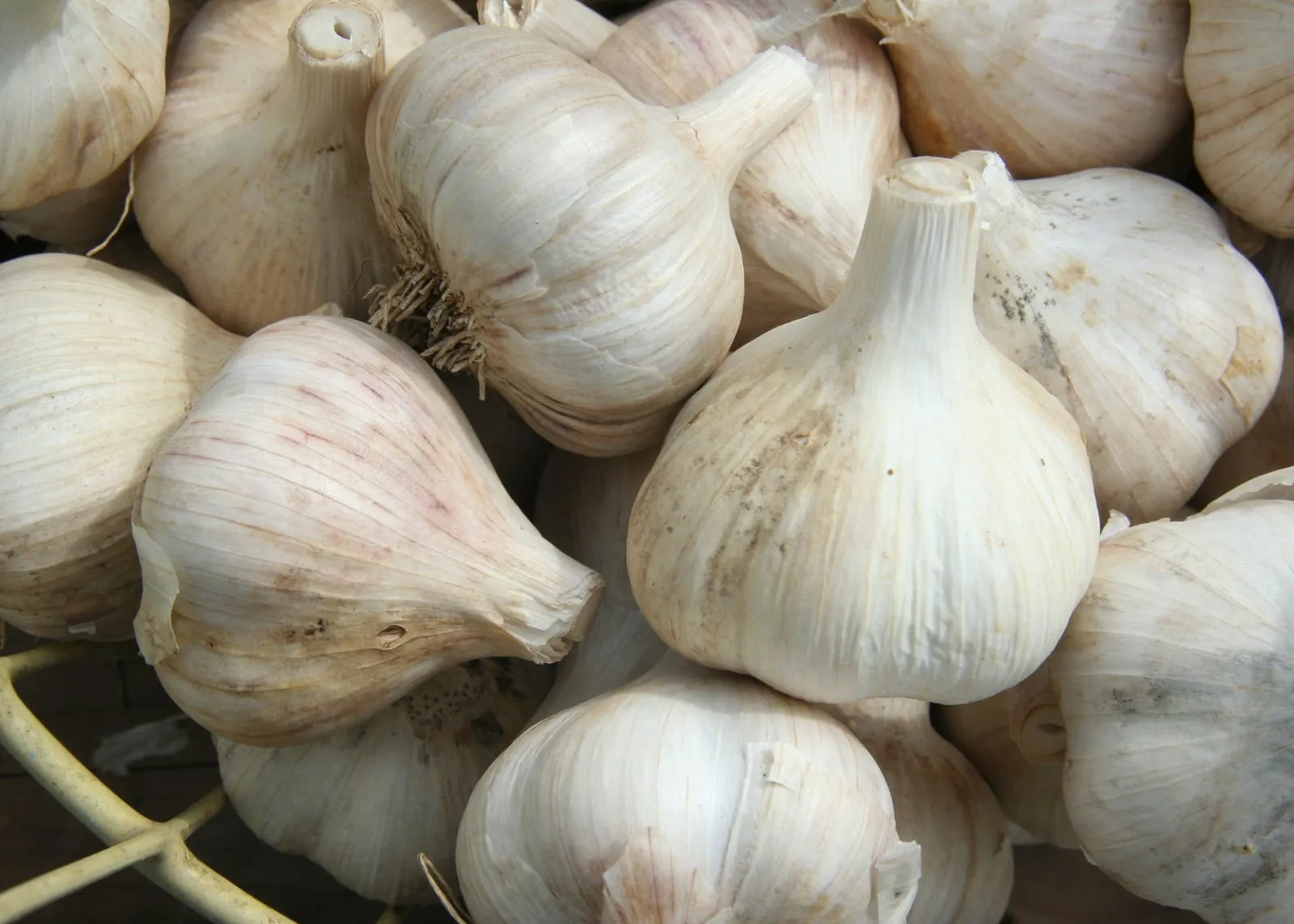
Image: "GarlicBasket", by Jonathunder, via Wikimedia Commons, licensed under CC-BY Source.

Related