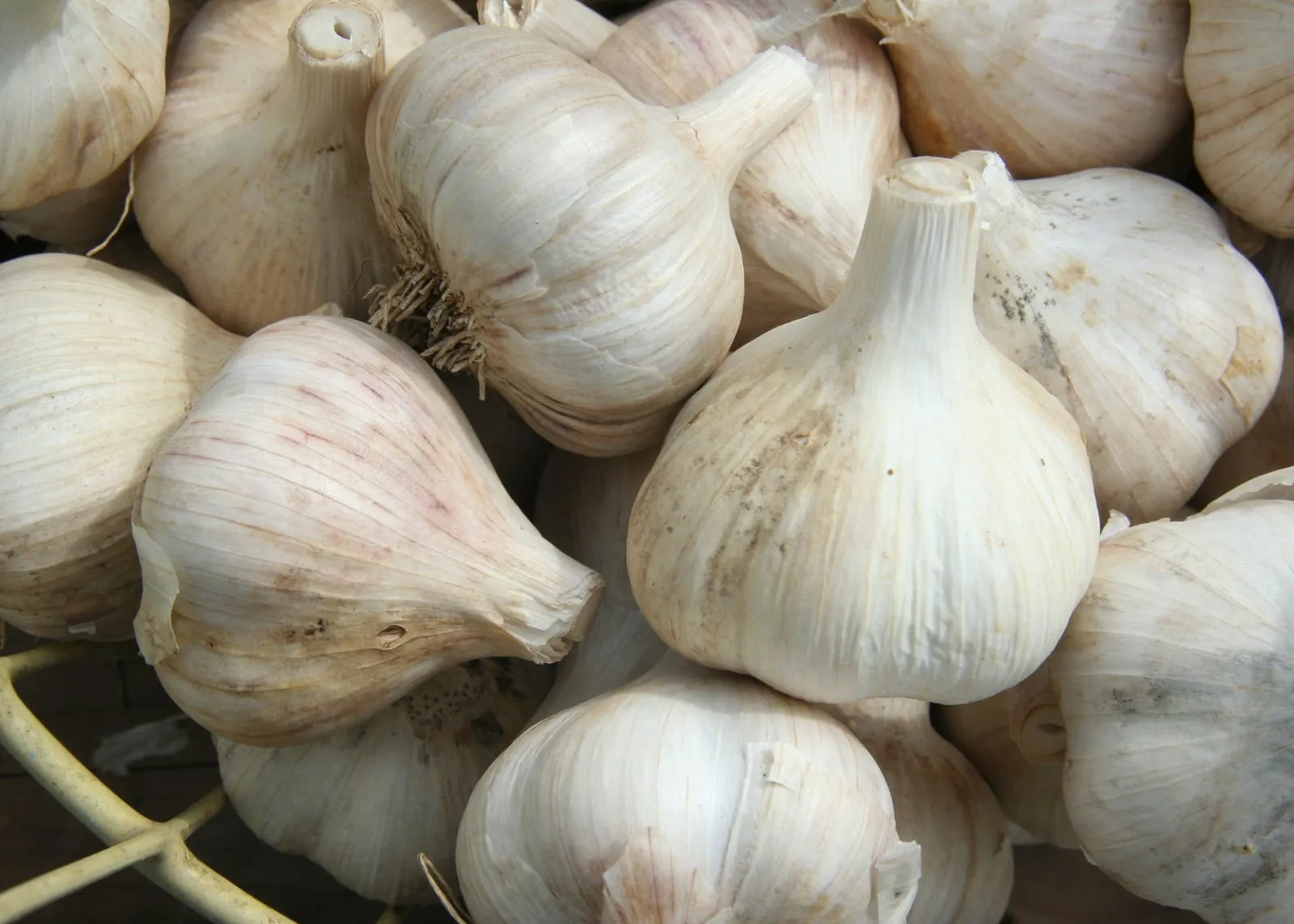
vegetable
Garlic
Allium sativum
USDA hardiness range
- Zones
- 3a–9a
- Days to harvest
- 240 to 270
- Sun
- Full
- Water
- Low
- Lifespan
- annual (overwintered)
Growing garlic
Garlic (Allium sativum) is a fall-planted annual that overwinters as a dormant clove and is harvested the following summer, 240 to 270 days after planting. It grows reliably across a wide climate band, from the hard winters of zone 3a through the mild winters of zone 9a, making it one of the most broadly adapted crops in the temperate garden.
What separates a productive planting from a failed one is mostly timing and variety matching. Garlic requires cold exposure (vernalization) to trigger proper bulb segmentation. Without sufficient chilling below roughly 40°F, cloves develop into single unsegmented rounds rather than multi-clove bulbs. Hardneck types (including Porcelain and Purple Stripe) perform best in zones 3a through 7b, where cold winters provide natural vernalization and distinct seasonal transitions. Softneck types (Artichoke and Silverskin) are more adaptable and remain the standard for zones 7a through 9a. In zones 8b and 9a, refrigerating seed garlic for 4 to 6 weeks before planting compensates for winters too mild for reliable natural vernalization.
The Cornell Garlic Production guide identifies vernalization as the single most important variable in determining bulb size and clove count. Get that right, and most other problems are manageable.
Recommended varieties
See all 4 →4 cultivars for home growers, with notes on flavor, ripening, and disease resistance.
| Variety | Notes | Zone fit | Disease resistance |
|---|---|---|---|
| Music | Pungent-sweet, balanced, bright flavor; large white-skinned hardneck cloves (4-6 per bulb). Roasting, fresh, all-purpose cooking. Cold-hardy hardneck, stores 6-8 months. The home-grower's hardneck standard. | | none noted |
| German Extra Hardy | Strong, robust, traditional garlic punch; tan-skinned porcelain hardneck. Roasting, fresh, raw applications. Very cold-hardy, stores 8-10 months, large cloves easy to peel. | | none noted |
| Inchelium Red | Mild, complex, slightly sweet softneck; many small cloves per bulb. All-purpose cooking, fresh, braiding for storage. Stores 8-10 months. Cold-tolerant softneck rare for the type. | | none noted |
| California Early Softneck | Mild, classic softneck flavor; the typical grocery-store garlic. Long-storing softneck, productive, easy to braid. Adapted to mild Western climates. | | none noted |
Soil and site requirements
Drainage is the first requirement. Cloves sitting in saturated soil through fall and winter rot quickly, and there is no recovery once a clove is lost. In heavy clay, raised beds or mounded rows are worth the extra effort. The goal is soil that drains freely after rain but retains enough moisture to support root establishment before hard frost.
Target a soil pH of 6.0 to 7.0. Below 5.8, sulfur compound production, which drives both flavor intensity and storage quality, is impaired, and phosphorus uptake declines. Lime if needed, ideally several weeks before planting to allow the amendment to work into the soil profile.
Full sun is non-negotiable for bulb development. Fewer than six direct hours per day consistently produces undersized bulbs regardless of soil quality. Avoid sites where tree canopy or structures cast shade in late spring, when plants are doing the majority of their bulb-building work.
Plant cloves 4 to 6 inches apart in rows 12 inches apart, pointed tip up, with the base 2 to 3 inches below the surface. Deeper planting (up to 4 inches) is appropriate in zones with hard freezes and limited snow cover. Apply 3 to 4 inches of straw mulch after the ground begins to cool; this moderates temperature swings and reduces heaving from freeze-thaw cycles.
Common diseases
Common pests
Common challenges
Late planting is the most common reason home growers harvest disappointing bulbs. Garlic cloves need 4 to 6 weeks in the ground before hard frost to establish roots; plant too close to winter and the root system is shallow, producing small, loosely formed bulbs the following summer. In zones 3 through 6, September to early October is the typical window. Zones 7 and 8 can push into November.
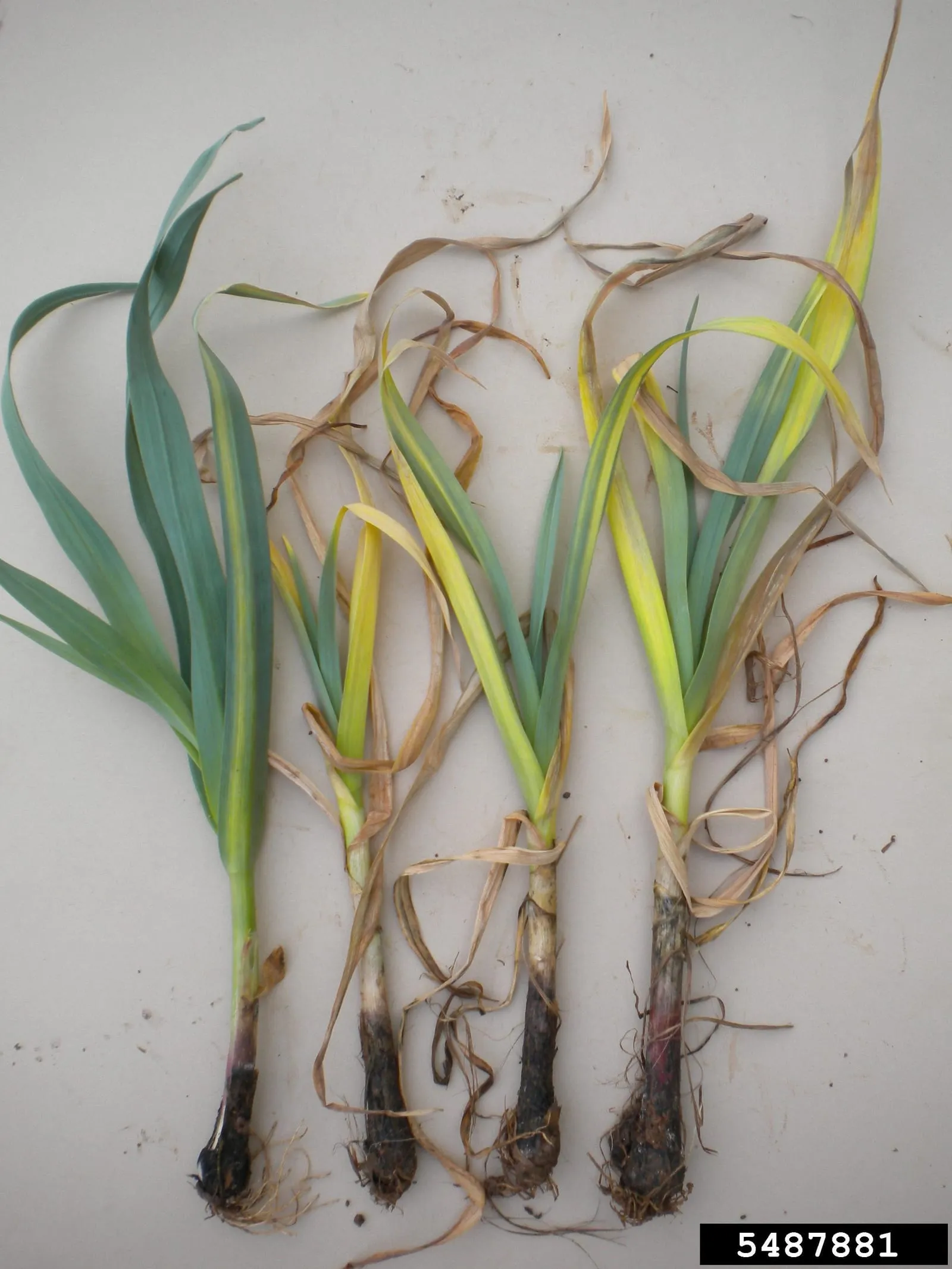
Onion white rot (Sclerotium cepivorum) is the disease most likely to cause escalating, season-over-season losses. It produces sclerotia, microscopic survival structures that remain viable in soil for 20 or more years. Infected plants show yellowing foliage and white, fluffy fungal growth at the bulb base. No effective soil remediation exists, and conventional fungicides do not eliminate the sclerotia. Prevention through clean seed stock is the only reliable strategy. Inspect cloves from all sources before planting, and avoid beds where alliums have shown unexplained foliage decline.
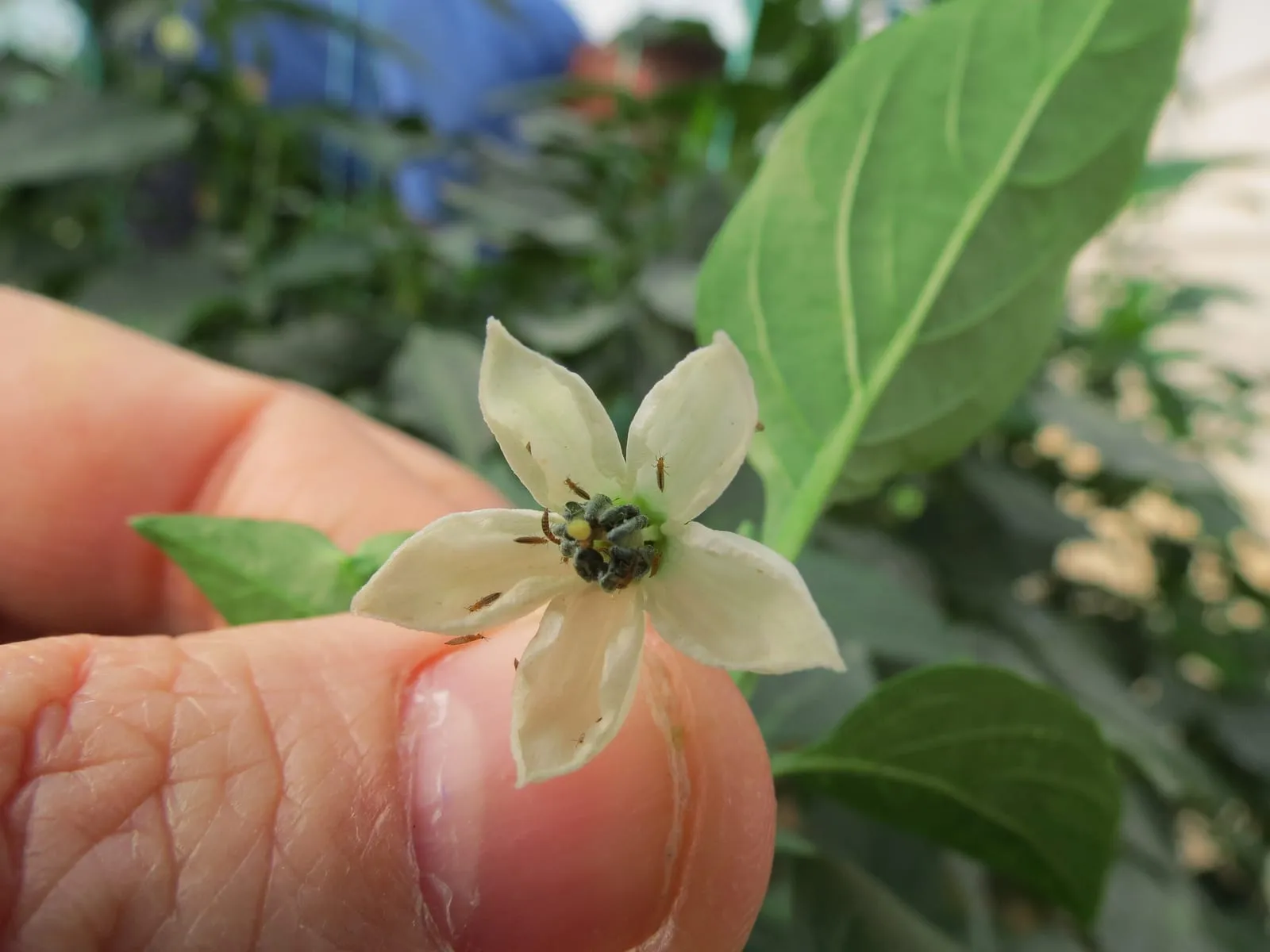
Onion thrips cause silvery streaking on foliage and can reduce yield during hot, dry stretches, but rarely cause crop failure at home-garden scale. What more often appears to be pest damage is drought stress during the critical spring bulbing window, when consistent soil moisture directly determines final bulb size. Keep beds evenly moist (not wet) from late winter through scape emergence.
Companion plants
Frequently asked questions
- Does garlic need cold temperatures to form proper bulbs?
Garlic requires vernalization, an extended period below roughly 40°F, to trigger clove differentiation. Without it, plants typically produce single unsegmented rounds rather than multi-clove bulbs. In mild-winter zones (8b and 9a), refrigerating seed garlic for 4 to 6 weeks before fall planting is a common and effective workaround.
- How many days does garlic take to harvest?
From fall planting, garlic matures in 240 to 270 days, with harvest falling in early to midsummer depending on zone and variety. The harvest window is short: once roughly half the leaves have browned, bulbs should be dug promptly. Leaving them too long causes the outer wrapper to deteriorate, reducing both appearance and storage life.
- What USDA zones support reliable garlic production?
Garlic grows across zones 3a through 9a. Hardneck varieties perform best in zones 3a to 7b, where cold winters provide natural vernalization. Softneck types handle milder winters and are the practical choice in zones 7a through 9a. In zones above 9a, consistent bulb formation without artificial pre-chilling is unreliable.
- Does garlic need pollinators to produce a crop?
No. Garlic is propagated vegetatively through individual cloves, not through seed, so pollination plays no role in the harvest. Hardneck varieties produce flower scapes, but these are typically removed to redirect energy to bulb development. Leaving them to bloom affects yield, not fertilization.
- What is the most serious disease threat to garlic?
Onion white rot (Sclerotium cepivorum) is the most damaging soilborne disease. Its sclerotia persist in soil for 20 or more years and cannot be eliminated with conventional fungicides. Once established in a bed, the only reliable management is avoiding all allium crops in that location for many years and sourcing only certified clean planting stock.
- What is the difference between hardneck and softneck garlic?
Hardneck garlic produces a rigid central scape and has 4 to 8 large cloves arranged around it. Flavor is typically stronger and more complex, and storage runs 6 to 10 months. Softneck types lack the central stalk, produce more cloves per bulb (often 10 to 20), store 10 to 12 months, and tolerate milder winters better. Most commercial garlic is softneck.
- When should garlic be planted?
Plant 4 to 6 weeks before the ground freezes hard, giving cloves time to root without producing significant top growth. In zones 3 through 6, that typically means September through early October. In zones 7 and 8, late October through November works well. Planting too early encourages excessive fall growth that is vulnerable to winter kill.
+−
+−
+−
+−
+−
+−
+−
Sources
Image: "GarlicBasket", by Jonathunder, via Wikimedia Commons, licensed under CC-BY. Source.

Garlic by zone
Related