vegetable in zone 5b
Growing garlic in zone 5b
Allium sativum
- Zone
- 5b -15°F to -10°F
- Growing season
- 165 days
- Suitable varieties
- 3
- Days to harvest
- 240 to 270
The verdict
Zone 5b is well within the sweet spot for hardneck garlic. The cold winters, with minimum temperatures between -15 and -10°F, deliver the extended vernalization period that hardneck varieties require to form distinct, separable cloves. Without several weeks of sustained cold below 40°F, garlic bulbs tend to be poorly differentiated or single-cloved; zone 5b provides that cold reliably every year.
The 165-day frost-free growing season is more than adequate to complete the crop's cycle. Hardneck types like Music and German Extra Hardy were developed for exactly these conditions and consistently outperform softneck types in northern zones. Inchelium Red, technically a softneck, is notable for its cold tolerance and performs well here despite that classification.
This is not a marginal zone for garlic. Growers in zones 5 and 6 routinely report some of the cleanest, best-formed bulbs in the country, owing to the sharp temperature transitions that carry the plant through each developmental phase.
Recommended varieties for zone 5b
3 cultivars suited to this zone, with disease-resistance and zone-fit annotations.
| Variety | Notes | Zone fit | Disease resistance |
|---|---|---|---|
| Music fits zone 5b | Pungent-sweet, balanced, bright flavor; large white-skinned hardneck cloves (4-6 per bulb). Roasting, fresh, all-purpose cooking. Cold-hardy hardneck, stores 6-8 months. The home-grower's hardneck standard. | | none noted |
| German Extra Hardy fits zone 5b | Strong, robust, traditional garlic punch; tan-skinned porcelain hardneck. Roasting, fresh, raw applications. Very cold-hardy, stores 8-10 months, large cloves easy to peel. | | none noted |
| Inchelium Red fits zone 5b | Mild, complex, slightly sweet softneck; many small cloves per bulb. All-purpose cooking, fresh, braiding for storage. Stores 8-10 months. Cold-tolerant softneck rare for the type. | | none noted |
Critical timing for zone 5b
In zone 5b, garlic is planted in fall, typically between late September and late October, after soil temperatures drop below 50°F but before the ground freezes solid. Planting while soils are still warm encourages excessive top growth before winter, which weakens the plant going into cold.
Root establishment continues through late fall. Brief shoot emergence before hard freeze is normal and not a concern. Growth resumes in early spring, often appearing above mulch while nighttime temperatures are still below freezing.
Hardneck varieties send up scapes in late May to mid-June. Scape removal redirects energy to bulb development and is standard practice in zone 5b. Harvest falls between late June and mid-July, signaled by the lower leaves yellowing while 5 to 6 green leaves remain on the plant. The number of intact green leaves at harvest corresponds directly to the number of healthy wrapper layers on the cured bulb.
Common challenges in zone 5b
- ▸ Plum curculio
- ▸ Codling moth
- ▸ Cedar-apple rust
Disease pressure to watch for
Modified care for zone 5b
The primary winter concern in zone 5b is frost-heave, not cold kill. Music, German Extra Hardy, and Inchelium Red all tolerate zone 5b minimums without loss, but repeated freeze-thaw cycles in late fall and early spring can push newly planted cloves out of the ground. Applying 4 to 6 inches of straw mulch after the first hard freeze reduces heaving and moderates soil temperature through the season.
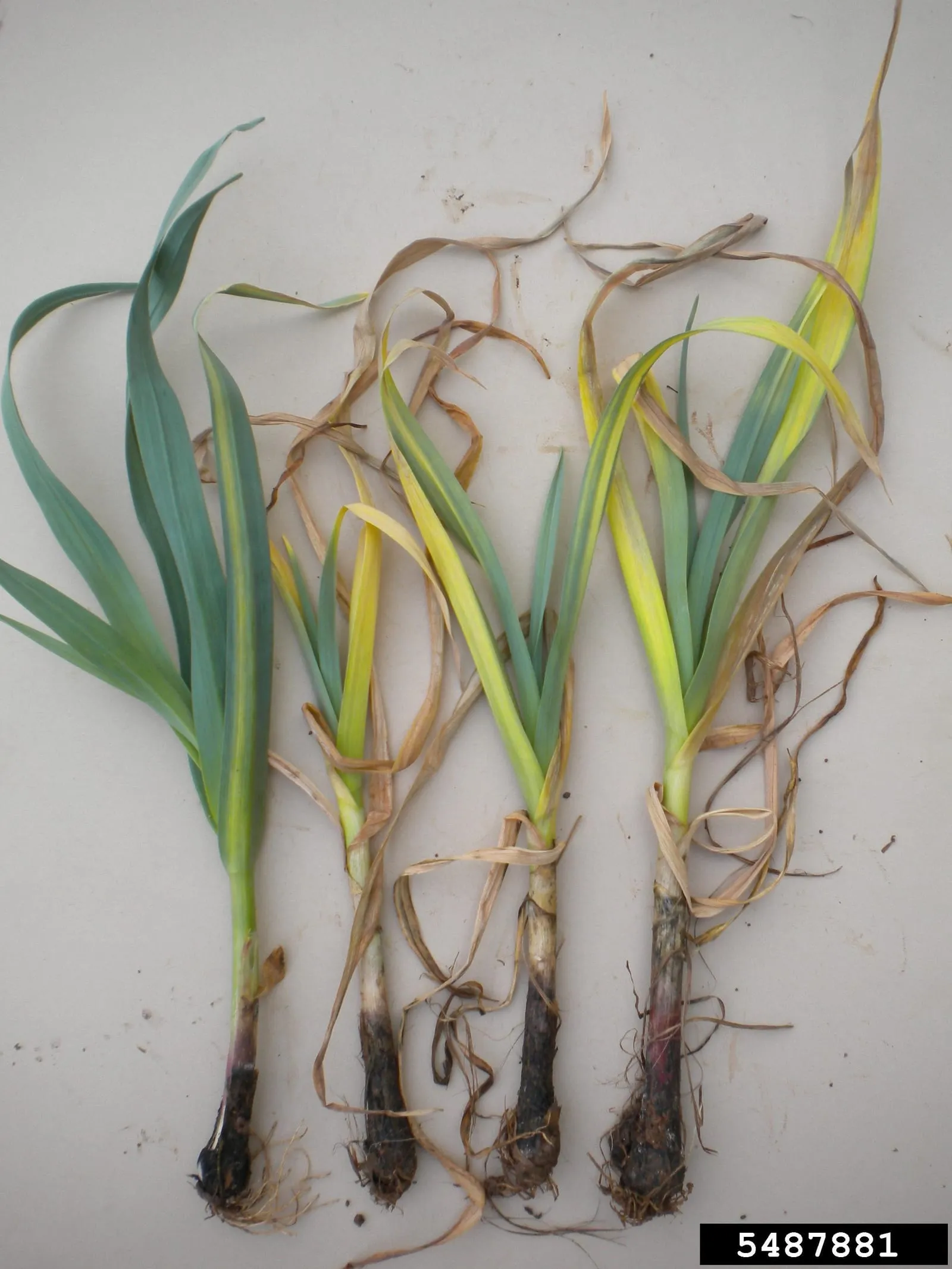
Onion White Rot (Stromatinia cepivorum) is the most serious disease risk for garlic in this region. The fungal sclerotia persist in soil for decades; once established, crop rotation loses its effectiveness. Moving soil or tools between beds spreads viable sclerotia, and alliums should not be replanted in any area with confirmed infection history. Certified disease-free seed stock is the most practical preventive measure available at planting.
Spring moisture encourages both white rot and botrytis leaf blight. Raised beds and adequate plant spacing improve drainage and airflow in wet seasons.
Garlic in adjacent zones
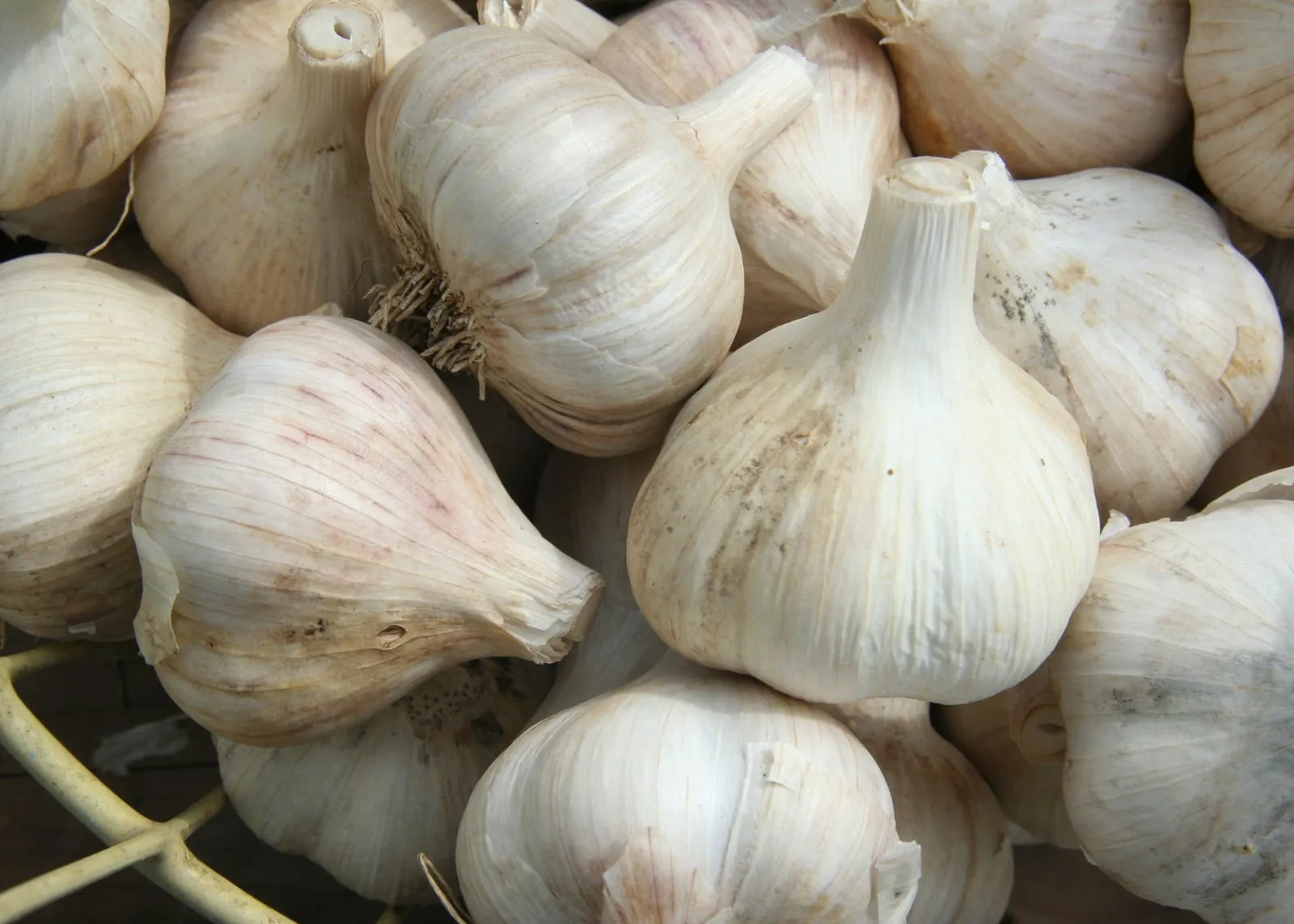
Image: "GarlicBasket", by Jonathunder, via Wikimedia Commons, licensed under CC-BY Source.

Related