vegetable in zone 5a
Growing garlic in zone 5a
Allium sativum
- Zone
- 5a -20°F to -15°F
- Growing season
- 150 days
- Suitable varieties
- 3
- Days to harvest
- 240 to 270
The verdict
Zone 5a is a sweet spot for hardneck garlic, not a marginal case. Garlic requires a vernalization period, typically 4 to 8 weeks below 40°F, to trigger bulb formation. Zone 5a winters, with minimum temperatures ranging from -20 to -15°F, deliver that chill requirement with room to spare. Hardneck varieties such as Music and German Extra Hardy were developed specifically for climates like this; they tolerate hard freezes without significant clove loss when planted at the right depth and mulched adequately.
Softneck types (the braiding varieties common in mild-winter regions) can be grown in zone 5a but tend to produce smaller bulbs and are less reliable overwintering. The 150-day frost-free growing season is sufficient: garlic is planted in fall, overwinters as established root systems with dormant tops, then resumes growth in spring and reaches harvest in midsummer. The crop's calendar fits zone 5a's rhythm cleanly.
Recommended varieties for zone 5a
3 cultivars suited to this zone, with disease-resistance and zone-fit annotations.
| Variety | Notes | Zone fit | Disease resistance |
|---|---|---|---|
| Music fits zone 5a | Pungent-sweet, balanced, bright flavor; large white-skinned hardneck cloves (4-6 per bulb). Roasting, fresh, all-purpose cooking. Cold-hardy hardneck, stores 6-8 months. The home-grower's hardneck standard. | | none noted |
| German Extra Hardy fits zone 5a | Strong, robust, traditional garlic punch; tan-skinned porcelain hardneck. Roasting, fresh, raw applications. Very cold-hardy, stores 8-10 months, large cloves easy to peel. | | none noted |
| Inchelium Red fits zone 5a | Mild, complex, slightly sweet softneck; many small cloves per bulb. All-purpose cooking, fresh, braiding for storage. Stores 8-10 months. Cold-tolerant softneck rare for the type. | | none noted |
Critical timing for zone 5a
Garlic is planted in fall, typically during the first two weeks of October in zone 5a. The goal is 4 to 6 weeks of root establishment before the ground freezes hard, without allowing significant top growth that would be vulnerable to winter dieback.
In spring, shoots emerge in late March or early April as soil temperatures rise above 40°F. On hardneck varieties, scapes (the curling flower stalks) appear in late May to early June and should be removed to redirect energy to bulb development. Bulb harvest follows roughly 3 to 4 weeks after scape removal, placing most zone 5a harvests in late June through mid-July. Timing is read by leaf count: harvest when 5 to 6 of the lower leaves have browned, which corresponds to 5 to 6 wrapper layers on the bulb.
Common challenges in zone 5a
- ▸ Fire blight in pears
- ▸ Cedar-apple rust
- ▸ Late spring frosts
Disease pressure to watch for
Modified care for zone 5a
The most important zone 5a adaptation is aggressive fall mulching. Apply 4 to 6 inches of straw, shredded leaves, or similar material after planting and before the ground freezes. Without this insulation, cloves can heave during freeze-thaw cycles or suffer direct freeze damage during the coldest nights of winter.
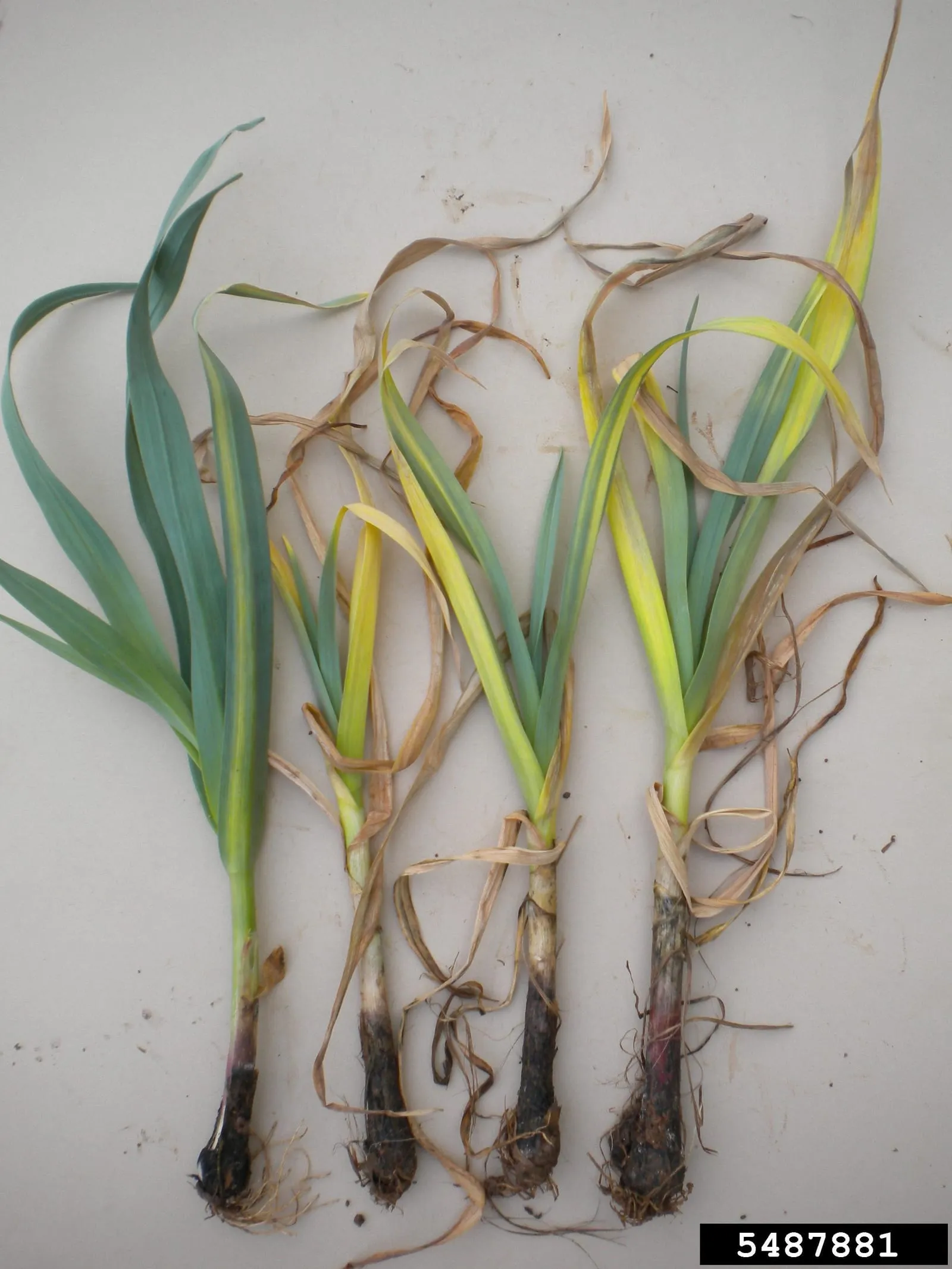
Onion White Rot (Stromatinia cepivorum) is the primary disease risk for alliums in this climate. The pathogen produces sclerotia that persist in soil for 20 or more years, making crop rotation the main management tool. Avoid planting garlic in any bed that has grown onions, leeks, or garlic within the past 8 years if white rot has been observed. Late spring frosts noted for zone 5a pose limited risk to garlic once tops are established; the crop tolerates light freezes in April, though a hard frost on young growth can cause tip burn. No protective measures are typically needed beyond the fall mulch already in place.
Frequently asked questions
- Do I need to mulch garlic in zone 5a?
Yes. Zone 5a winters reach -20 to -15°F, which can heave or kill unprotected cloves. Apply 4 to 6 inches of straw or shredded leaves after planting in fall and before hard frost. Remove or thin the mulch in early spring once growth resumes.
- Which garlic types perform best in zone 5a?
Hardneck varieties are the standard choice for zone 5a. Music and German Extra Hardy are well-documented performers in cold-winter climates. Inchelium Red, a softneck, is more cold-tolerant than most softneck types and can succeed here with adequate mulching.
- When should I plant garlic in zone 5a?
Target the first two weeks of October. Planting too early allows excessive top growth before winter; planting too late leaves cloves without enough root establishment to anchor against freeze-thaw heaving. Aim for 4 to 6 weeks between planting and hard ground freeze.
- What is onion white rot and how do I prevent it?
Onion White Rot is a soilborne fungal disease caused by Stromatinia cepivorum that rots garlic and onion roots and bulbs. Its sclerotia persist in soil for decades. Prevention relies on long crop rotation: avoid planting any allium in affected soil for at least 8 years. There are no curative treatments once a bed is infested.
+−
+−
+−
+−
Garlic in adjacent zones
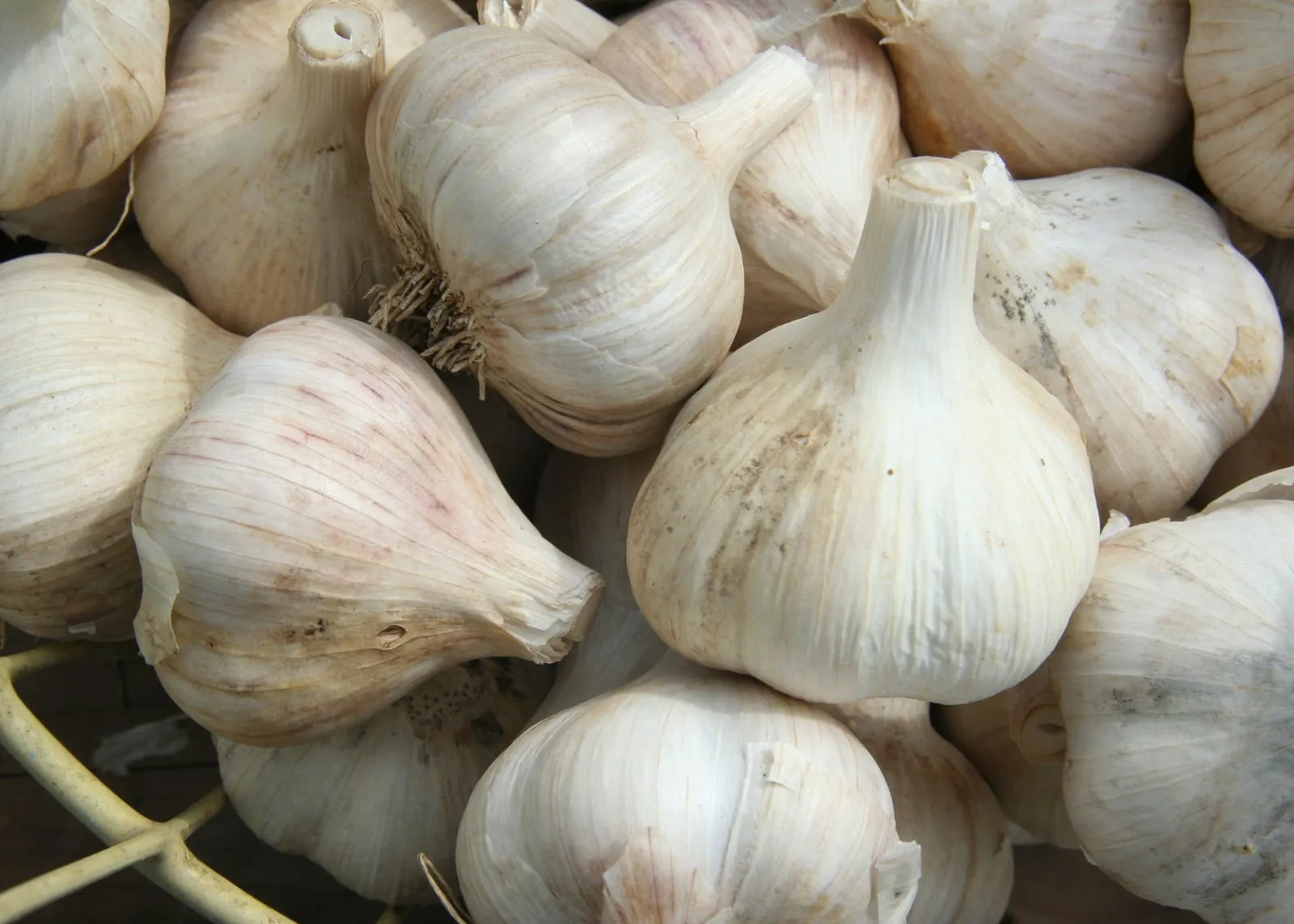
Image: "GarlicBasket", by Jonathunder, via Wikimedia Commons, licensed under CC-BY Source.

Related