nut in zone 5b
Growing hazelnut in zone 5b
Corylus species and hybrids
- Zone
- 5b -15°F to -10°F
- Growing season
- 165 days
- Chill needed
- 800 to 1500 below 45°F
- Suitable varieties
- 5
- Days to harvest
- 100 to 130
The verdict
Zone 5b sits at the northern edge of reliable hazelnut production, with winter lows between -15°F and -10°F. The chill-hour picture is favorable: zone 5b locations typically accumulate well above 800 hours below 45°F, and many sites approach or exceed the upper end of the 800 to 1,500 hour requirement. Cold hardiness, not chilling, is the real constraint. European hazelnut cultivars including Jefferson and Yamhill carry meaningful risk at sustained -15°F exposure, particularly on young plants or poorly sited ones. The native American Hazelnut and Beaked Hazelnut are fully winter-hardy through zone 5b and into zone 4, making them lower-risk choices for growers in colder pockets of the zone.
Eastern Filbert Blight is established across much of zone 5b's geographic range, and it sharply narrows variety options. Jefferson and Yamhill carry moderate EFB resistance; unresistant European selections are not realistic here. Zone 5b is workable for hazelnuts, but it is not the sweet spot for high-yielding European types. Growers willing to plant native or hybrid selections will have considerably more margin.
Recommended varieties for zone 5b
5 cultivars suited to this zone, with disease-resistance and zone-fit annotations.
| Variety | Notes | Zone fit | Disease resistance |
|---|---|---|---|
| Jefferson fits zone 5b | Sweet, rich, buttery; fresh, baking, confections, butter. Large round nuts. The Oregon State release that resists Eastern Filbert Blight, the standard for new commercial plantings. Pair with Eta or Theta as pollinizer. | |
|
| Yamhill fits zone 5b | Sweet, rich flavor, smaller round nuts; fresh and processing. Compact OSU release with strong EFB resistance, productive in cooler sites. | |
|
| Theta fits zone 5b | Sweet, rich, large nuts with easy crack-out; baking and fresh. OSU pollinizer for Jefferson, EFB-resistant, productive in its own right. | |
|
| American Hazelnut fits zone 5b | Sweet, mild, small nuts; fresh, baking. Native Corylus americana, naturally EFB-tolerant. Multi-stem shrub form (8-15 ft), suitable for hedgerows. Lower yields than European hybrids. | |
|
| Beaked Hazelnut fits zone 5b | Sweet, intensely flavored, very small nuts; foraging quality, hedgerow use. Native Corylus cornuta, extremely cold-hardy and disease-tolerant. Spreading shrub, ornamental husks. | | none noted |
Critical timing for zone 5b
Hazelnuts bloom unusually early, often before leaves emerge, with catkins shedding pollen as early as late January in mild years. In zone 5b, bloom typically runs from late February through mid-March depending on winter's progression. This timing creates a known collision point with late cold snaps: a hard freeze during pollen shed does not kill catkins outright, but a frost hitting receptive female flowers can meaningfully reduce nut set.
Zone 5b's last frost typically falls between late April and mid-May, well after bloom concludes, so pollination usually completes before the main frost window. Harvest falls in August through September as nut clusters begin dropping naturally from the husk. The zone's 165-day growing season provides adequate time between pollination and full nut maturity.
Common challenges in zone 5b
- ▸ Plum curculio
- ▸ Codling moth
- ▸ Cedar-apple rust
Disease pressure to watch for
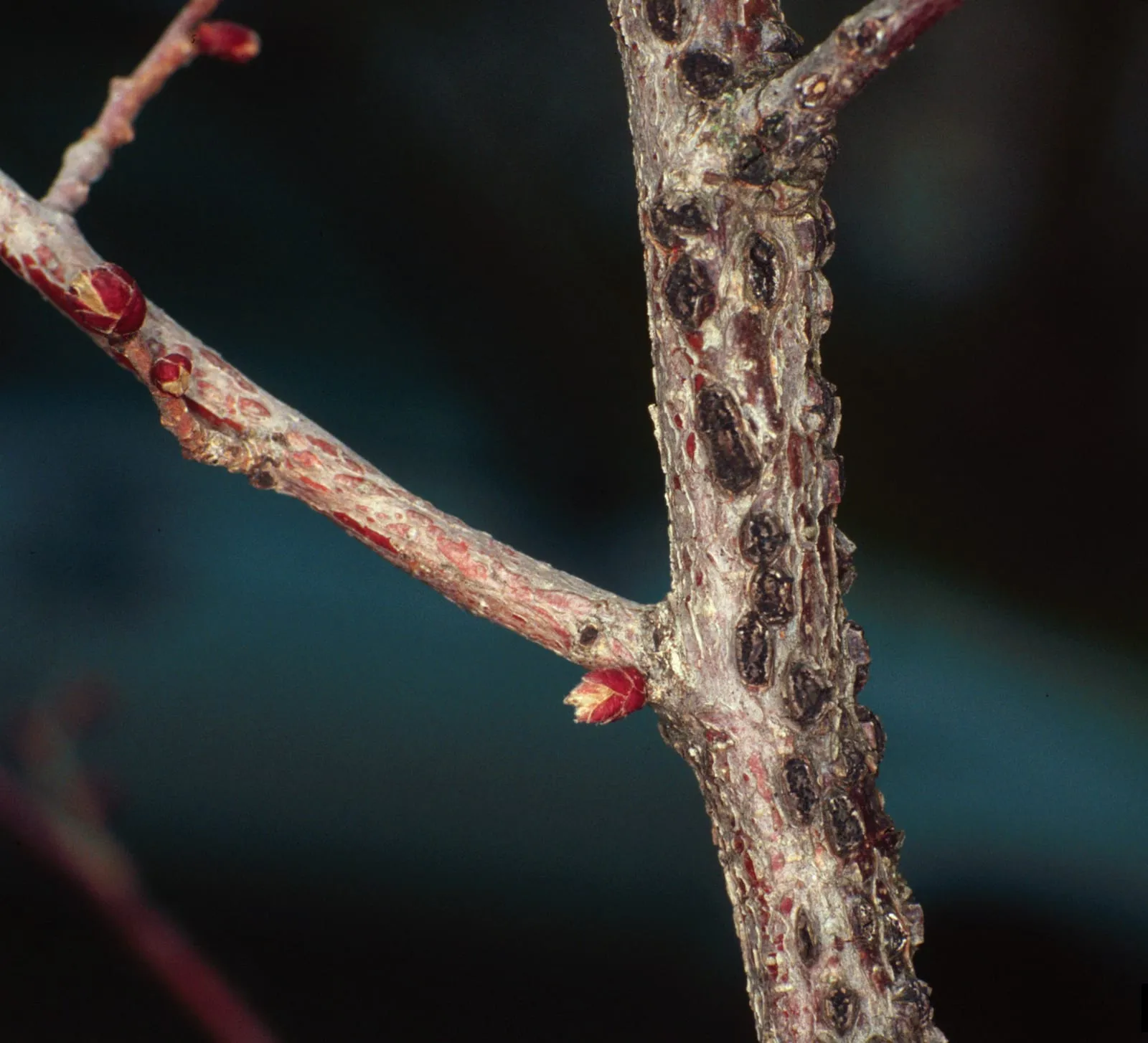
Anisogramma anomala
Native fungal disease of American hazelnut that devastates European hazelnut plantings, the limiting factor for commercial hazelnut culture in the East.
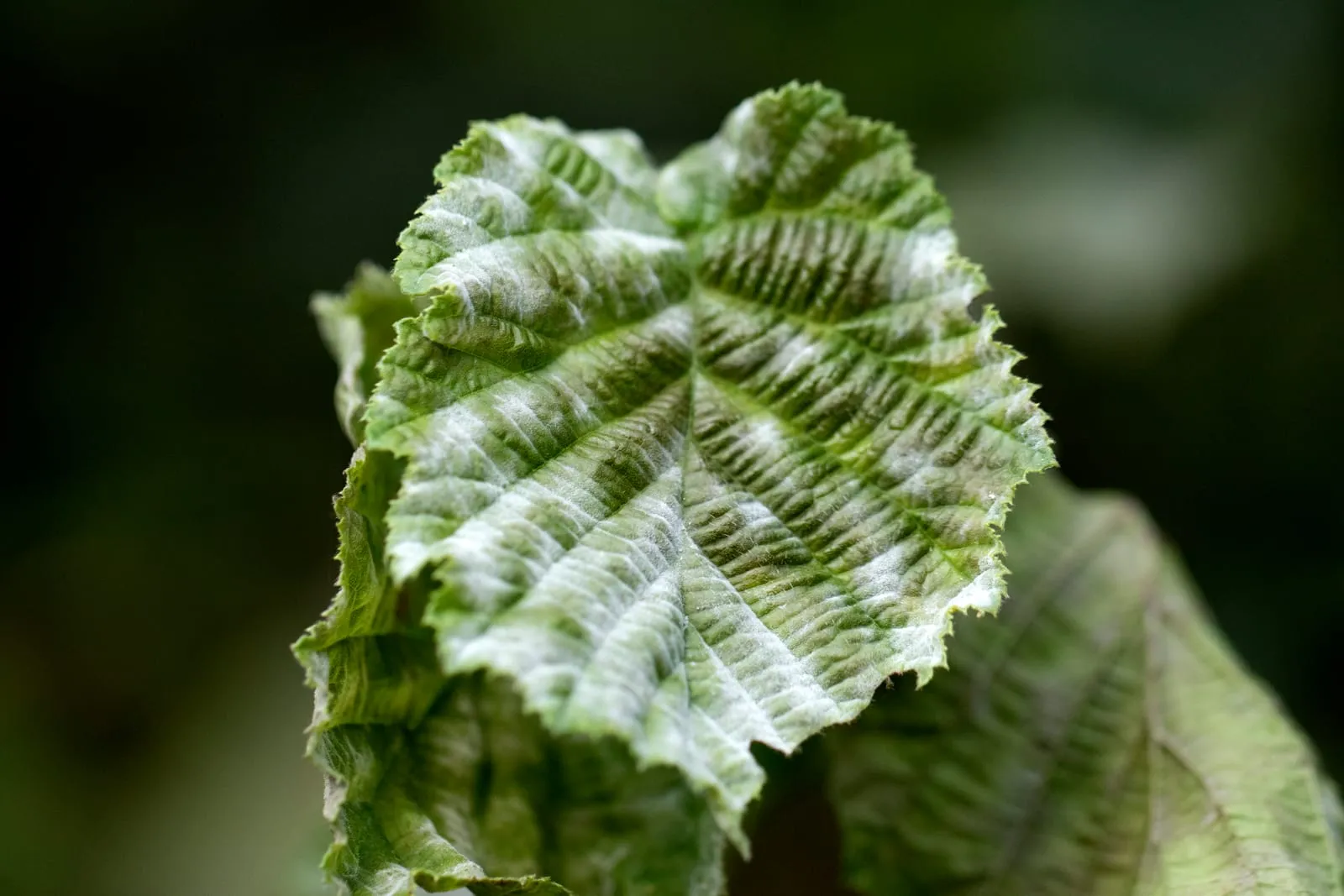
Xanthomonas arboricola pv. corylina
Bacterial disease that kills young hazelnut trees and damages established plantings, particularly during wet establishment.
Modified care for zone 5b
In zone 5b, the most consequential management decision is variety selection, made before planting. Jefferson and Yamhill, both from Oregon State University's breeding program, are the most practical European-type cultivars with meaningful Eastern Filbert Blight resistance. Even so, they warrant a sheltered planting site in colder or more exposed parts of the zone. A south-facing slope or windbreak position reduces winter desiccation damage on young canes during the temperature swings common in zone 5b winters. Mulch applied before freeze-up helps protect shallow roots.
Bacterial Hazelnut Blight is favored by the cool, wet spring conditions typical of this zone. Pruning to open canopy airflow and avoiding overhead irrigation during extended wet springs are the main cultural responses. Prune in late winter before bud swell, removing crossing or crowded stems to reduce the humid microclimate that bacterial blight exploits.
Hazelnut in adjacent zones
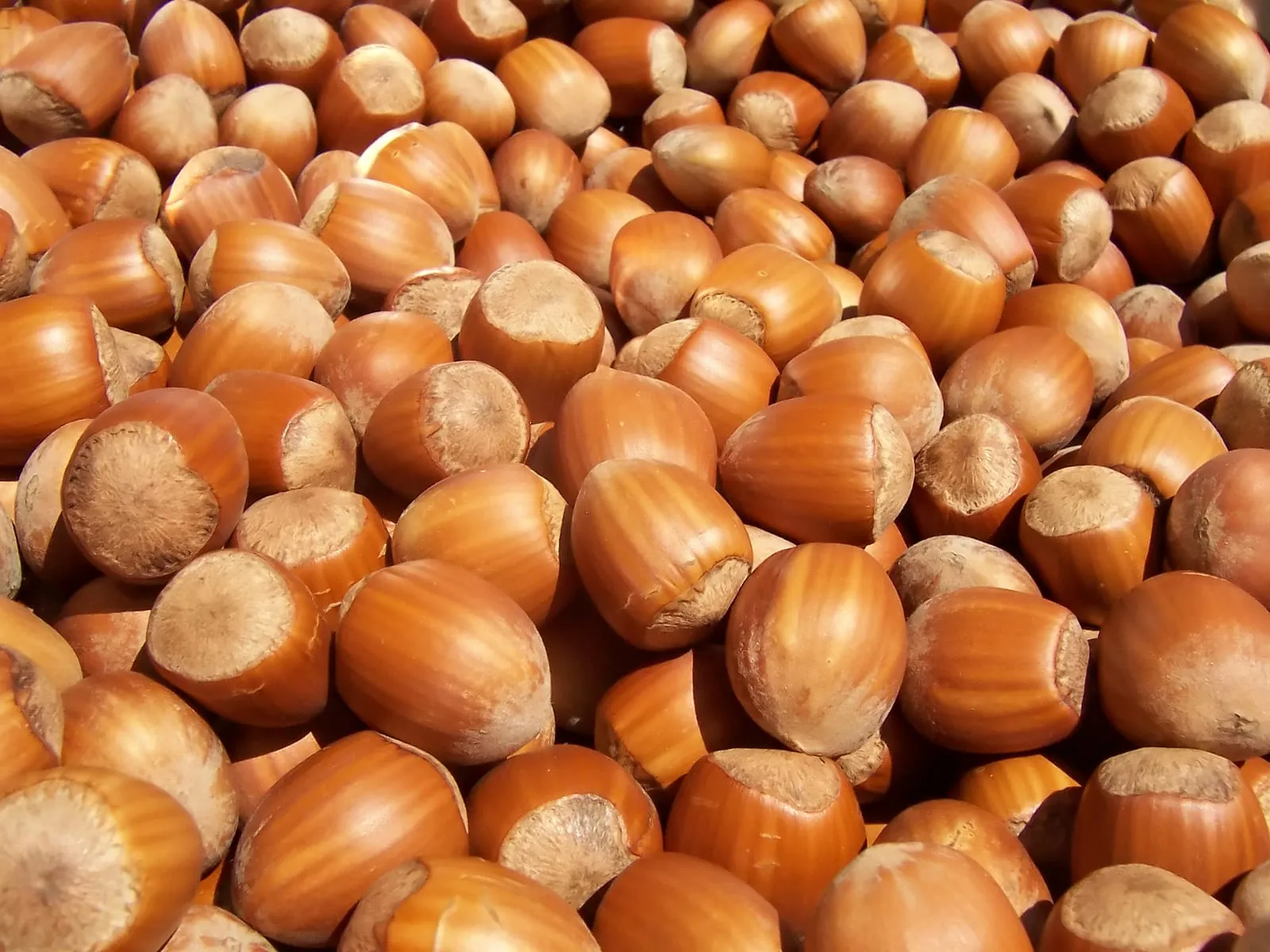
Image: "Hazelnuts", by Fir0002 at English Wikipedia, via Wikimedia Commons, licensed under CC-BY Source.

Related