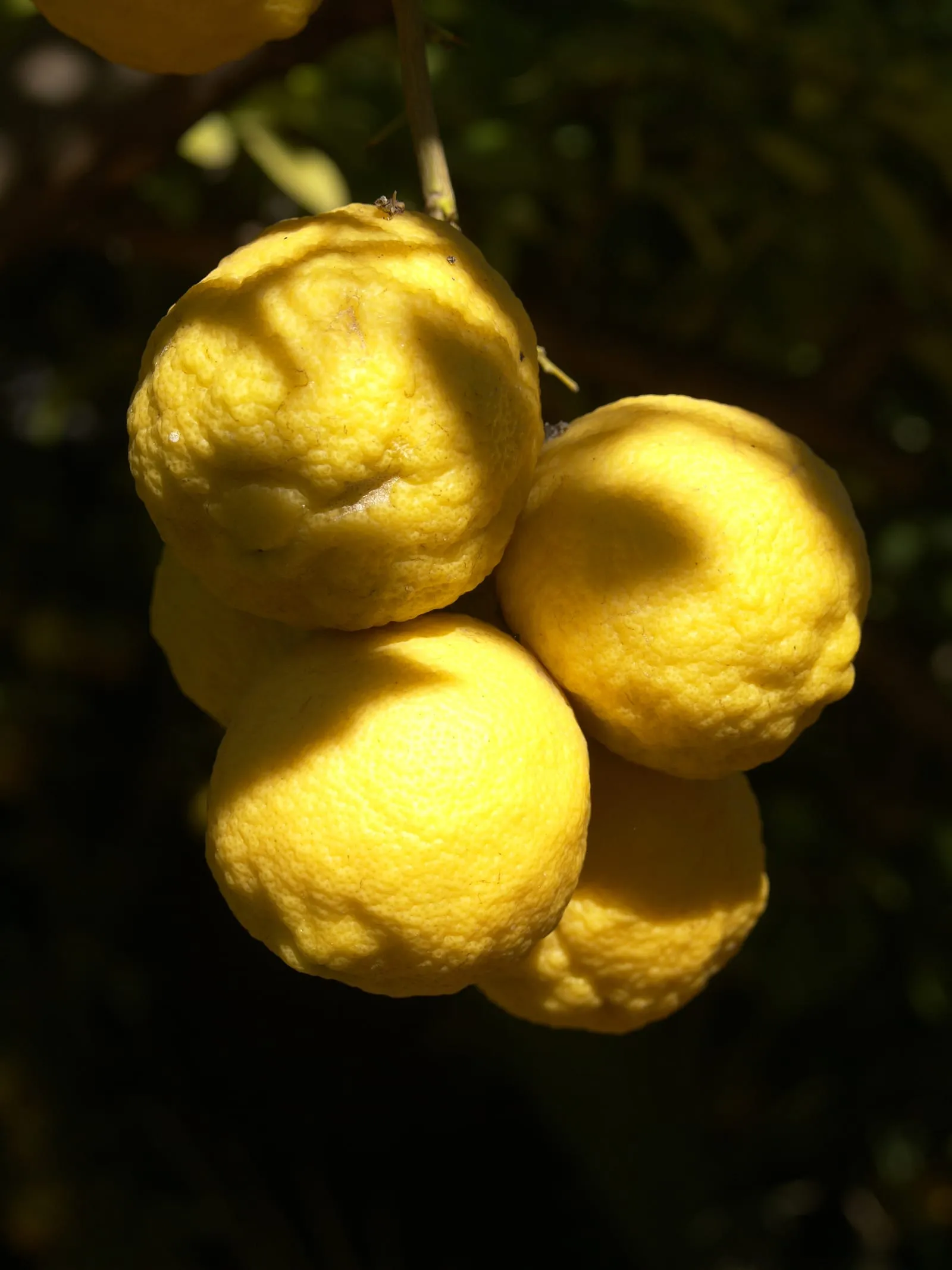
fruit tree in zone 9b
Growing lemon in zone 9b
Citrus limon
- Zone
- 9b 25°F to 30°F
- Growing season
- 310 days
- Chill needed
- 0 to 100 below 45°F
- Suitable varieties
- 4
- Days to harvest
- 180 to 365
The verdict
Zone 9b sits near the center of lemon's preferred range, not at its edges. With minimum winter temperatures between 25°F and 30°F and a 310-day growing season, conditions match well with what lemon trees need to perform consistently. The chill-hour requirement of 0 to 100 hours is easily satisfied in most zone 9b winters, and the long frost-free period allows fruit to develop fully on the tree without rushing harvest.
The principal risk sits at the lower end of the zone's temperature range. Established Eureka and Lisbon trees tolerate brief dips into the upper 20s, but extended exposure below 28°F damages open flowers, small branches, and fruit. Meyer is somewhat more cold-tolerant and is often the safer choice for growers in colder pockets or elevated sites within the zone.
Summer heat stress is a real factor, but lemons are better adapted to it than most other citrus types. The main challenge is maintaining adequate soil moisture through peak summer heat rather than temperature tolerance itself.
Recommended varieties for zone 9b
4 cultivars suited to this zone, with disease-resistance and zone-fit annotations.
| Variety | Notes | Zone fit | Disease resistance |
|---|---|---|---|
| Eureka fits zone 9b | Bright tart juice with a clean almost-floral finish; the standard supermarket lemon. Vigorous nearly thornless tree, fruits nearly year-round in zones 10-11. | | none noted |
| Lisbon fits zone 9b | Sharper acidity than Eureka, holds well on the tree. More cold-tolerant and thornier; the better choice for marginal zones. | | none noted |
| Meyer fits zone 9b | Sweet-tart with a distinct tangerine note from its mandarin parentage; a chef's lemon for tarts and curd. Cold-hardy to 22°F when well-established. | |
|
| Ponderosa fits zone 9b | Massive grapefruit-sized fruit with thick rind; mild-acid juice for novelty rather than volume. Compact tree fits dooryard plantings. | | none noted |
Critical timing for zone 9b
Lemon is unusual among fruit crops because it blooms and sets fruit across multiple cycles annually. In zone 9b, the primary bloom flush typically runs late winter through early spring, roughly February through April. Secondary flushes in summer and fall are common on healthy, well-irrigated trees.
The zone's frost window, generally spanning late November through February, overlaps with the early stages of the primary bloom. A late freeze after flowers open is the main timing risk. Fruit from the spring bloom reaches maturity roughly six to nine months later, placing peak harvest for Eureka and Lisbon in late fall to early winter. Because trees carry fruit at multiple stages simultaneously, some harvest is often possible across most of the year on mature trees.
Common challenges in zone 9b
- ▸ Heat stress in summer
- ▸ Insufficient chill for most apples
- ▸ Salt spray near coasts
Disease pressure to watch for
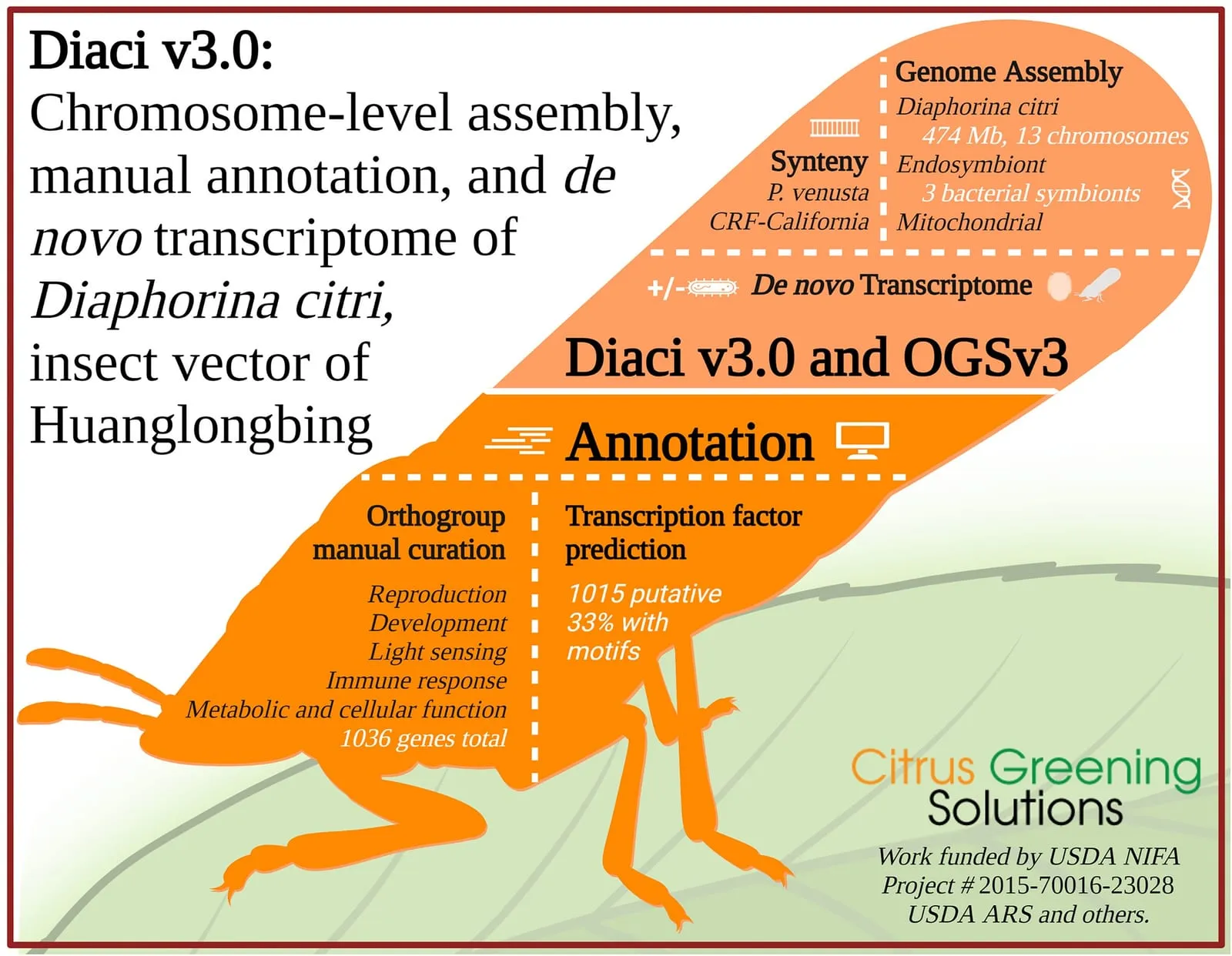
Candidatus Liberibacter asiaticus
Devastating bacterial disease vectored by the Asian citrus psyllid. Once infected, trees decline progressively over several years and there is no cure. Has destroyed commercial citrus across Florida and threatens production worldwide.
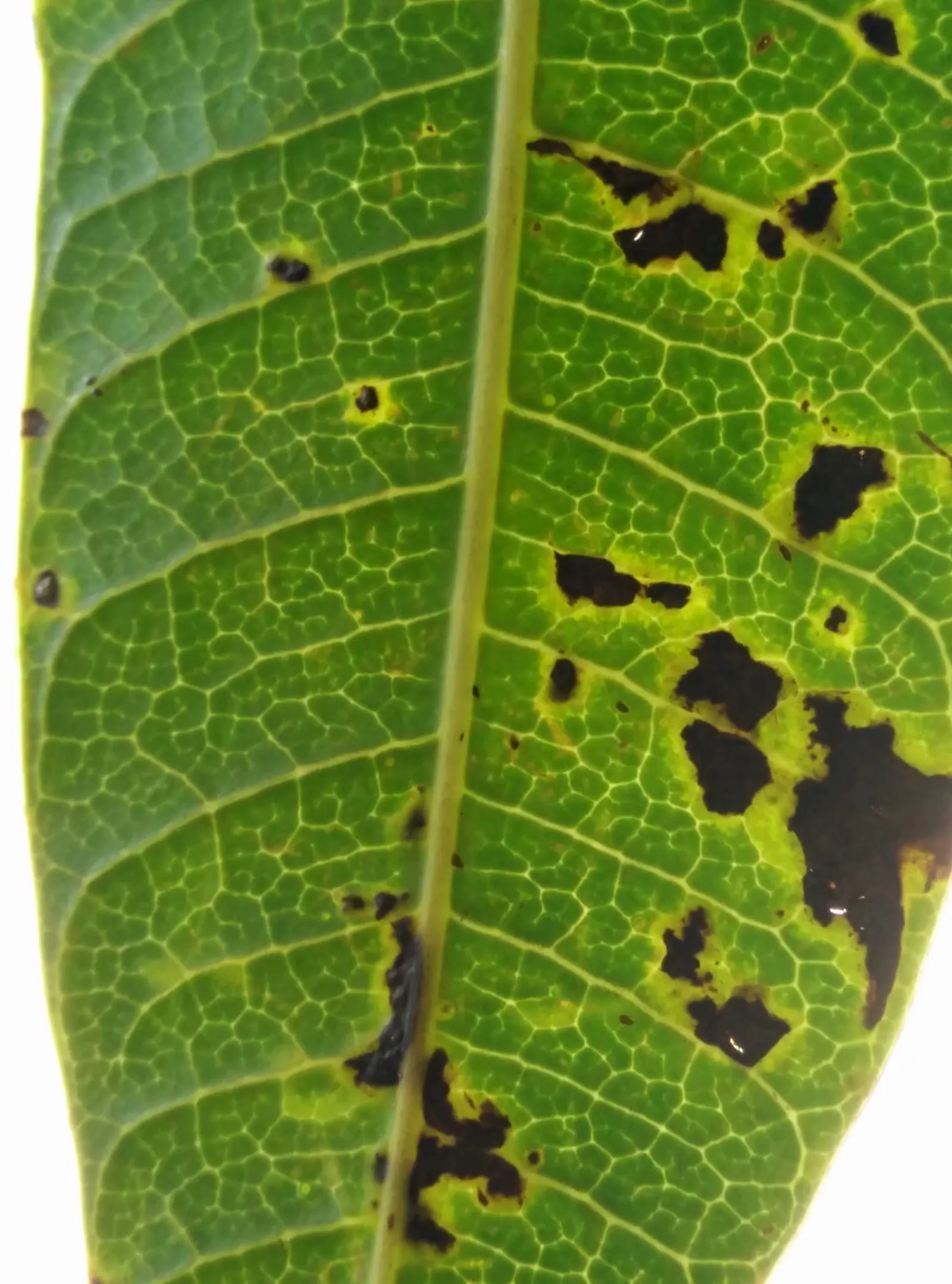
Xanthomonas citri
Bacterial disease producing raised corky lesions on leaves, twigs, and fruit. Spread by wind-driven rain and contaminated tools. Quarantine-regulated in many areas.
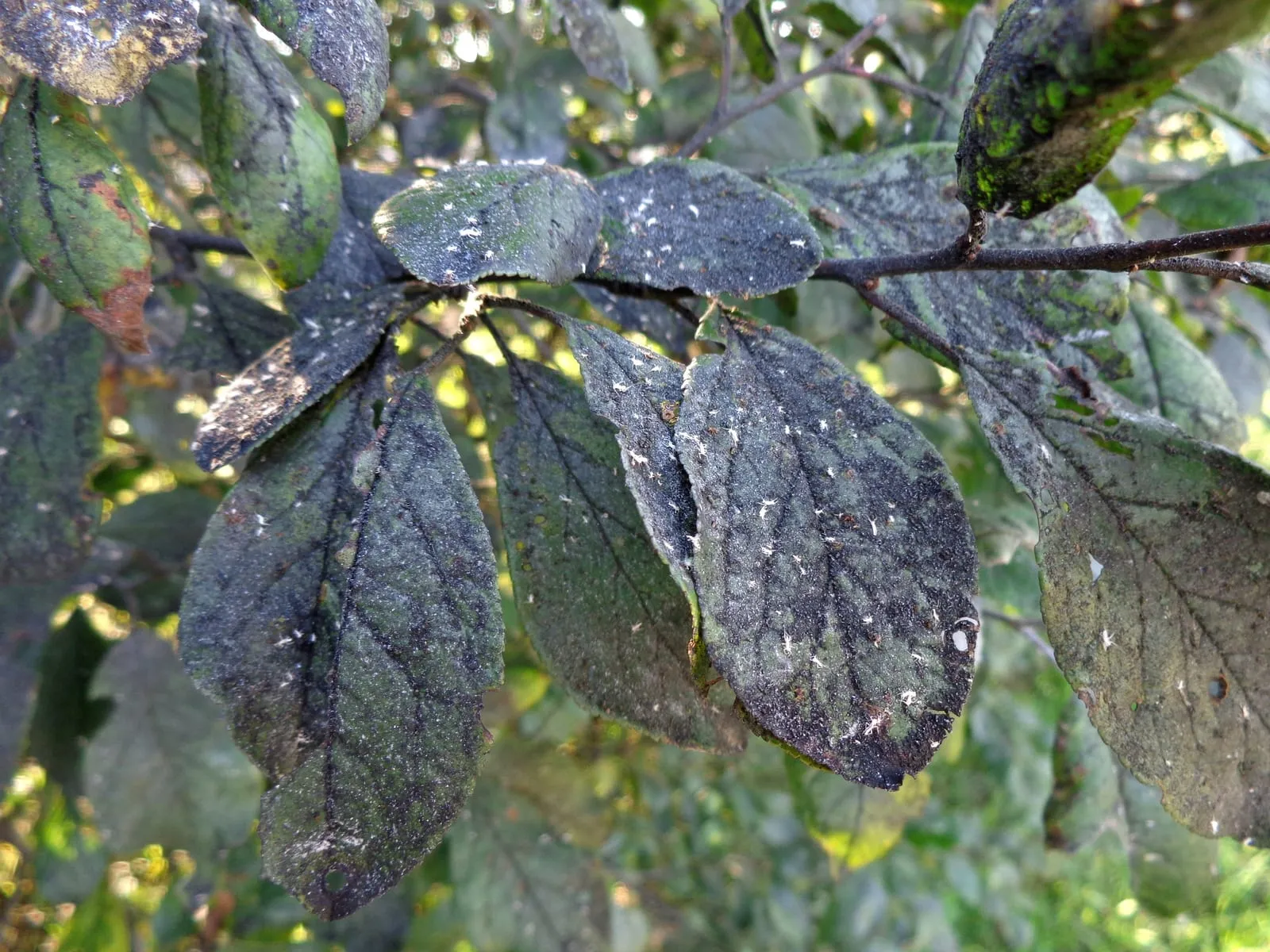
Capnodium spp.
Black fungal coating that grows on honeydew secreted by aphids, scale, mealybugs, and whiteflies. Doesn't infect plant tissue directly but blocks photosynthesis and disfigures fruit.
Modified care for zone 9b
Summer irrigation demands are higher in zone 9b than in coastal or moderate Mediterranean climates. During heat events above 100°F, water stress accelerates fruit drop and can scorch foliage. Deep, infrequent irrigation paired with 3 to 4 inches of organic mulch over the root zone helps buffer soil temperature and reduce moisture loss.
Young trees warrant frost protection during the first two to three winters. Covering with frost cloth when temperatures are forecast to drop below 28°F, and wrapping the trunk with insulating material, limits cold damage before the tree develops enough canopy mass to buffer itself.
Near the coast, salt spray deposits on foliage stress trees over time; periodic rinsing with fresh water during dry periods reduces accumulation. Citrus greening (HLB) has spread into parts of the zone 9b range. There is no cure once a tree is infected, so buying nursery stock from certified clean sources and monitoring for the Asian citrus psyllid vector are the most important preventive steps.
Lemon in adjacent zones
Image: "Citrus x limon (Outjo)", by Hans Hillewaert, via Wikimedia Commons, licensed under CC-BY Source.
.jpg)
Related