vegetable in zone 8b
Growing onion in zone 8b
Allium cepa
- Zone
- 8b 15°F to 20°F
- Growing season
- 260 days
- Suitable varieties
- 1
- Days to harvest
- 90 to 130
The verdict
Zone 8b is a natural fit for short-day onions, not a marginal case. The 260-day growing season and mild winters create ideal conditions for fall planting and a long, unhurried bulbing period. Short-day varieties like Vidalia (Yellow Granex) initiate bulb formation when day length reaches 10 to 12 hours, which occurs reliably in late winter and early spring across zone 8b. Minimum winter temperatures of 15 to 20°F are cold enough to firm up transplants without killing them outright.
The chill-hour concerns that limit fruit tree selection in this zone are not relevant to onions. Onions respond to photoperiod, not accumulated cold. The zone-specific challenges that do apply are nematode pressure in sandy soils and susceptibility to Onion White Rot under the region's humid spring conditions. Neither makes zone 8b unsuitable; both require deliberate management.
Recommended varieties for zone 8b
1 cultivar suited to this zone, with disease-resistance and zone-fit annotations.
| Variety | Notes | Zone fit | Disease resistance |
|---|---|---|---|
| Vidalia (Yellow Granex) fits zone 8b | Very sweet, juicy, mild; the famous Georgia sweet onion. Fresh, onion rings, salsa. Short-day variety only true to type in low-sulfur soil; storage minimal. | | none noted |
Critical timing for zone 8b
Short-day onions in zone 8b are planted in fall, typically mid-September through November, as transplants or sets. Plants establish through winter, then begin active bulbing as day length climbs past 10 to 12 hours in late February and March. Harvest typically runs from mid-April through early June depending on planting date and density.
Zone 8b's last frost generally falls between mid-February and mid-March. Onion plants are bulbing aggressively during that same window of lingering frost risk. Established plants tolerate light frosts without damage, but temperatures below 20°F can injure bulbs that have begun swelling noticeably. Row cover is a reasonable precaution during hard freeze events in the cooler northern portions of the zone.
Common challenges in zone 8b
- ▸ Low chill hours limit apple variety selection
- ▸ Citrus greening risk
- ▸ Nematodes in sandy soils
Disease pressure to watch for
Modified care for zone 8b
The most significant management adjustment in zone 8b is nematode pressure, particularly in sandy, well-drained soils common across the region. Root-knot nematodes stunt root development and reduce final bulb size. Rotating onions with non-host crops (grasses, sweet corn) for at least two seasons reduces soil populations; resistant short-day varieties are limited, so rotation is the primary tool.
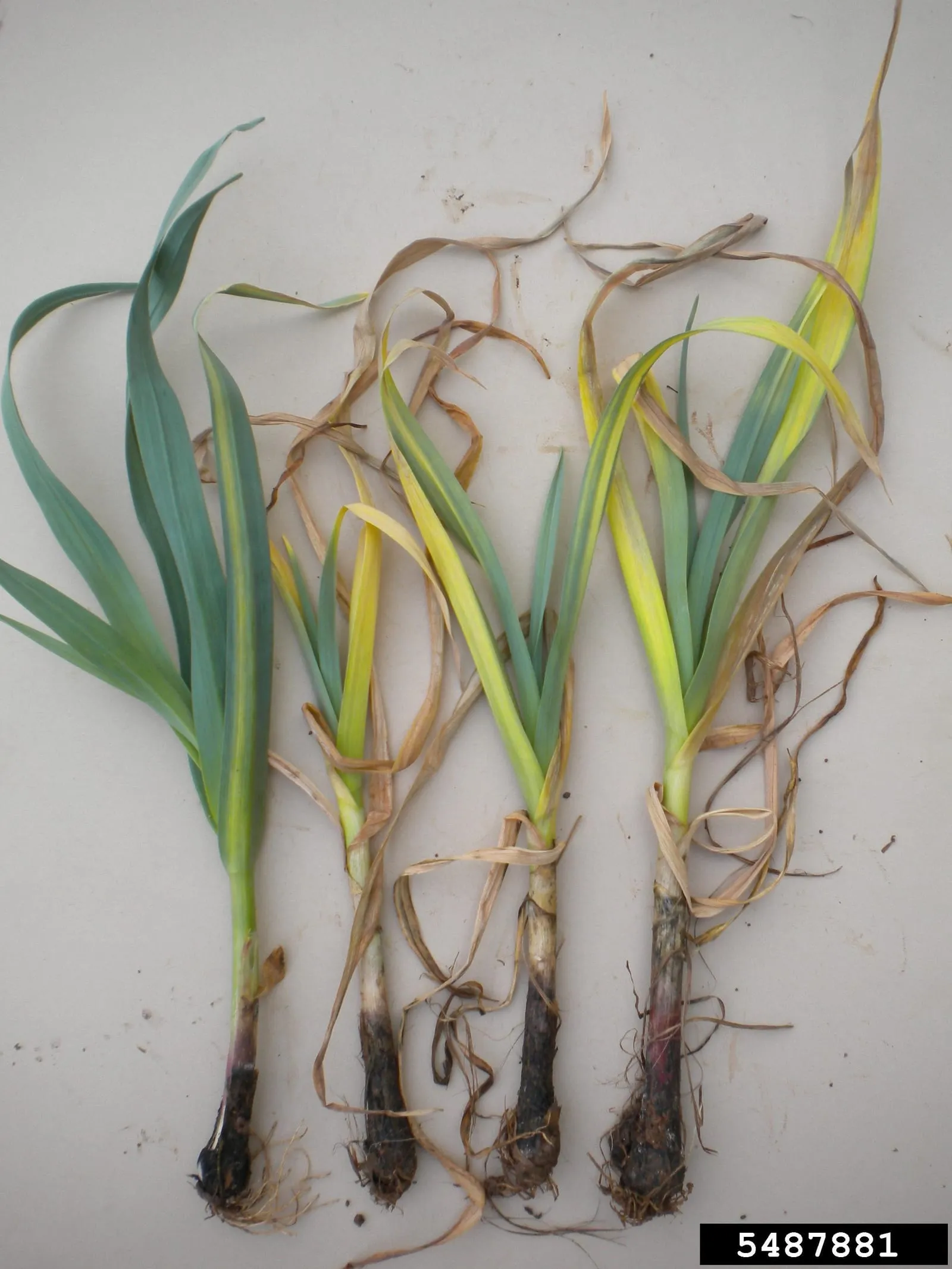
Onion White Rot is a persistent fungal problem under zone 8b's humid spring conditions. The pathogen survives in soil for decades, so planting in fields with no prior history of the disease is more effective than fungicide applications alone. Adequate plant spacing and drip irrigation rather than overhead watering reduce the leaf wetness that favors disease spread. Timing harvest before sustained summer heat arrives also limits late-season rot losses.
Onion in adjacent zones
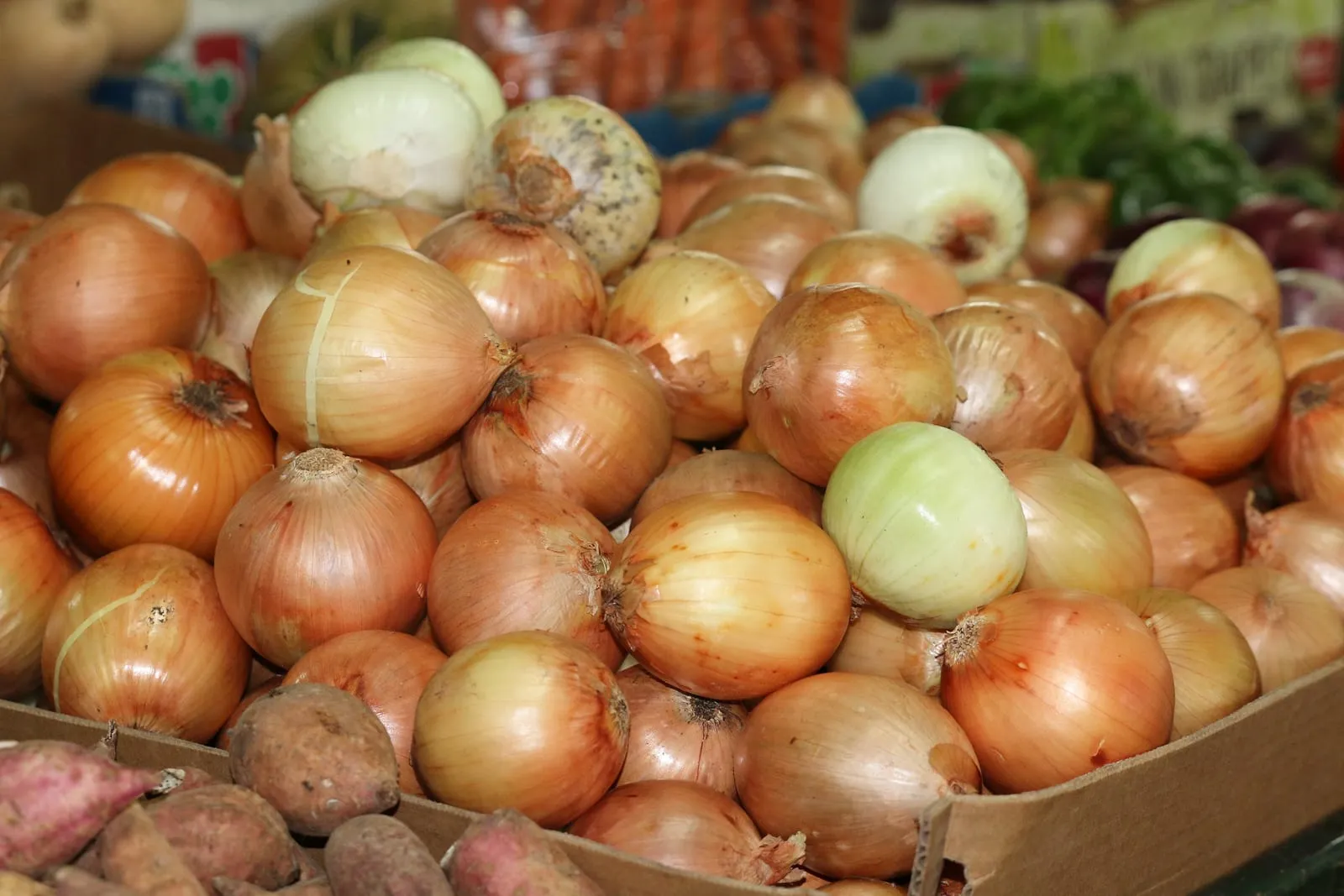
Image: "Zwiebeln auf Antigua", by CHK46, via Wikimedia Commons, licensed under CC-BY Source.

Related