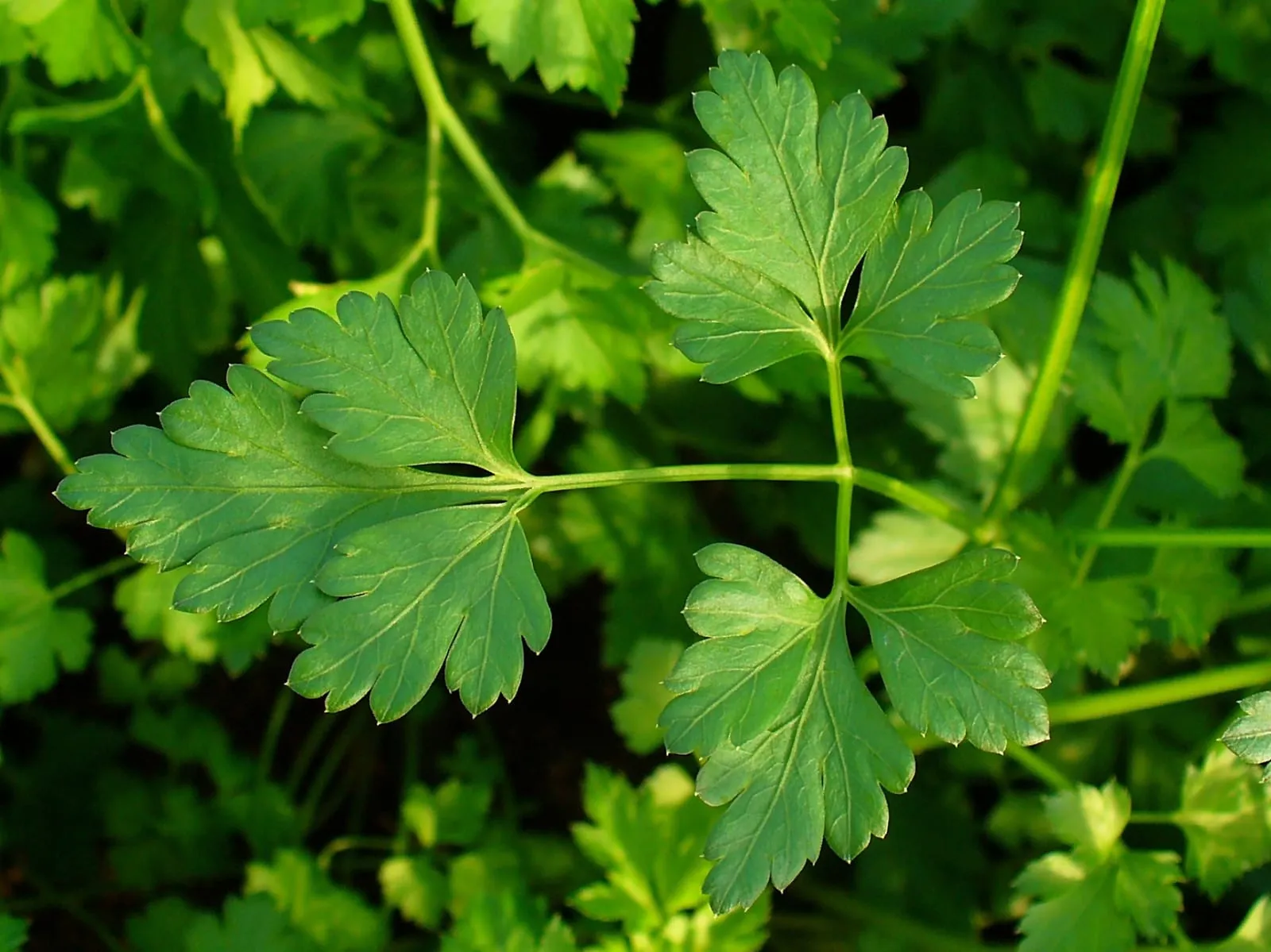
herb in zone 5b
Growing parsley in zone 5b
Petroselinum crispum
- Zone
- 5b -15°F to -10°F
- Growing season
- 165 days
- Suitable varieties
- 3
- Days to harvest
- 70 to 90
The verdict
Parsley fits comfortably within zone 5b's productive range. Unlike fruit trees, parsley carries no chill-hour requirement; it is a biennial herb grown primarily for its first-year foliage, so winter temperature floors matter mainly for overwintering attempts rather than cropping success. Zone 5b's -15 to -10°F minimums are cold enough to kill unprotected crowns outright, but the 165-day growing season gives ample time to reach full harvest as an annual, which is how most zone 5b growers approach it.
All three commercially available types perform reliably here: Italian flat-leaf for cooking, curled for garnish and container growing, and Hamburg root for the edible taproot. None are marginal at this latitude. The limiting factor in zone 5b is spring soil temperature rather than season length, since parsley germination stalls in cold ground and the window between soil warm-up and transplant time can compress in a late spring.
Recommended varieties for zone 5b
3 cultivars suited to this zone, with disease-resistance and zone-fit annotations.
| Variety | Notes | Zone fit | Disease resistance |
|---|---|---|---|
| Italian Flat-Leaf fits zone 5b | Strong, clean, classic parsley flavor; flat dark-green leaves. Cooking, garnish, tabbouleh, gremolata. The cook's parsley, more flavor than curly types, the Mediterranean standard. | | none noted |
| Curled / Moss fits zone 5b | Milder, slightly grassy; tightly curled bright green leaves. Garnish, restaurant plate decoration, light cooking use. Heritage variety, ornamental, holds shape in beds. | | none noted |
| Hamburg / Root fits zone 5b | Mild parsley flavor in white parsnip-like root; earthy when cooked. Soups, stews, roasted. Dual-purpose: leaves for garnish, roots for cooking. European heritage variety. | | none noted |
Critical timing for zone 5b
Zone 5b's last spring frost typically falls between late April and mid-May. Parsley seedlings tolerate light frost, so direct sowing can begin 2 to 3 weeks before that date, though germination is unreliable when soil temperatures are below 50°F. Starting seeds indoors 8 to 10 weeks before the last frost date gives plants a significant lead, which matters because germination alone takes 14 to 28 days even under ideal warmth.
First harvest of outer stems begins 70 to 90 days after germination, placing peak production in midsummer. The 165-day season supports continuous harvest through October before a killing frost ends the planting. Parsley flowers and sets seed only in its second year; growers treating it as an annual will not see bloom during the first season.
Common challenges in zone 5b
- ▸ Plum curculio
- ▸ Codling moth
- ▸ Cedar-apple rust
Modified care for zone 5b
The primary adjustment in zone 5b is timing the start carefully. Soil below 50°F suppresses germination sharply, so direct sowing too early in April leads to uneven stands. Using a soil thermometer and waiting for consistent readings above 50°F before outdoor seeding improves results meaningfully.
For growers who want to overwinter plants for second-year seed production, apply 4 to 6 inches of straw mulch over crowns after the first hard frost has set. Survival at -15°F is inconsistent even with mulch, so replanting from seed each spring is the more dependable approach.
The zone challenges listed for zone 5b (plum curculio, codling moth, cedar-apple rust) are fruit-tree concerns and do not affect parsley. The primary pest to watch on parsley is the black swallowtail caterpillar, which feeds on leaves but rarely damages a home planting severely enough to warrant intervention.
Frequently asked questions
- Can parsley survive winter outdoors in zone 5b?
Occasionally, with 4 to 6 inches of straw mulch applied after the first hard frost. However, -15 to -10°F winters kill unprotected crowns reliably, and mulched plants do not always survive either. Most zone 5b growers treat parsley as an annual and reseed each spring rather than depending on overwintered plants.
- Why is my parsley so slow to germinate in spring?
Parsley germination is slow by nature, taking 14 to 28 days even at optimal soil temperatures (50 to 70°F). In zone 5b's cool spring soil, germination can stretch past four weeks. Starting seeds indoors under warmth 8 to 10 weeks before the last frost date is the most reliable way to get a strong stand.
- Which parsley type is best suited for zone 5b?
All three types (Italian flat-leaf, curled, and Hamburg root) perform reliably as annuals in zone 5b. Flat-leaf tends to be the most vigorous and flavorful. Hamburg root requires the longest season and benefits most from an indoor start; direct sowing it outdoors in zone 5b leaves little margin before fall frost.
+−
+−
+−
Parsley in adjacent zones
Image: "Petroselinum crispum 003", by H. Zell, via Wikimedia Commons, licensed under CC-BY Source.

Related