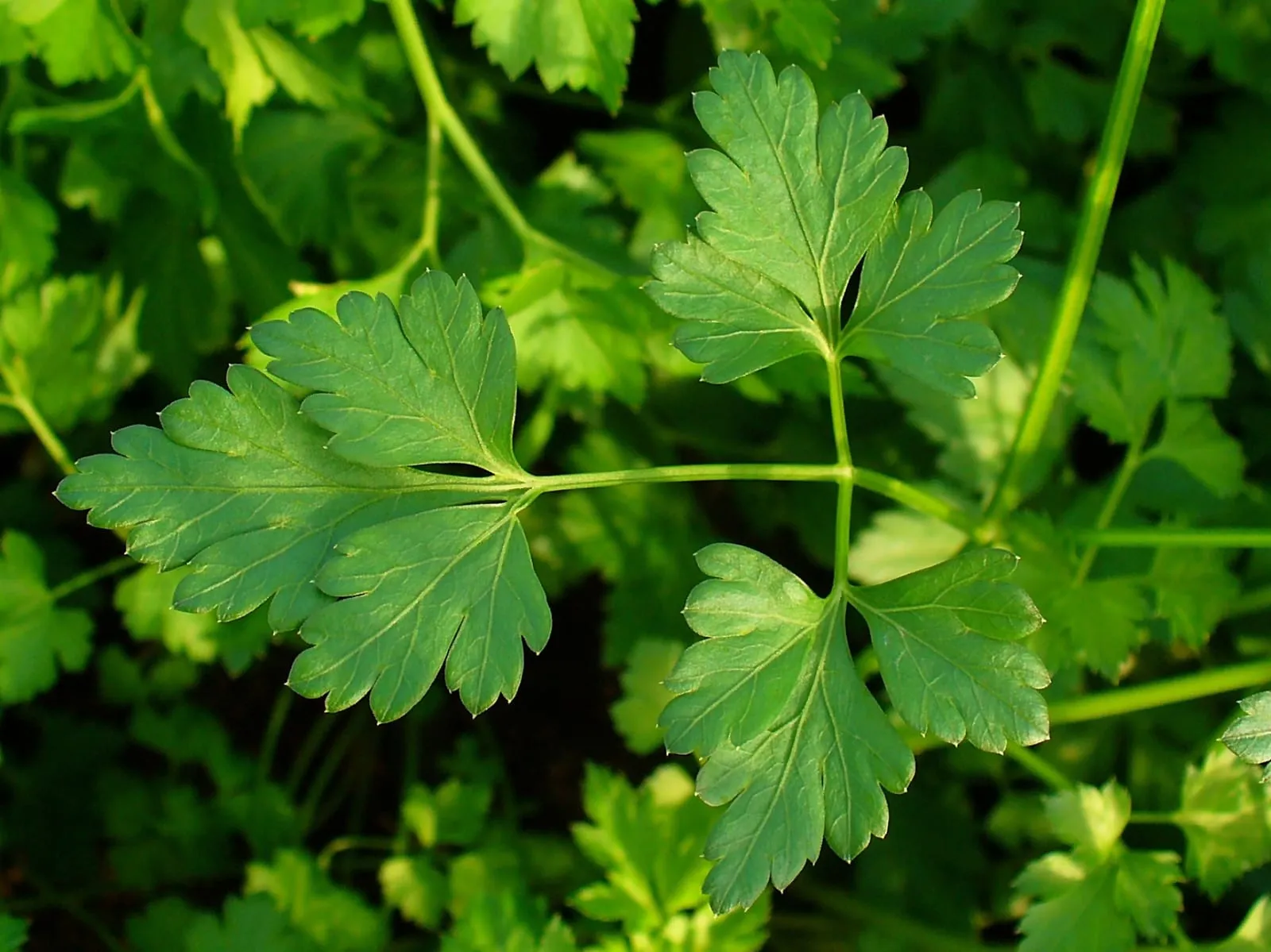
herb in zone 5a
Growing parsley in zone 5a
Petroselinum crispum
- Zone
- 5a -20°F to -15°F
- Growing season
- 150 days
- Suitable varieties
- 3
- Days to harvest
- 70 to 90
The verdict
Zone 5a is a genuine sweet spot for parsley, not a marginal case. As a biennial native to the Mediterranean but naturalized across temperate regions, parsley handles cold winters well, routinely overwintering in zones 4 through 6 with minimal intervention. The zone's minimum temperatures (-20 to -15°F) sit at the lower edge of what unprotected crowns can survive, but a few inches of straw mulch applied after the ground begins to freeze reliably carries plants through.
Parsley has no meaningful chill-hour requirement in the fruit-tree sense. The cold period does serve a biological function: second-year plants need winter exposure to trigger bolting and seed production. Zone 5a's winters are more than cold enough to satisfy that. With a 150-day growing season, there is adequate time for parsley to establish fully from a spring sow and still allow multiple harvests before hard frost. All three compatible varieties (Italian Flat-Leaf, Curled/Moss, Hamburg/Root) perform reliably in this zone.
Recommended varieties for zone 5a
3 cultivars suited to this zone, with disease-resistance and zone-fit annotations.
| Variety | Notes | Zone fit | Disease resistance |
|---|---|---|---|
| Italian Flat-Leaf fits zone 5a | Strong, clean, classic parsley flavor; flat dark-green leaves. Cooking, garnish, tabbouleh, gremolata. The cook's parsley, more flavor than curly types, the Mediterranean standard. | | none noted |
| Curled / Moss fits zone 5a | Milder, slightly grassy; tightly curled bright green leaves. Garnish, restaurant plate decoration, light cooking use. Heritage variety, ornamental, holds shape in beds. | | none noted |
| Hamburg / Root fits zone 5a | Mild parsley flavor in white parsnip-like root; earthy when cooked. Soups, stews, roasted. Dual-purpose: leaves for garnish, roots for cooking. European heritage variety. | | none noted |
Critical timing for zone 5a
The primary timing challenge in zone 5a is parsley's notoriously slow germination, typically 14 to 28 days even under ideal conditions. Starting seeds indoors 10 to 12 weeks before the last frost date (roughly late February through early March for most zone 5a locations) gives transplants time to establish before outdoor conditions are stable.
Direct sowing is possible 4 to 6 weeks before the last frost, since parsley seedlings tolerate light frost. Expect first harvest roughly 70 to 90 days after germination. Late spring frosts, a recognized zone 5a challenge, can burn tender new growth; row covers or cold frames protect early transplants without much added labor. Plants that overwinter produce a flush of growth in early spring before bolting in late May or June of their second year.
Common challenges in zone 5a
- ▸ Fire blight in pears
- ▸ Cedar-apple rust
- ▸ Late spring frosts
Modified care for zone 5a
The most useful zone 5a adaptation is treating parsley as a true biennial rather than an annual. After the first killing frost, cut plants back to a few inches and apply 3 to 4 inches of straw or shredded leaves over the crown. Remove mulch gradually in early spring as temperatures stabilize. Second-year plants yield a concentrated early-spring harvest before they bolt.
Hamburg Root parsley is particularly well suited to cold climates: the root stores energy through winter and the plant re-sprouts vigorously in spring. For Italian Flat-Leaf and Curled types grown as annuals, starting fresh transplants each year often outperforms carrying over winter plants that bolt quickly. Zone 5a's late spring frosts are the main in-season risk; protect transplants set out before the last frost date with floating row cover on nights forecast below 28°F.
Frequently asked questions
- Can parsley survive winter in zone 5a?
Yes, with light protection. A 3 to 4 inch layer of straw mulch applied after the first hard freeze insulates the crown through zone 5a winters. Plants often re-sprout in early spring, giving a second-year harvest before bolting in late spring or early summer.
- Which parsley variety does best in zone 5a?
All three standard types (Italian Flat-Leaf, Curled/Moss, Hamburg Root) grow well in zone 5a. Hamburg Root parsley has an edge in cold climates because the root stores energy through winter, producing a reliable early-spring flush before the plant bolts.
- How early can parsley be planted in zone 5a?
Transplants can go out 4 to 6 weeks before the last frost date. Parsley seedlings tolerate light frosts, but temperatures below 28°F can damage tender growth, so keep row cover on hand for late-season cold snaps. Direct sowing works at the same timing, though germination is slow.
- Why does my parsley germinate so slowly?
Parsley seed germination typically takes 14 to 28 days even under warm, moist conditions. Soaking seeds in warm water for 24 hours before planting shortens the window somewhat. Soil temperature below 50°F slows germination significantly, so bottom heat improves indoor starts.
+−
+−
+−
+−
Parsley in adjacent zones
Image: "Petroselinum crispum 003", by H. Zell, via Wikimedia Commons, licensed under CC-BY Source.

Related