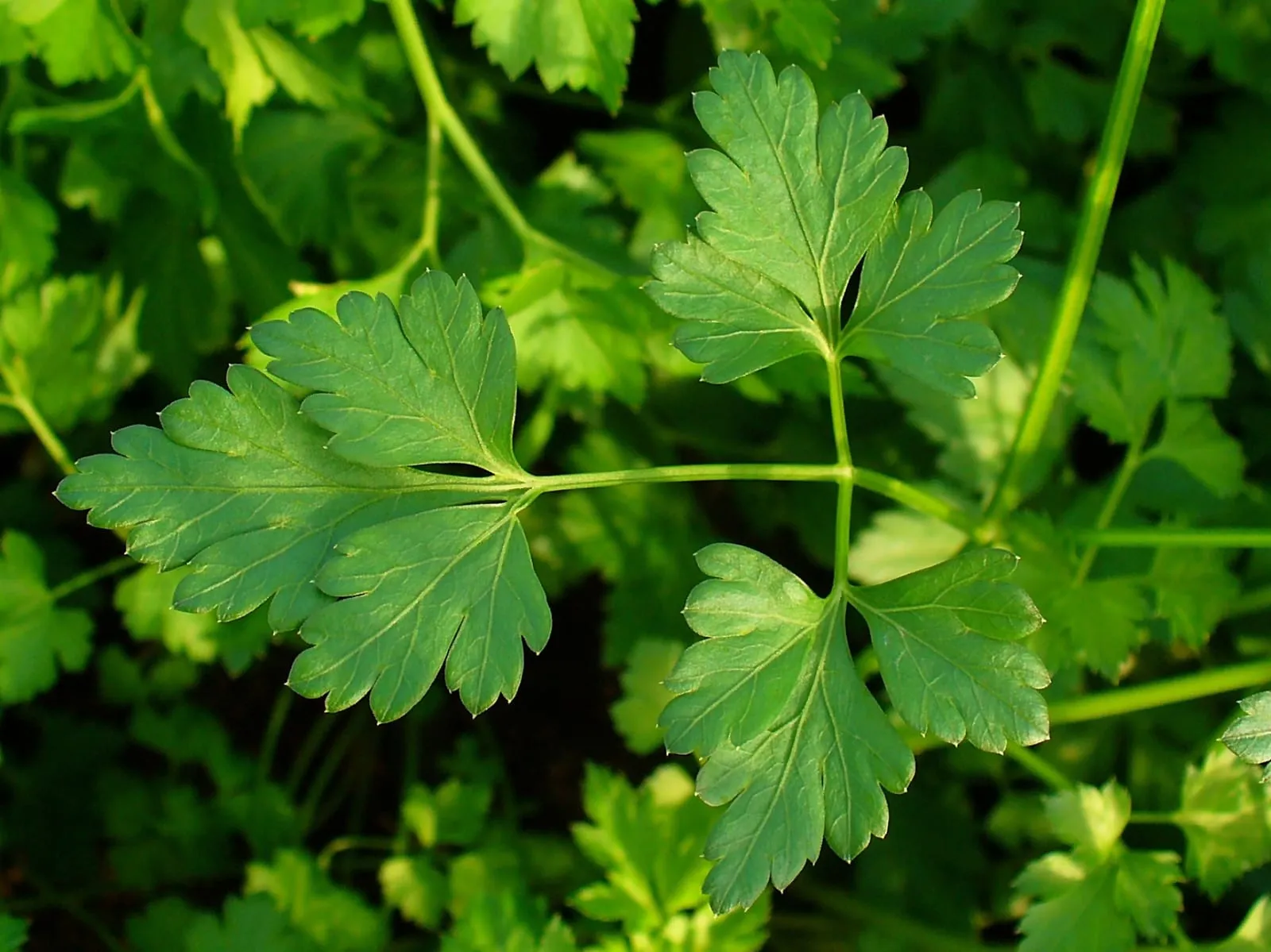
herb in zone 4b
Growing parsley in zone 4b
Petroselinum crispum
- Zone
- 4b -25°F to -20°F
- Growing season
- 130 days
- Suitable varieties
- 3
- Days to harvest
- 70 to 90
The verdict
Parsley performs reliably in zone 4b, though the short 130-day growing season and late spring frost dates require planning. Unlike fruit crops, parsley carries no chill-hour requirement; the relevant constraint here is season length relative to the crop's notoriously slow germination. Direct-sown seed can take three to six weeks to emerge, which eats into the usable window when last frost in zone 4b commonly falls in mid to late May. Indoor starting resolves this cleanly.
All three compatible varieties (Italian Flat-Leaf, Curled/Moss, Hamburg/Root) are suited to zone 4b conditions. Parsley is a biennial that tolerates light frost well, so the cool summers typical of zone 4b suit it better than heat. The crop does not struggle with the zone's cold winters in the way perennial fruits do, since it is most commonly grown as an annual. Zone 4b is not a marginal zone for parsley; it is a workable one, with cold-weather tolerances that align well.
Recommended varieties for zone 4b
3 cultivars suited to this zone, with disease-resistance and zone-fit annotations.
| Variety | Notes | Zone fit | Disease resistance |
|---|---|---|---|
| Italian Flat-Leaf fits zone 4b | Strong, clean, classic parsley flavor; flat dark-green leaves. Cooking, garnish, tabbouleh, gremolata. The cook's parsley, more flavor than curly types, the Mediterranean standard. | | none noted |
| Curled / Moss fits zone 4b | Milder, slightly grassy; tightly curled bright green leaves. Garnish, restaurant plate decoration, light cooking use. Heritage variety, ornamental, holds shape in beds. | | none noted |
| Hamburg / Root fits zone 4b | Mild parsley flavor in white parsnip-like root; earthy when cooked. Soups, stews, roasted. Dual-purpose: leaves for garnish, roots for cooking. European heritage variety. | | none noted |
Critical timing for zone 4b
Indoor starting eight to ten weeks before the last expected frost is the standard approach in zone 4b. With last frost typically arriving in mid to late May, seeds should go into trays in early to mid March. Expect germination to take three to six weeks even under warm conditions; pre-soaking seed in warm water for 24 hours before sowing speeds emergence somewhat.
Transplants go out after frost danger has passed. Harvest begins once plants have established five or more stems and continues through the growing season. Parsley tolerates fall frosts well into the low 20s Fahrenheit, extending harvest into October in most zone 4b locations. The bolting that occurs in a biennial's second year is largely irrelevant in zone 4b, where winter temperatures of -25 to -20°F kill unprotected plants outright; most growers start fresh seed each spring.
Common challenges in zone 4b
- ▸ Spring frost timing
- ▸ Apple scab pressure
- ▸ Cane berry winter dieback
Modified care for zone 4b
The most important adjustment in zone 4b is starting seed indoors. Parsley's slow germination makes direct outdoor sowing risky when the frost-free window is 130 days or fewer. Trays kept at 70°F soil temperature, with bottom heat if available, improve germination rates and shorten the waiting period before transplant.
Attempting to overwinter parsley in zone 4b requires heavy mulching (four to six inches of straw) applied after the ground has cooled but before it freezes hard. Even with protection, survival through -20°F lows is inconsistent. Hamburg/Root parsley is the strongest candidate for overwintering attempts because the fleshy taproot stores more energy reserves than leaf types. Growers who want second-year plants for seed saving should focus effort there.
Summer care in zone 4b is generally lower-effort than in warmer zones. Heat stress and premature bolting are uncommon; the cool growing season is well-suited to leafy herb production without additional shade or irrigation intervention.
Frequently asked questions
- Can parsley survive winter in zone 4b?
Survival through zone 4b winters (-25 to -20°F) is unreliable even with mulch protection. Hamburg/Root parsley has the best odds due to its energy-storing taproot, but most growers treat parsley as an annual and start fresh seed indoors each spring.
- When should parsley seed be started indoors in zone 4b?
Start seed indoors eight to ten weeks before the last expected frost. In most zone 4b locations, that means trays in early to mid March, with transplants going outside in late May or early June once frost risk has passed.
- Which parsley variety is best for zone 4b?
All three main types (Italian Flat-Leaf, Curled/Moss, Hamburg/Root) grow well in zone 4b. Italian Flat-Leaf is preferred for culinary use; Hamburg/Root is the best option for growers attempting to overwinter the plant for second-year seed production.
- Does parsley bolt in zone 4b summers?
Premature bolting is uncommon in zone 4b because the cool summers keep plants in vegetative mode. Bolting is a second-year behavior in this biennial, and zone 4b winters typically kill plants before they reach their second season.
+−
+−
+−
+−
Parsley in adjacent zones
Image: "Petroselinum crispum 003", by H. Zell, via Wikimedia Commons, licensed under CC-BY Source.

Related