berry in zone 10a
Growing passionfruit in zone 10a
Passiflora edulis
- Zone
- 10a 30°F to 35°F
- Growing season
- 340 days
- Chill needed
- 0 below 45°F
- Suitable varieties
- 3
- Days to harvest
- 240 to 365
The verdict
Passionfruit requires zero chill hours, which makes zone 10a a genuine sweet spot rather than a marginal zone for this crop. The 340-day growing season comfortably accommodates the vine's need for sustained warmth from establishment through fruit set. Minimum winter temperatures of 30 to 35°F are the only real cold risk, and established vines of Purple Possum and Frederick can tolerate brief dips into that range before recovering. Yellow (Flavicarpa) is the most heat-resilient option and performs well where summer temperatures push above 95°F for extended stretches. The primary constraints in zone 10a are hurricane exposure and the need to select cultivars that perform under persistent heat rather than any deficiency of warmth or season length. For most of the crop's range, cold is the limiting factor; in zone 10a, wind and storm events are the variable that determines whether a planting survives long-term.
Recommended varieties for zone 10a
3 cultivars suited to this zone, with disease-resistance and zone-fit annotations.
| Variety | Notes | Zone fit | Disease resistance |
|---|---|---|---|
| Purple Possum fits zone 10a | Tart-sweet aromatic pulp with intense floral notes; the standard purple variety for fresh eating and juice. Self-fertile and reliable in marginal zones. | | none noted |
| Frederick fits zone 10a | Larger sweeter purple passionfruit with less acid bite; better for fresh eating without sugar. Self-fertile; vigorous vine. | | none noted |
| Yellow (Flavicarpa) fits zone 10a | Larger yellow-skinned tart-tropical fruit; the juice industry standard. Needs cross-pollination; plant two vines. | | none noted |
Critical timing for zone 10a
In zone 10a, passionfruit vines planted in spring typically begin flowering within 12 to 18 months. Bloom runs from late spring through early fall, with the peak flush in May through July across most of the zone. Fruit matures 70 to 80 days after successful pollination. The zone's 340-day growing season allows for multiple fruit sets in a single calendar year under favorable conditions. Frost timing is rarely a factor: the occasional dip to 30 to 35°F tends to occur in December through February, well outside the active bloom window. Growers in coastal areas with hurricane exposure should note that late-summer storms coincide with peak fruit development and can strip immature fruit from vines before harvest.
Common challenges in zone 10a
- ▸ No chilling for traditional temperate fruit
- ▸ Hurricane exposure
- ▸ Heat-tolerant cultivars only
Disease pressure to watch for
Modified care for zone 10a
The standard passionfruit care regime requires meaningful adjustment in zone 10a. Hurricane and tropical storm exposure is the top structural concern: vines need a sturdy trellis anchored to withstand high winds, and growers in exposed locations benefit from a secondary windbreak. During dry periods in summer, supplemental irrigation matters more than it does in cooler zones, since heat stress during flowering reduces fruit set. Anthracnose pressure increases in humid conditions and wet seasons, so fungicide timing should align with bloom and fruit development rather than waiting for visible symptoms. Yellow (Flavicarpa) naturally tolerates the heat and humidity better than purple varieties, making it the lower-maintenance option for zone 10a. Purple Possum and Frederick deliver better fresh-eating quality but may need more consistent monitoring for fungal issues during wet summers.
Passionfruit in adjacent zones
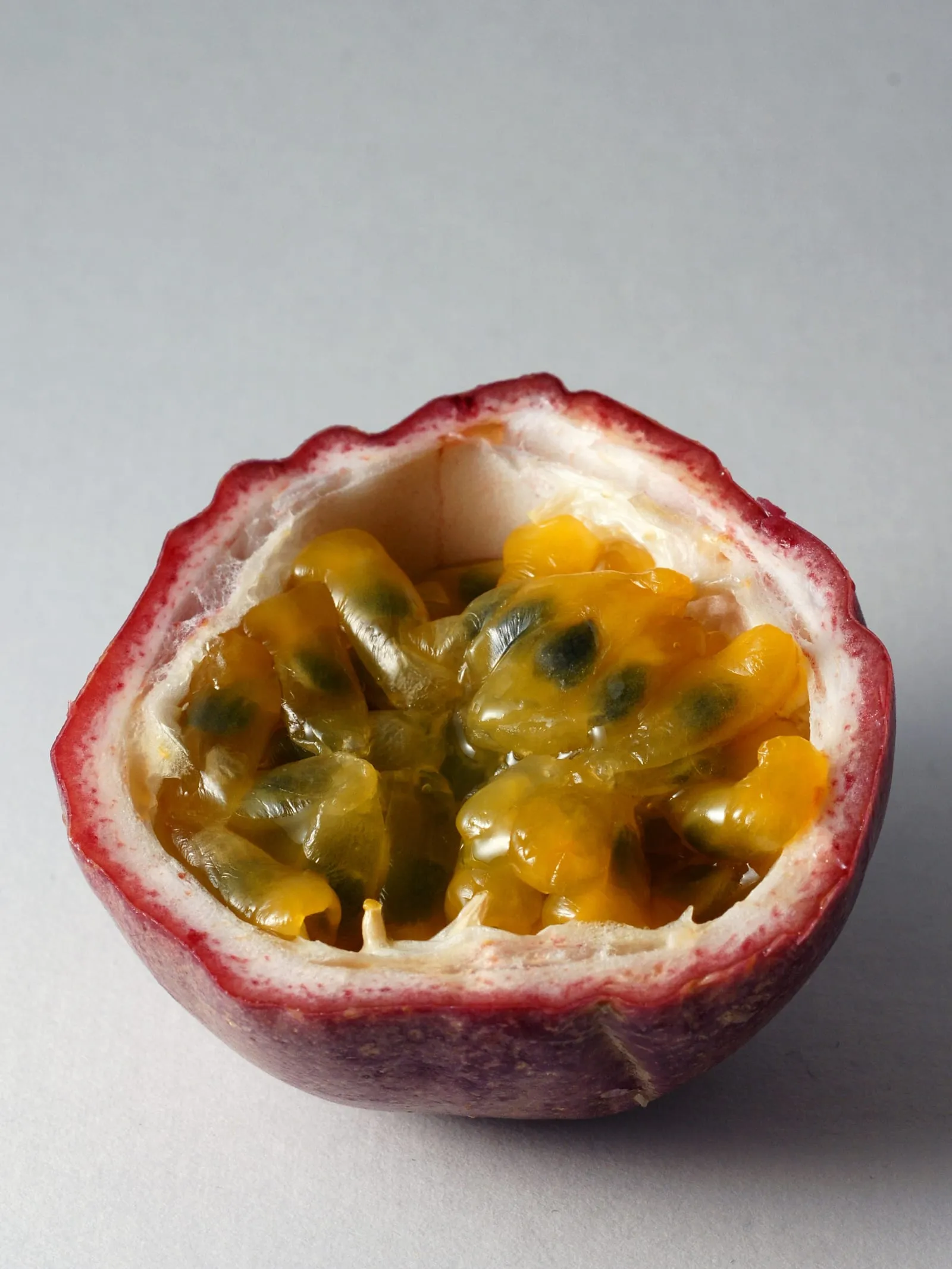
Image: "Passiflora Edulis Open Fruit2", by Alexander Klink, via Wikimedia Commons, licensed under CC-BY Source.

Related