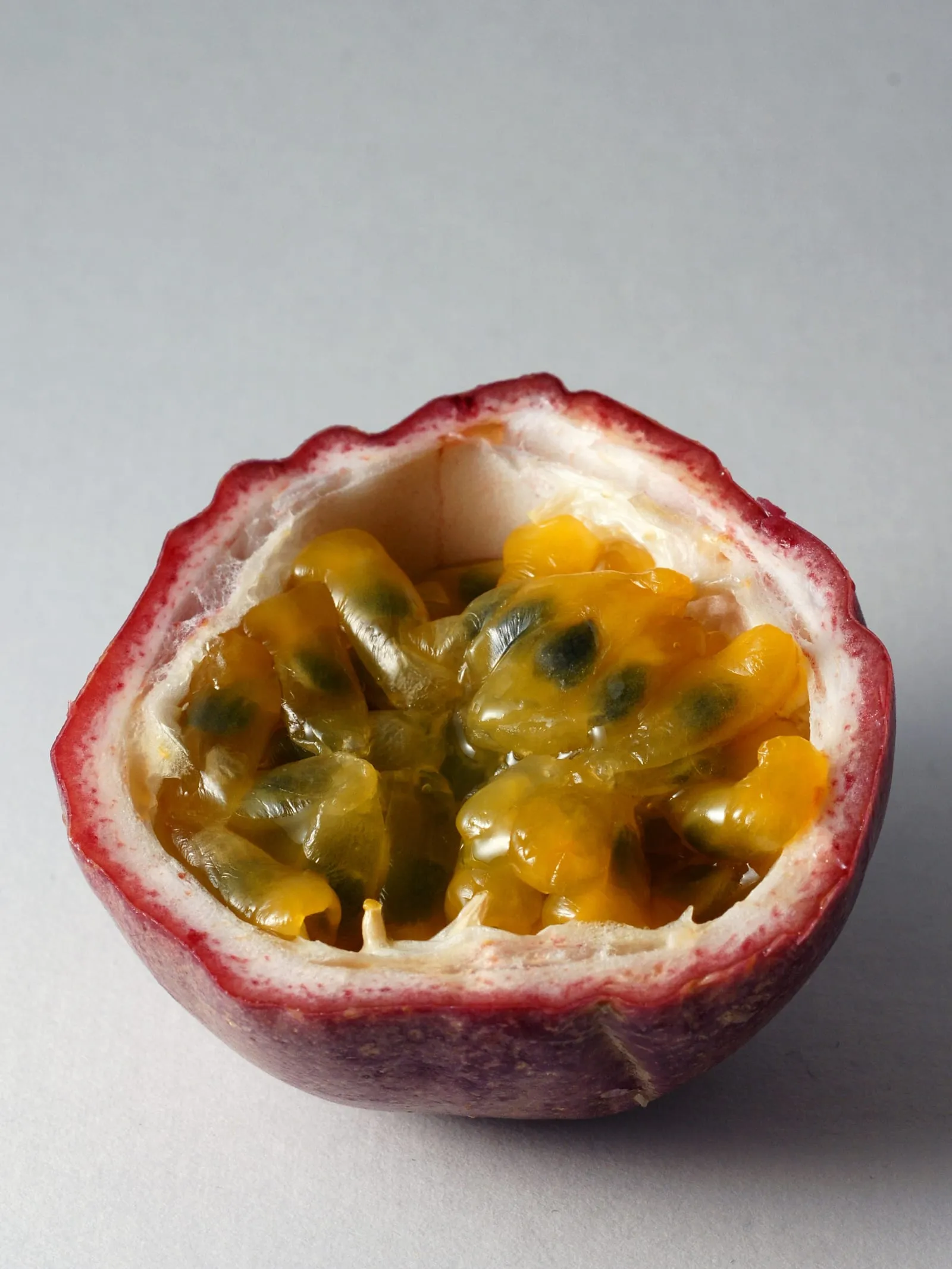
berry in zone 10b
Growing passionfruit in zone 10b
Passiflora edulis
- Zone
- 10b 35°F to 40°F
- Growing season
- 365 days
- Chill needed
- 0 below 45°F
- Suitable varieties
- 3
- Days to harvest
- 240 to 365
The verdict
Passionfruit is not marginal in zone 10b. It is genuinely at home here. The crop requires zero chill hours, which aligns exactly with what zone 10b delivers: minimum temperatures of 35 to 40°F and a 365-day growing season with no meaningful dormancy period. There is no cold-season bottleneck to work around.
All three compatible varieties perform well under these conditions. Yellow passionfruit (Passiflora edulis f. flavicarpa) is the most heat-tolerant and disease-resistant of the group, and it is grown commercially throughout tropical and subtropical zones for good reason. Frederick and Purple Possum are purple-fruited selections that thrive where nights remain warm but not extreme. Established vines of any of these varieties will produce year-round given consistent moisture and trellis support. The main limiting factors in zone 10b are not cold-related but rather pest and disease pressure and, in coastal sites, soil salinity.
Recommended varieties for zone 10b
3 cultivars suited to this zone, with disease-resistance and zone-fit annotations.
| Variety | Notes | Zone fit | Disease resistance |
|---|---|---|---|
| Purple Possum fits zone 10b | Tart-sweet aromatic pulp with intense floral notes; the standard purple variety for fresh eating and juice. Self-fertile and reliable in marginal zones. | | none noted |
| Frederick fits zone 10b | Larger sweeter purple passionfruit with less acid bite; better for fresh eating without sugar. Self-fertile; vigorous vine. | | none noted |
| Yellow (Flavicarpa) fits zone 10b | Larger yellow-skinned tart-tropical fruit; the juice industry standard. Needs cross-pollination; plant two vines. | | none noted |
Critical timing for zone 10b
In zone 10b, passionfruit vines flower primarily in response to day-length cues rather than temperature breaks. Bloom peaks during spring (March through May) and again in fall (September through November), though mature vines often carry scattered flowers outside those windows. Frost is not a practical concern at the zone's minimum temperatures of 35 to 40°F, so bloom timing is not constrained by cold and there is no critical window to protect.
Harvest follows bloom by approximately 70 to 80 days. Spring-blooming vines yield in early to midsummer; fall-blooming vines produce through winter. Fruit is ripe when the skin shifts from green to fully colored and the fruit drops or detaches with light pressure. On established vines, the result is a near-continuous harvest window across the year.
Common challenges in zone 10b
- ▸ No winter chill
- ▸ Tropical pest and disease pressure
- ▸ Saltwater intrusion in coastal soils
Disease pressure to watch for
Modified care for zone 10b
The primary management adjustment in zone 10b is disease pressure rather than cold protection. Mango Anthracnose (Colletotrichum gloeosporioides) can affect fruit skin and wound sites during wet, humid periods, particularly through the summer rainy season. Minimizing overhead irrigation, thinning vines on the trellis to improve airflow, and removing fallen fruit promptly all reduce infection risk.
Coastal sites with saltwater intrusion in the soil present a second challenge. Passionfruit is moderately salt-sensitive, and growers in low-lying or coastal-adjacent locations should amend planting beds with organic matter to improve drainage and monitor soil electrical conductivity periodically. Raised-bed planting is worth considering where salinity risk is high.
Summer heat events above 95°F can trigger brief flower drop, particularly on Purple Possum. Most established vines recover without intervention, but 30% shade cloth during sustained heat is a reasonable option for younger plantings.
Passionfruit in adjacent zones
Image: "Passiflora Edulis Open Fruit2", by Alexander Klink, via Wikimedia Commons, licensed under CC-BY Source.

Related