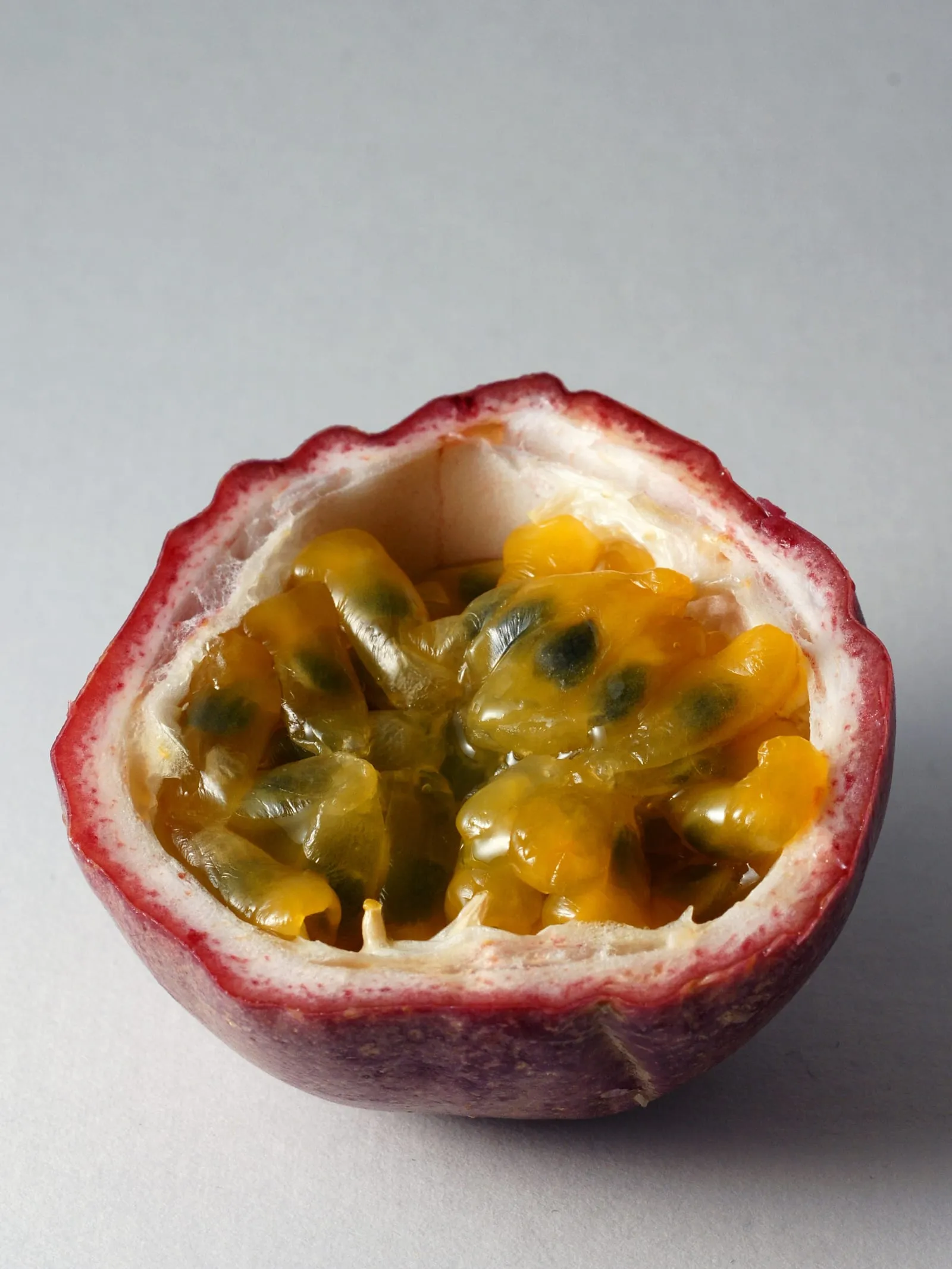
berry
Passionfruit
Passiflora edulis
USDA hardiness range
- Zones
- 9b–12b
- Chill hours
- 0 below 45°F
- Days to harvest
- 240 to 365
- Sun
- Full
- Water
- Moderate
- Lifespan
- 5 to 10 years
Growing passionfruit
Passionfruit (Passiflora edulis) is a vigorous tropical vine that produces fragrant, intensely flavored fruit in zones 9b through 12b. Chill-hour requirements are zero, so the binding constraint is cold tolerance: vines are killed to the ground below about 30°F, and sustained freezes will kill roots in zones colder than 9b. In zones 9b and 10a, frost timing and microclimate placement matter considerably; in zones 10b through 12b, production is more reliable year to year.
The vine reaches bearing age quickly by fruit-tree standards, typically producing first fruit 8 to 12 months after planting, with days to harvest from flowering ranging from 240 to 365 depending on variety and seasonal conditions. Purple varieties (Purple Possum, Frederick) are generally more cold-tolerant and suited for fresh eating; yellow types (Flavicarpa) produce larger, more acidic fruit preferred by the juice industry but require cross-pollination between two vines.
What separates productive plantings from failed ones is usually site selection combined with pollination planning. Passionfruit needs consistent warmth, good air circulation to limit fungal pressure, and dependable bee activity for fruit set. Gardens where cold air pools, drainage is poor, or bee pressure is low frequently produce vines that grow vigorously but fruit erratically. Matching variety to local zone conditions and ensuring adequate pollinator habitat are the decisions with the largest impact on yield.
Recommended varieties
See all 3 →3 cultivars for home growers, with notes on flavor, ripening, and disease resistance.
| Variety | Notes | Zone fit | Disease resistance |
|---|---|---|---|
| Purple Possum | Tart-sweet aromatic pulp with intense floral notes; the standard purple variety for fresh eating and juice. Self-fertile and reliable in marginal zones. | | none noted |
| Frederick | Larger sweeter purple passionfruit with less acid bite; better for fresh eating without sugar. Self-fertile; vigorous vine. | | none noted |
| Yellow (Flavicarpa) | Larger yellow-skinned tart-tropical fruit; the juice industry standard. Needs cross-pollination; plant two vines. | | none noted |
Soil and site requirements
Passionfruit tolerates a range of soil types but performs best in well-drained loam or sandy loam with a pH between 6.0 and 6.5 (UF/IFAS Extension: Passionfruit Growing in Florida). Avoid heavy clay or any site where water pools after rain; root rot in saturated soil is a consistent failure mode. Raised beds or bermed planting sites are worthwhile investments where drainage is marginal.
Full sun is non-negotiable for productive fruiting. A south- or southeast-facing fence, trellis, or masonry wall provides both sun exposure and structural support for a vine that can reach 15 to 20 feet in a single growing season. In zone 9b, the thermal mass of a masonry wall is a meaningful benefit, buffering overnight lows that can dip to 25°F.
Space vines at least 8 to 10 feet apart to allow for airflow, which reduces fungal disease incidence. Planting too close to structures that trap humidity or block morning sun compounds disease risk. In frost-marginal zones, avoid low spots and north-facing exposures; an elevated site with good cold-air drainage extends the productive season and protects roots during cold snaps.
Common diseases
Common pests
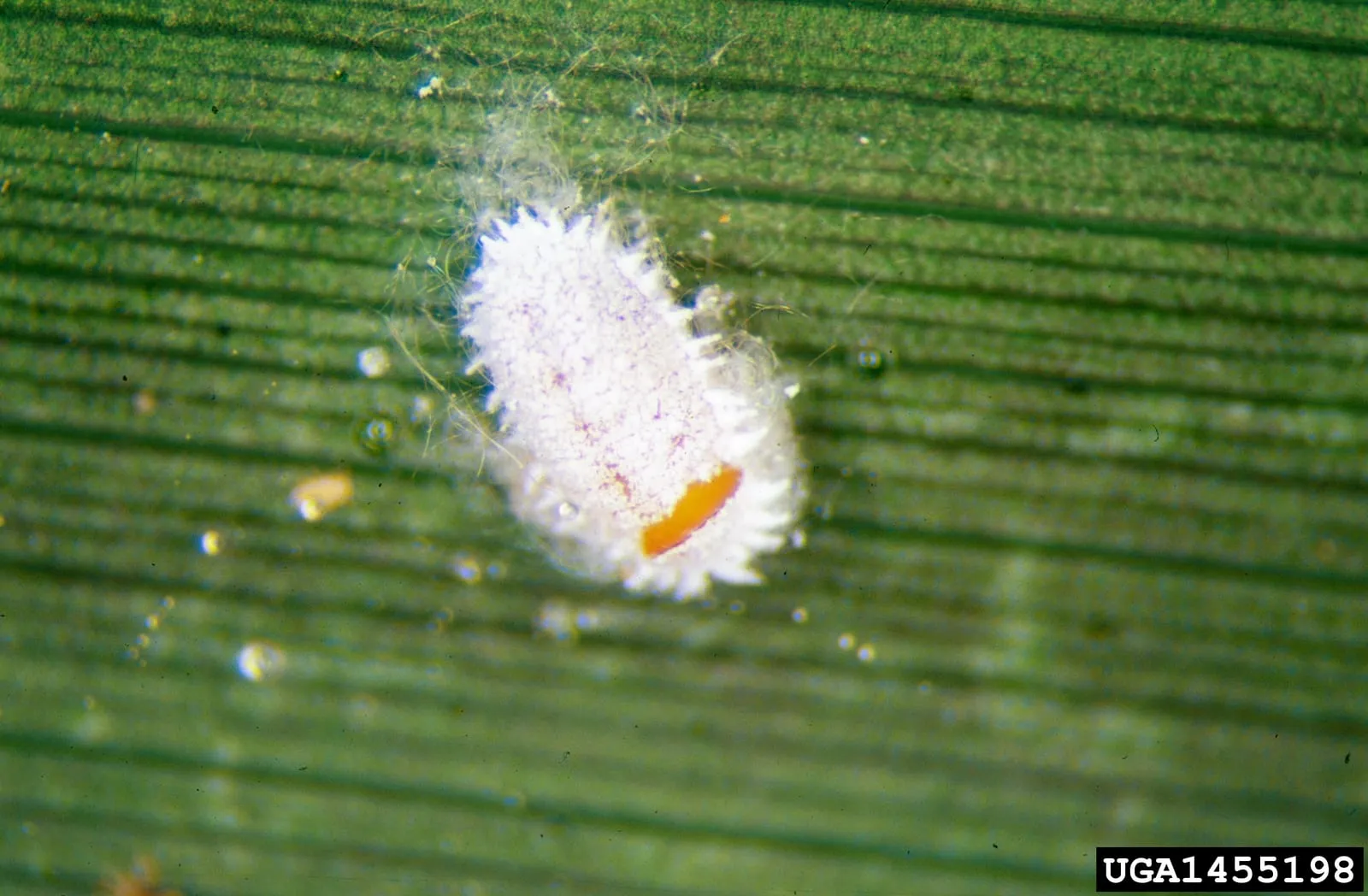
Pseudococcidae spp.
Soft white waxy insects that cluster at leaf joints, fruit stems, and root crowns. Honeydew secretion supports sooty mold; root mealybugs cause decline that mimics drought.
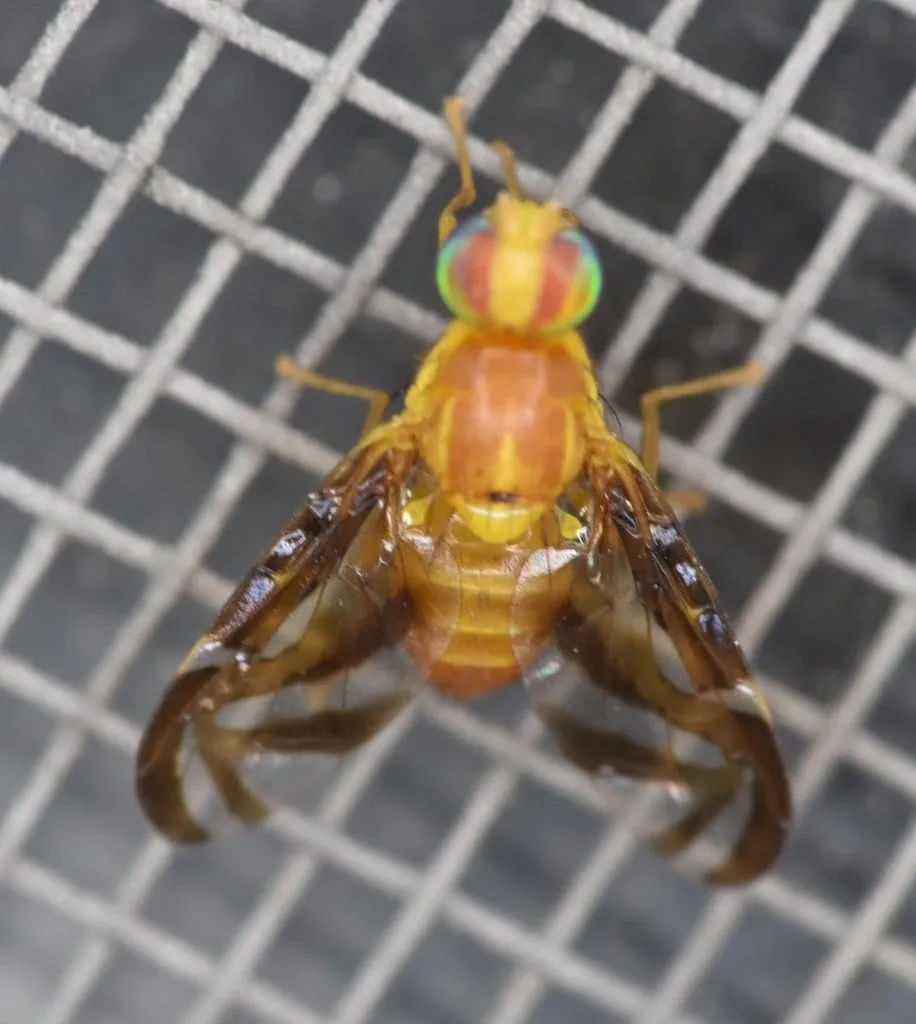
Anastrepha suspensa
Tropical fruit fly endemic to Florida and the Caribbean. Less aggressive on commercial citrus than Mediterranean fruit fly, but devastating on guava, carambola, and other thin-skinned tropicals.
Common challenges
The most common cause of passionfruit failure at the northern edge of the range is cold damage. Zone 9b growers often see vines die back to the ground in hard winters. Roots can survive temperatures down to about 28°F if insulated with heavy mulch, but above-ground growth is consistently lost below 30°F. The practical approach is to mulch deeply at the base before the first frost, protect young vines with frost cloth, and select cold-tolerant purple varieties over yellow types in zones 9b and 10a.
Pollination failure is the second major issue. Purple Possum and Frederick are self-fertile, but fruit set still depends on active bee foraging. Gardens with heavy insecticide use or low native bee habitat frequently see abundant flowering with poor set, even on self-fertile varieties. Yellow (Flavicarpa) requires cross-pollination between two vines; a single-vine planting will flower generously but set little fruit.
Fungal disease pressure, particularly anthracnose, increases when vines are crowded, poorly ventilated, or in persistently humid conditions. The University of Hawaii identifies anthracnose as a significant yield limiter in wet climates. Preventive copper fungicide applications at flowering, combined with trellis management that keeps foliage open, reduce incidence without heavy spray inputs.
Frequently asked questions
- Does passionfruit require any chill hours to fruit?
No. Passionfruit has a chill-hour requirement of zero. It is a tropical vine that fruits based on heat accumulation and day length, not winter cold. The limiting factor in cooler climates is frost tolerance, not chill-hour accumulation.
- How long does it take passionfruit to produce fruit after planting?
Most plantings produce first fruit 8 to 12 months after planting. From the time of flowering, days to harvest range from 240 to 365 depending on variety and seasonal temperatures. Yellow varieties typically take longer to ripen than purple types.
- What USDA hardiness zones can grow passionfruit?
Passionfruit is reliably productive in zones 9b through 12b. Zone 9b is the marginal northern edge; vines frequently die back to the ground in hard winters there but may resprout from roots. Zones colder than 9b are not suitable for in-ground cultivation without significant frost protection.
- Do passionfruit vines need a second plant for pollination?
It depends on the variety. Purple Possum and Frederick are self-fertile and will set fruit with a single vine, provided bee activity is adequate. Yellow (Flavicarpa) requires cross-pollination; plant at least two vines of this type to achieve meaningful fruit set.
- What is the most common disease affecting passionfruit?
Anthracnose, a fungal disease, is the most significant disease concern for passionfruit. It is particularly problematic in humid climates and crowded plantings. Good airflow through trellis management and preventive copper fungicide applications at flowering are the standard control measures.
- How long does a passionfruit vine typically live?
Passionfruit vines have a productive lifespan of roughly 5 to 10 years under good conditions. Older vines tend to decline in vigor and fruit production. In frost-prone zones, cold damage may shorten productive life considerably regardless of age.
- What is the difference between purple and yellow passionfruit?
Purple varieties (such as Purple Possum and Frederick) are more cold-tolerant, self-fertile, and better suited to fresh eating, with aromatic tart-sweet pulp. Yellow (Flavicarpa) produces larger fruit with higher acidity, preferred for juice production, but requires two vines for pollination and is less cold-tolerant than purple types.
+−
+−
+−
+−
+−
+−
+−
Sources
- [1] UF/IFAS Extension: Passionfruit Growing in Florida
- [2] University of Hawaii: Passionfruit (Lilikoi)
Image: "Passiflora Edulis Open Fruit2", by Alexander Klink, via Wikimedia Commons, licensed under CC-BY. Source.

Passionfruit by zone
Related