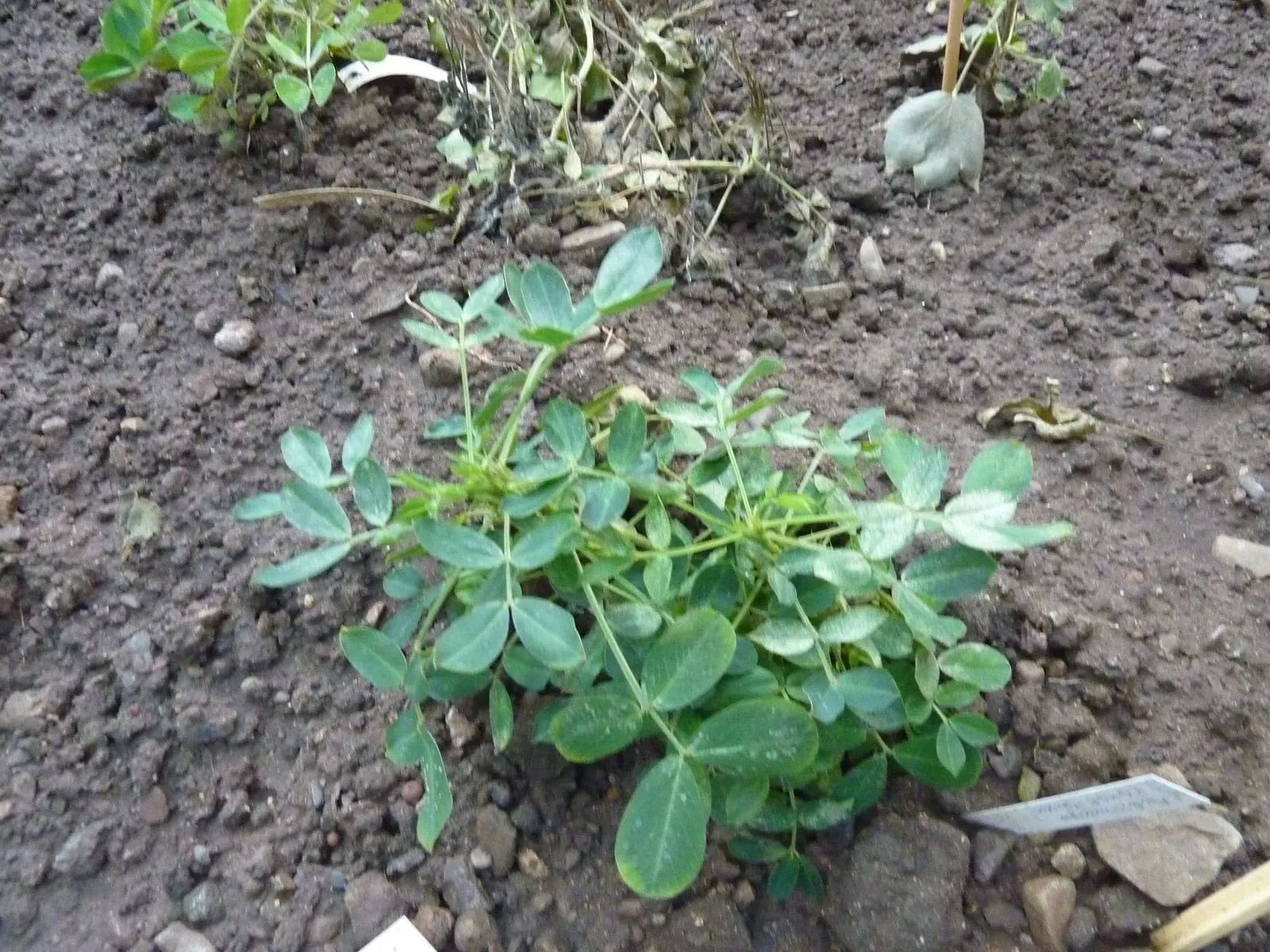
vegetable in zone 7a
Growing peanut in zone 7a
Arachis hypogaea
- Zone
- 7a 0°F to 5°F
- Growing season
- 210 days
- Suitable varieties
- 3
- Days to harvest
- 110 to 150
The verdict
Zone 7a sits at the northern practical edge of reliable peanut production, not the sweet spot. Peanuts are warm-season annuals with no chill-hour requirement, so the relevant question is heat accumulation and frost-free season length. The zone's 210-day growing season is sufficient for all three compatible types, including Virginia, which needs 130 to 150 days to full maturity. The binding constraint is soil temperature: peanut seed germinates poorly below 65°F, and pods require sustained warmth through the fill period from July into September.
In the lower-elevation, southeastern portions of zone 7a (the Virginia and North Carolina Piedmont, central Tennessee, northern Arkansas), heat units are generally adequate and the zone functions as a workable producer. In higher-elevation pockets within zone 7a, cool nights can limit pod fill even when the frost-free window looks sufficient on paper. Spanish varieties at 110 to 120 days carry the least timing risk. Virginia types can succeed but require planting at the earliest safe opportunity to build in a margin before the first fall frost.
Recommended varieties for zone 7a
3 cultivars suited to this zone, with disease-resistance and zone-fit annotations.
| Variety | Notes | Zone fit | Disease resistance |
|---|---|---|---|
| Virginia fits zone 7a | Mild, classic peanut flavor; large kernels in long pods. Roasting in shell, boiling green, ballpark peanuts. Heritage Southern variety, needs full long warm season. | | none noted |
| Spanish fits zone 7a | Rich, oily, intense peanut flavor; small reddish-skinned kernels. Roasting, peanut butter, candy. Earliest-maturing peanut, viable in warm zone 6 with full season. | | none noted |
| Tennessee Red Valencia fits zone 7a | Sweet, complex, slightly raisin-like; small red-skinned kernels with 3-4 per pod. Boiling green, roasting, candy. Productive heirloom, ornamental, kid-friendly project crop. | | none noted |
Critical timing for zone 7a
Planting in zone 7a should wait until soil temperature at 4-inch depth reaches 65°F consistently, which typically falls between late April and mid-May depending on elevation and site exposure. Spanish types planted May 1 to 10 will reach harvest maturity in late August to mid-September, well ahead of the zone's typical first fall frost window in late October to early November. Virginia types planted in late April need to be monitored closely as harvest approaches October, when frost risk begins to build.
Peanut plants bloom from June through August; the peg (the elongated ovary stalk) drives into the soil after each fertilized flower, and pods develop underground over the following 60 to 90 days. Harvest timing is not driven by calendar date but by pod shell color and seed maturity, confirmed by pulling a test plant. Zone 7a growers have less margin for delayed harvest than producers in zones 8 and above.
Common challenges in zone 7a
- ▸ Cedar-apple rust
- ▸ Brown rot
- ▸ Fire blight
- ▸ High humidity disease pressure
Disease pressure to watch for
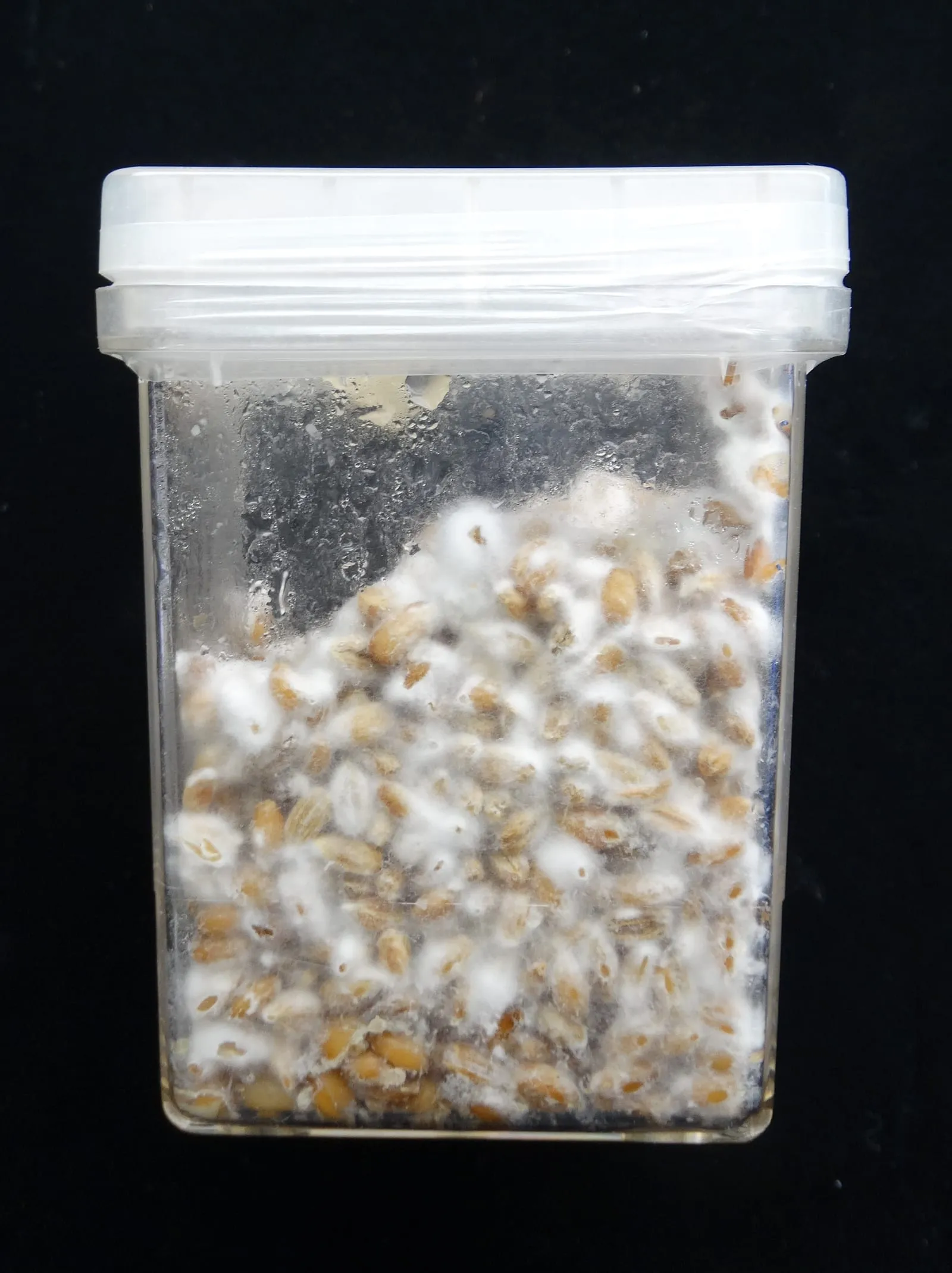
Fusarium oxysporum
Soil-borne fungal disease that plugs vascular tissue and kills affected plants. Persists in soil for many years; impossible to eliminate once established.
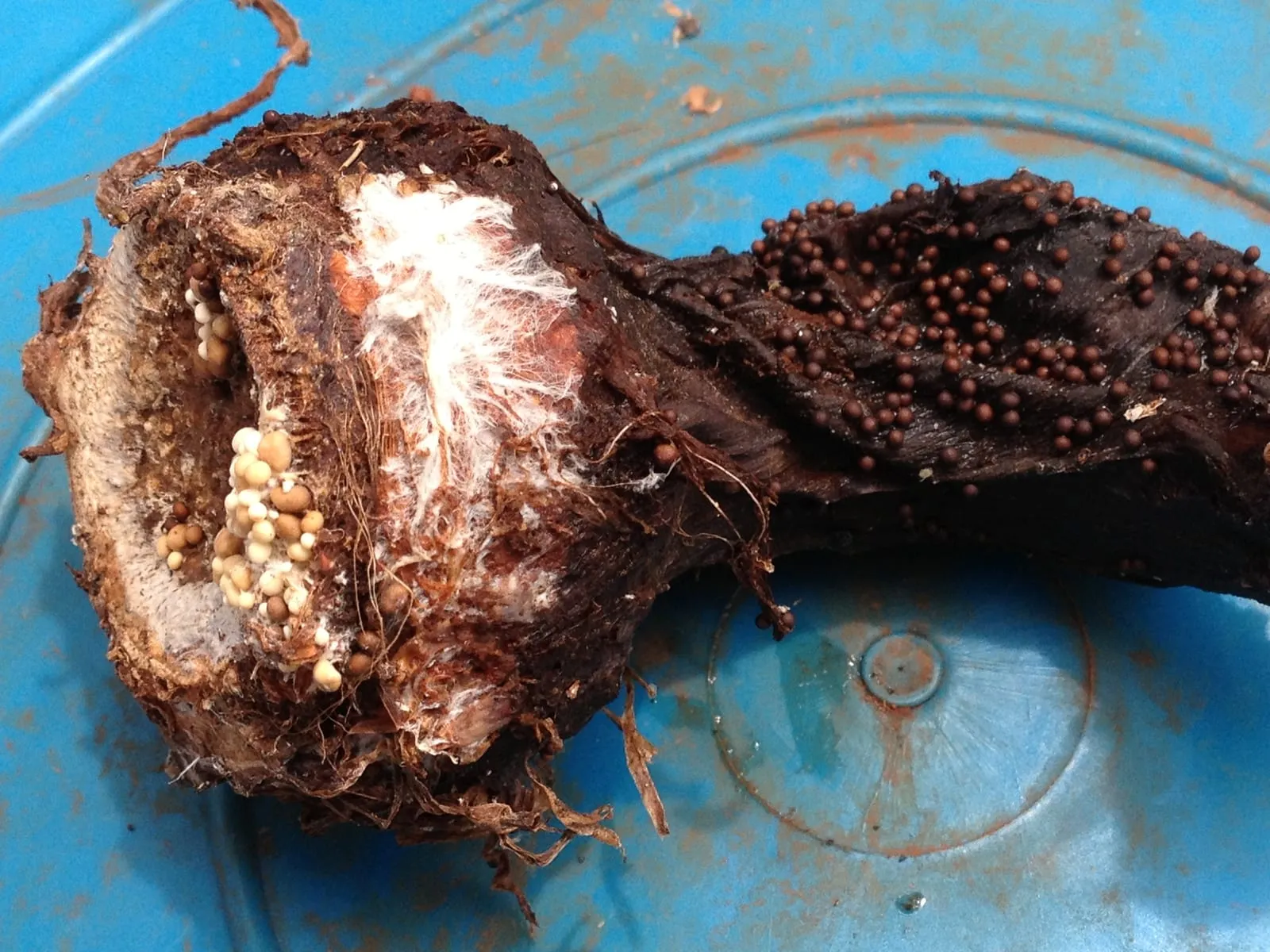
Sclerotium rolfsii
Soil-borne fungal disease most damaging in warm humid Southern conditions. White mycelial fans and small mustard-seed-sized sclerotia at the soil line are diagnostic.
Modified care for zone 7a
Zone 7a growers should prioritize soil drainage above most other factors. Peanuts are unusually sensitive to wet, compacted conditions during pod fill, and the high-humidity disease environment typical of the Mid-Atlantic and Upper South amplifies Fusarium wilt pressure in saturated soils. Sandy loam or well-amended raised beds give a meaningful advantage over heavy clay profiles. Selecting resistant varieties is the most direct mitigation for Fusarium wilt; Virginia types show moderate variation in susceptibility, while Tennessee Red Valencia was developed partly for performance in the region.
Black plastic mulch can accelerate soil warming in April, effectively extending the usable growing season by one to two weeks at the cool end. Calcium availability during pod development matters more in acidic soils common to the Appalachian portions of zone 7a; a soil test before planting should confirm pH near 6.0 to 6.5 and flag any calcium deficiency. Late-season leaf spot pressure, worsened by humidity, is managed primarily by fungicide timing aligned with canopy closure in July.
Frequently asked questions
- Can Virginia-type peanuts ripen fully in zone 7a?
Virginia types at 130 to 150 days to maturity can reach full maturity in zone 7a if planted by late April and grown at lower elevations with good heat retention. The margin is tighter than in zones 8 and above. Spanish or Tennessee Red Valencia are lower-risk choices if the planting window is delayed past May 1.
- What soil type do peanuts need in zone 7a?
Sandy loam or any well-drained, loose-textured soil is strongly preferred. Heavy clay soils common in parts of zone 7a restrict peg penetration and pod development, increase Fusarium wilt pressure, and cause surface cracking that physically damages pods at harvest. Raised beds with amended soil can compensate on clay sites.
- How does humidity in zone 7a affect peanut disease risk?
Zone 7a's summer humidity creates conditions favorable for late leaf spot and early leaf spot diseases, both of which reduce canopy and ultimately pod yield. Fungicide applications timed to canopy closure and repeated on a 14-day schedule through August are standard practice in the region. Fusarium wilt, the disease listed for this variety set, is primarily a soil-borne concern managed through variety selection and drainage rather than foliar sprays.
- When should peanuts be harvested in zone 7a?
Harvest readiness is confirmed by pulling a test plant and examining pod interior color, not by calendar date. In zone 7a, most Spanish types are ready to dig in late August to mid-September. Virginia types planted in late April typically reach harvest in October, which leaves limited buffer before the first frost. Waiting too long increases risk of vine frost damage and pod loss to soil-borne decay.
+−
+−
+−
+−
Peanut in adjacent zones
Image: "Arachis hypogaea (DITSL)", by James Steakley, via Wikimedia Commons, licensed under CC-BY Source.
.JPG)
Related