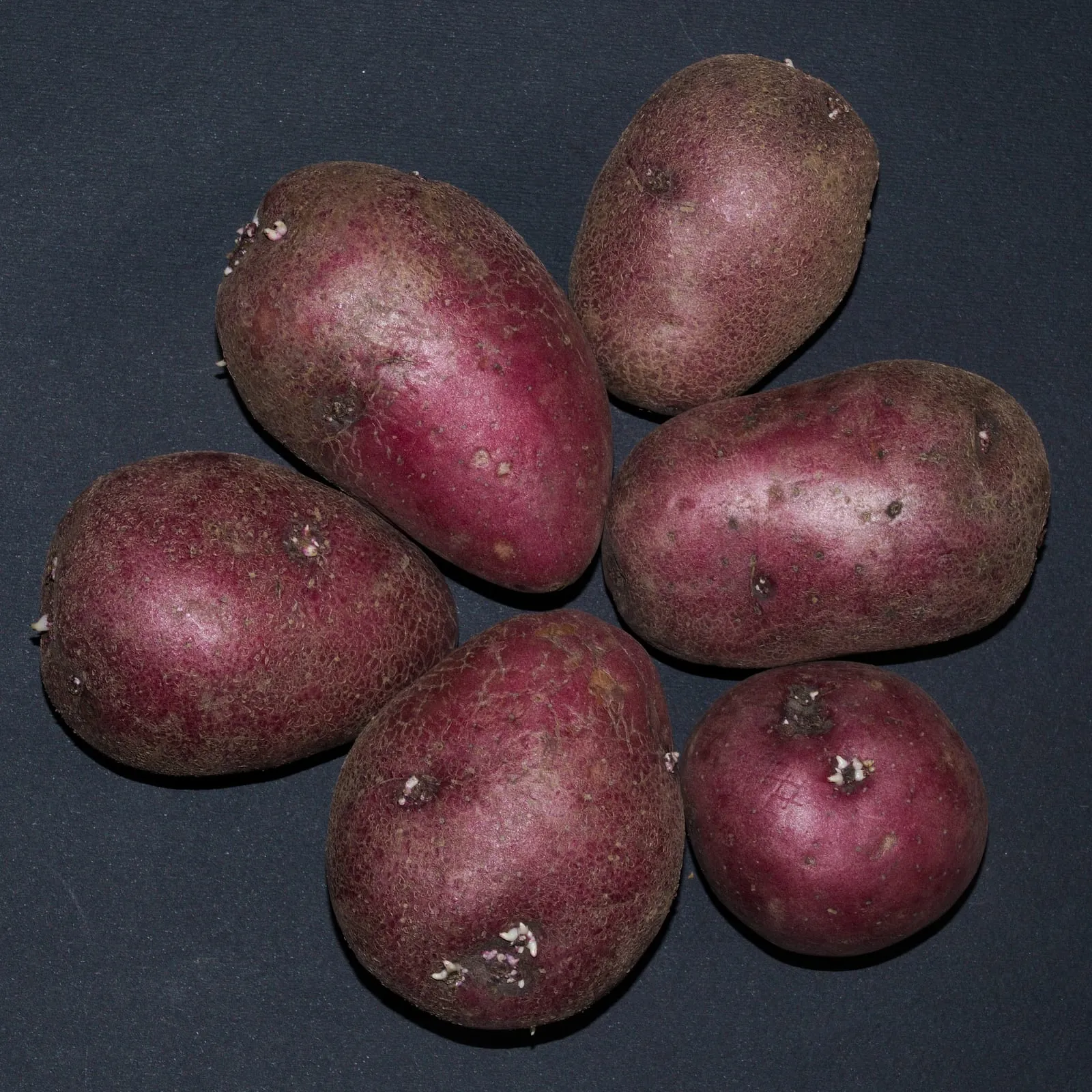
vegetable in zone 5b
Growing potato in zone 5b
Solanum tuberosum
- Zone
- 5b -15°F to -10°F
- Growing season
- 165 days
- Suitable varieties
- 5
- Days to harvest
- 70 to 120
The verdict
Zone 5b is a reliable sweet spot for potato production, not a marginal case. Potatoes are a cool-season crop with no chill-hour requirement; what they need is a growing season long enough to mature tubers before hard frost returns in fall. Zone 5b's average 165-day season satisfies that requirement for every variety in common production, including longer-maturing types like Russet Burbank and Kennebec.
Soil temperature matters more than air temperature for potatoes. Planting begins when soil at 4-inch depth consistently reaches 45°F, which in zone 5b typically falls in mid-to-late April. The zone's winter minimums (-15 to -10°F) are irrelevant once the crop is harvested and stored; the concern is late-spring soil temperature and early-fall frost timing, both of which zone 5b handles without difficulty. Varieties like Yukon Gold, Red Norland, and Adirondack Blue are well-suited to the shorter end of zone 5b's season; Russet Burbank and Kennebec use most of that 165-day window.
Recommended varieties for zone 5b
5 cultivars suited to this zone, with disease-resistance and zone-fit annotations.
| Variety | Notes | Zone fit | Disease resistance |
|---|---|---|---|
| Yukon Gold fits zone 5b | Buttery, smooth, slightly sweet; yellow-fleshed all-purpose potato. Mashing, roasting, frying, gratins. The home-garden standard, stores well. | | none noted |
| Russet Burbank fits zone 5b | Dry, fluffy, classic baking potato; the McDonald's french fry variety. Baking, mashing, frying. Long-storage main-crop, needs full season. | | none noted |
| Red Norland fits zone 5b | Waxy, moist, mild flavor; thin-skinned red new potato. Boiling, salads, roasting whole. Early variety, can dig as small new potatoes 60 days after planting. | | none noted |
| Kennebec fits zone 5b | Smooth, balanced flavor, all-purpose; classic American main-crop white potato. Mashing, frying, baking, storage. Disease-tolerant, productive, easy to grow. | | none noted |
| Adirondack Blue fits zone 5b | Earthy, slightly nutty, holds purple color when cooked; blue-skinned blue-fleshed novelty. Roasting, oven fries, salads. High in anthocyanins, productive. | | none noted |
Critical timing for zone 5b
In zone 5b, seed potatoes typically go in the ground between mid-April and early May, targeting a soil temperature above 45°F and roughly two to four weeks before the average last frost date. Planting into cold, wet soil raises rot risk without meaningfully accelerating emergence.
Early varieties such as Red Norland mature in approximately 70 days, putting harvest around late July. Mid-season types like Yukon Gold run 75 to 80 days, with harvest in August. Main-season varieties, including Kennebec and Russet Burbank, require 110 to 120 days and should be harvested before the first hard frost, which arrives in zone 5b in mid-to-late October on average. Adirondack Blue sits in the 80- to 90-day range. The foliage dies back naturally as tubers mature; curing harvested potatoes for 10 to 14 days at 50 to 60°F before storage firms the skin and extends shelf life.
Common challenges in zone 5b
- ▸ Plum curculio
- ▸ Codling moth
- ▸ Cedar-apple rust
Disease pressure to watch for
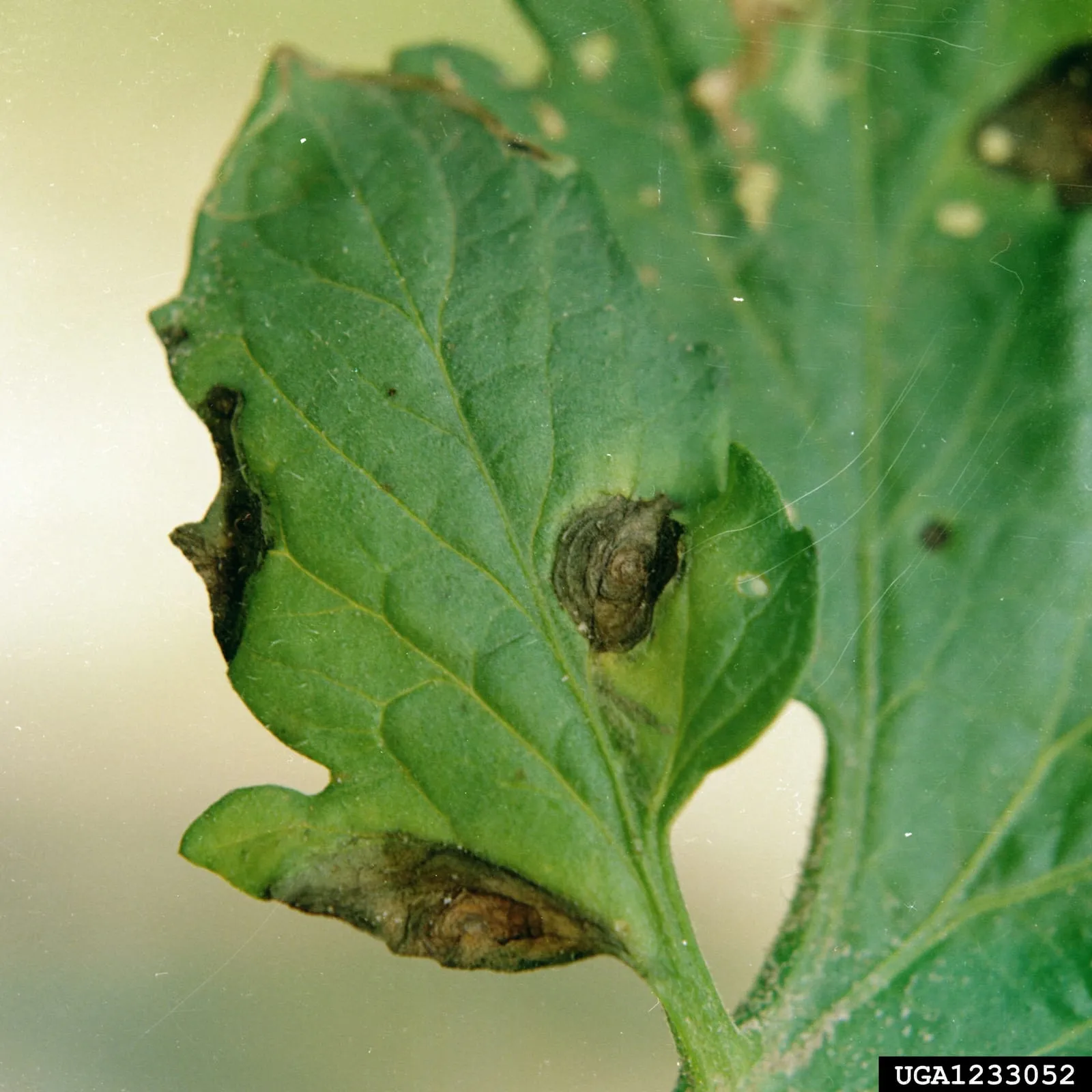
Alternaria solani
Fungal disease starting on lower leaves and progressing upward. The most common tomato and potato leaf disease in the eastern US.
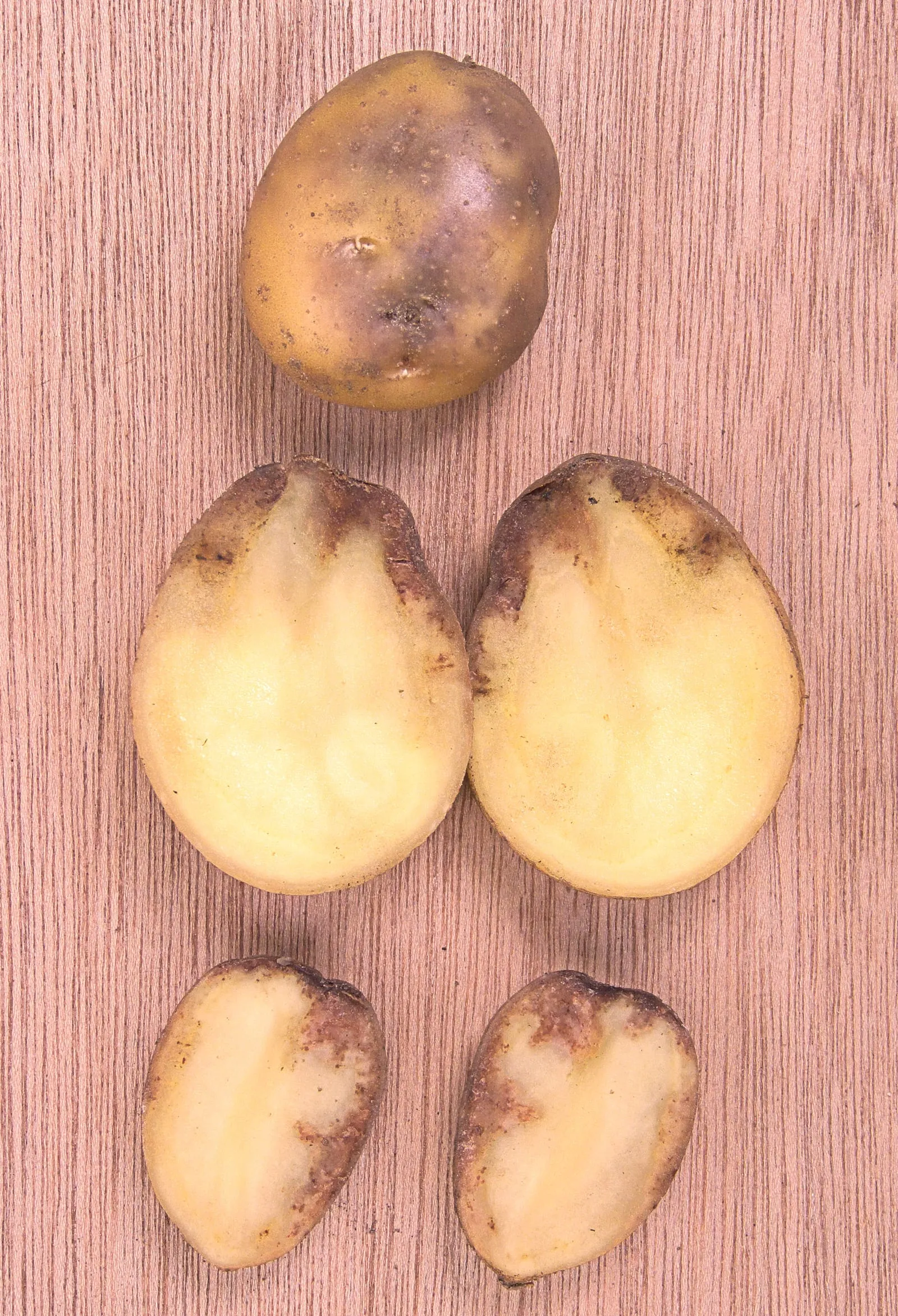
Phytophthora infestans
The pathogen responsible for the Irish Potato Famine. Devastating in cool wet weather; can destroy a tomato planting in days.
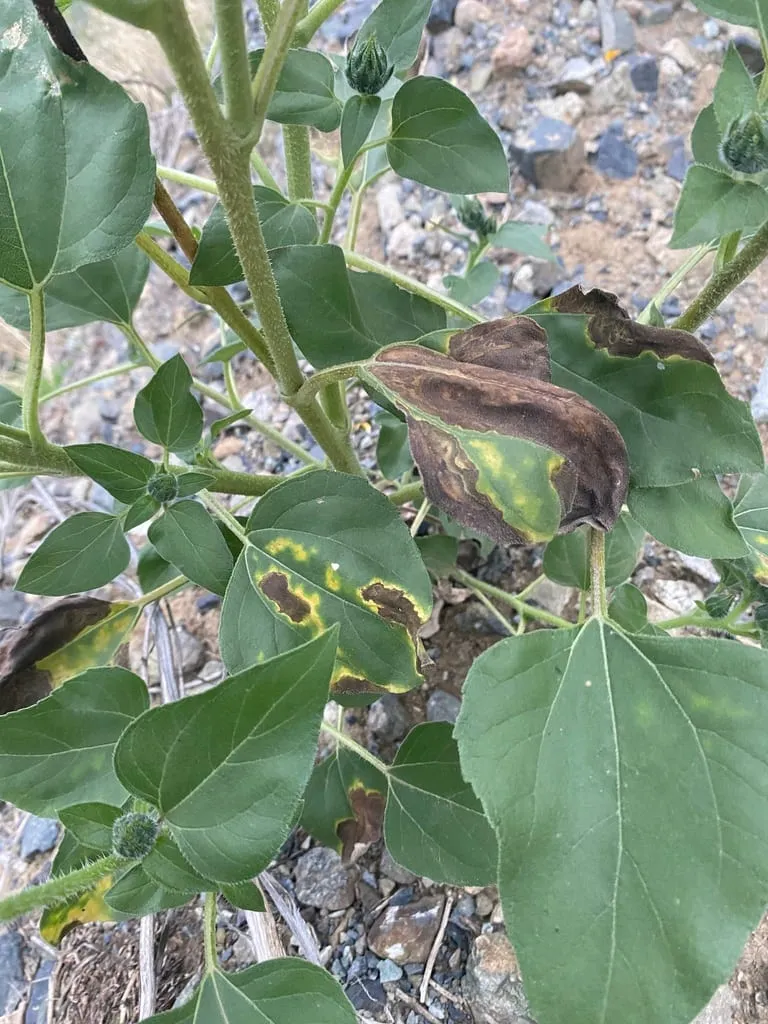
Verticillium dahliae
Soil-borne fungal disease similar to fusarium wilt but with broader host range and cooler temperature optimum. Persists in soil for 10+ years.
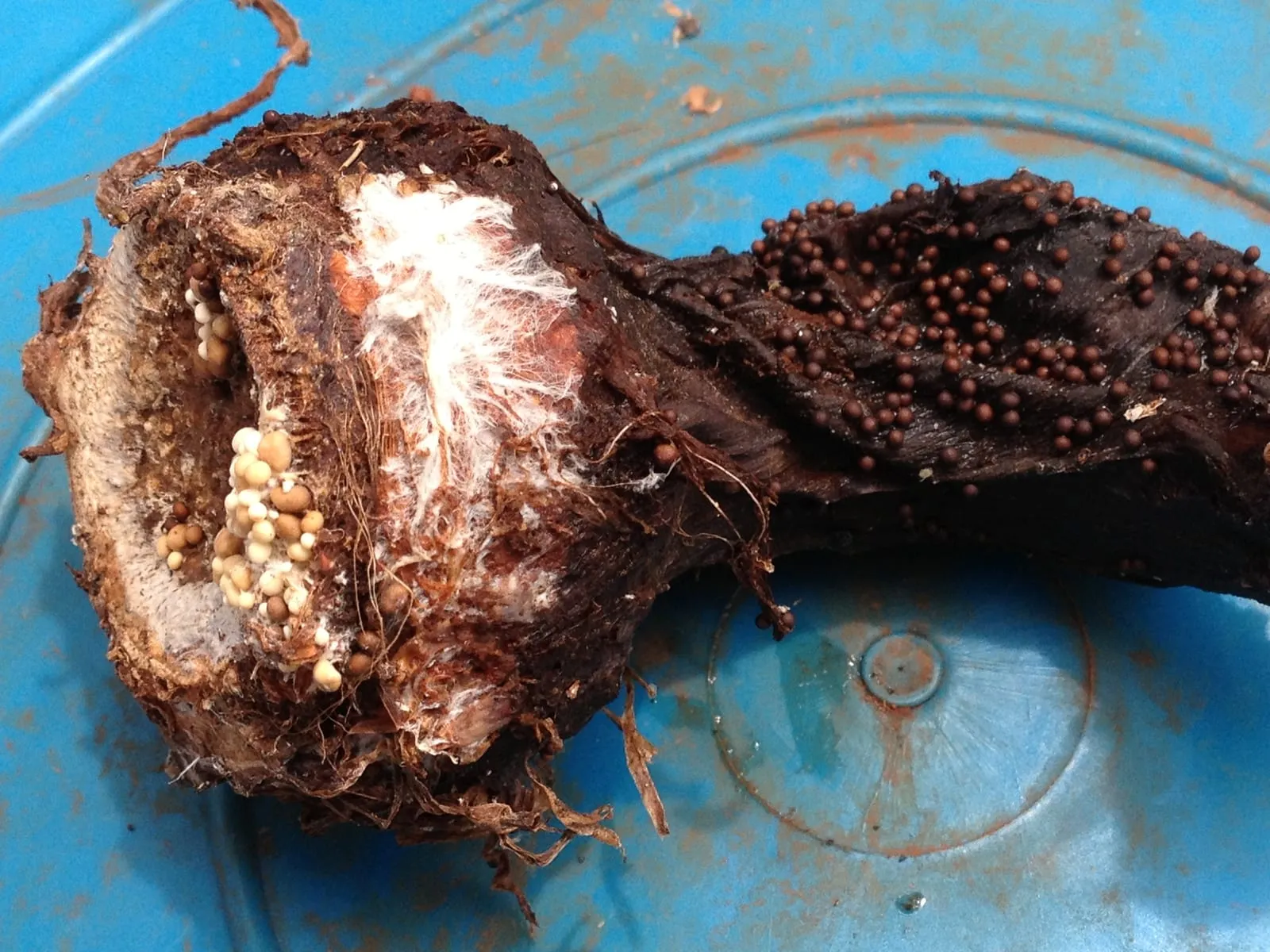
Sclerotium rolfsii
Soil-borne fungal disease most damaging in warm humid Southern conditions. White mycelial fans and small mustard-seed-sized sclerotia at the soil line are diagnostic.
Modified care for zone 5b
The primary disease adjustment for zone 5b is late blight management. Zone 5b's cool, humid summers, particularly in July and August, create conditions that favor Phytophthora infestans, the pathogen behind late blight. Growers should monitor foliage weekly once canopy fills in and avoid overhead irrigation in the evening. Selecting partially resistant varieties and applying preventive copper-based fungicide during high-pressure periods (cool nights, prolonged leaf wetness) is standard practice in this zone.
Verticillium wilt is a soil-borne concern throughout the northern tier; avoid planting potatoes in ground that grew tomatoes, peppers, or eggplant in the previous two to three seasons. Hilling soil up around stems twice during the season, first when plants reach 6 inches and again three weeks later, prevents light from greening tubers and supports higher yields. Consistent soil moisture reduces hollow heart, which is more common when plants experience dry spells followed by heavy rain.
Frequently asked questions
- Can potatoes survive a late frost after planting in zone 5b?
Emerged foliage is damaged at 28°F and killed at 25°F. If a frost is forecast after shoots break the surface, mounding soil or covering with row cover overnight protects the plant. The tuber itself, still below ground, is rarely harmed by a single late frost event.
- Which potato variety is best for zone 5b beginners?
Red Norland is a reliable first choice: it matures in roughly 70 days, leaving a wide margin before fall frost, and resists scab better than most red-skinned types. Yukon Gold is a close second if buttery flavor is the priority.
- How does late blight differ from early blight in zone 5b conditions?
Early blight (Alternaria solani) appears as dark concentric rings on lower leaves in mid-summer and progresses slowly; it rarely kills plants outright. Late blight spreads rapidly in cool, wet weather and can collapse an entire planting within days. Zone 5b's July and August weather patterns favor late blight more than early blight in wet years.
+−
+−
+−
Potato in adjacent zones
Image: "Solanum tuberosum Red Scarlett20170523 7825", by Bff, via Wikimedia Commons, licensed under CC-BY Source.

Related