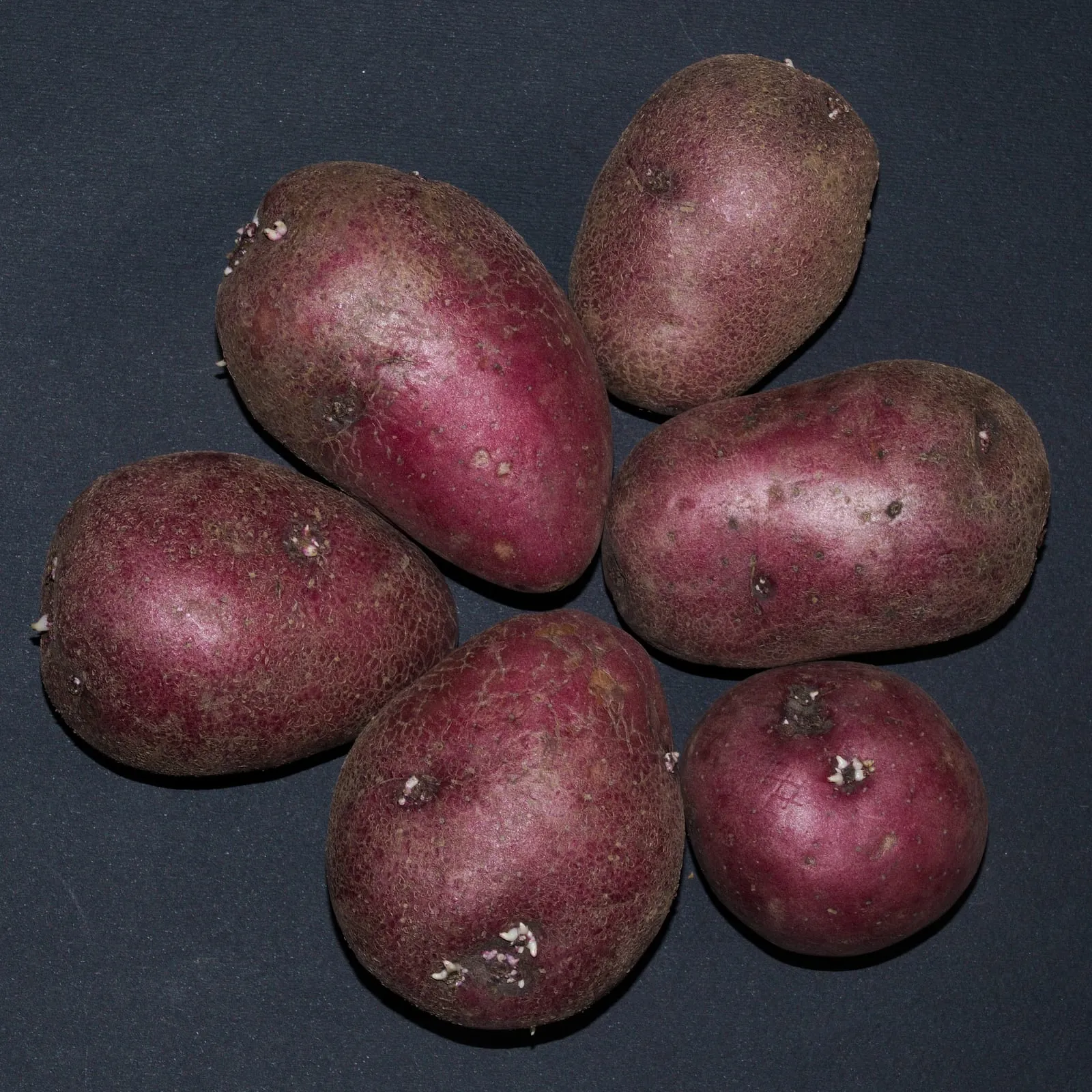
vegetable
Potato
Solanum tuberosum
USDA hardiness range
- Zones
- 3a–9a
- Days to harvest
- 70 to 120
- Sun
- Full
- Water
- Moderate
- Lifespan
- annual
Growing potato
Potato is among the most productive home garden crops by caloric yield per square foot, and one of the most zone-adaptable vegetables in cultivation. It grows across zones 3a through 9a, but success is highly contingent on timing relative to soil temperature, season length, and summer heat.
In zones 3 through 6, the binding constraint is season length. Main-crop varieties like Russet Burbank require 100 to 120 days to develop storage-quality tubers, which is tight in zone 3 but workable with careful variety selection. Early varieties (60 to 75 days) give northern growers substantially more margin and are the better default choice north of zone 5.
In zones 7 through 9a, the challenge reverses. Tuber development stalls when soil temperatures exceed roughly 80°F, and summer heat arrives well before main-crop varieties can finish. Many growers in zone 8 and 9a treat potatoes as a fall or winter crop, planting in late summer for harvest before the ground hardens.
Across all zones, late blight (Phytophthora infestans) is the single most consistent failure mode. It spreads from water-soaked leaf lesions to complete vine collapse in as little as five to seven days under cool, wet conditions. Choosing tolerant varieties, scouting foliage weekly, and applying preventive copper-based sprays during humid stretches are the practices that separate reliable harvests from disappointing ones. The Cornell Potato Production Guide remains the most thorough reference for managing blight pressure.
Recommended varieties
See all 5 →5 cultivars for home growers, with notes on flavor, ripening, and disease resistance.
| Variety | Notes | Zone fit | Disease resistance |
|---|---|---|---|
| Yukon Gold | Buttery, smooth, slightly sweet; yellow-fleshed all-purpose potato. Mashing, roasting, frying, gratins. The home-garden standard, stores well. | | none noted |
| Russet Burbank | Dry, fluffy, classic baking potato; the McDonald's french fry variety. Baking, mashing, frying. Long-storage main-crop, needs full season. | | none noted |
| Red Norland | Waxy, moist, mild flavor; thin-skinned red new potato. Boiling, salads, roasting whole. Early variety, can dig as small new potatoes 60 days after planting. | | none noted |
| Kennebec | Smooth, balanced flavor, all-purpose; classic American main-crop white potato. Mashing, frying, baking, storage. Disease-tolerant, productive, easy to grow. | | none noted |
| Adirondack Blue | Earthy, slightly nutty, holds purple color when cooked; blue-skinned blue-fleshed novelty. Roasting, oven fries, salads. High in anthocyanins, productive. | | none noted |
Soil and site requirements
Potatoes require loose, well-drained soil. Compacted or waterlogged ground causes tubers to rot before they size up, particularly during warm stretches. In heavy clay soils, raised rows or raised beds are the practical solution; they improve drainage and make both hilling and harvest considerably easier.
Target a soil pH between 5.0 and 6.0. Higher pH does not harm growth directly, but it increases susceptibility to common scab (Streptomyces scabies), which roughens the skin without affecting eating quality but makes storage potatoes unappealing. Avoid planting in ground that has been recently limed.
Full sun is non-negotiable. A minimum of six to eight hours of direct sun supports adequate yields; eight to ten hours is better. Shaded plants produce elongated, weak stems and small tubers.
Seed pieces should be spaced 10 to 12 inches apart in rows 2.5 to 3 feet wide. Each piece needs at least one or two eyes (dormant growth buds). Closer spacing increases competition for nutrients and water; wider row spacing makes hilling practical, which is necessary for blocking light from developing tubers and preventing greening.
In zones 7 through 9a, microclimate selection matters. A slightly north-facing slope or a naturally cooler low spot can extend the productive spring window by one to two weeks before summer heat shuts down tuber bulking. In zones 3 through 5, avoid frost pockets where cold air settles; potato foliage is not frost-tolerant once it emerges.
Common diseases
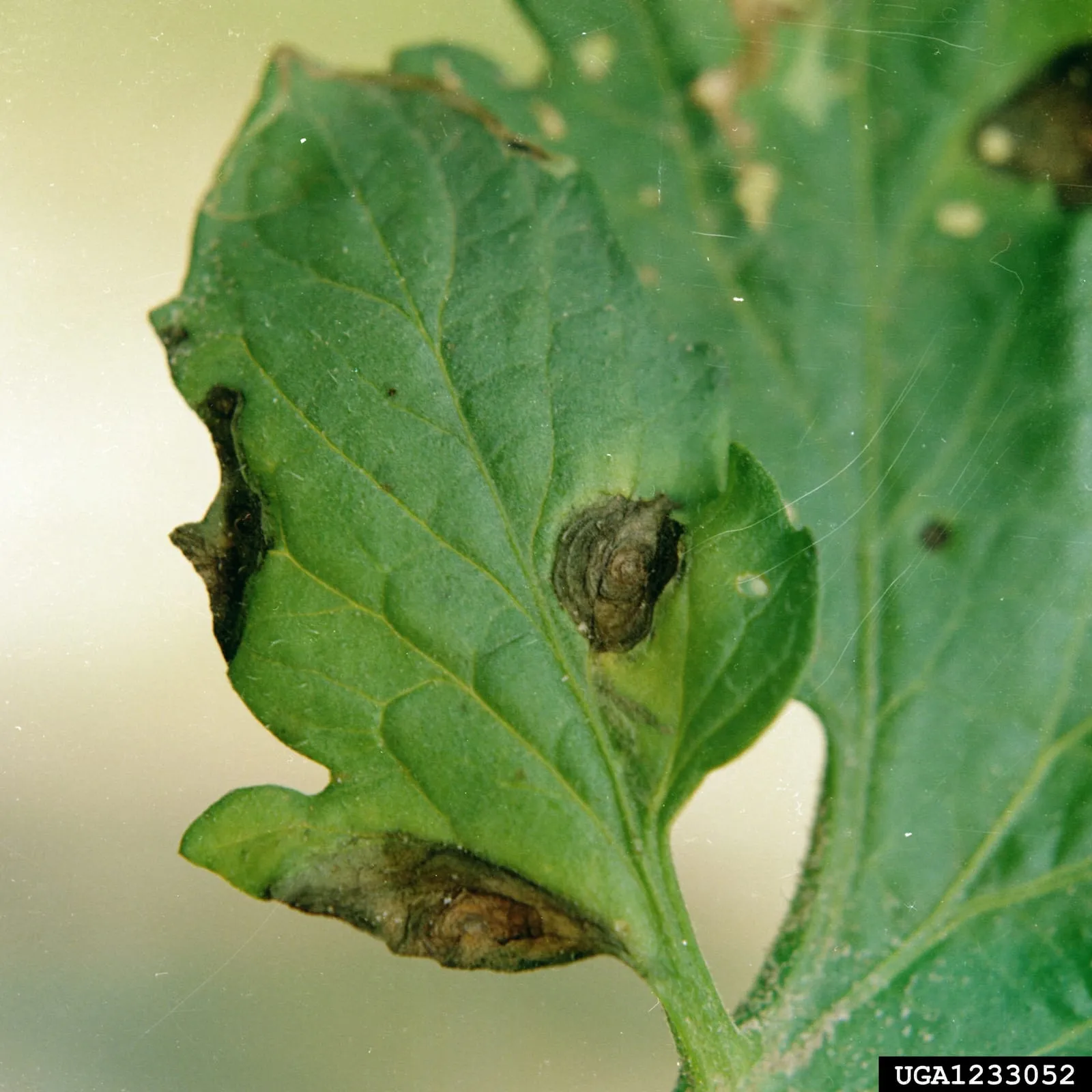
Alternaria solani
Fungal disease starting on lower leaves and progressing upward. The most common tomato and potato leaf disease in the eastern US.
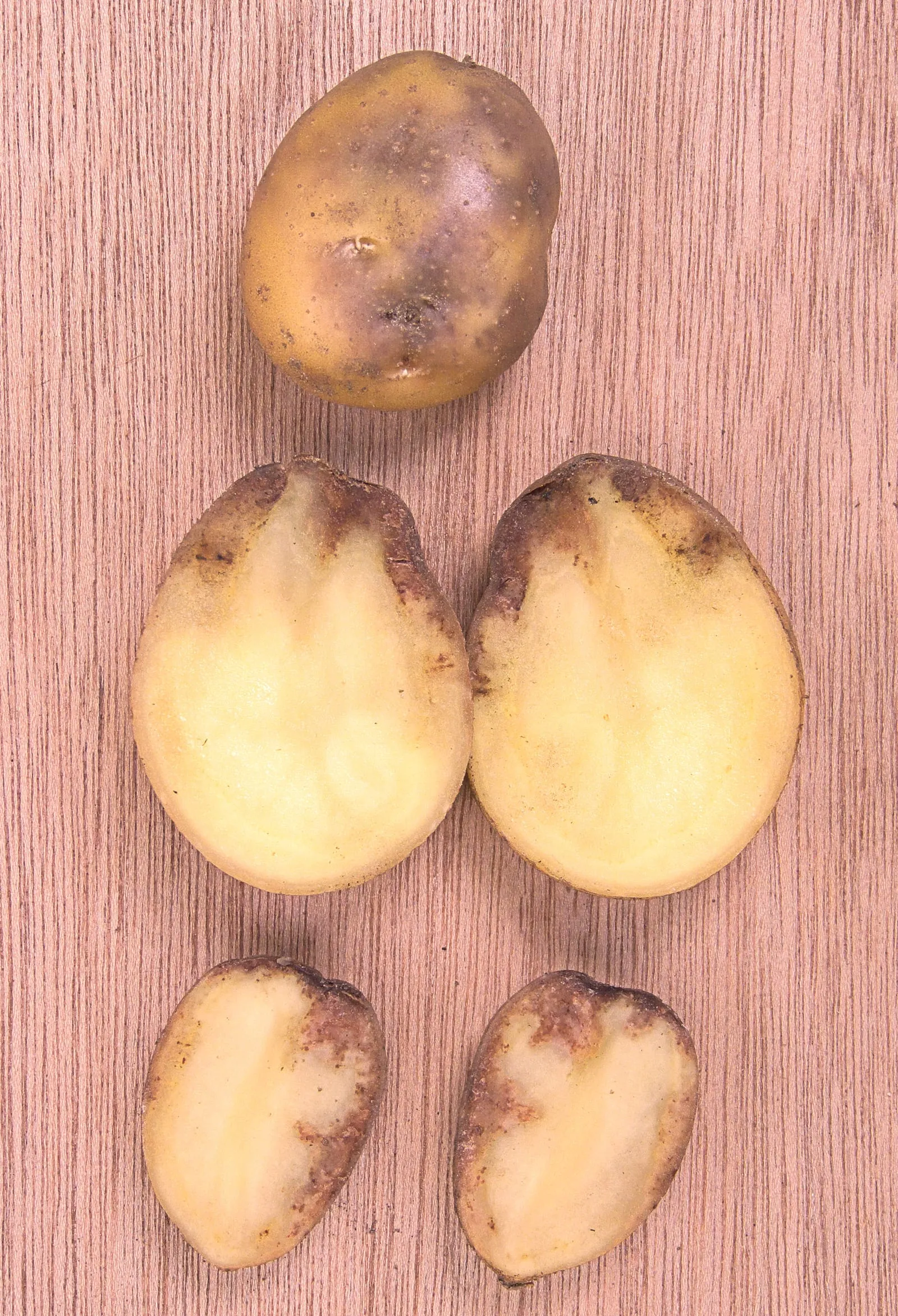
Phytophthora infestans
The pathogen responsible for the Irish Potato Famine. Devastating in cool wet weather; can destroy a tomato planting in days.
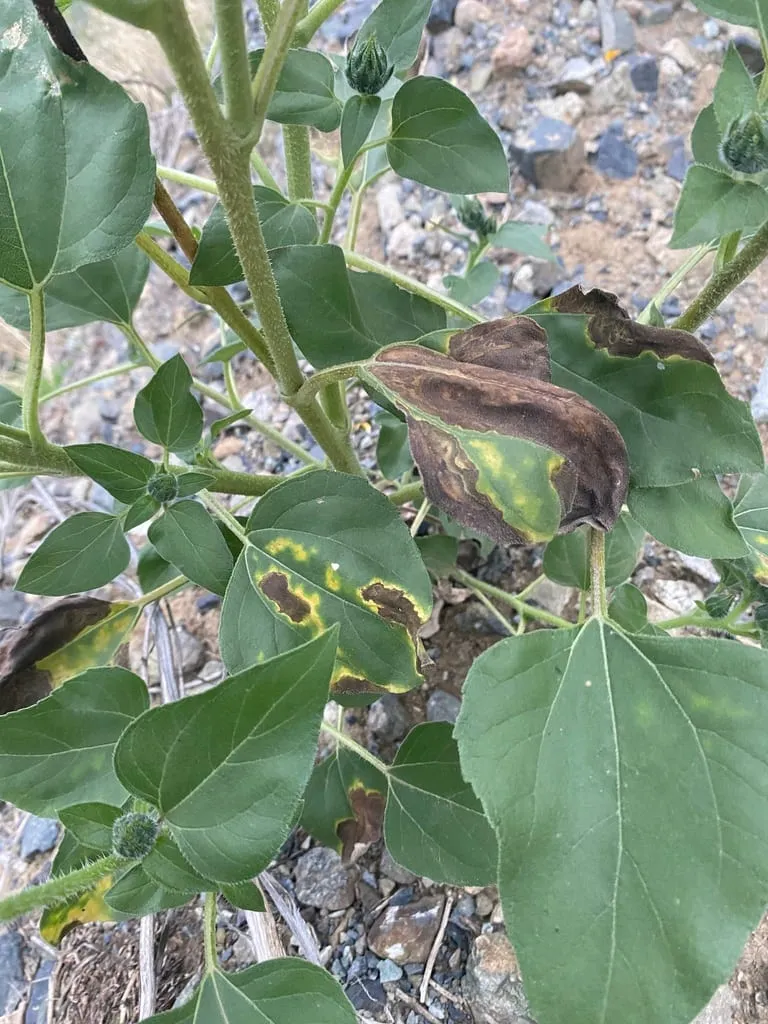
Verticillium dahliae
Soil-borne fungal disease similar to fusarium wilt but with broader host range and cooler temperature optimum. Persists in soil for 10+ years.
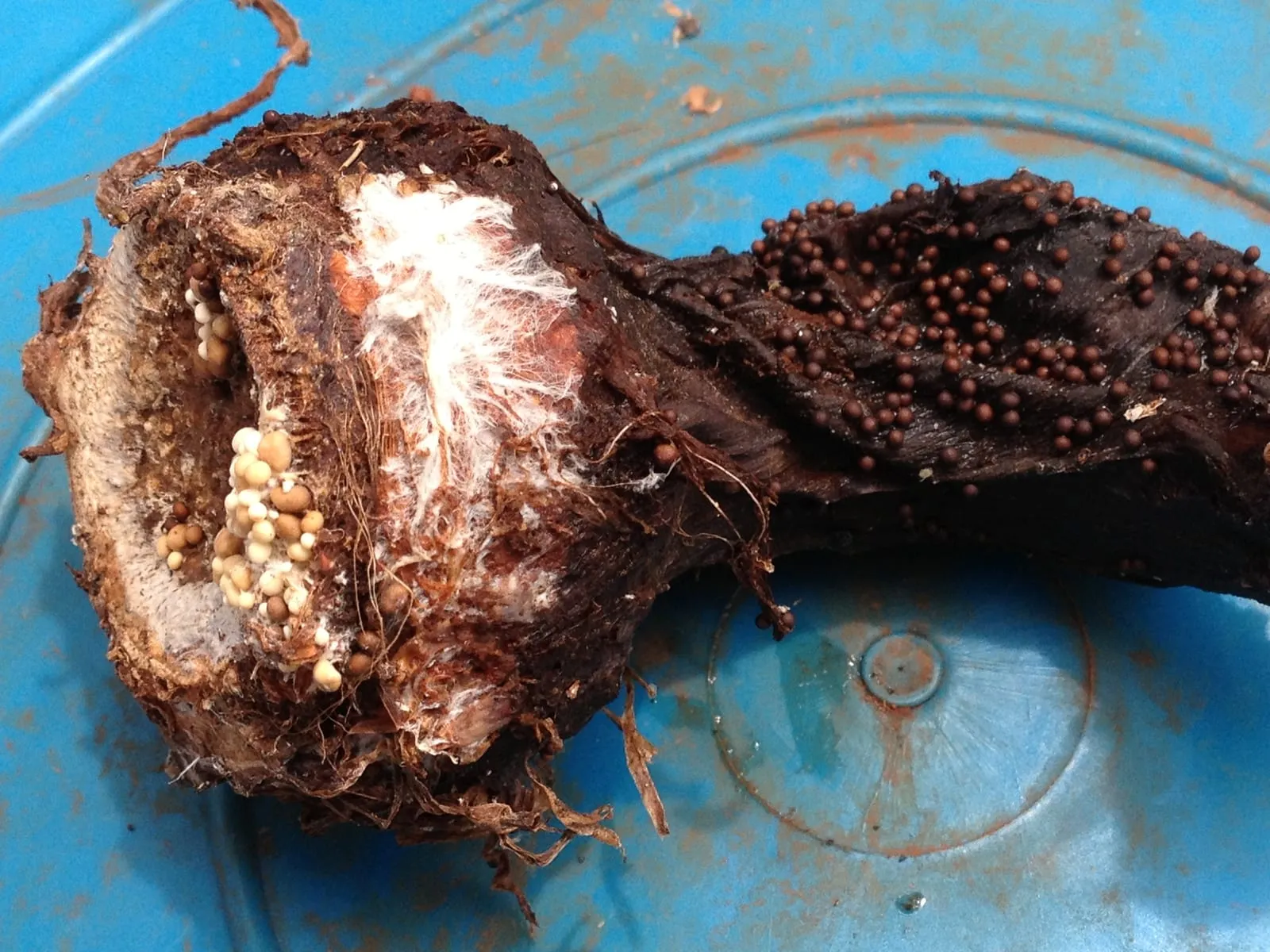
Sclerotium rolfsii
Soil-borne fungal disease most damaging in warm humid Southern conditions. White mycelial fans and small mustard-seed-sized sclerotia at the soil line are diagnostic.
Common pests
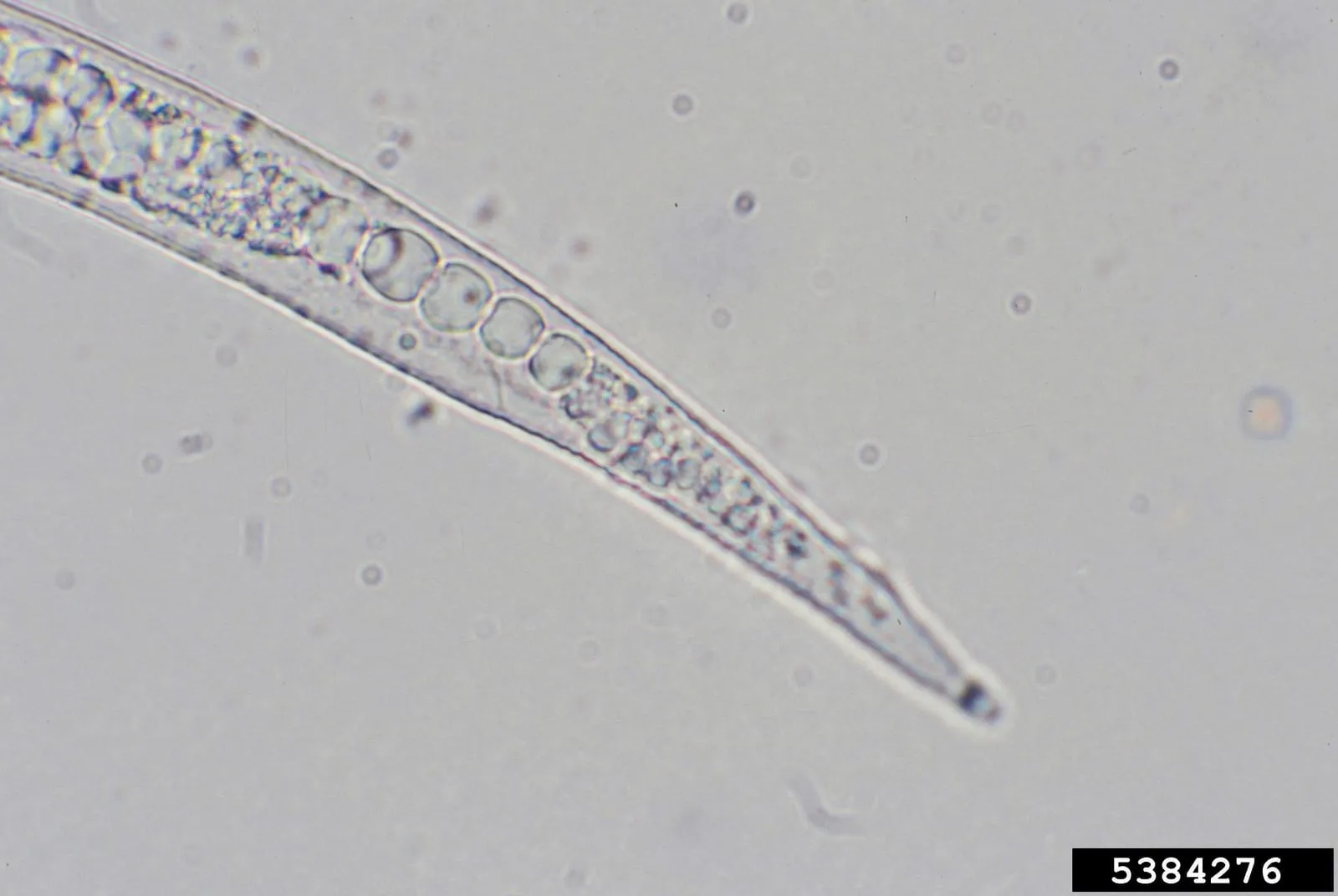
Meloidogyne species
Microscopic soil-dwelling worm that forms galls on roots, reducing vigor and yield.
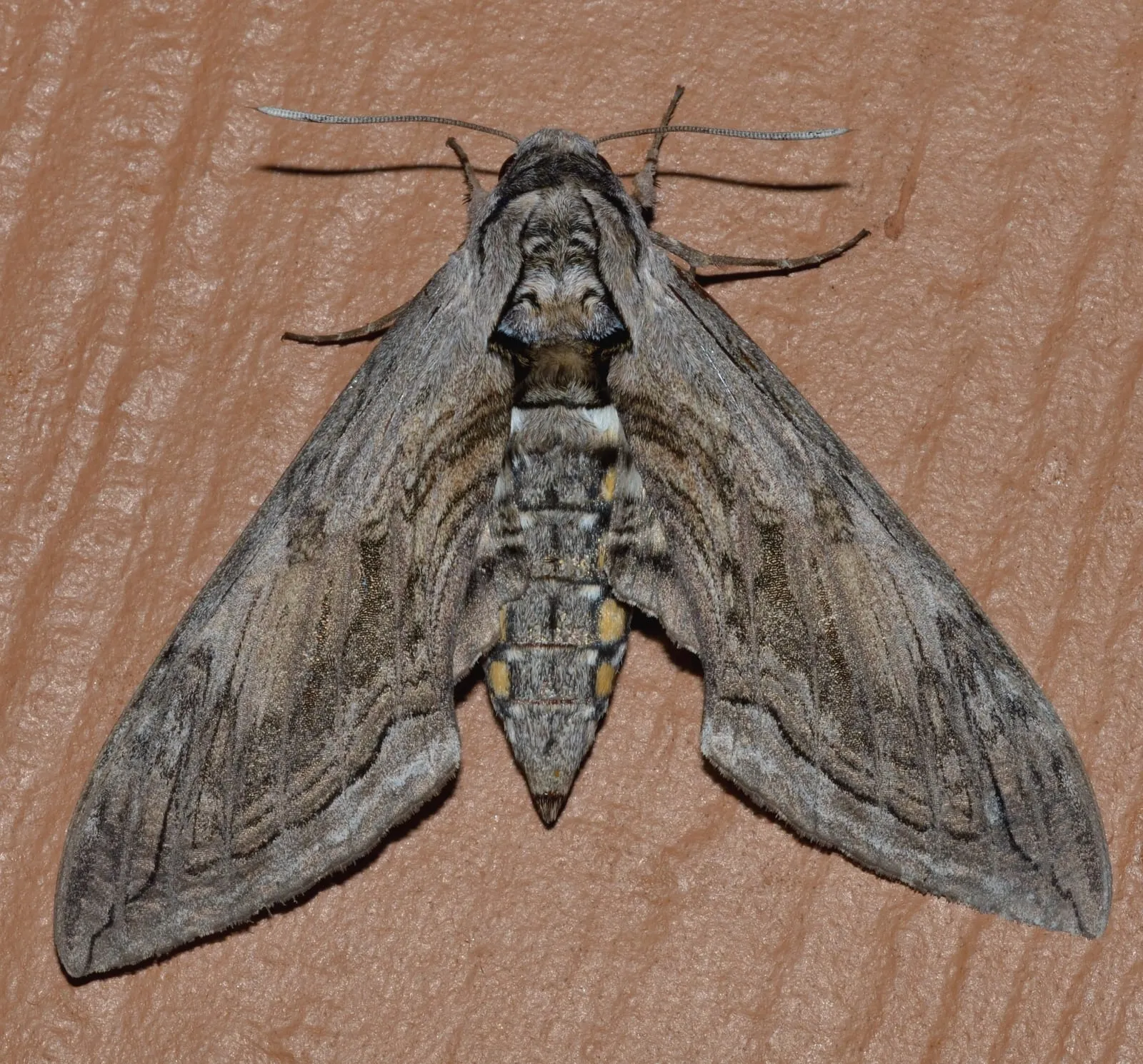
Manduca quinquemaculata
Large green caterpillar (up to 4 inches) that defoliates tomato and other Solanaceae plants rapidly. Mature larvae become five-spotted hawk moths.
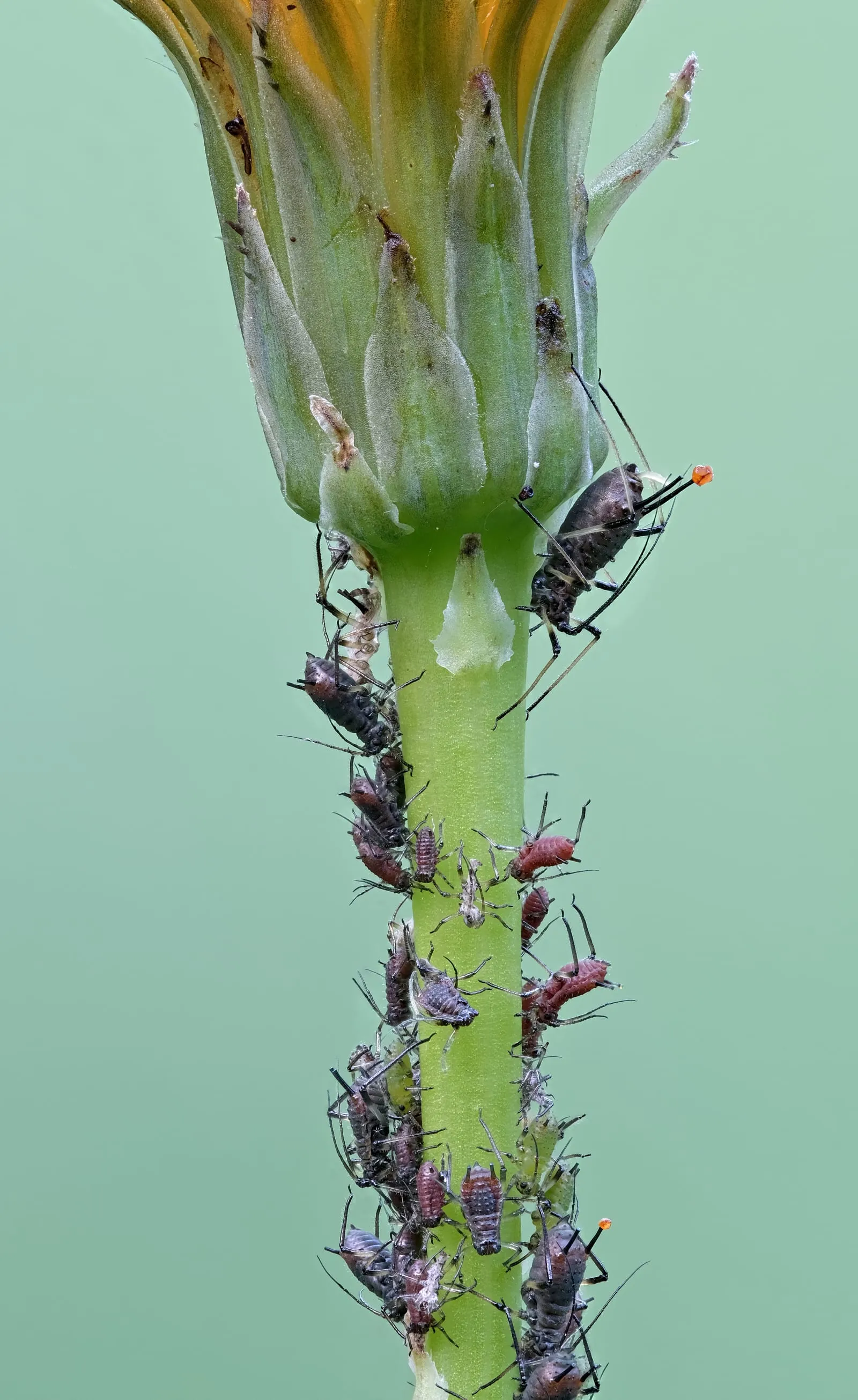
Multiple species (Aphididae)
Small soft-bodied sap-sucking insects that reproduce explosively in spring. Excrete honeydew that supports sooty mold and attracts ants. Transmit viral diseases.
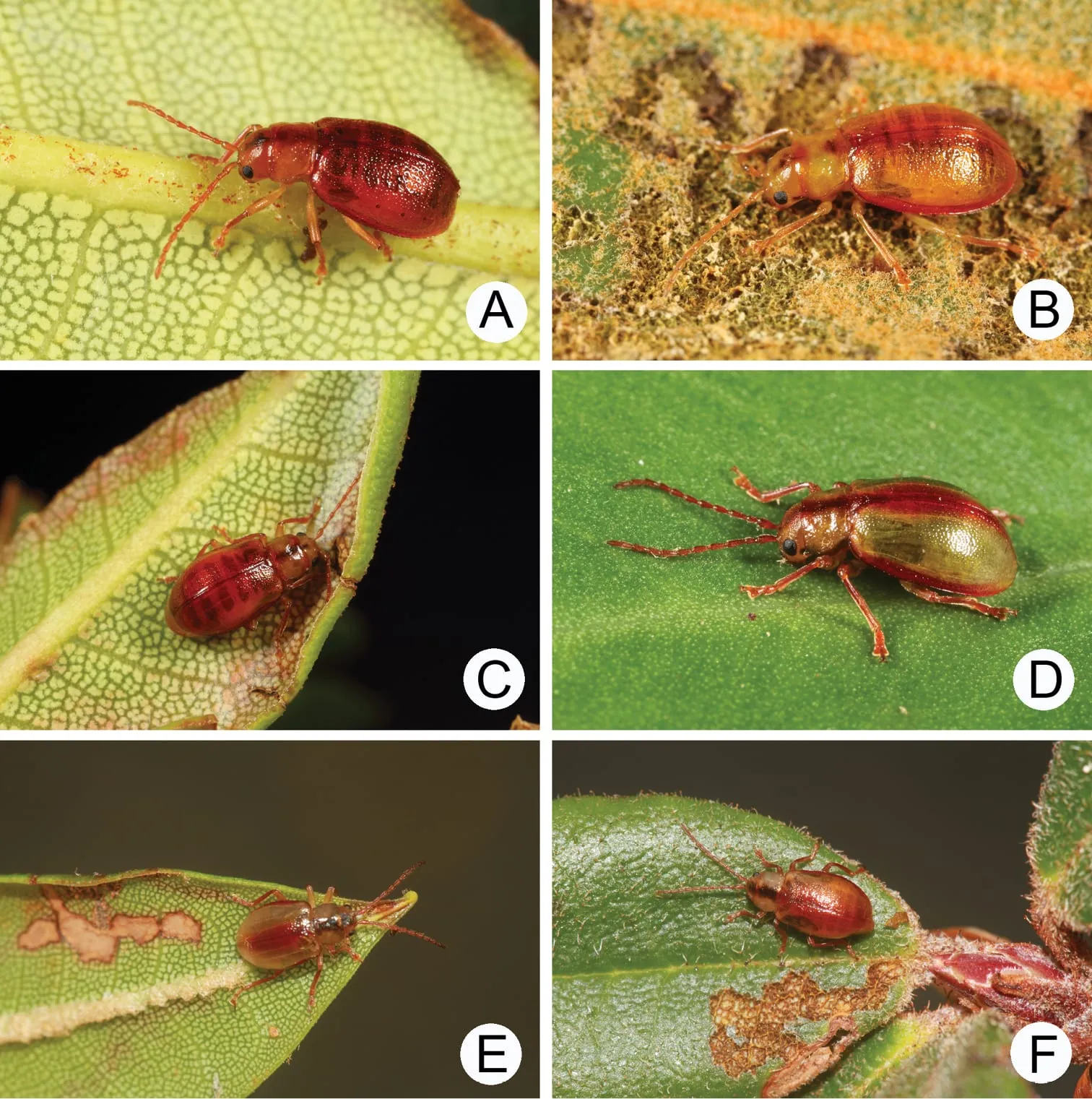
Multiple species (Chrysomelidae)
Tiny black or bronze jumping beetles that put hundreds of small holes in seedling leaves. Most damaging on direct-seeded brassicas and young eggplant.
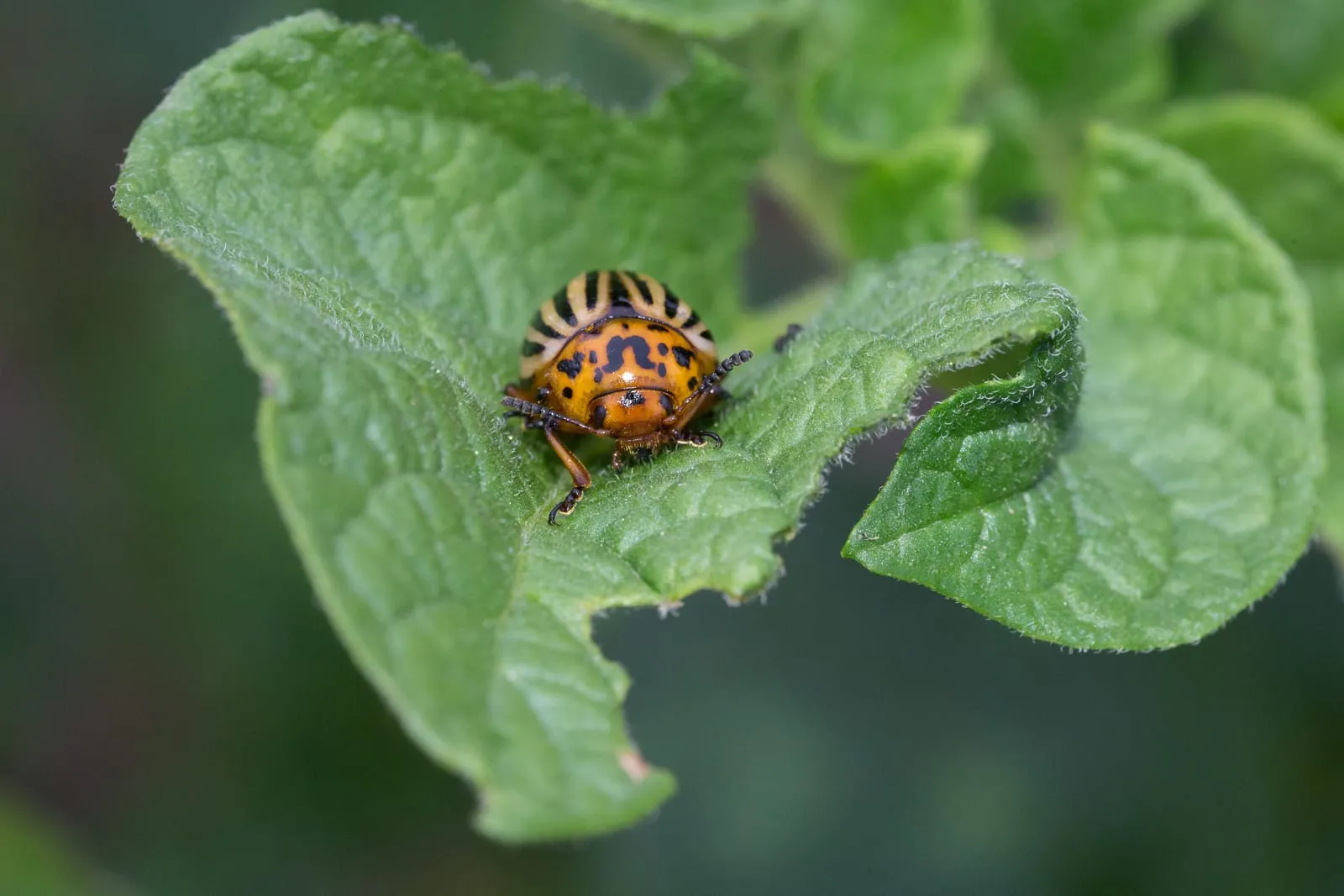
Leptinotarsa decemlineata
Yellow-and-black-striped beetle and red-orange humpbacked larvae that defoliate potato and eggplant. Capable of destroying a planting in days during peak feeding.
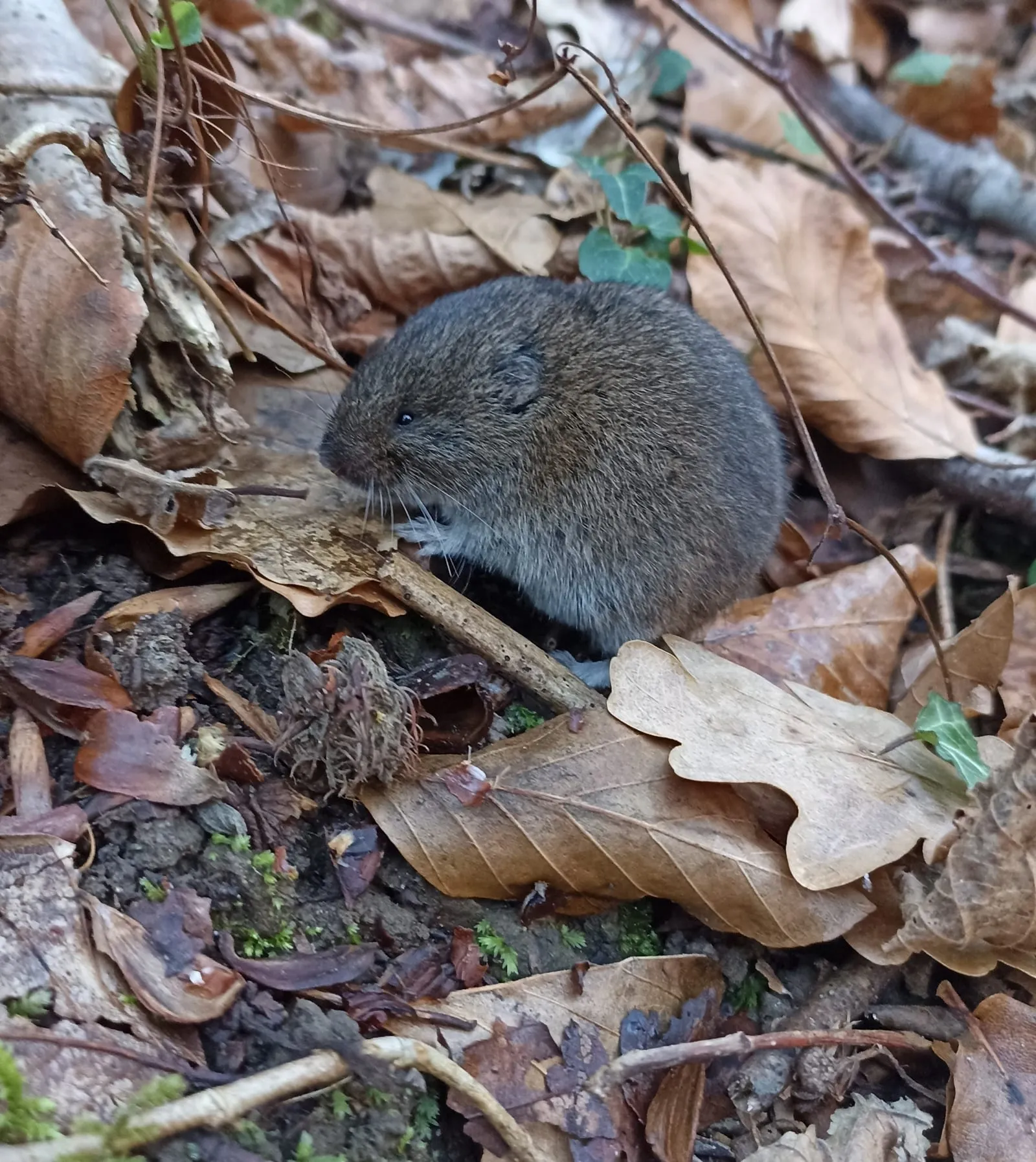
Microtus species
Field voles and meadow voles girdle young fruit-tree trunks under snow cover during winter and chew root crops. The leading cause of mysterious orchard losses.
Common challenges
Three issues account for most home potato failures.
Late blight (Phytophthora infestans) is the highest-stakes risk. The pathogen spreads explosively under cool nights and humid days, turning foliage black and collapsing vines in five to seven days. Preventive fungicide applications, including copper-based options acceptable for organic production, should begin before symptoms appear during high-humidity periods. Once blight is established in a planting, control is difficult. Infected vines should be destroyed promptly and never composted; spores can persist in plant debris.
Colorado potato beetle (Leptinotarsa decemlineata) is the most damaging insect pest. Adults and larvae defoliate plants efficiently, and populations build quickly through the growing season. In small gardens, hand-picking egg masses and larvae is effective early on. For larger plantings, spinosad and neem-based sprays are options. The beetle develops resistance to chemical controls rapidly; rotating insecticide classes or relying on biological controls reduces this pressure, a point the Cornell Potato Production Guide addresses directly.
Frost timing at planting is the third common failure point. Seed pieces planted in cold, wet soil below 40°F rot before sprouting. Waiting until soil temperature reaches 45°F at a four-inch depth is the reliable threshold. In zones 3 and 4, this is often mid-May, which is later than the calendar's last-frost date suggests and later than many gardeners expect.
Companion plants
Frequently asked questions
- Do potatoes require chill hours to produce?
No. Potatoes are not a chill-hour crop. They are grown from tuber pieces (seed potatoes), not from seed, and require no cold conditioning before planting. Tuber development is triggered by soil temperature and day length, not prior chilling. Plant when soil temperature reaches 45°F at four-inch depth.
- How many days does it take from planting to harvest?
Days to harvest range from 70 to 120 days depending on variety type. Early varieties like Red Norland can be dug as new potatoes around 60 to 70 days after planting. Main-crop varieties like Russet Burbank require 100 to 120 days and need a longer season to develop the dry, starchy flesh that stores well.
- What zones can potatoes grow in?
Potatoes are adapted to zones 3a through 9a. In zones 3 through 6, season length is the main constraint and early varieties are the safer choice. In zones 7 through 9a, summer heat limits the spring planting window; a fall or winter planting schedule is often more productive than attempting a long-season spring crop.
- Do potatoes need pollinators to produce a harvest?
No. The harvestable potato is a underground tuber, a vegetative structure unrelated to pollination or seed set. Potatoes do not require pollinator visits or cross-pollination to produce a crop. The flowers that appear on the plant can be left or removed without affecting yield.
- What is the most destructive disease in home potato plantings?
Late blight (Phytophthora infestans) is the most destructive. It progresses from dark, water-soaked leaf lesions to complete vine collapse in five to seven days under cool, humid conditions. Early blight (Alternaria solani) is more common but less severe, causing leaf spotting that reduces yield without killing plants outright. Verticillium wilt causes gradual decline and is difficult to distinguish from normal senescence early on.
- Why do some potatoes turn green after harvest?
Tubers exposed to light produce solanine, a glycoalkaloid that causes green discoloration and a bitter, mildly toxic taste. Hilling soil around developing plants prevents light from reaching tubers in the garden. After harvest, store potatoes in complete darkness to prevent greening during storage.
- Can potatoes be grown in containers or grow bags?
Yes, with realistic yield expectations. Containers of at least 15 gallons with loose, well-drained potting mix work well for early varieties. Yields per plant are lower than in-ground plantings, and consistent watering is more critical because containers dry out faster. This approach suits zones 8 and 9a where in-ground planting windows are narrow and spring heat arrives quickly.
+−
+−
+−
+−
+−
+−
+−
Sources
Image: "Solanum tuberosum Red Scarlett20170523 7825", by Bff, via Wikimedia Commons, licensed under CC-BY. Source.

Potato by zone
Related