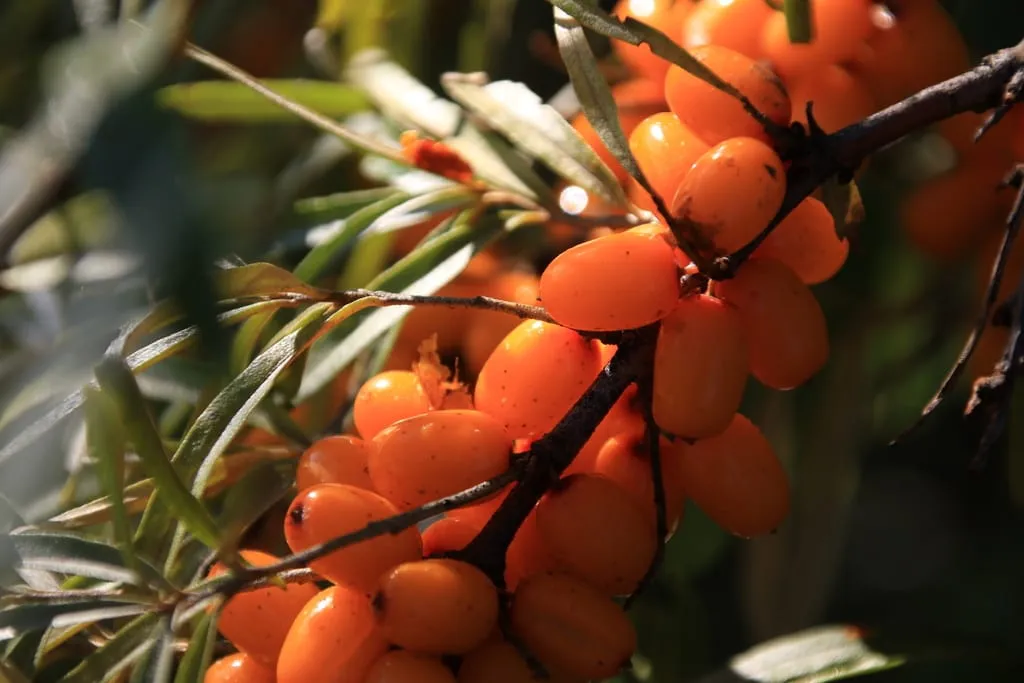
berry in zone 5b
Growing sea buckthorn in zone 5b
Hippophae rhamnoides
- Zone
- 5b -15°F to -10°F
- Growing season
- 165 days
- Suitable varieties
- 4
- Days to harvest
- 100 to 130
The verdict
Zone 5b is a genuine sweet spot for sea buckthorn, not a marginal case. The plant is native to Siberia and Central Asia and rated to zone 3 or colder in the hardiest cultivars. Winter lows of -15 to -10°F present no meaningful cold damage risk to established plants or their root systems.
Sea buckthorn also has very modest chill-hour requirements compared to most temperate fruit crops, so the 165-day growing season in zone 5b is more than sufficient for full dormancy, reliable pollination, and berry development. Ironically, sea buckthorn tends to underperform in warmer zones (7 and above), where incomplete winter chilling can reduce fruiting. Zone 5b's cold winters ensure deep dormancy and set the plant up for strong berry set the following season.
Varieties like Botanica and Frugana were bred in Central European continental climates with temperature profiles nearly identical to zone 5b winters. Garden's Gift and Romeo were selected with similar cold tolerance in mind. All four are reasonable choices for this zone.
Recommended varieties for zone 5b
4 cultivars suited to this zone, with disease-resistance and zone-fit annotations.
| Variety | Notes | Zone fit | Disease resistance |
|---|---|---|---|
| Botanica fits zone 5b | Tart, bracingly acidic, complex citrus-passionfruit-pineapple flavor; juice, jam, syrup, oil. Russian-bred female with high yields. Requires a male pollinator (one male per 6-8 females). | | none noted |
| Frugana fits zone 5b | Tart, juicy, large bright-orange berries; processing, oil extraction. German-bred female productive with reduced thorns compared to wild stock. | | none noted |
| Garden's Gift fits zone 5b | Tart, large vibrant orange berries; juice and jam. Russian female with concentrated cluster, easier handharvest. Pair with male pollinator. | | none noted |
| Romeo (male) fits zone 5b | Pollinator only, no fruit; provides pollen for female cultivars. Plant one male per 6-8 females. Vigorous nitrogen-fixing shrub useful as windbreak. | | none noted |
Critical timing for zone 5b
Sea buckthorn blooms early, typically late March to mid-April in zone 5b, before leaf-out. Zone 5b's average last spring frost falls between April 15 and May 1, so there is overlap between bloom and frost risk. The exposure is lower than it might appear: sea buckthorn flowers are small and wind-pollinated, without the large petals that concentrate frost damage on stone fruit blossoms. Light frosts during bloom rarely prevent a crop.
Berry ripening occurs in late August through September depending on cultivar, with Botanica and Frugana typically on the earlier end. Zone 5b's first fall frost generally arrives in early to mid-October, so the harvest window is comfortable. Berries can be left on the plant past first frost and harvested in November, when cold temperatures make the tart fruit slightly sweeter and easier to strip from branches.
Common challenges in zone 5b
- ▸ Plum curculio
- ▸ Codling moth
- ▸ Cedar-apple rust
Modified care for zone 5b
Zone 5b growers need few adaptations relative to sea buckthorn's native range. Site selection matters more than any cultural modification: plant on well-drained, sandy or loamy ground with good air circulation. Sea buckthorn tolerates poor, dry soil far better than heavy clay or poorly drained sites, and wet winters are a more reliable source of root stress than cold temperatures.
The zone challenges listed for this region (plum curculio, codling moth, cedar-apple rust) are primarily concerns for apple, pear, and stone fruit growers. Sea buckthorn is not a significant host for any of these pests or the fungal pathogen. Pest pressure is generally low. The main issues in zone 5b are spider mites during hot, dry August stretches and aphid colonies on new spring growth; neither typically requires anything beyond monitoring and a water spray on severe infestations.
Plan for two plants minimum, one female and one male (Romeo or a local selection), sited within 20 feet for reliable wind pollination.
Frequently asked questions
- Is zone 5b too cold for sea buckthorn?
No. Sea buckthorn is rated to zone 3 in the hardiest selections and is native to regions with winters colder than zone 5b. The varieties available in North American nurseries (Botanica, Frugana, Garden's Gift) handle -15 to -10°F without significant cold damage.
- Do I need a male plant to get berries in zone 5b?
Yes. Sea buckthorn is dioecious, meaning male and female flowers are on separate plants. One male plant (Romeo is the most widely available named selection) can pollinate up to seven or eight female plants within about 20 feet. Without a male, female plants produce no fruit.
- When should I expect the first harvest after planting?
Most growers see the first meaningful berry crop in year three or four. Established plants in zone 5b can produce 15 to 25 pounds per female plant annually once mature, typically at years five through seven.
- Does late spring frost damage sea buckthorn bloom in zone 5b?
The risk exists but is lower than for stone fruits. Sea buckthorn blooms before leaf-out and the flowers are small and wind-pollinated, making them less vulnerable to light frost events than the showy blossoms of peach or cherry. A hard frost below 28°F during peak bloom can reduce set, but partial crops are common even after frost exposure.
+−
+−
+−
+−
Sea Buckthorn in adjacent zones
Image: "Облепиха", by Нурхайдарова Татьяна, via iNaturalist, licensed under CC-BY Source.
Related