vegetable in zone 3b
Growing swiss chard in zone 3b
Beta vulgaris subsp. vulgaris
- Zone
- 3b -35°F to -30°F
- Growing season
- 100 days
- Suitable varieties
- 3
- Days to harvest
- 50 to 60
The verdict
Swiss chard is a strong match for zone 3b, though the reason has nothing to do with chill hours. Chill hour requirements apply to perennial crops that need winter dormancy to break properly; chard is an annual grown entirely within a single frost-free season. The relevant metric is growing season length, and at 100 days, zone 3b provides adequate time for all three recommended varieties to reach full harvest size.
Bright Lights and Fordhook Giant both mature in 50 to 60 days from direct sow, fitting comfortably within the zone's window. Rhubarb Chard runs slightly longer but still finishes before hard frost arrives. More importantly, chard genuinely prefers cool temperatures, with 50 to 75°F being its most productive range, which means zone 3b's shoulder seasons are close to ideal growing conditions. The main constraint is the compressed window, not the cold itself.
Recommended varieties for zone 3b
3 cultivars suited to this zone, with disease-resistance and zone-fit annotations.
| Variety | Notes | Zone fit | Disease resistance |
|---|---|---|---|
| Bright Lights fits zone 3b | Mild, slightly earthy, tender; mixed-color stems (yellow, orange, pink, red, white). Sauteing, soups, fresh salads, ornamental edible. AAS winner, productive, beautiful in mixed beds. | | none noted |
| Fordhook Giant fits zone 3b | Mild, slightly sweet; classic white-stemmed dark green-leaf chard. Sauteing, soups, lasagna. Heritage productive variety, very heat- and cold-tolerant. | | none noted |
| Rhubarb Chard fits zone 3b | Slightly earthy, mild; deep red stems and dark green leaves. Sauteing, soups, fresh in salads. Productive heritage variety, ornamental enough for borders. | | none noted |
Critical timing for zone 3b
Last frost in zone 3b typically falls between late May and early June, depending on elevation and local topography. Direct seeding is viable once soil warms to 50°F, generally mid to late May in most zone 3b locations. For the earliest possible harvest, starting transplants indoors 4 to 6 weeks before the anticipated last frost date shifts the timeline by nearly a month.
Most varieties reach harvestable size (outer leaves at 6 to 8 inches) in 50 to 60 days. That puts the first harvest window in mid to late July for transplanted seedlings, or early August for direct-sown plants. First fall frost typically arrives late August to mid-September, leaving a narrow but workable harvest period. Row covers rated to 28°F can add 2 to 3 usable weeks on either end of that window.
Common challenges in zone 3b
- ▸ Short season
- ▸ Winter desiccation
- ▸ Site selection critical for fruit trees
Disease pressure to watch for
Modified care for zone 3b
The primary adjustment in zone 3b is treating the growing season as a single non-negotiable window. Succession planting, which works well in longer-season zones to extend harvest across months, is rarely practical here. A single well-timed planting that runs the full season is the more reliable approach.
Fusarium wilt is the main disease concern, and the pathogen persists in soil. Rotating chard out of beds where spinach, beets, or other chenopods grew recently reduces inoculum pressure. None of the three listed varieties carry wilt resistance, so rotation is the primary management tool.
Row covers serve double duty in this zone: protecting transplants from late May frost and extending harvest into October when light frosts begin arriving. Soil temperature is a bottleneck in a 100-day season, so laying dark mulch or black plastic a week before transplanting can meaningfully advance planting date and compress the gap between last frost and first harvest.
Frequently asked questions
- Can Swiss chard survive a late frost in zone 3b?
Established plants tolerate light frost down to about 28°F without significant damage. Seedlings and fresh transplants are more vulnerable. Row covers rated for 4 to 6°F of frost protection are sufficient to bridge most late-season cold snaps in zone 3b.
- Which Swiss chard variety performs best in zone 3b?
Fordhook Giant is the most reliable option for short-season zones due to its vigorous growth and quick maturity. Bright Lights is a close second with the same speed and more color variation. Rhubarb Chard runs slightly slower but still fits within the 100-day window.
- Is it worth starting Swiss chard indoors in zone 3b?
Yes. Starting transplants 4 to 6 weeks early effectively adds a full month to the growing season, shifting first harvest from August into mid-July. In a 100-day zone, that margin is significant and typically means several additional weeks of continuous harvest before fall frost ends the season.
+−
+−
+−
Swiss Chard in adjacent zones
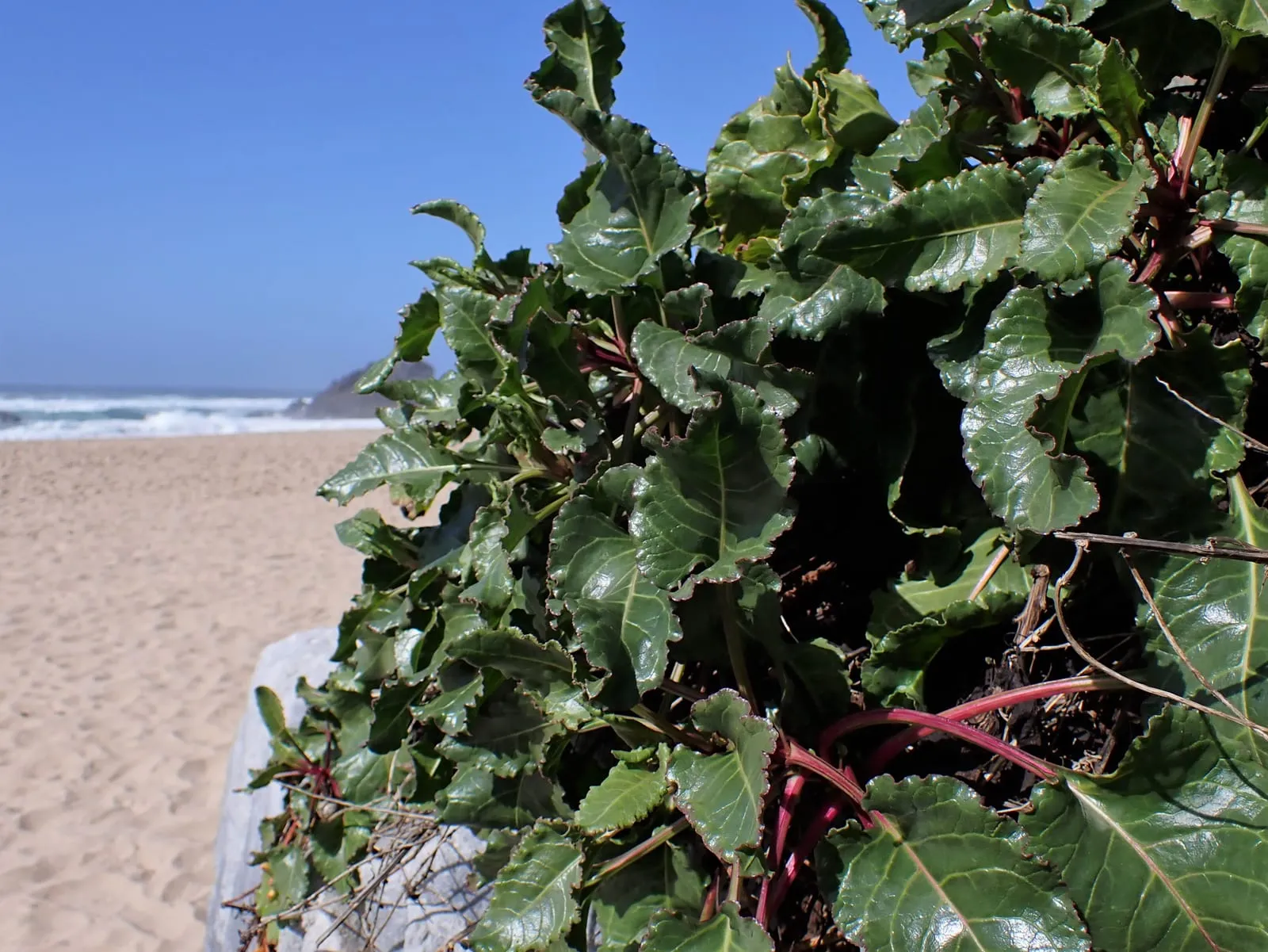
Image: "Beta vulgaris subsp. maritima kz05", by Krzysztof Ziarnek, Kenraiz, via Wikimedia Commons, licensed under CC-BY Source.

Related