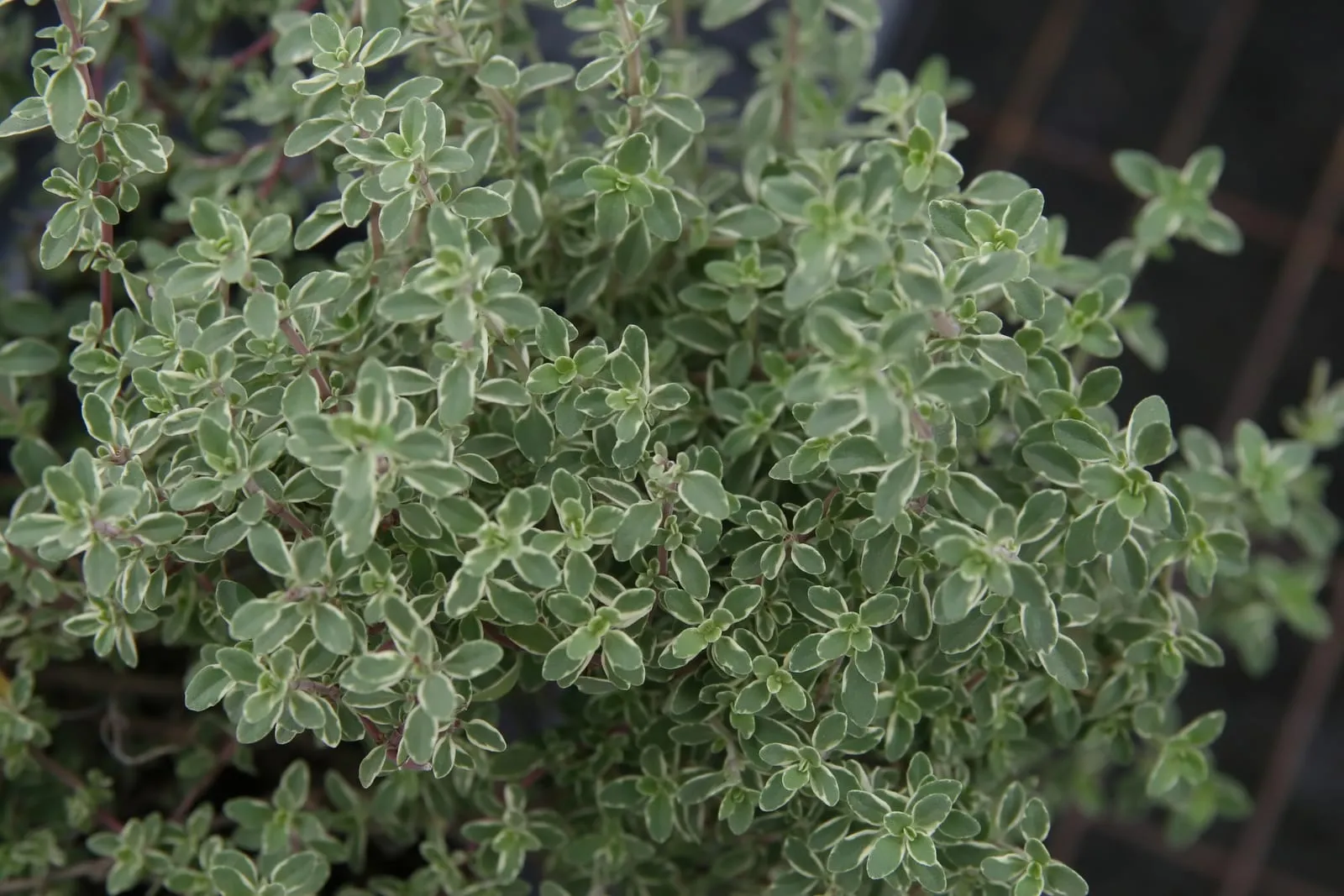
herb in zone 8b
Growing thyme in zone 8b
Thymus vulgaris
- Zone
- 8b 15°F to 20°F
- Growing season
- 260 days
- Suitable varieties
- 2
- Days to harvest
- 75 to 95
The verdict
Zone 8b is a strong fit for thyme, not a marginal one. Thyme originates from the Mediterranean basin and tolerates both summer heat and mild winters with ease. Minimum temperatures of 15 to 20°F fall well within thyme's hardiness range (generally zone 4 through 9), so winter kill is rarely a concern. The 260-day growing season allows thyme to establish deeply, produce multiple harvests, and overwinter as a semi-evergreen shrub rather than dying back to the ground.
Neither English/Common nor Lemon thyme requires any chill hours, so the zone's low-chill profile creates no limitation here. The greater challenge in zone 8b is the opposite: summer heat and, in coastal or low-elevation areas, elevated humidity. Thyme demands sharp drainage and air circulation; waterlogged roots and stagnant moisture invite fungal crown rot faster than cold ever would. In well-drained sites, however, zone 8b growers can expect thyme to thrive as a long-lived perennial.
Recommended varieties for zone 8b
2 cultivars suited to this zone, with disease-resistance and zone-fit annotations.
| Variety | Notes | Zone fit | Disease resistance |
|---|---|---|---|
| English / Common fits zone 8b | Earthy, slightly minty, classic French-cooking thyme flavor; small dark green leaves on woody stems. Soups, stews, roasted meats, herbes de Provence. The cook's thyme. | | none noted |
| Lemon fits zone 8b | Bright lemon-citrus notes with thyme base; small green leaves with subtle yellow variegation. Fresh on fish, chicken, summer cocktails, fruit dishes. Productive, fragrant. | | none noted |
Critical timing for zone 8b
In zone 8b, thyme typically breaks dormancy and resumes active growth in late February or early March, earlier than in cooler zones. Bloom usually arrives from late March through May, depending on the specific location and microclimate. Flowers are small and tubular, ranging from pale lavender to white depending on variety, and attract pollinators throughout the bloom window.
Leaf harvest can occur year-round in zone 8b, since thyme remains semi-evergreen through the mild winters. The most potent flavor concentrates just before and during bloom, making late spring the prime harvest window for culinary use. A late frost in early March, which zone 8b can occasionally see, may damage tender new growth but rarely kills established plants. Growth slows but does not stop during peak summer heat.
Common challenges in zone 8b
- ▸ Low chill hours limit apple variety selection
- ▸ Citrus greening risk
- ▸ Nematodes in sandy soils
Modified care for zone 8b
The primary care adjustment in zone 8b is drainage management, not cold protection. Soils with poor drainage, heavy clay layers, or nematode pressure (a noted zone challenge in sandy soils) create the conditions most likely to shorten thyme's lifespan. Planting in raised beds or mounded rows improves drainage and reduces nematode exposure in problem soils.
Summer shade is generally unnecessary for English or Lemon thyme, both of which handle full sun in zone 8b without scorching. However, afternoon shade in the hottest interior locations can reduce plant stress from June through August. Avoid overhead irrigation; drip or ground-level watering keeps foliage dry and limits fungal pressure. In zone 8b, established plants rarely need additional winter mulching, though a light layer of gravel or coarse sand around the crown helps maintain drainage and reflects heat away from the root zone during the coolest months.
Thyme in adjacent zones
Image: "Thymus vulgaris Argenteus 1zz", by Photo by David J. Stang, via Wikimedia Commons, licensed under CC-BY Source.

Related