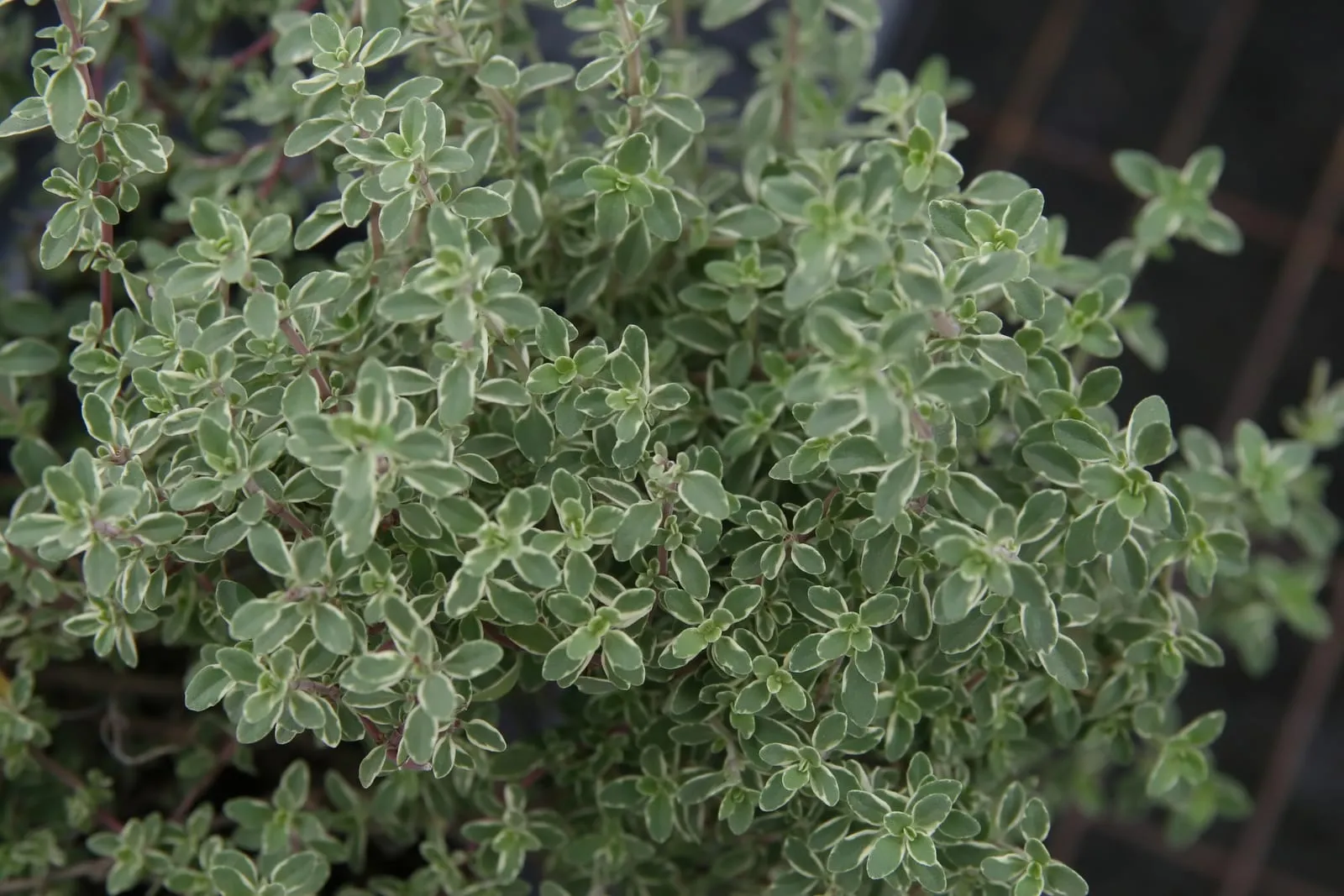
herb
Thyme
Thymus vulgaris
USDA hardiness range
- Zones
- 4a–9a
- Days to harvest
- 75 to 95
- Sun
- Full
- Water
- Low
- Lifespan
- perennial
Growing thyme
Thyme (Thymus vulgaris) is a low-maintenance perennial that earns its keep across zones 4a through 9a, offering culinary utility across most of the temperate United States. Established plants are drought-tolerant and relatively long-lived, with first harvests arriving 75 to 95 days from transplant. Three varieties cover most home growing scenarios: common (English) thyme for cooking, lemon thyme for lighter applications, and creeping thyme as a functional groundcover.
Where thyme succeeds, it does so almost without intervention. Where it fails, the cause is nearly always the same: too much water or too little sun. Thyme originates in the dry, rocky soils of the Mediterranean basin and carries those preferences into the garden. Heavy clay soils, low-lying areas, or spots that stay wet after rain will kill thyme more reliably than any pest or pathogen.
At the colder end of its range (zones 4a-5b), thyme may die back in winter and re-emerge in spring, or may not survive a harsh winter without mulch protection. In zones 8b-9a, summer heat can shorten the lifespan of common thyme; lemon thyme handles heat somewhat better. The most productive plantings tend to occur in zones 6a-8a, where warm summers and cold-but-not-severe winters keep plants vigorous without pushing either extreme.
Recommended varieties
See all 3 →3 cultivars for home growers, with notes on flavor, ripening, and disease resistance.
| Variety | Notes | Zone fit | Disease resistance |
|---|---|---|---|
| English / Common | Earthy, slightly minty, classic French-cooking thyme flavor; small dark green leaves on woody stems. Soups, stews, roasted meats, herbes de Provence. The cook's thyme. | | none noted |
| Lemon | Bright lemon-citrus notes with thyme base; small green leaves with subtle yellow variegation. Fresh on fish, chicken, summer cocktails, fruit dishes. Productive, fragrant. | | none noted |
| Creeping (Mother of Thyme) | Mild thyme flavor; ground-cover habit, pink summer flowers. Edible (smaller leaves) but mostly ornamental. Stepable groundcover, drought-tolerant. | | none noted |
Soil and site requirements
Thyme requires excellent drainage above all else. Sandy loam or loamy soil with a pH between 6.0 and 8.0 is ideal; the plant tolerates slightly alkaline conditions better than most herbs. Avoid heavy clay or heavily amended beds with high organic matter retention, both of which hold moisture at the root zone longer than thyme tolerates.
Full sun is non-negotiable for culinary productivity. Plants grown in partial shade produce fewer essential oils, which means less flavor, more leggy growth, and increased susceptibility to fungal problems in wet weather. Site thyme where it receives at least 6 hours of direct sun, with 8 hours preferred.
Space plants 12 to 18 inches apart to allow air circulation and prevent the crown from staying wet after rain. In containers, a fast-draining mix (roughly half potting soil, half perlite or coarse sand) in a pot with drainage holes will outperform in-ground plantings in heavier soils. In zones 4a-5b, a south-facing microclimate with reflected heat from a wall or rock can make the difference between a plant that overwinters reliably and one that winterkills. Applying a light layer of straw mulch after the ground freezes protects roots without trapping moisture against the crown.
Common pests
Common challenges
The most common reason home thyme plantings fail is overwatering. Unlike basil or parsley, thyme does not benefit from consistent moisture. Established plants in well-drained soil should receive water only when the top 2 inches of soil are dry. Waterlogged roots cause crown rot quickly, and by the time symptoms appear (wilting, blackened stems at the base), the plant is usually not salvageable. The solution is site selection before the plant goes in the ground, not irrigation adjustment after the fact.
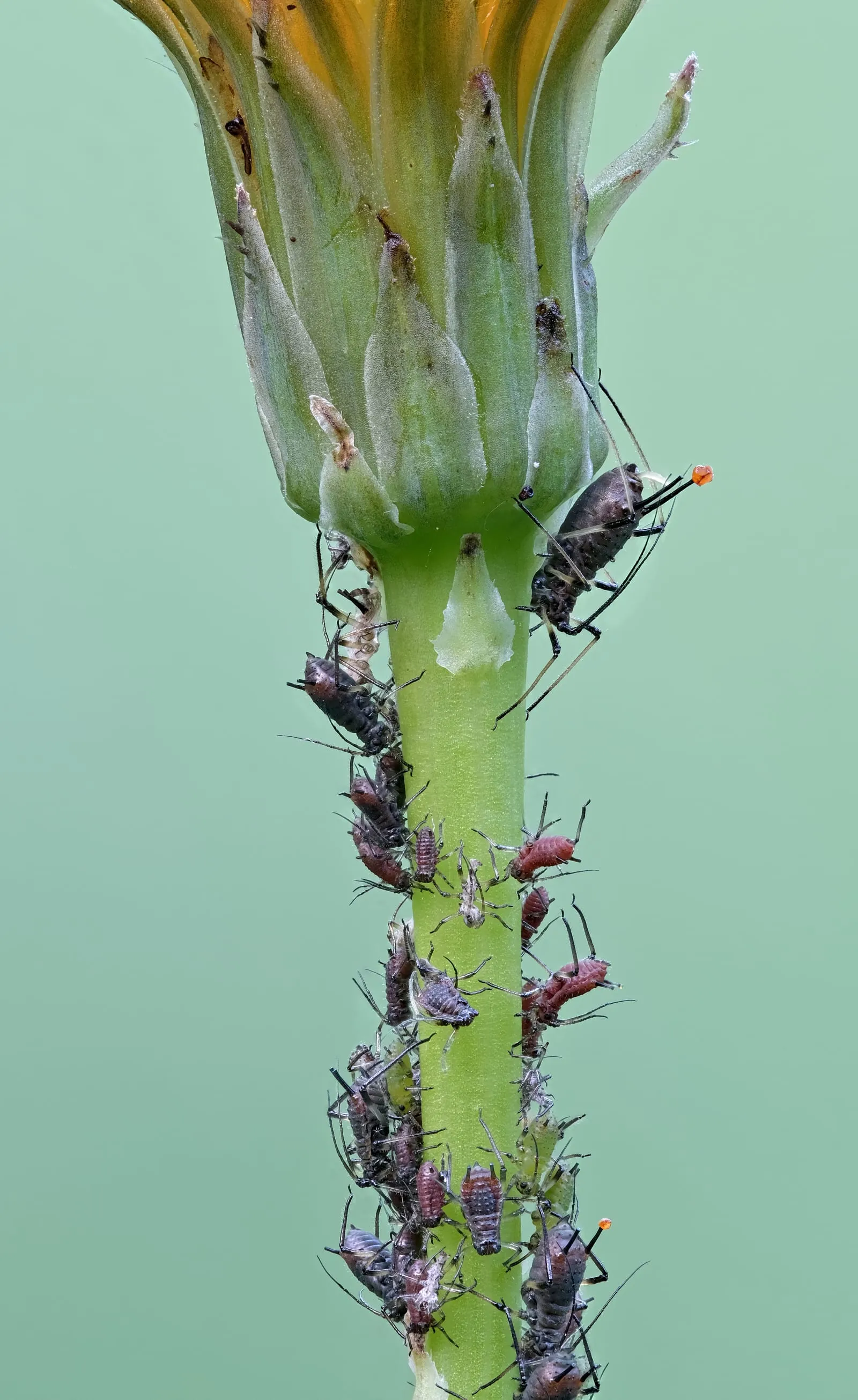
Aphids are the primary pest concern, typically appearing on new growth in spring and early summer. Infestations on thyme are rarely severe enough to threaten plant health, but heavy aphid pressure reduces growth and can allow sooty mold to establish on the honeydew they leave behind. A strong spray of water dislodges colonies; insecticidal soap is effective for persistent infestations. Natural predators (ladybugs, parasitic wasps) typically control populations without intervention in garden settings.
At the cold end of the range (zones 4a-5b), winterkill is a real risk in exposed sites. Woody stems that experience repeated freeze-thaw cycles crack and die back unevenly. Hard pruning in early spring removes dead wood and stimulates new growth, but plants killed to the root may not regenerate. In marginal zones, treating thyme as a short-lived perennial or overwintering divisions indoors is more reliable than depending on an established plant to survive.
Companion plants
Frequently asked questions
- Does thyme have chill-hour requirements?
No. Thyme is a woody perennial herb, not a fruiting plant with dormancy-breaking chill-hour requirements. It goes dormant in cold winters and re-emerges in spring, but this process does not depend on a specific accumulation of cold hours the way apples or peaches do. Zone hardiness (minimum winter temperature) matters; chilling accumulation does not.
- How long does thyme take to produce a first harvest?
First harvest typically arrives 75 to 95 days from transplant. After establishment, plants can be harvested lightly throughout the growing season. Avoid removing more than one-third of the plant at once, which can weaken regrowth and expose woody stems to winterkill.
- What USDA zones does thyme grow in?
Thyme grows as a perennial in zones 4a through 9a. At the colder end (zones 4a-5b), plants may die back in winter and benefit from light mulch protection. In zones 8b-9a, summer heat can shorten plant lifespan; lemon thyme generally handles heat better than common thyme.
- Does thyme need pollinators to produce a harvest?
No. Thyme is harvested for its foliage, which requires no pollination. Plants do flower in early summer, and the flowers are edible and attractive to bees. Some growers remove flowers to redirect energy to leaf production, though this is optional and a matter of preference.
- What diseases are most likely to affect thyme?
Thyme has few significant disease problems when grown in well-drained soil. The primary threat is fungal crown rot caused by waterlogged conditions rather than an airborne pathogen. Selecting a well-drained site and avoiding overhead irrigation prevents most crown rot before it starts.
- Which thyme variety is best for cooking?
English (common) thyme is the standard culinary choice, with earthy, slightly minty flavor suited to soups, stews, roasted meats, and herbes de Provence blends. Lemon thyme offers bright citrus notes and works well with fish, chicken, and lighter preparations. Both are productive perennials in zones 4a-9a.
- Is creeping thyme useful in the kitchen?
Creeping thyme (sometimes called mother of thyme) is edible, but its smaller leaves and milder flavor make it a secondary choice for cooking. It is better suited as a stepable groundcover or ornamental border plant. Its pink summer flowers and drought tolerance are its main appeal outside the kitchen.
+−
+−
+−
+−
+−
+−
+−
Sources
Image: "Thymus vulgaris Argenteus 1zz", by Photo by David J. Stang, via Wikimedia Commons, licensed under CC-BY. Source.

Thyme by zone
Related