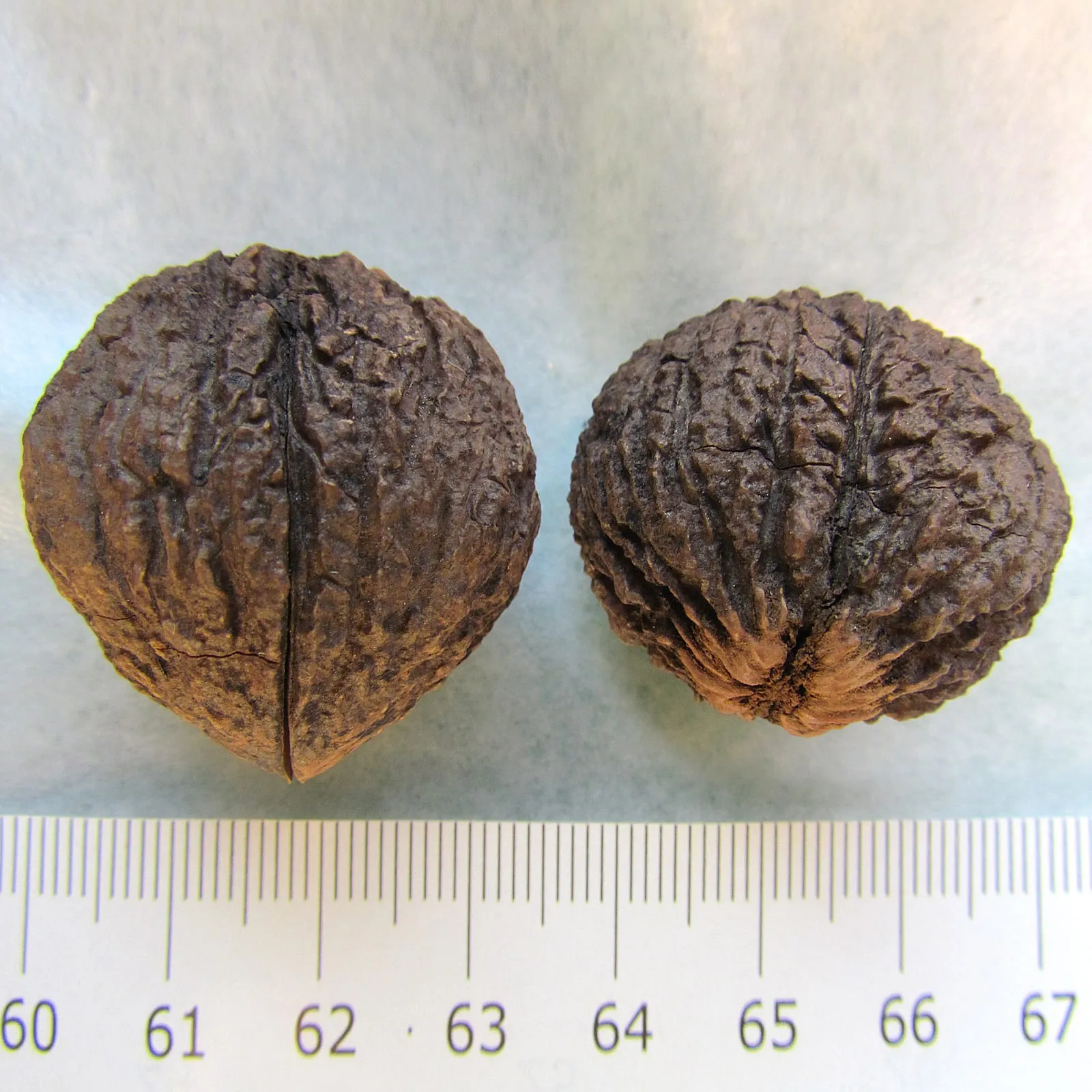
nut in zone 5b
Growing black walnut in zone 5b
Juglans nigra
- Zone
- 5b -15°F to -10°F
- Growing season
- 165 days
- Chill needed
- 700 to 1500 below 45°F
- Suitable varieties
- 4
- Days to harvest
- 150 to 200
The verdict
Zone 5b sits near the center of black walnut's natural range in eastern North America, making this a strong rather than marginal zone for the crop. Chill-hour accumulation in zone 5b typically exceeds 1,200 hours annually, well within the 700 to 1,500 hour requirement. The 165-day growing season is sufficient for nut development and hull split before first frost, provided trees are sited away from low-lying frost pockets that compress the effective season.
Cold hardiness is rarely the constraint here. Black walnut tolerates the -15 to -10°F lows that define zone 5b without significant winter injury. Varieties such as Thomas, Sparks 127, and Emma K have documented performance in zone 5 conditions. The more meaningful limitations in this zone are disease pressure and the need for a site with good air drainage, not cold tolerance.
Recommended varieties for zone 5b
4 cultivars suited to this zone, with disease-resistance and zone-fit annotations.
| Variety | Notes | Zone fit | Disease resistance |
|---|---|---|---|
| Thomas fits zone 5b | Bold, intense, distinctively earthy black-walnut flavor; baking (cookies, cakes, ice cream), fudge. The heritage productive variety, large nuts with thicker shells than English walnut. Self-fertile but better with a partner. | | none noted |
| Sparrow fits zone 5b | Bold, rich black-walnut flavor; baking and confections. Early-ripening selection that finishes before first frost in zones 5-6. Cracks easier than most black walnuts. | | none noted |
| Emma K fits zone 5b | Bold, intensely flavored, very large kernels; baking and shelling. High kernel-to-shell ratio for a black walnut, productive Missouri selection. | | none noted |
| Sparks 127 fits zone 5b | Bold, classic black-walnut flavor, medium kernels; baking. Compact tree (40-50 ft mature) suitable for smaller landscapes where standard black walnut would dominate. | | none noted |
Critical timing for zone 5b
Black walnut breaks dormancy later than most orchard trees, with leafout typically occurring in early May in zone 5b. Male catkins emerge just ahead of the leaves; female flowers follow within a week or two. The active pollination window falls in mid-May, after the bulk of late-frost risk has passed for most zone 5b locations, which is a meaningful advantage over earlier-blooming species.
Nuts require roughly 150 days from pollination to hull split. In zone 5b, hull split generally occurs in late September to early October. First frost typically arrives between mid and late October, leaving a workable harvest window. In colder zone 5b microclimates where October frosts come early, harvest timing becomes a closer call and variety selection matters more.
Common challenges in zone 5b
- ▸ Plum curculio
- ▸ Codling moth
- ▸ Cedar-apple rust
Disease pressure to watch for
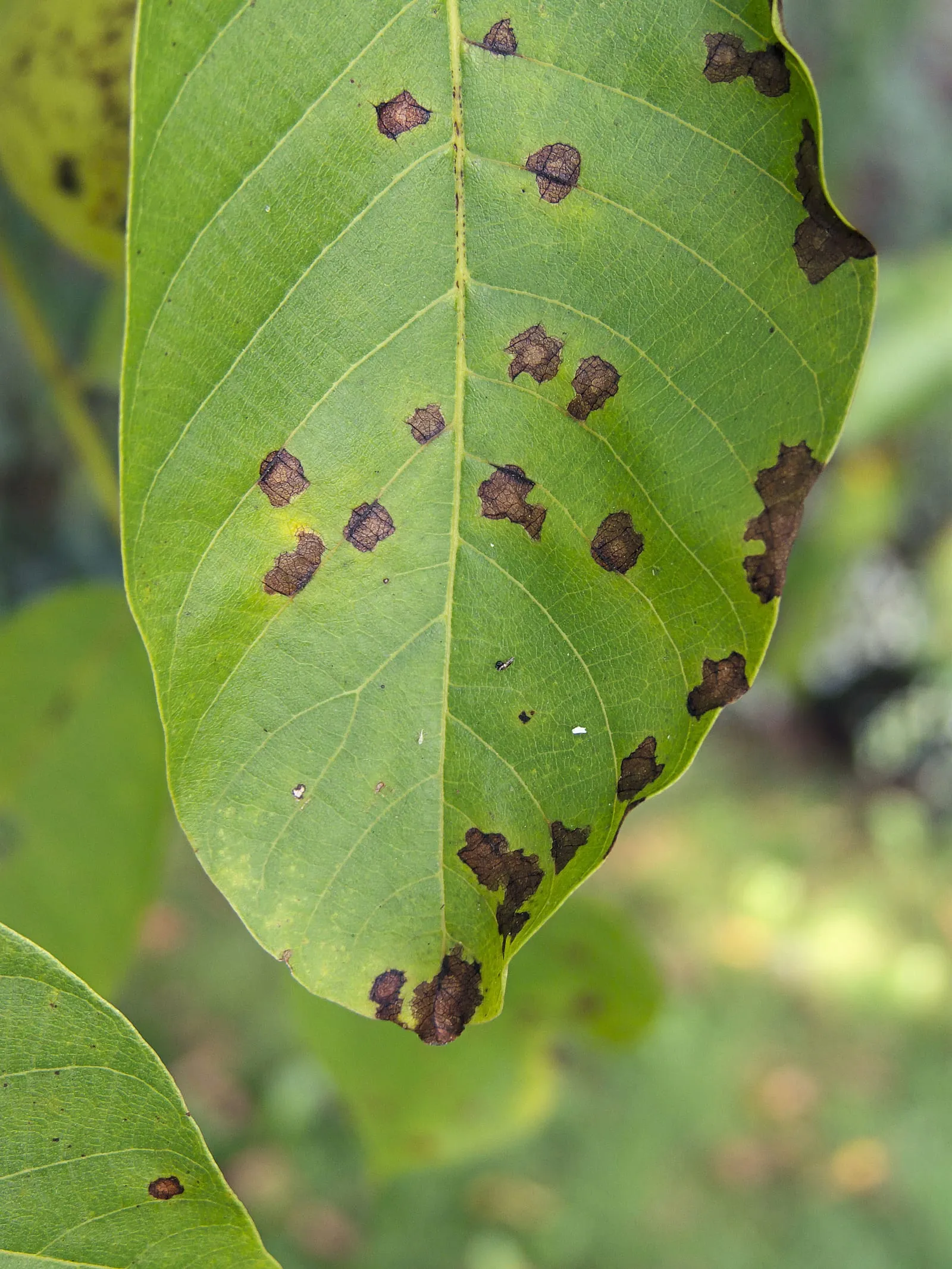
Ophiognomonia leptostyla
Fungal leaf disease causing premature defoliation in wet seasons, weakening trees over consecutive years and reducing kernel fill.
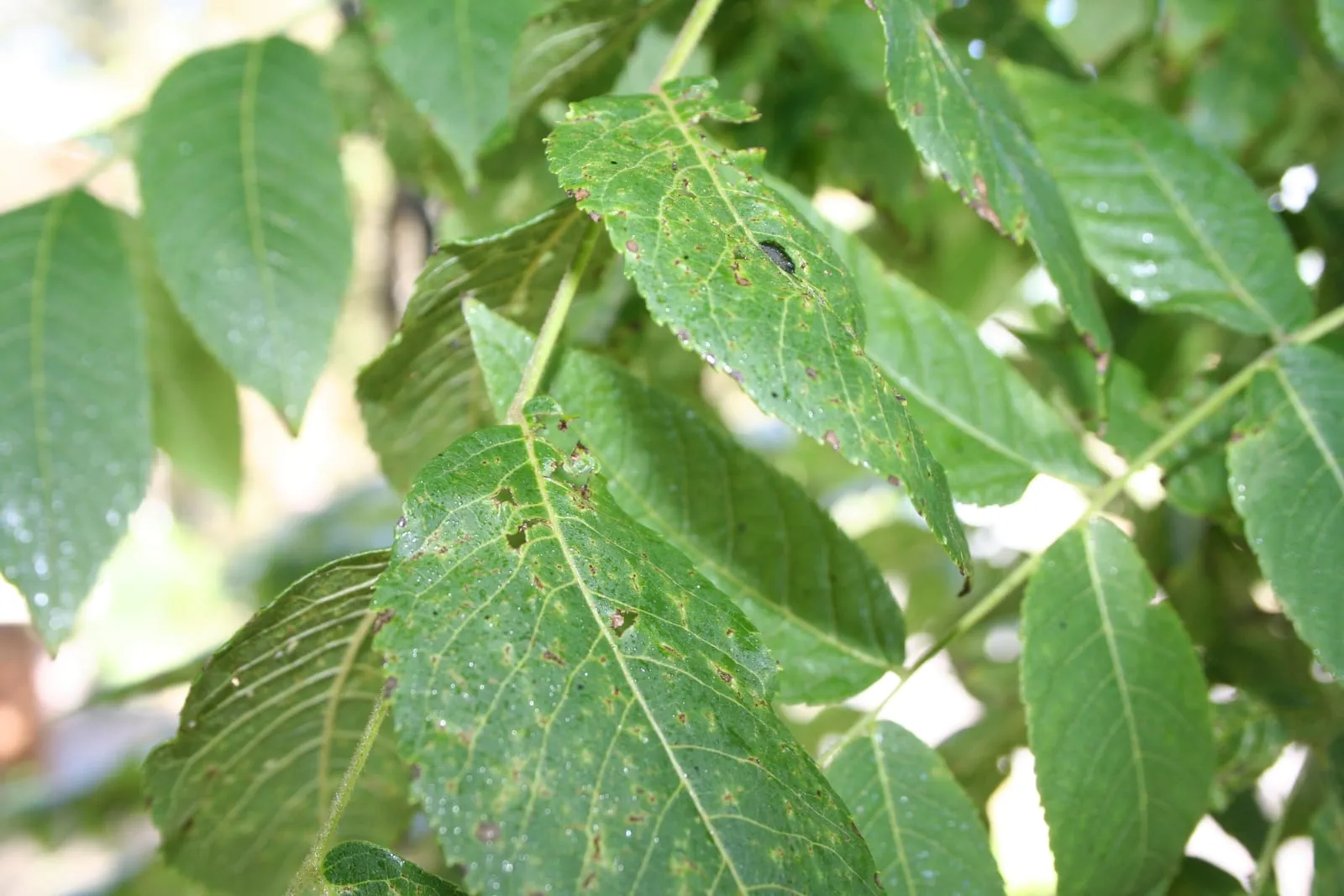
Geosmithia morbida (vectored by Pityophthorus juglandis)
Fatal disease of black walnut caused by a fungus vectored by the walnut twig beetle. Spreading eastward from the western US, devastating native black walnut stands.
Modified care for zone 5b
Disease management requires more attention in zone 5b than in drier or warmer parts of the walnut range. Walnut Anthracnose thrives in wet summers and causes premature defoliation; pruning for canopy airflow and removing fallen leaf debris in autumn reduce overwintering inoculum. Thousand Cankers Disease has expanded its documented range into portions of zone 5b in recent years. Annual bark inspections for the small, dark, clustered cankers associated with walnut twig beetle activity are warranted, particularly on Thomas and other older selections that were selected before TCD pressure was well understood.
Among the pest pressures listed for this zone, Codling moth affects walnut kernels on a timing similar to apples; monitoring with traps and timing any interventions to moth flight improves efficacy. Plum curculio is less damaging to walnuts than to stone fruits but worth monitoring in areas with heavy pressure.
Black Walnut in adjacent zones
Image: "Juglans nigra nuts", by Gmihail at Serbian Wikipedia, via Wikimedia Commons, licensed under CC-BY Source.

Related