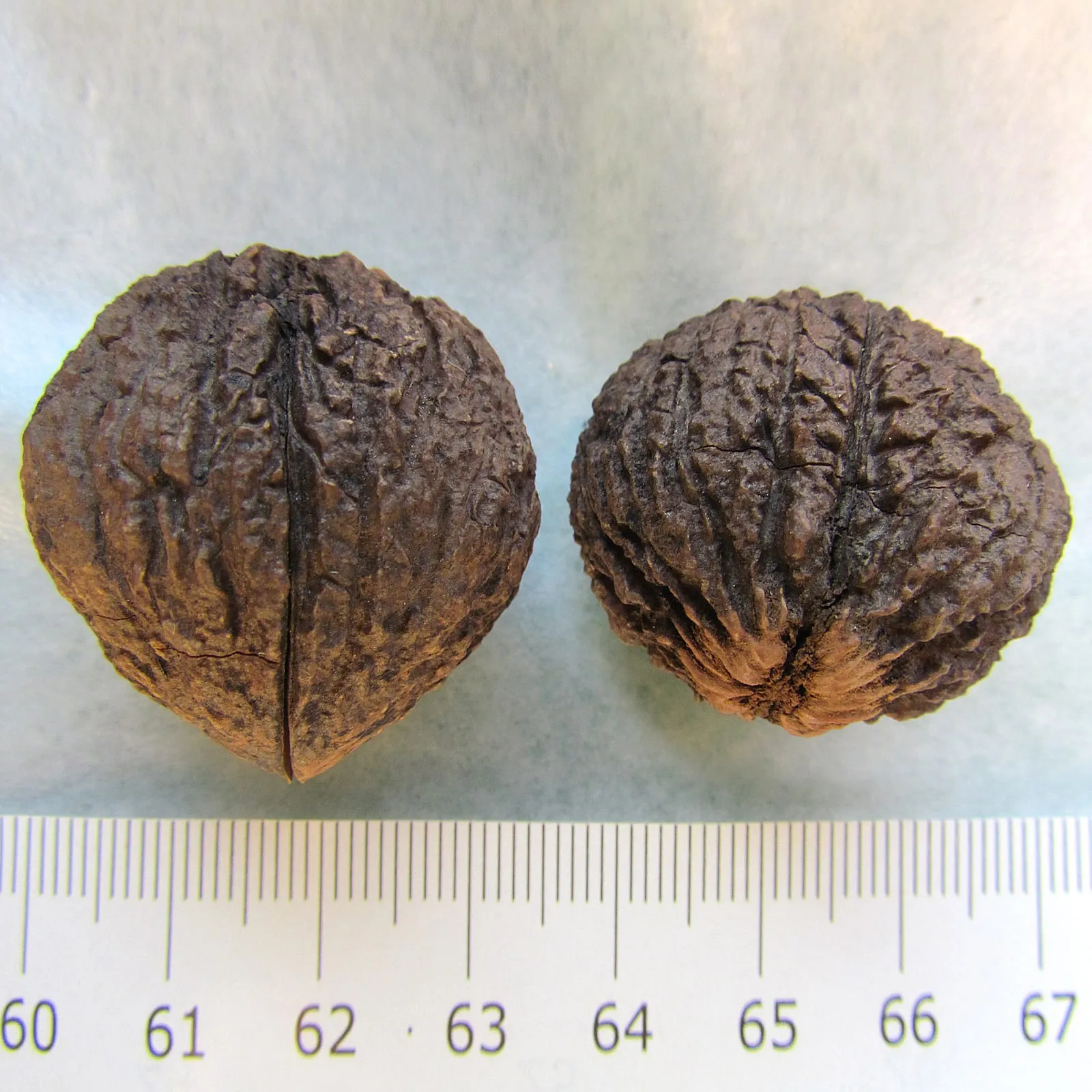
nut in zone 5a
Growing black walnut in zone 5a
Juglans nigra
- Zone
- 5a -20°F to -15°F
- Growing season
- 150 days
- Chill needed
- 700 to 1500 below 45°F
- Suitable varieties
- 4
- Days to harvest
- 150 to 200
The verdict
Zone 5a sits squarely within black walnut's native cold-hardiness range. The species tolerates temperatures to around -25°F, so the zone's -20 to -15°F lows pose no significant winter kill risk to established trees. On chill hours, zone 5a typically accumulates 1,000 to 1,400 hours below 45°F annually, which slots comfortably within the crop's 700 to 1,500-hour requirement. This is not a marginal zone for black walnut.
The real limiting factor is growing season length. At roughly 150 days, zone 5a gives the nuts enough time to mature in most years, but a late spring or early fall frost can cut that window short. Varieties matter here: Thomas and Sparks 127 are known to ripen earlier than wild-type selections, which reduces the risk of caught-short harvests. Emma K and Sparrow are also reliably productive in cooler northern climates. Zone 5a is a solid fit, not a stretch.
Recommended varieties for zone 5a
4 cultivars suited to this zone, with disease-resistance and zone-fit annotations.
| Variety | Notes | Zone fit | Disease resistance |
|---|---|---|---|
| Thomas fits zone 5a | Bold, intense, distinctively earthy black-walnut flavor; baking (cookies, cakes, ice cream), fudge. The heritage productive variety, large nuts with thicker shells than English walnut. Self-fertile but better with a partner. | | none noted |
| Sparrow fits zone 5a | Bold, rich black-walnut flavor; baking and confections. Early-ripening selection that finishes before first frost in zones 5-6. Cracks easier than most black walnuts. | | none noted |
| Emma K fits zone 5a | Bold, intensely flavored, very large kernels; baking and shelling. High kernel-to-shell ratio for a black walnut, productive Missouri selection. | | none noted |
| Sparks 127 fits zone 5a | Bold, classic black-walnut flavor, medium kernels; baking. Compact tree (40-50 ft mature) suitable for smaller landscapes where standard black walnut would dominate. | | none noted |
Critical timing for zone 5a
Black walnut leafs out and releases pollen in late April to mid-May in zone 5a, depending on the specific site and the spring's warmth. Catkins appear before the leaves fully open. Late spring frosts are the main timing hazard: a frost after pollination can damage the developing nutlets, reducing yield for that season without harming the tree itself.
Nut harvest typically falls in late September through October, when the outer green husk begins to soften and darken. First frost in zone 5a commonly arrives in early to mid-October, so there is usually a narrow but adequate window between full ripeness and hard freeze. In colder microsites or following a delayed spring, that window tightens. Collecting fallen nuts promptly prevents quality loss from freeze-thaw cycles.
Common challenges in zone 5a
- ▸ Fire blight in pears
- ▸ Cedar-apple rust
- ▸ Late spring frosts
Disease pressure to watch for
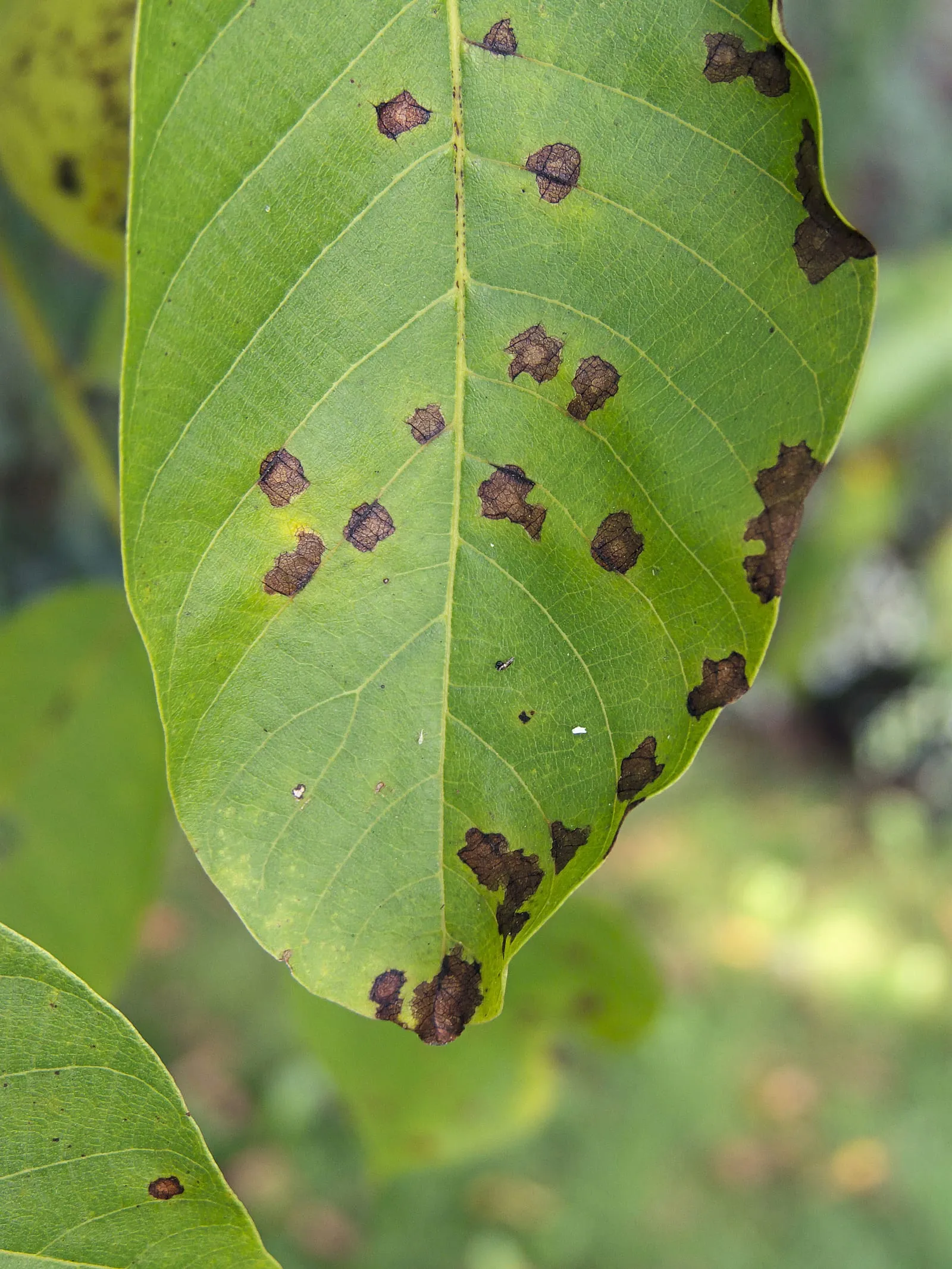
Ophiognomonia leptostyla
Fungal leaf disease causing premature defoliation in wet seasons, weakening trees over consecutive years and reducing kernel fill.
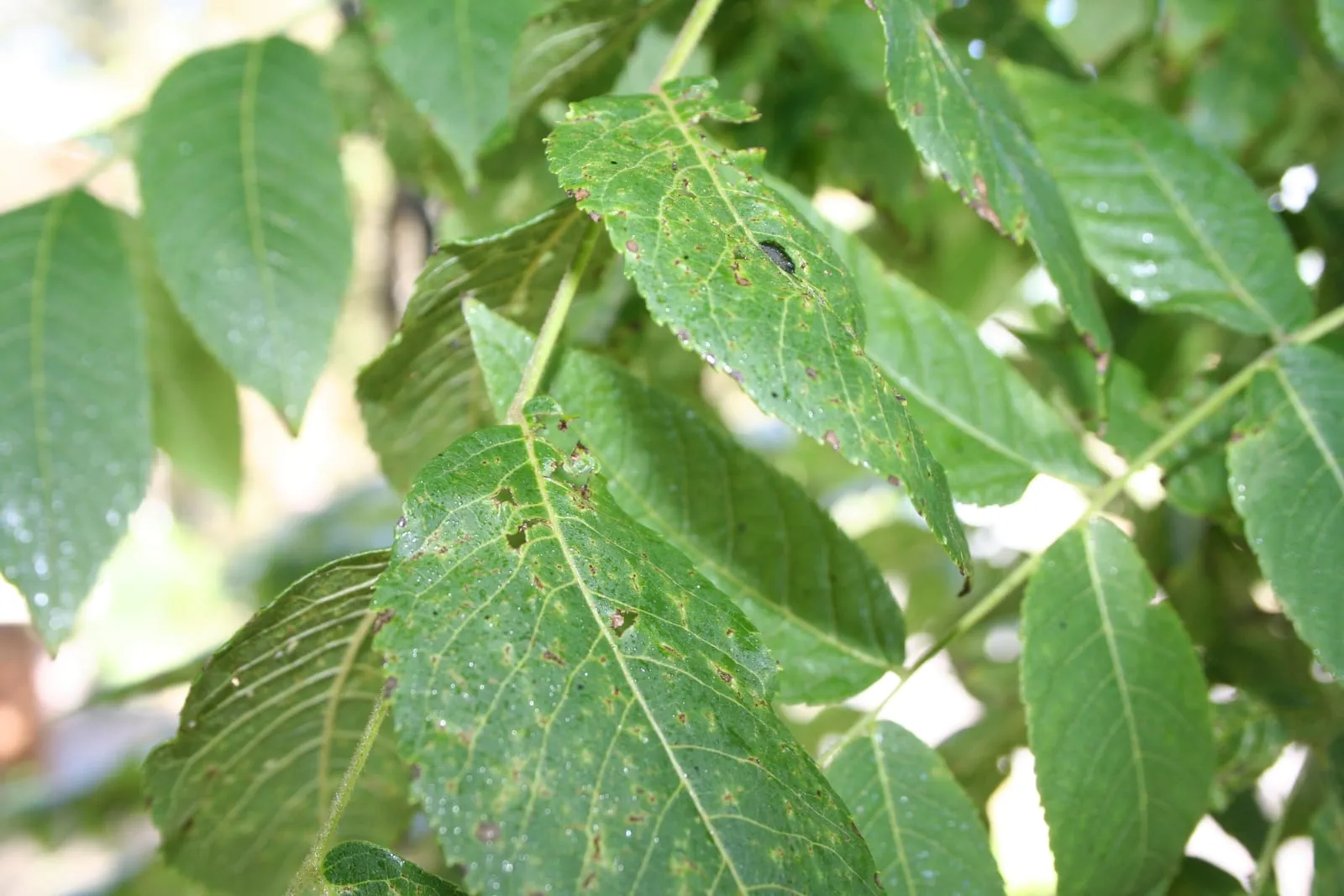
Geosmithia morbida (vectored by Pityophthorus juglandis)
Fatal disease of black walnut caused by a fungus vectored by the walnut twig beetle. Spreading eastward from the western US, devastating native black walnut stands.
Modified care for zone 5a
Site selection does more work in zone 5a than in warmer zones. Avoid low-lying frost pockets where cold air pools in spring; even a gentle slope improves frost drainage around bloom time. South or southeast-facing exposures warm earlier in spring and extend the effective growing season at the margins.
Walnut Anthracnose pressure increases in wet summers, and zone 5a's cooler, often humid conditions can favor the disease. Raking and removing fallen leaflets in autumn reduces inoculum for the following season. Thousand Cankers Disease, caused by a bark beetle-fungus complex, is advancing into the northern Midwest and Great Lakes; sourcing nursery stock from reputable regional growers and inspecting for twig dieback annually is prudent. No spray program reliably controls either disease once established, so sanitation and site hygiene are the practical levers.
Frequently asked questions
- Is zone 5a too cold for black walnut to produce nuts reliably?
No. Black walnut is native across much of the northern US and is cold-hardy well below zone 5a temperatures. The 150-day growing season in zone 5a is generally sufficient for early-ripening selections like Thomas and Sparks 127. Wild-type seedling trees may not ripen fully in the shortest seasons.
- Which black walnut varieties perform best in zone 5a?
Thomas and Sparks 127 are the most commonly recommended named selections for shorter-season zones because they ripen earlier than many other cultivars. Emma K and Sparrow also have solid track records in northern climates. All four are improved selections with larger, thinner-shelled nuts than wild seedlings.
- How serious is Thousand Cankers Disease for zone 5a growers?
The disease has been confirmed in parts of the eastern and midwestern US and is considered a serious long-term threat to native black walnut populations. There is no cure once a tree is infected. Buying locally sourced nursery stock and avoiding moving walnut wood across state lines reduces introduction risk.
- Can late spring frosts in zone 5a kill the tree or just reduce the harvest?
Established black walnut trees are not killed by typical late spring frosts in zone 5a. A hard frost after catkin release or during early nut set can reduce or eliminate that year's crop, but the tree itself recovers and produces normally the following year.
+−
+−
+−
+−
Black Walnut in adjacent zones
Image: "Juglans nigra nuts", by Gmihail at Serbian Wikipedia, via Wikimedia Commons, licensed under CC-BY Source.

Related