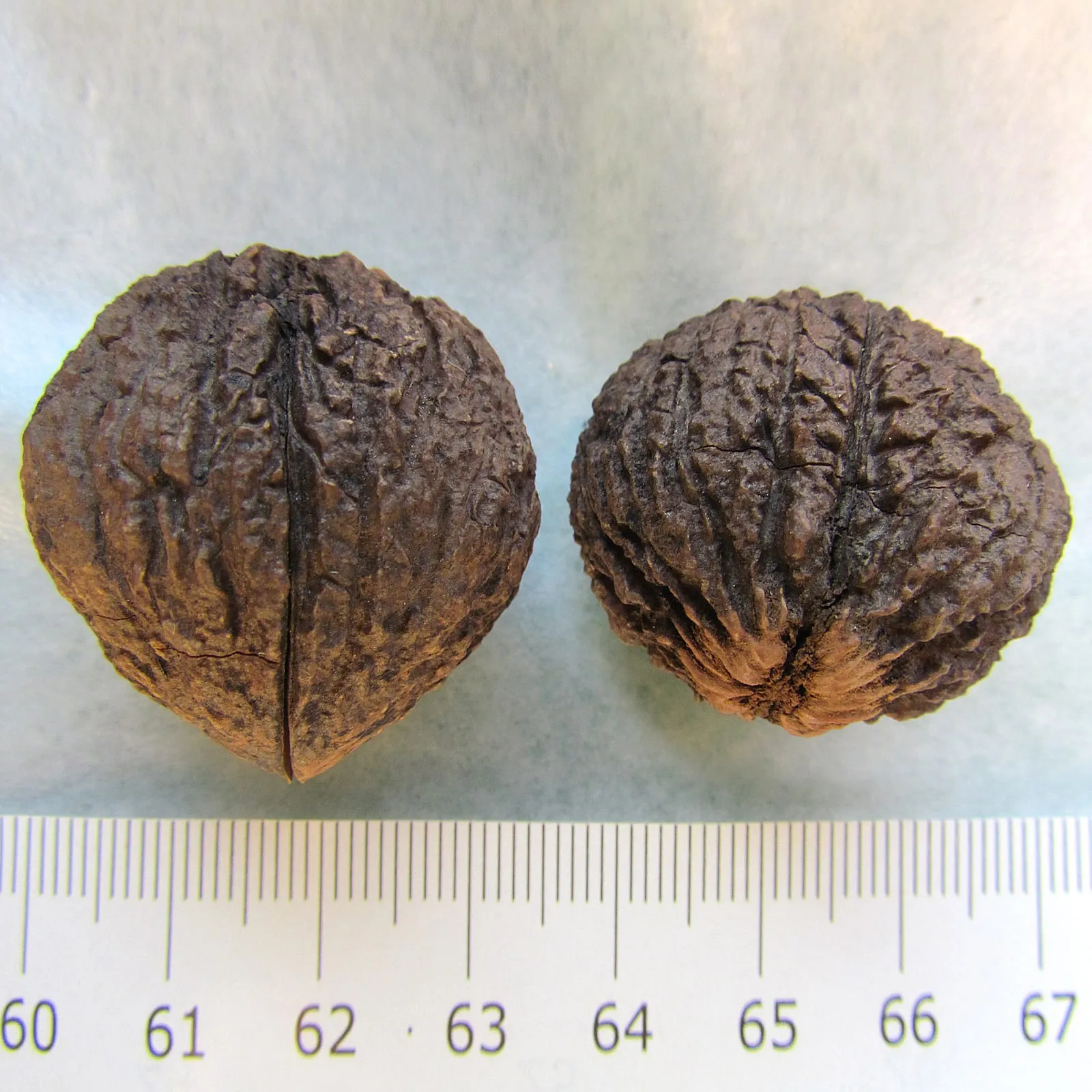
nut
Black Walnut
Juglans nigra
USDA hardiness range
- Zones
- 4a–9a
- Chill hours
- 700 to 1500 below 45°F
- Days to harvest
- 150 to 200
- Sun
- Full
- Water
- Moderate
- Lifespan
- 130 to 250 years
Growing black walnut
Black walnut (Juglans nigra) is a native North American hardwood that functions simultaneously as a long-lived timber tree and a high-value nut crop. Hardy across USDA zones 4a through 9a, it thrives across the eastern and central United States wherever 700 to 1,500 chill hours accumulate reliably. The kernel's bold, intensely earthy flavor distinguishes it sharply from the milder English walnut and commands a significant premium in specialty baking markets. Where black walnut succeeds, it succeeds for generations: trees commonly live 130 to 250 years and frequently outlast the orchardists who plant them.
The tree struggles at the warm edge of its range. In zones 8b and 9a, chill-hour accumulation falls short in warm winters, causing erratic leafout and poor nut fill. At the cool end, zone 4a growers face late-spring frosts capable of damaging emerging flowers before pollination completes. The 150 to 200 days required from leafout to harvest maturity makes early-ripening selections like Sparrow essential in shorter-season zones 5 and 6.
The clearest predictor of a productive planting is site selection made before the tree goes in the ground. Black walnut demands deep, well-drained loam and is unforgiving of compacted or waterlogged soils. Juglone, the allelopathic compound released by walnut roots and hulls, limits what can grow within the root zone and must be factored into landscape planning from the start. Trees given adequate space and appropriate soils require relatively little ongoing intervention and will produce for decades.
Recommended varieties
See all 4 →4 cultivars for home growers, with notes on flavor, ripening, and disease resistance.
| Variety | Notes | Zone fit | Disease resistance |
|---|---|---|---|
| Thomas | Bold, intense, distinctively earthy black-walnut flavor; baking (cookies, cakes, ice cream), fudge. The heritage productive variety, large nuts with thicker shells than English walnut. Self-fertile but better with a partner. | | none noted |
| Sparrow | Bold, rich black-walnut flavor; baking and confections. Early-ripening selection that finishes before first frost in zones 5-6. Cracks easier than most black walnuts. | | none noted |
| Emma K | Bold, intensely flavored, very large kernels; baking and shelling. High kernel-to-shell ratio for a black walnut, productive Missouri selection. | | none noted |
| Sparks 127 | Bold, classic black-walnut flavor, medium kernels; baking. Compact tree (40-50 ft mature) suitable for smaller landscapes where standard black walnut would dominate. | | none noted |
Soil and site requirements
Deep, well-drained loam with a pH between 6.0 and 6.5 produces the most consistent results. Black walnut tolerates mildly acidic to neutral soils but shows calcium and manganese deficiencies in highly acidic conditions and chlorosis in alkaline ones. Soil depth is a critical factor: roots can reach 8 to 12 feet in suitable ground, and trees planted over hardpan, fractured rock, or a high water table rarely develop full crowns or production potential.
Full sun is not optional. Trees shaded by neighboring canopy produce fewer nuts and are significantly more susceptible to Walnut Anthracnose because foliage dries more slowly after rain. A south- or southeast-facing slope improves cold-air drainage, which reduces flower damage during late-spring frosts in zones 4 through 6.
Spacing of 40 to 60 feet between trees balances crown development against long-term yield. Closer spacing is workable in the first decade but requires aggressive thinning before canopy closure. A mature black walnut crown can spread 60 to 80 feet in diameter, so planning with full size in mind prevents crowding problems that are difficult to correct later.
The juglone footprint extends roughly 50 to 60 feet from the trunk in all directions. Sensitive species including tomatoes, blueberries, and most brassicas planted within this zone will decline or fail. Corn, beans, squash, and most grasses are tolerant. The Penn State Juglone Tolerance resource lists sensitive and tolerant species and is worth consulting before designing planting beds near the root zone.
Common diseases
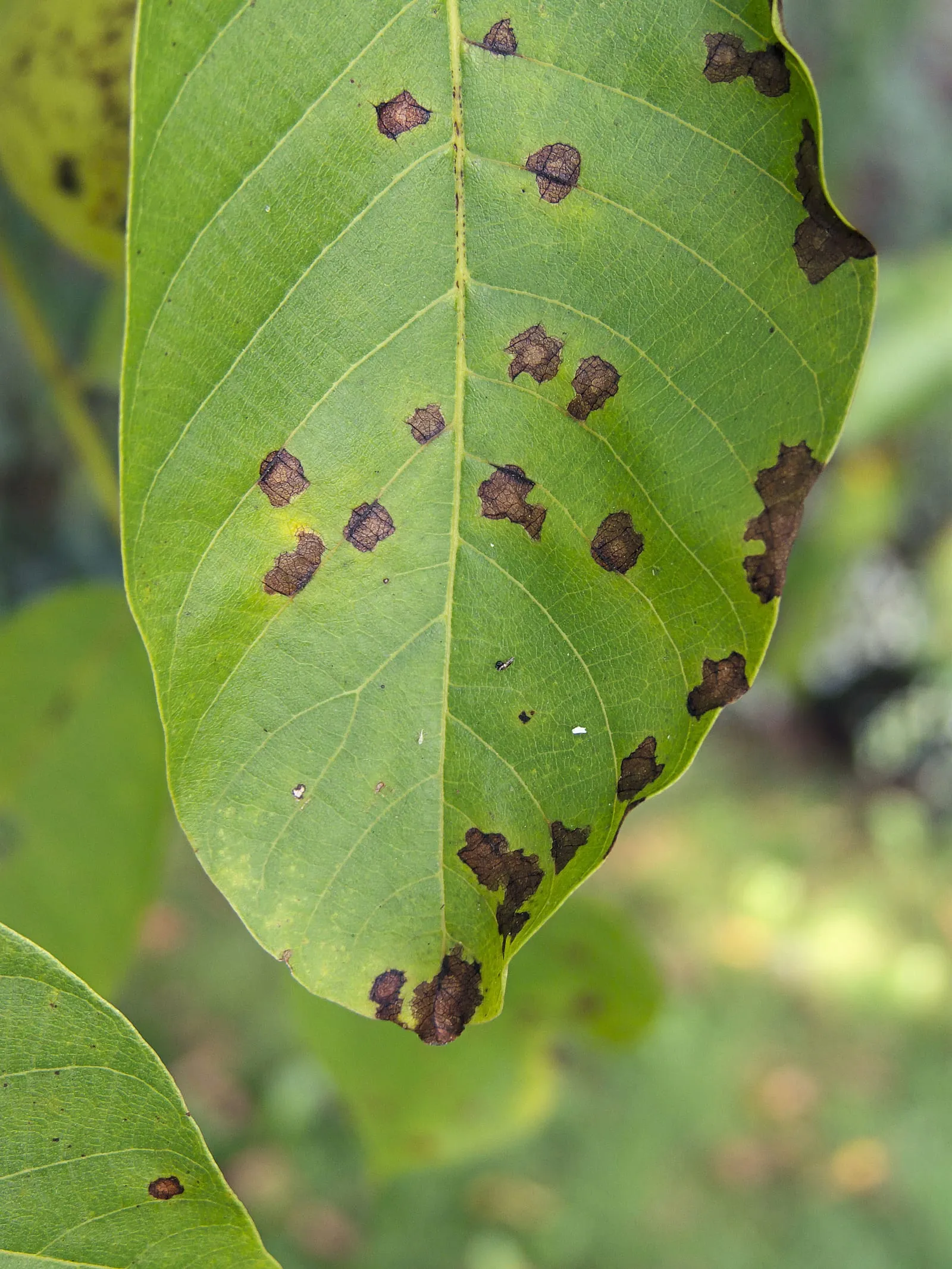
Ophiognomonia leptostyla
Fungal leaf disease causing premature defoliation in wet seasons, weakening trees over consecutive years and reducing kernel fill.
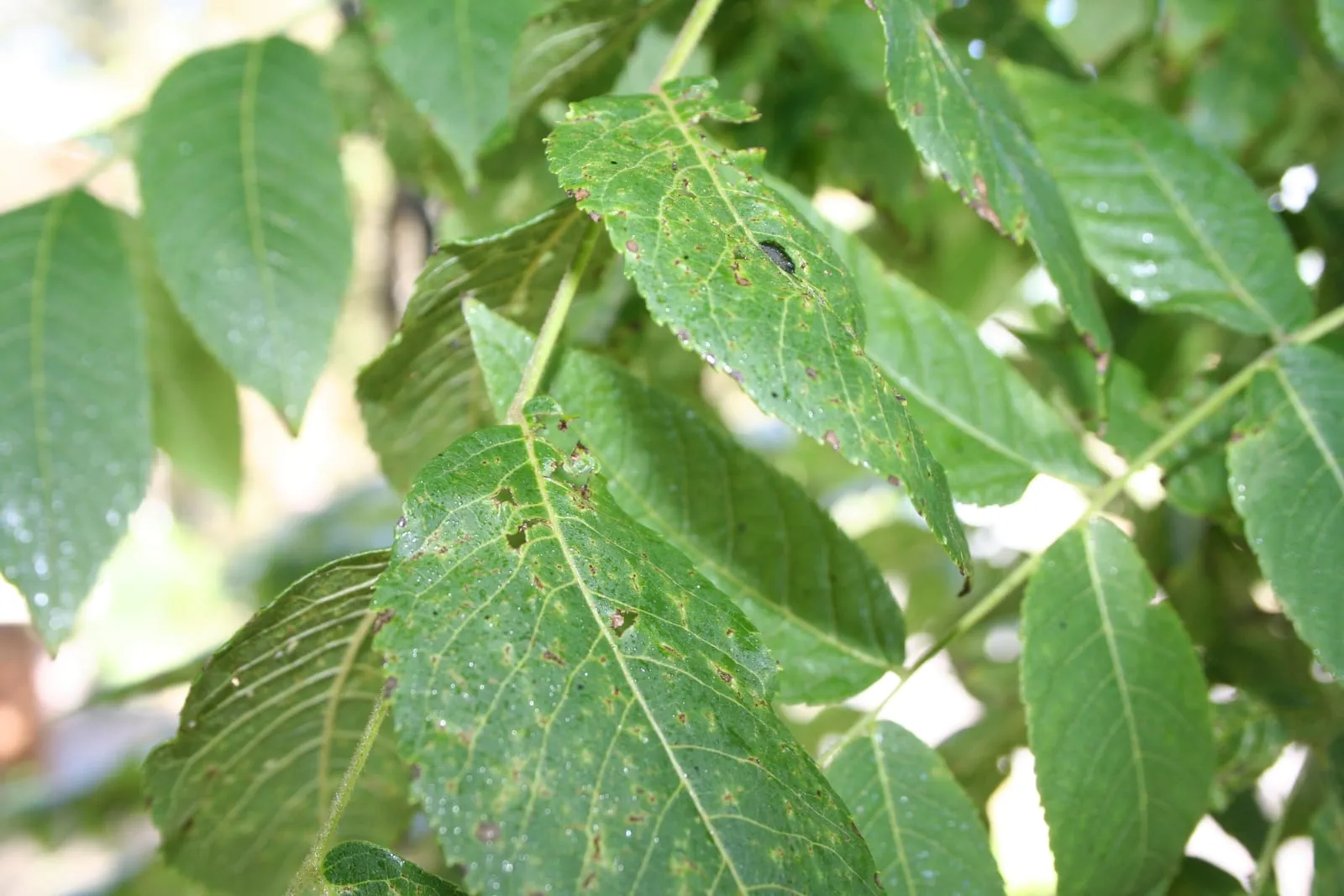
Geosmithia morbida (vectored by Pityophthorus juglandis)
Fatal disease of black walnut caused by a fungus vectored by the walnut twig beetle. Spreading eastward from the western US, devastating native black walnut stands.
Common pests
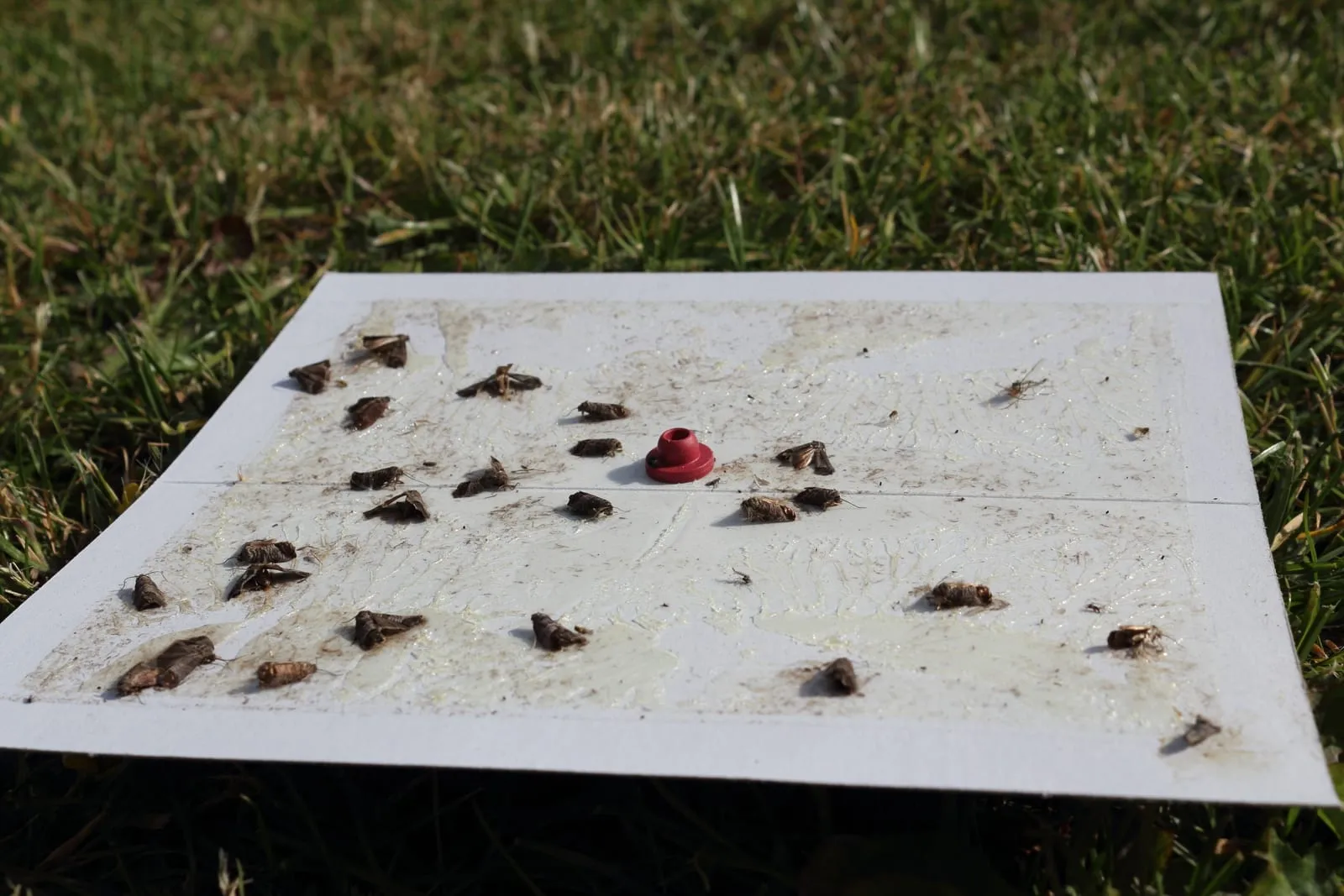
Cydia pomonella
The most damaging pest of apple worldwide. Larvae tunnel into developing fruit, ruining the crop.
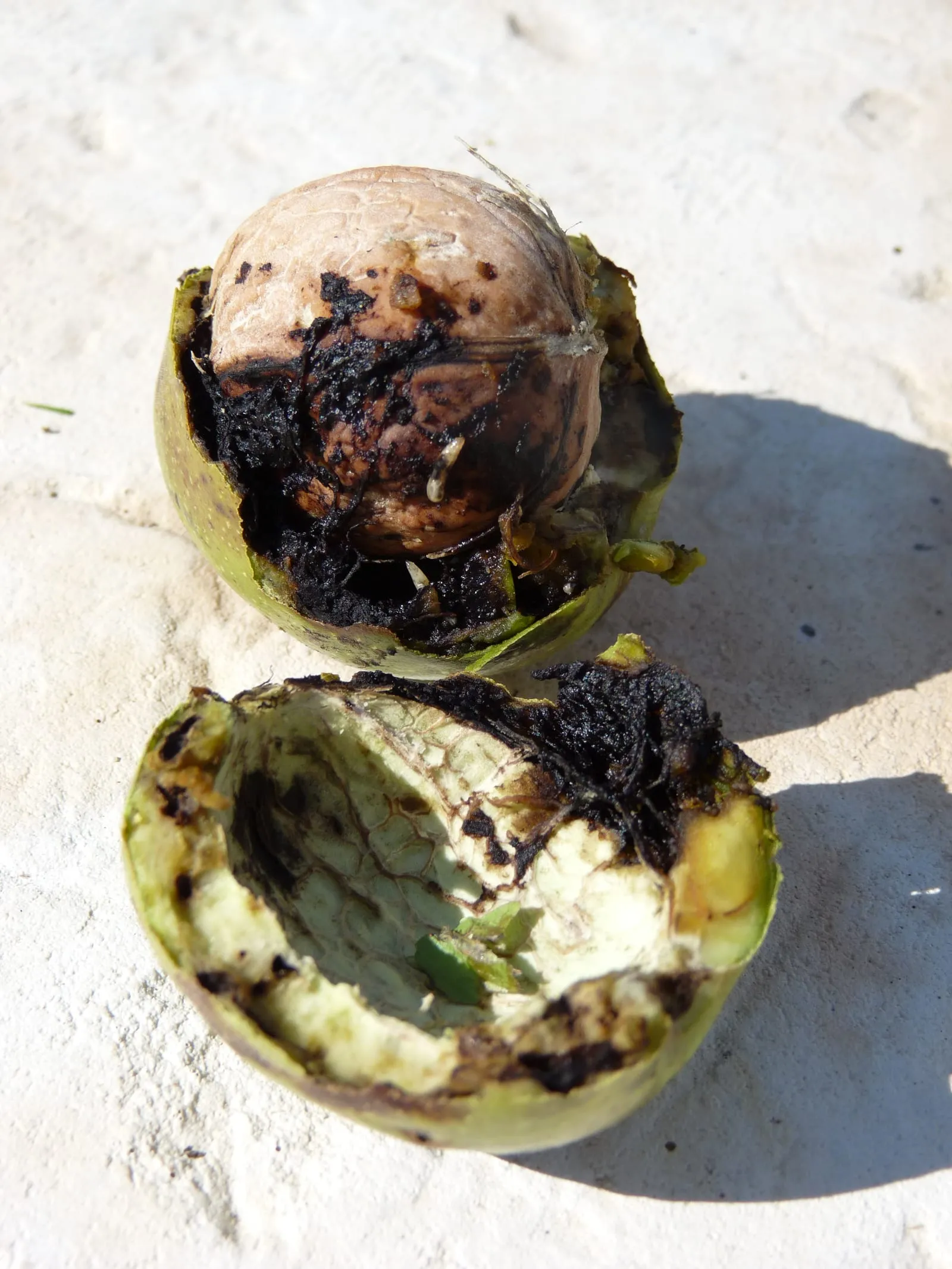
Rhagoletis completa
Tephritid fly whose larvae develop inside walnut husks, causing dark staining of the shell and reduced kernel quality.
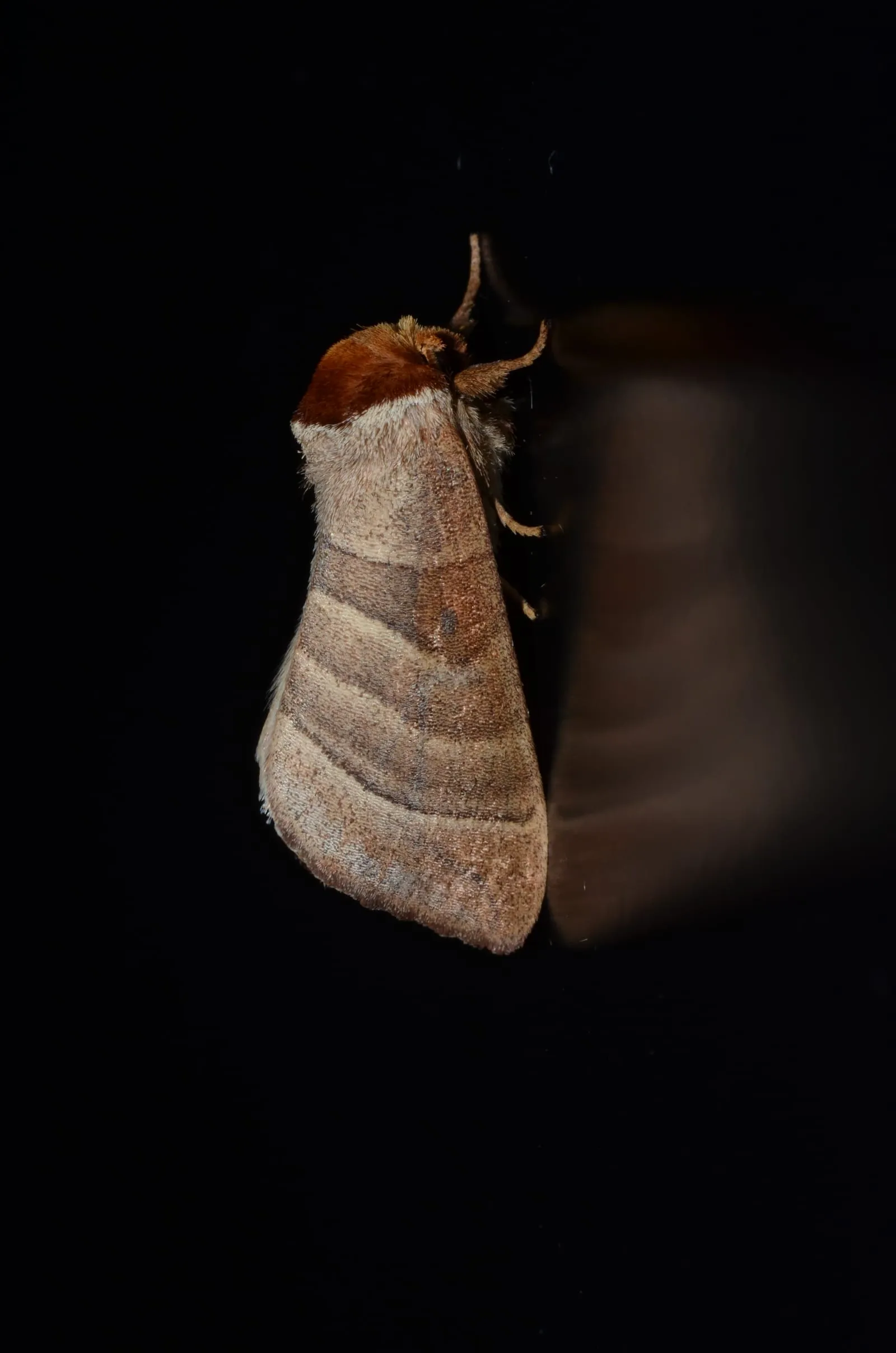
Datana integerrima
Gregarious caterpillar that feeds in dense colonies on walnut and pecan foliage, capable of defoliating entire branches in days.
Common challenges
Three problems account for most failed or underperforming black walnut plantings.
Hull processing delay is the most preventable failure point for home growers. Once nuts fall, green hulls must be removed within a few days. Hulls left on too long rot and stain the shell, degrading both flavor and kernel color. Standard practice is mechanical hulling (a corn sheller works well) followed by thorough washing and curing. Nuts dried to approximately 8 percent moisture store reliably through winter; nuts dried unevenly develop off-flavors and mold.
Walnut Anthracnose is the most consistent disease pressure across the native range, causing premature defoliation and shriveled, undersized kernels in wet growing seasons. The fungal pathogen overwinters in infected leaf litter. Raking and removing fallen leaves after harvest reduces inoculum significantly without chemical inputs. In consistently wet regions, fungicide applications timed from bud break through hull split are outlined in Missouri Black Walnut Center management guides.
Thousand Cankers Disease poses a more serious long-term threat. The condition, caused by a fungal complex vectored by the walnut twig beetle, kills branches progressively from the canopy downward. Originally concentrated in western plantings, it has spread into eastern populations. Trees showing branch dieback with small, dark cankers beneath the bark should be assessed promptly by a certified arborist. No effective chemical control exists; removal of heavily infected trees is the primary tool for limiting beetle spread to adjacent trees.
Companion plants
Frequently asked questions
- How many chill hours does black walnut require?
Black walnut needs 700 to 1,500 chill hours annually (temperatures between 32 and 45 degrees F). Most of its native range in zones 4a through 7b easily meets this range. In zones 8b and 9a, warm winters can fall short of the lower threshold, producing erratic leafout and reduced nut fill the following season.
- How many days does black walnut take to reach harvest?
Nut maturity requires 150 to 200 days from leafout. First production on named varieties typically begins 4 to 7 years after planting; seedling trees often take longer. In zones 5 and 6, choosing early-ripening selections like Sparrow reduces the risk of nuts failing to mature before first frost.
- What USDA zones support black walnut?
Black walnut is hardy across zones 4a through 9a. Zones 5a through 7b represent the core of its productive range, where chill hours are reliably met and growing seasons are long enough for full nut maturity. At zone 4a, late-spring frost damage to flowers is an ongoing risk; at zone 9a, insufficient winter chilling limits reliable production.
- Does black walnut need a second tree for pollination?
Most named varieties are self-fertile, but yields are noticeably better with a second tree nearby. Catkin timing varies between individuals, and two overlapping selections improve pollen coverage during the short pollination window. The Thomas variety is rated self-fertile but performs better as part of a two-tree planting.
- What is the most common disease affecting black walnut?
Walnut Anthracnose is the most widespread fungal disease, causing premature defoliation and shriveled kernels during wet growing seasons. It overwinters in fallen leaf litter, so removing and disposing of leaves after harvest reduces the following season's disease load. Thousand Cankers Disease is a more serious threat where established, causing progressive dieback with no available chemical cure.
- What is juglone and which plants are sensitive to it?
Juglone is an allelopathic compound released by black walnut roots, hulls, and decomposing leaves. Within roughly 50 to 60 feet of the trunk, it inhibits many common garden plants. Sensitive species include tomatoes, peppers, blueberries, and many ornamentals. Tolerant plants include corn, beans, squash, and most grasses. The Penn State Juglone Tolerance resource maintains a detailed species list.
- How long does a black walnut tree live and produce nuts?
Black walnut commonly lives 130 to 250 years. Nut production typically peaks between years 10 and 80, then gradually declines, though older trees can still crop meaningfully. This longevity makes site selection a multi-generational decision; trees planted in deep loam with adequate spacing often outlast their original context by a century or more.
+−
+−
+−
+−
+−
+−
+−
Sources
Image: "Juglans nigra nuts", by Gmihail at Serbian Wikipedia, via Wikimedia Commons, licensed under CC-BY. Source.

Black Walnut by zone
Related