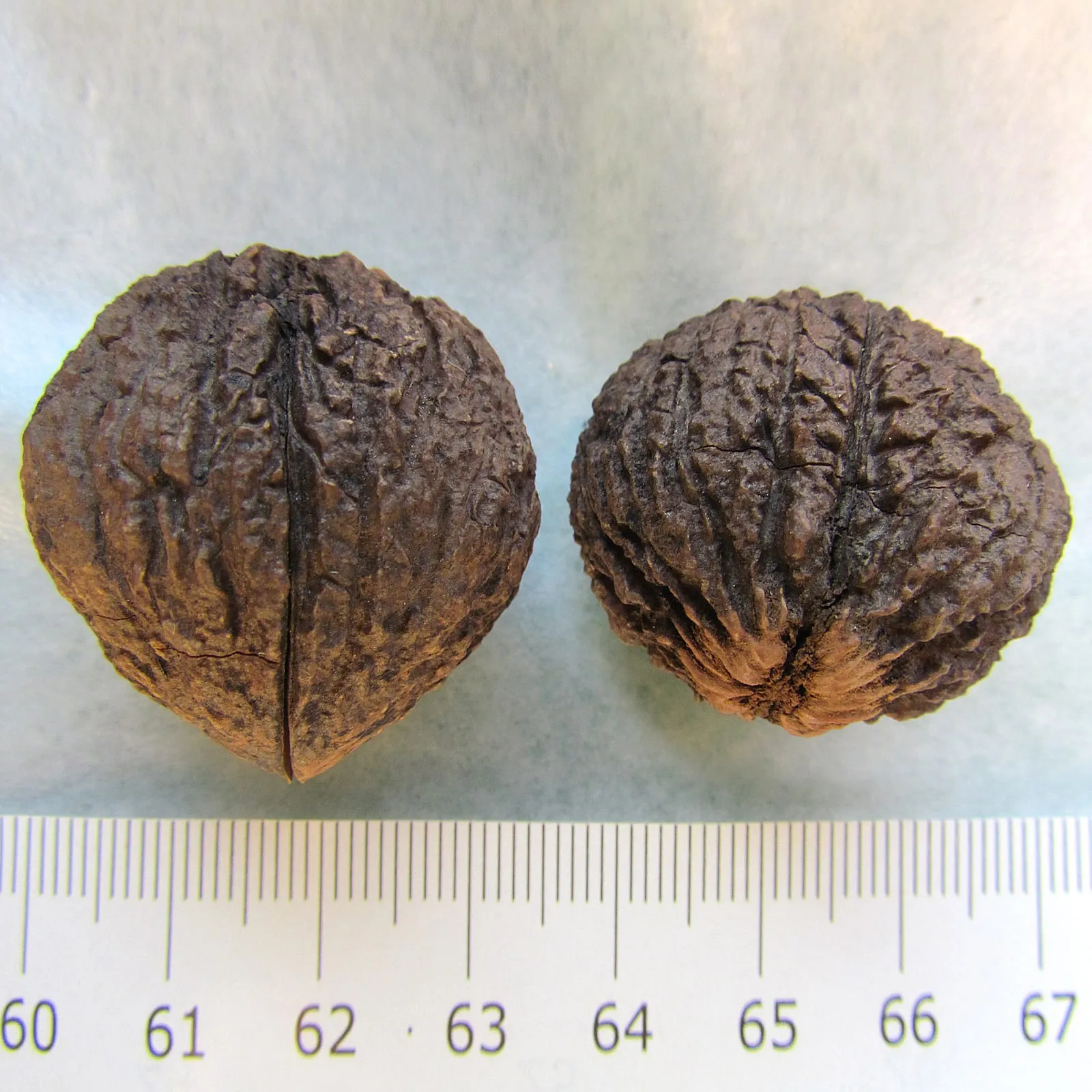
nut in zone 7b
Growing black walnut in zone 7b
Juglans nigra
- Zone
- 7b 5°F to 10°F
- Growing season
- 220 days
- Chill needed
- 700 to 1500 below 45°F
- Suitable varieties
- 2
- Days to harvest
- 150 to 200
The verdict
Zone 7b sits comfortably within black walnut's native range across the eastern United States, and the chill-hour match is solid. Black walnut requires 700 to 1,500 chill hours depending on provenance; zone 7b typically accumulates 800 to 1,100 hours between November and February, placing most sites well within that window. This is not a marginal zone for the crop.
The 220-day growing season in zone 7b is more than sufficient for nut development and full husk maturation before fall frost. Varieties Thomas and Emma K were selected partly for predictable performance in mid-Atlantic and upper-South conditions, making them reasonable starting points for zone 7b plantings. The main limiting factors in this zone are not cold or season length but summer disease pressure and insect load, both of which are manageable with appropriate site selection and monitoring.
Recommended varieties for zone 7b
2 cultivars suited to this zone, with disease-resistance and zone-fit annotations.
| Variety | Notes | Zone fit | Disease resistance |
|---|---|---|---|
| Thomas fits zone 7b | Bold, intense, distinctively earthy black-walnut flavor; baking (cookies, cakes, ice cream), fudge. The heritage productive variety, large nuts with thicker shells than English walnut. Self-fertile but better with a partner. | | none noted |
| Emma K fits zone 7b | Bold, intensely flavored, very large kernels; baking and shelling. High kernel-to-shell ratio for a black walnut, productive Missouri selection. | | none noted |
Critical timing for zone 7b
Black walnut leafs out in mid to late April in zone 7b, with catkin bloom following shortly after. Last frost in zone 7b typically falls between March 20 and April 10, depending on elevation and local cold-air drainage. Bloom occurs after leaf-out, which provides some natural buffer against late frost damage to the reproductive structures, though a hard freeze in early April can still damage emerging growth.
Nuts reach maturity in late September through October. The husk shifts from firm green to soft and darkening as the nut ripens; nuts drop or can be knocked free at that point. Cure harvested nuts in a single layer in a well-ventilated area for two to four weeks before cracking. Zone 7b's long season rarely causes rush-to-harvest pressure from early fall frost.
Common challenges in zone 7b
- ▸ Cedar-apple rust pressure heavy in piedmont
- ▸ Japanese beetles
- ▸ Brown marmorated stink bug
- ▸ Late summer disease pressure
Disease pressure to watch for
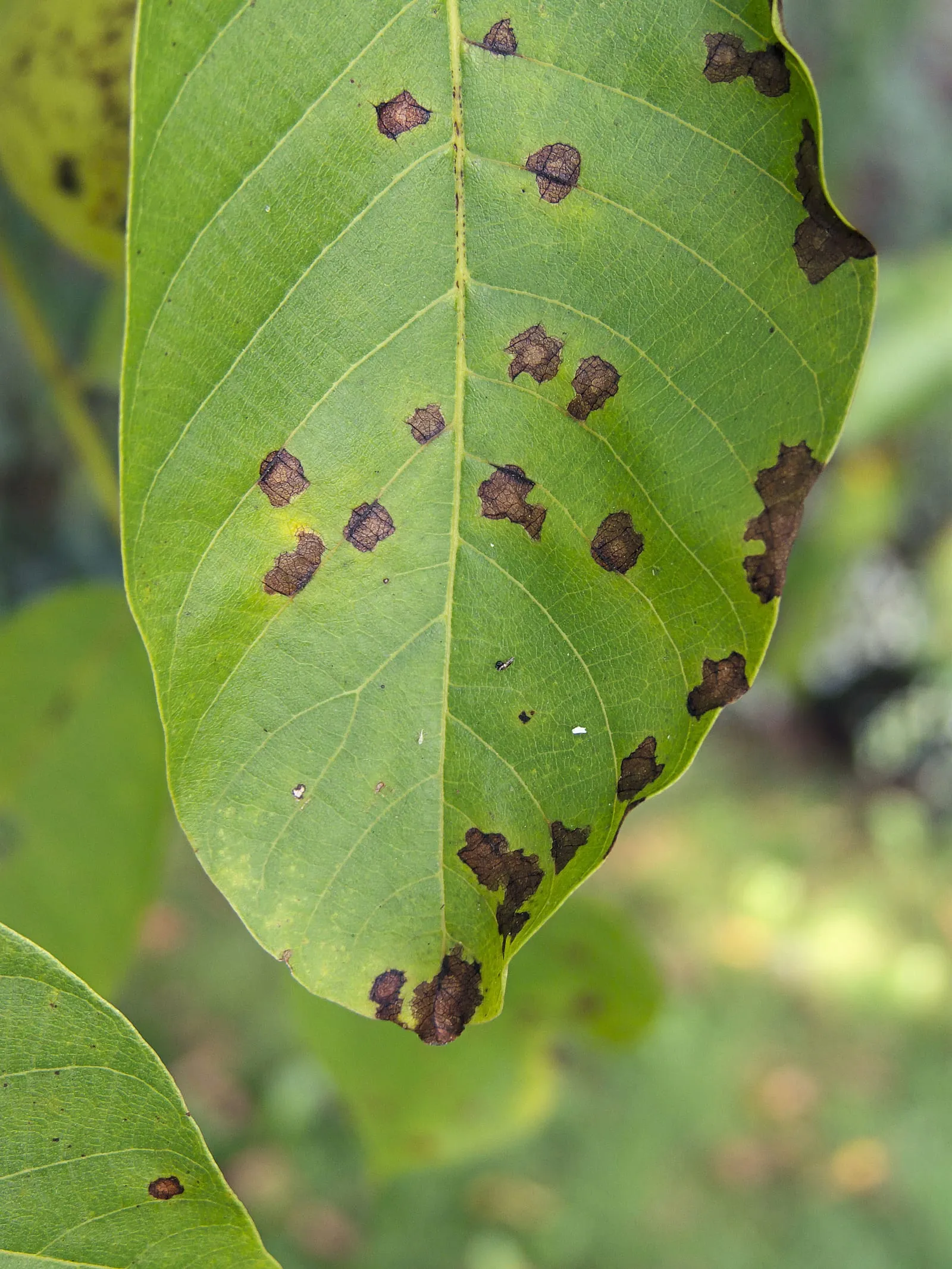
Ophiognomonia leptostyla
Fungal leaf disease causing premature defoliation in wet seasons, weakening trees over consecutive years and reducing kernel fill.
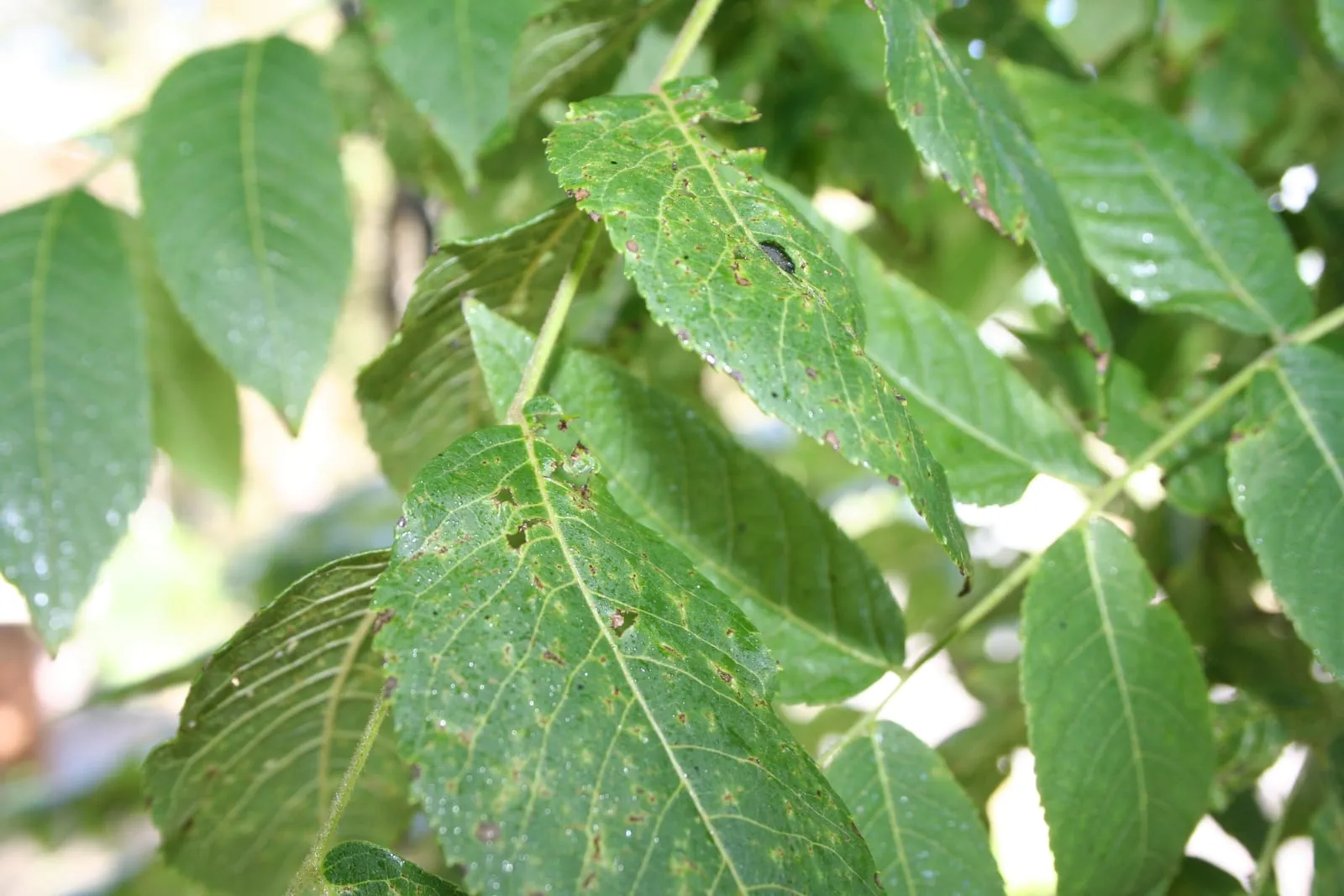
Geosmithia morbida (vectored by Pityophthorus juglandis)
Fatal disease of black walnut caused by a fungus vectored by the walnut twig beetle. Spreading eastward from the western US, devastating native black walnut stands.
Modified care for zone 7b
The primary adjustment in zone 7b is managing disease and insect pressure during the long, humid summer. Walnut Anthracnose causes premature defoliation in wet years; maintaining canopy airflow through selective pruning reduces incidence. Thousand Cankers Disease, caused by a fungal-beetle complex, has been confirmed in portions of the mid-Atlantic and piedmont South; inspect bark annually for the small cankers and discolored tissue that signal infection, and avoid moving wood from affected regions.
Japanese beetles feed heavily on walnut foliage through July and August. Defoliation pressure is rarely fatal to established trees but weakens younger plantings. Brown marmorated stink bug can damage developing husks, causing blemished kernels. Neither pest requires routine chemical response on mature trees, but both warrant monitoring on trees in their first five years. No winter protection is needed for established black walnut in zone 7b; the species handles temperatures well below the zone's 5 to 10 degree minimum without dieback.
Frequently asked questions
- Is zone 7b too warm for black walnut?
No. Black walnut is native throughout much of the zone 7b range in the eastern United States and accumulates sufficient chill hours (typically 800 to 1,100) to meet the crop's 700 to 1,500 hour requirement. The southern edge of zone 7b in the deep piedmont is more marginal, but most zone 7b sites are well within the comfortable range.
- When do black walnuts drop in zone 7b?
Nuts typically fall from late September through mid-October in zone 7b. Collect them promptly after they drop; husks that sit on wet ground begin to degrade the shell and kernel quickly. Remove husks and rinse the shells before curing in a ventilated space for two to four weeks.
- What is Thousand Cankers Disease and should zone 7b growers be concerned?
Thousand Cankers Disease is caused by a walnut twig beetle that carries the fungus Geosmithia morbida. Infected trees develop numerous small bark cankers that coalesce and girdle branches over several years. It has been confirmed in parts of the mid-Atlantic and Southeast. Zone 7b growers should inspect bark annually and avoid introducing wood or nursery stock from affected areas.
+−
+−
+−
Black Walnut in adjacent zones
Image: "Juglans nigra nuts", by Gmihail at Serbian Wikipedia, via Wikimedia Commons, licensed under CC-BY Source.

Related