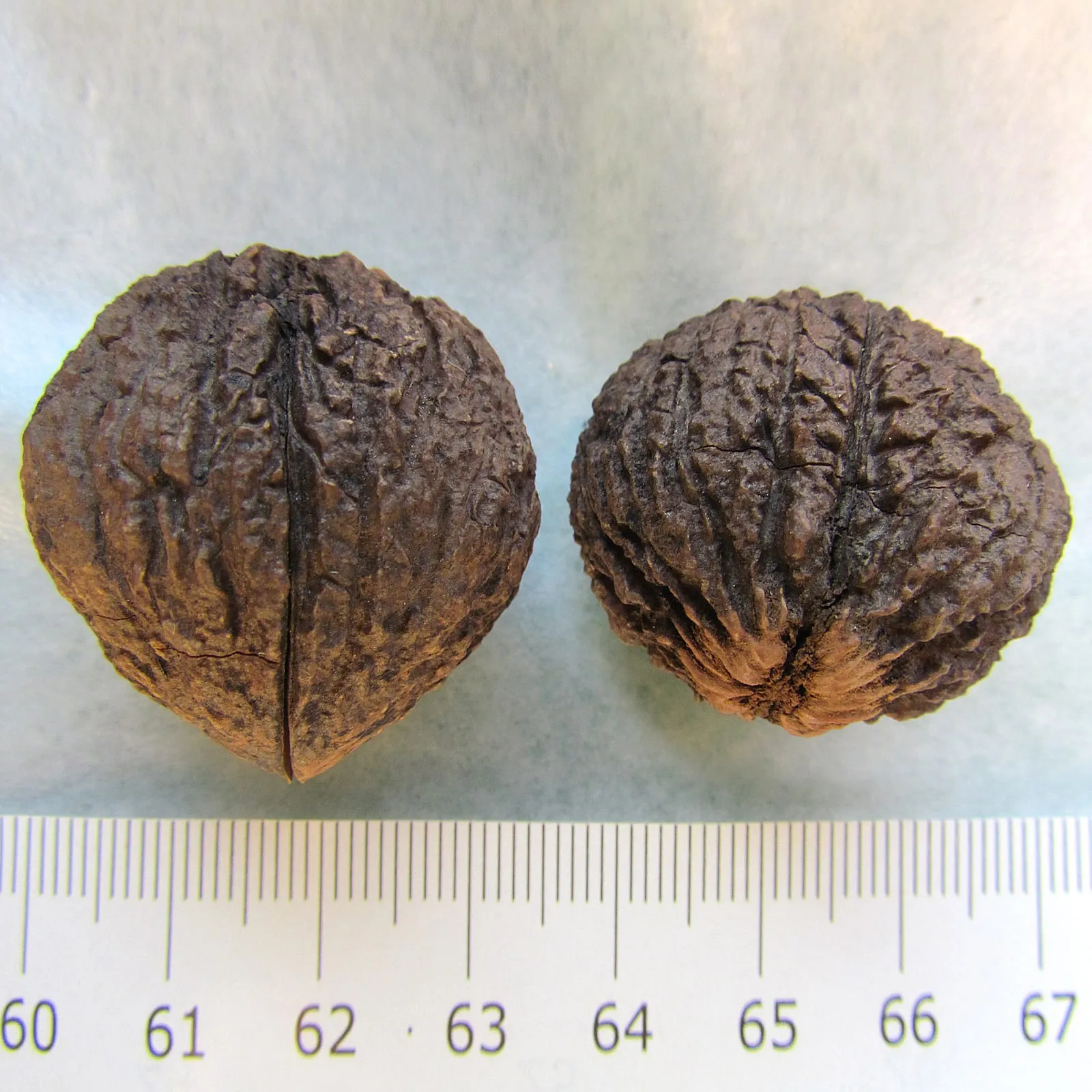
nut in zone 8b
Growing black walnut in zone 8b
Juglans nigra
- Zone
- 8b 15°F to 20°F
- Growing season
- 260 days
- Chill needed
- 700 to 1500 below 45°F
- Suitable varieties
- 0
- Days to harvest
- 150 to 200
The verdict
Zone 8b sits at the southern fringe of black walnut's reliable range. The crop's chill-hour requirement spans 700 to 1500 hours, and zone 8b typically accumulates 400 to 800 hours depending on elevation, proximity to the coast, and year-to-year winter variation. Most sites in this zone will fall short in warm winters, placing black walnut in marginal rather than well-suited territory here. The minimum temperatures of 15 to 20°F pose no cold-damage threat to established trees, and the 260-day growing season is more than sufficient for nut development. The limiting factor is dormancy. Incomplete chilling leads to delayed and uneven leafout, poor nut set, and gradual tree decline over successive warm winters. Cooler inland pockets at elevation, where chill accumulation occasionally clears 700 hours, represent the most viable sites. Low-elevation and coastal portions of zone 8b will struggle consistently and are not recommended for black walnut plantings.
Critical timing for zone 8b
In zone 8b, black walnut typically breaks dormancy in late February to early March, considerably earlier than trees in cooler zones. Catkin elongation precedes the pistillate flowers by several days, and pollination is entirely wind-dependent. The region's last frost generally falls between late January and mid-February, meaning an early bloom year carries real frost risk to female flowers. Nut development runs through the long summer, with harvest arriving in September to October. The 260-day growing season provides adequate time for nut fill under normal conditions, though sustained heat above 95°F during kernel fill in July and August can affect oil content and kernel quality. Growers tracking local frost records will find wide year-to-year variation in exact bloom timing.
Common challenges in zone 8b
- ▸ Low chill hours limit apple variety selection
- ▸ Citrus greening risk
- ▸ Nematodes in sandy soils
Disease pressure to watch for
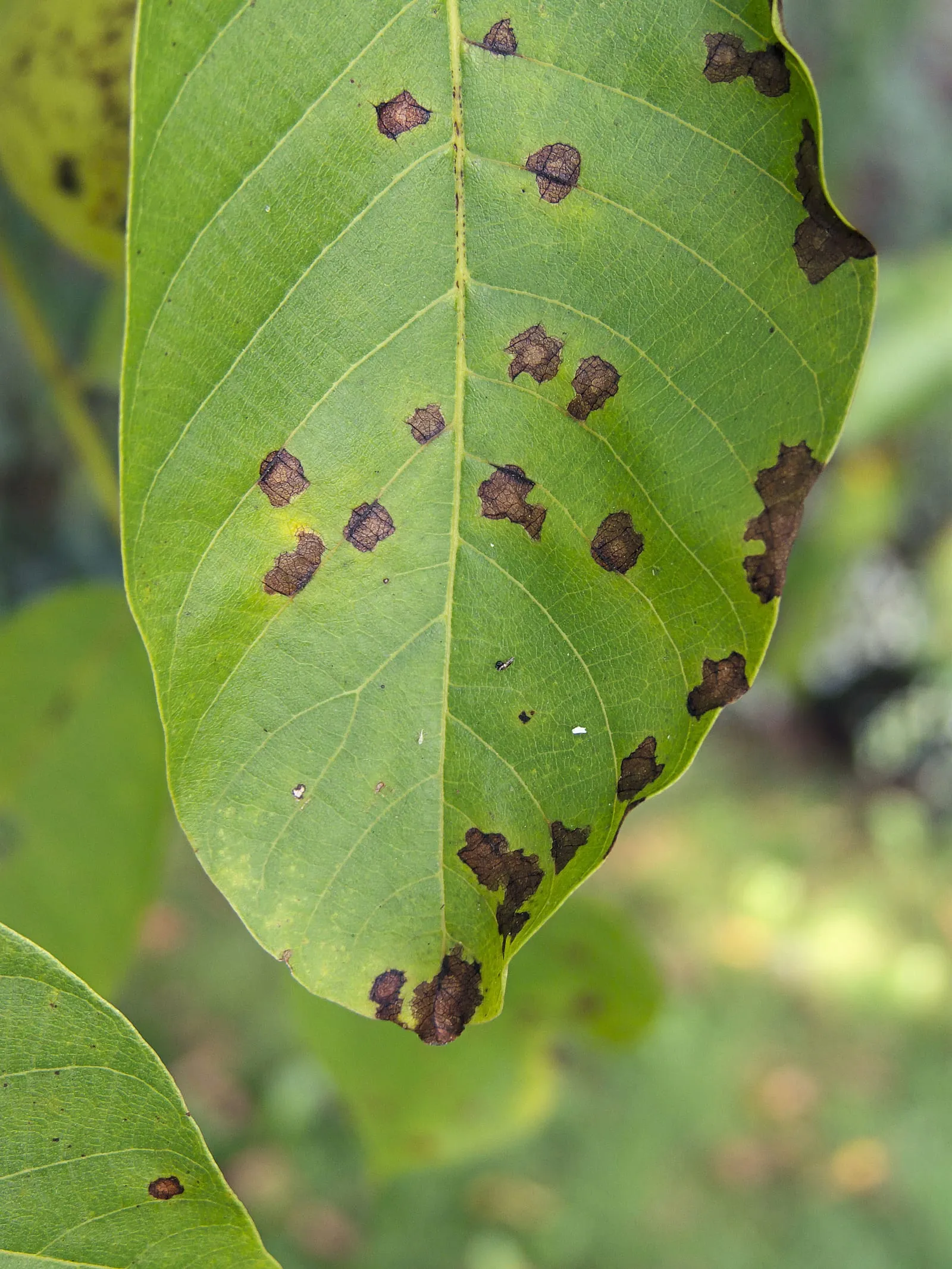
Ophiognomonia leptostyla
Fungal leaf disease causing premature defoliation in wet seasons, weakening trees over consecutive years and reducing kernel fill.
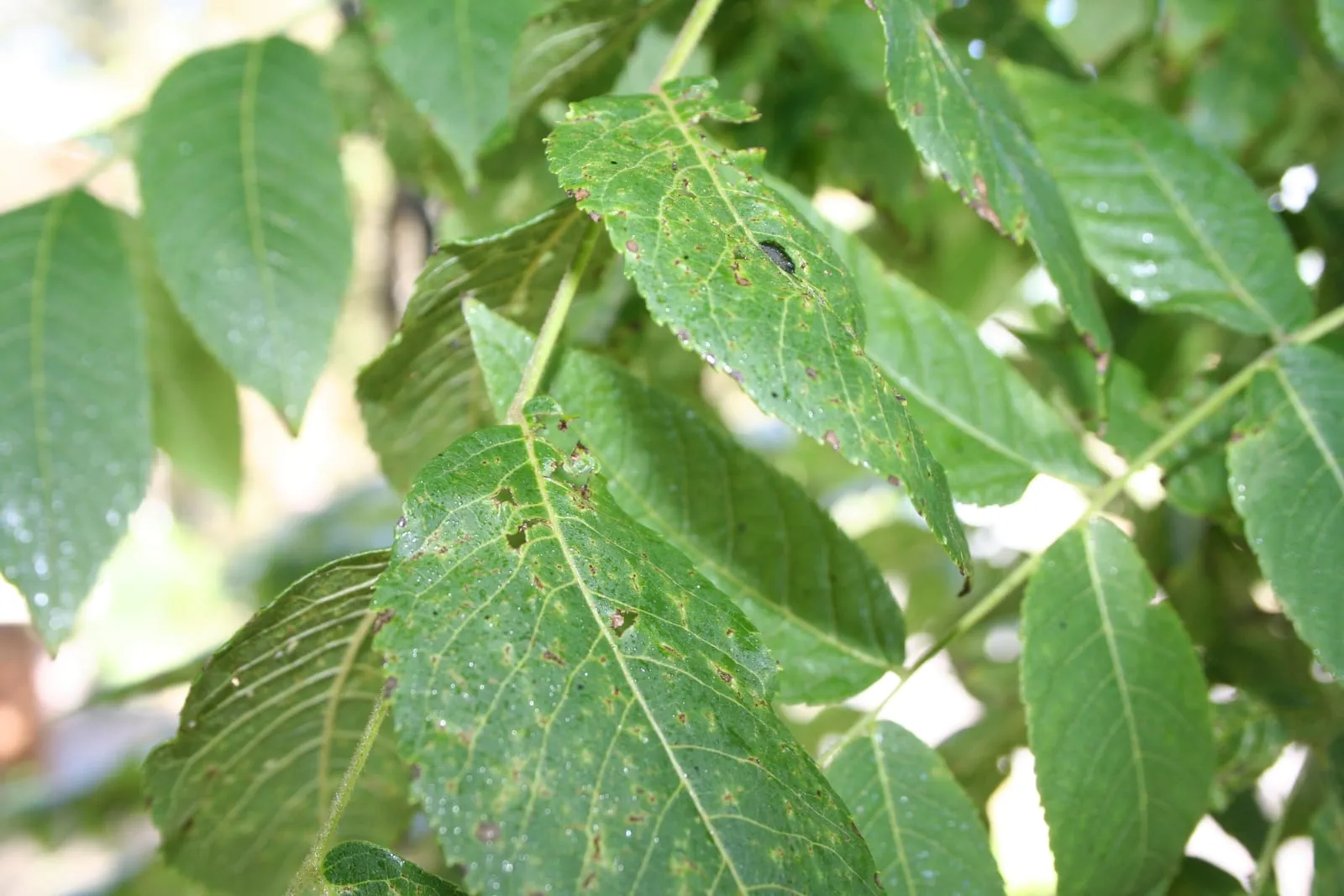
Geosmithia morbida (vectored by Pityophthorus juglandis)
Fatal disease of black walnut caused by a fungus vectored by the walnut twig beetle. Spreading eastward from the western US, devastating native black walnut stands.
Modified care for zone 8b
Zone 8b's heat and humidity amplify both primary disease threats. Walnut Anthracnose spreads readily in warm, wet springs and can trigger early defoliation in affected trees; maintaining open canopy structure through pruning and avoiding any overhead irrigation reduces incidence. Thousand Cankers Disease, spread by the walnut twig beetle, is established across much of the Southeast and has no effective curative treatment once infection is widespread. Monitoring for entry holes and flagging branch dieback early is the only practical response. Sandy soils common to parts of this zone carry nematode pressure that weakens root systems and accelerates decline from secondary stresses; heavy organic mulch over the root zone moderates soil temperature and moisture extremes. In years when chill accumulation falls below 700 hours, irregular bloom and reduced nut set are expected outcomes with no intervention available.
Frequently asked questions
- Can black walnut reliably produce nuts in zone 8b?
Production is unreliable in most of zone 8b. Chill-hour deficits in warm winters result in poor bloom and low nut set. Cooler inland sites at elevation that occasionally accumulate 700 or more chill hours offer the best odds, but growers should expect inconsistent yields compared to trees in zones 5b through 7b.
- What is Thousand Cankers Disease and how serious is it for zone 8b growers?
Thousand Cankers Disease is caused by a fungus vectored by the walnut twig beetle. Infected trees develop numerous small cankers beneath the bark that coalesce and girdle branches. There is no effective treatment once infection is heavy, and the disease is already present across much of the Southeast. Trees stressed by chill-hour deficits or nematodes are more vulnerable.
- Does black walnut's allelopathic effect change in zone 8b conditions?
Black walnut produces juglone, a compound toxic to many nearby plants, regardless of zone. The effect radius and soil persistence depend more on root spread and soil drainage than on climate zone. Sandy soils common in parts of zone 8b may allow juglone to leach more quickly, but the exclusion zone around the tree remains relevant for sensitive plantings.
+−
+−
+−
Black Walnut in adjacent zones
Image: "Juglans nigra nuts", by Gmihail at Serbian Wikipedia, via Wikimedia Commons, licensed under CC-BY Source.

Related