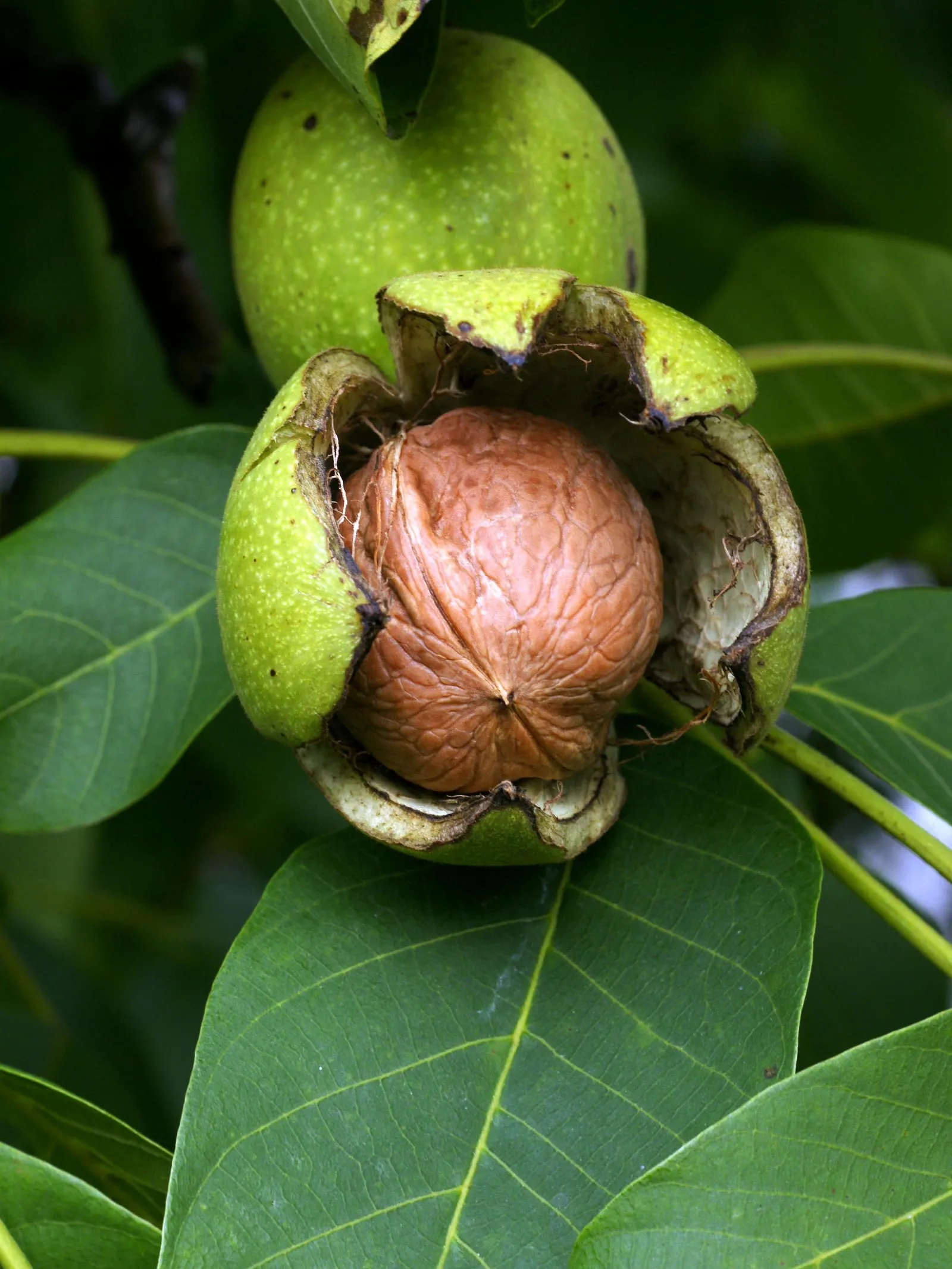
nut in zone 5b
Growing english walnut in zone 5b
Juglans regia
- Zone
- 5b -15°F to -10°F
- Growing season
- 165 days
- Chill needed
- 500 to 800 below 45°F
- Suitable varieties
- 3
- Days to harvest
- 150 to 200
The verdict
English walnut sits at the cold edge of its viable range in zone 5b. The chill-hour requirement of 500 to 800 hours is met comfortably most winters, so dormancy completion is not the concern. The concern is winter cold: English walnut flower buds and cambium can sustain significant damage when temperatures fall below -10°F to -15°F, exactly the range zone 5b regularly reaches. Standard seedling trees are poor bets here. The Carpathian, Lake, and Hansen varieties were specifically selected for cold hardiness and push that threshold further than unimproved stock. On exposed ridgelines or in frost pockets, expect some dieback in severe winters even with cold-hardy varieties. The 165-day growing season is adequate for nut development once a tree is established. Treat zone 5b as marginal rather than a sweet spot; variety selection is the deciding factor.
Recommended varieties for zone 5b
3 cultivars suited to this zone, with disease-resistance and zone-fit annotations.
| Variety | Notes | Zone fit | Disease resistance |
|---|---|---|---|
| Carpathian fits zone 5b | Sweet, mild, easy-shelling thin shells; fresh, baking, oil. Cold-hardy strain (zones 5-7) with reliable cropping where most English walnuts fail. Originated in the Carpathian Mountains. | | none noted |
| Lake fits zone 5b | Sweet, mild, large kernels with thin shells; fresh, baking. Wisconsin-bred Carpathian selection, productive and reliable in the upper Midwest. | | none noted |
| Hansen fits zone 5b | Sweet, mild, large kernels; fresh and baking. Cold-hardy selection productive in zone 4 sites, the hardiest commercial English walnut available. | | none noted |
Critical timing for zone 5b
English walnut blooms early relative to its zone, with catkins and pistillate flowers typically opening in April in zone 5b. Zone 5b's average last frost falls anywhere from late April into mid-May depending on site and elevation, which places it squarely inside the bloom window. A hard frost during pollination can eliminate the year's crop entirely. Harvest runs September into October, well before first frost, so the back end of the season is not the limiting factor. The 165-day growing season provides enough time for nut filling as long as bloom proceeds without frost damage. Growers on north-facing aspects or in sheltered positions may see bloom delayed by a week or more, which reduces frost exposure risk but compresses the window between fruit set and first fall frost.
Common challenges in zone 5b
- ▸ Plum curculio
- ▸ Codling moth
- ▸ Cedar-apple rust
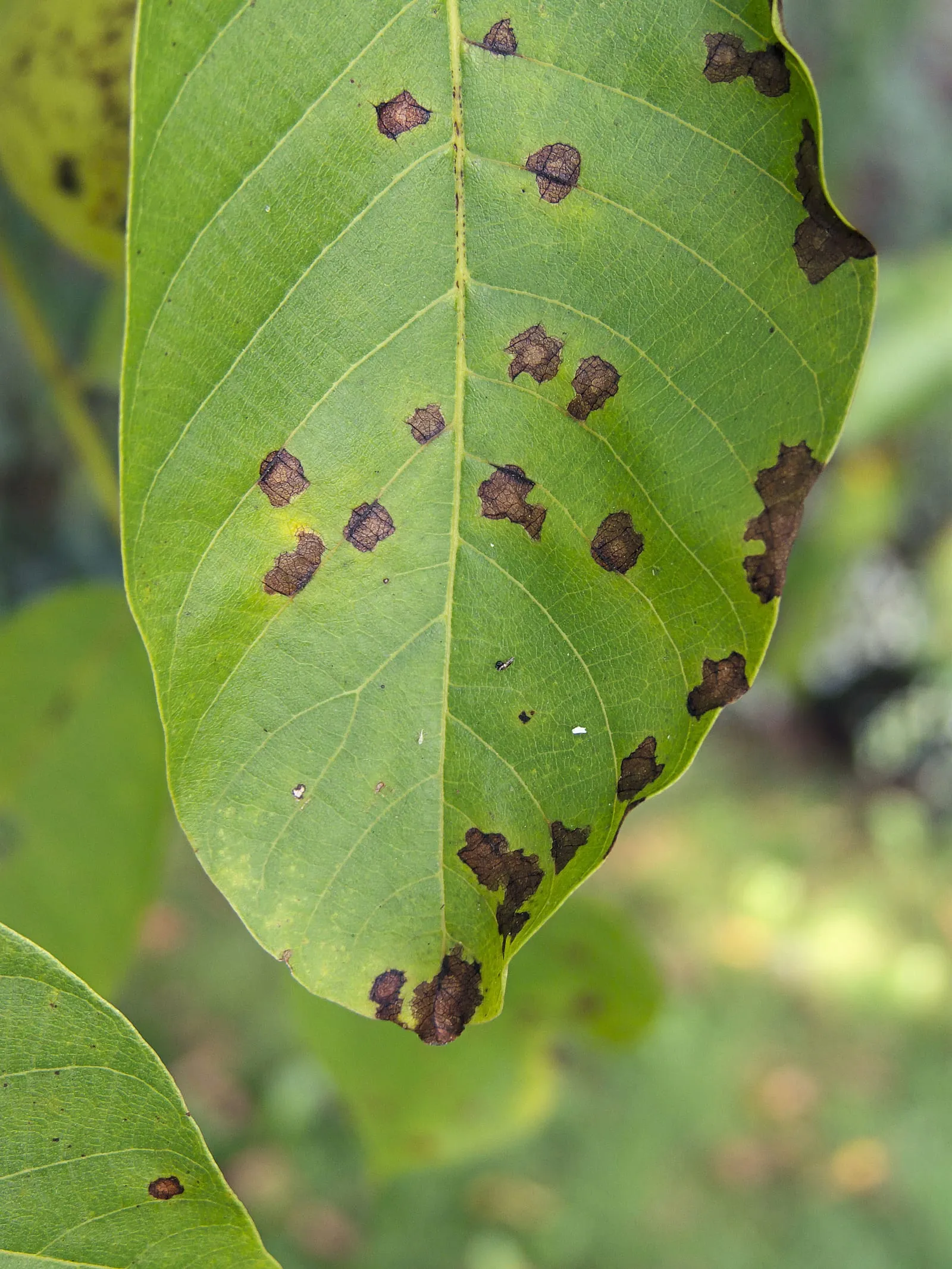
Disease pressure to watch for
Modified care for zone 5b
Newly planted trees in zone 5b need extra attention for the first two or three winters. Young trees are more cold-sensitive than established ones, and bark splitting from sudden temperature swings is a common failure mode. Wrapping trunks with tree wrap or burlap and mulching heavily over the root zone reduces this risk during establishment. Walnut anthracnose pressure is heightened in the cool, wet springs typical of zone 5b; removing and disposing of fallen leaves each autumn cuts overwintering inoculum significantly. Plum curculio and codling moth require the same integrated management as in warmer zones, with spray timing shifted to match the shorter season and later bloom. Site selection matters more here than in warmer zones: avoid frost pockets and low-lying areas where cold air pools, since the difference between a viable bloom and a total frost loss often comes down to just a few degrees of elevation.
Frequently asked questions
- Can English walnut survive zone 5b winters?
Cold-hardy varieties such as Carpathian, Lake, and Hansen can survive zone 5b winters in most years. Standard seedling trees are not reliable at these temperatures. Even cold-hardy selections may experience some dieback when temperatures drop below -15°F, so site selection and trunk protection during establishment matter.
- What is the biggest risk to English walnut in zone 5b?
Late spring frosts during bloom are the primary threat to annual yield. English walnut flowers in April in zone 5b, and the average last frost date often falls within that same window. A single hard frost during pollination can eliminate the crop for the entire season.
- Does English walnut get enough chill hours in zone 5b?
Yes. Zone 5b winters reliably accumulate well over 800 chill hours, exceeding the 500 to 800 hours English walnut requires for proper dormancy completion. Chill-hour deficit is not a concern at this latitude.
+−
+−
+−
English Walnut in adjacent zones
Image: "Juglans regia Echte Walnussfrucht 1", by Böhringer Friedrich, via Wikimedia Commons, licensed under CC-BY Source.

Related