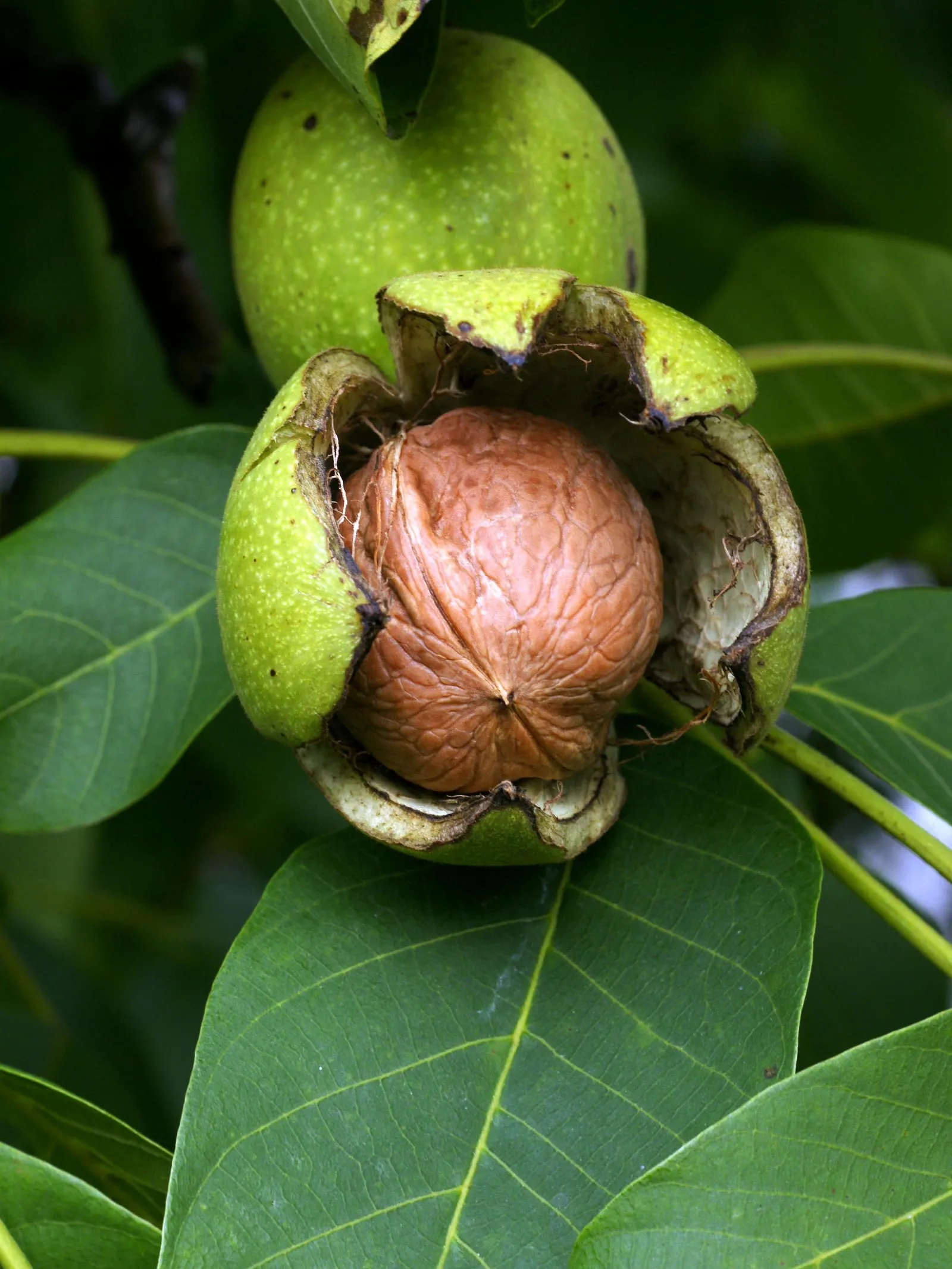
nut in zone 6a
Growing english walnut in zone 6a
Juglans regia
- Zone
- 6a -10°F to -5°F
- Growing season
- 180 days
- Chill needed
- 500 to 800 below 45°F
- Suitable varieties
- 3
- Days to harvest
- 150 to 200
The verdict
Zone 6a sits near the northern edge of reliable English walnut production, but it is workable rather than marginal when variety selection is taken seriously. The zone's 500 to 800 or more annual chill hours align well with English walnut's chilling requirement of 500 to 800 hours, so dormancy breaks cleanly and nut set is not compromised by insufficient cold. The real concern is extreme winter cold: temperatures dropping to -10°F can kill or severely injure wood on less-adapted selections, which rules out many California commercial varieties entirely.
The 180-day growing season in zone 6a is adequate for nut development, provided the tree leafs out without a damaging late frost. Varieties bred for northern climates, particularly Carpathian, Lake, and Hansen, carry substantially better cold-wood hardiness than standard Persian strains and are the practical prerequisite for growing English walnut this far north. With the right selection and a sheltered site, zone 6a is a viable, if demanding, environment.
Recommended varieties for zone 6a
3 cultivars suited to this zone, with disease-resistance and zone-fit annotations.
| Variety | Notes | Zone fit | Disease resistance |
|---|---|---|---|
| Carpathian fits zone 6a | Sweet, mild, easy-shelling thin shells; fresh, baking, oil. Cold-hardy strain (zones 5-7) with reliable cropping where most English walnuts fail. Originated in the Carpathian Mountains. | | none noted |
| Lake fits zone 6a | Sweet, mild, large kernels with thin shells; fresh, baking. Wisconsin-bred Carpathian selection, productive and reliable in the upper Midwest. | | none noted |
| Hansen fits zone 6a | Sweet, mild, large kernels; fresh and baking. Cold-hardy selection productive in zone 4 sites, the hardiest commercial English walnut available. | | none noted |
Critical timing for zone 6a
English walnut breaks dormancy and begins catkin development in mid- to late April in zone 6a, with pistillate flowers receptive roughly two to three weeks later. This timing puts bloom squarely in the window when late frosts are still possible, and a hard freeze after the catkins emerge can eliminate the year's crop. Sites with good air drainage, where cold air drains away from the tree canopy on still nights, consistently outperform low-lying or frost-pocket locations.
Hull split and harvest typically fall between mid-September and mid-October in zone 6a. The 180-day season is sufficient for nut fill on early-ripening northern varieties; later-maturing selections may not fully ripen before the first fall frost. Growers should harvest promptly once hulls split to reduce walnut anthracnose infection of the nut meat.
Common challenges in zone 6a
- ▸ Brown rot in stone fruit
- ▸ Japanese beetles
- ▸ Spring frost damage to peach buds
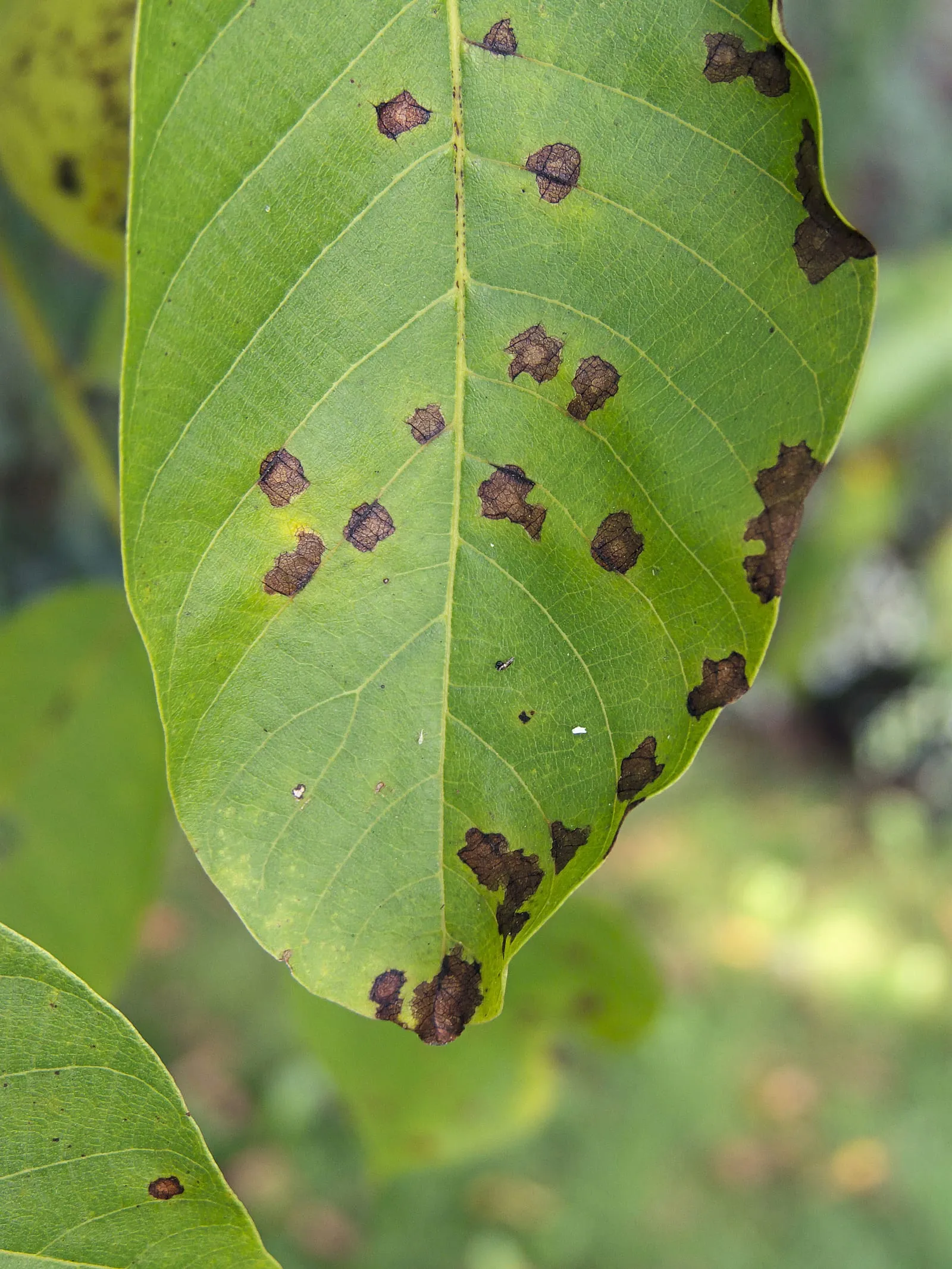
Disease pressure to watch for
Modified care for zone 6a
Site selection matters more in zone 6a than in warmer zones. A south-facing slope with good cold-air drainage reduces frost exposure during bloom and provides a slightly longer effective growing season. Planting against a structure that buffers northwest winter winds can reduce desiccation and bark injury during the coldest stretches.
Walnut anthracnose, the primary fungal concern for this crop, is encouraged by wet spring conditions. In zone 6a, where spring rainfall is often substantial, copper-based fungicide applications at bud break and again after leaf expansion can reduce early season inoculum. Fallen leaves and husks should be raked and removed, not composted, to interrupt the disease cycle.
Japanese beetle pressure is a documented challenge in zone 6a. Walnut foliage is a preferred host. Targeted physical removal or perimeter traps placed away from the tree can reduce feeding damage; mass-trapping near the tree tends to draw more beetles than it catches.
Frequently asked questions
- Can English walnut survive -10°F winters in zone 6a?
Cold-adapted varieties such as Carpathian, Lake, and Hansen are bred to tolerate temperatures in this range. Standard California commercial selections are not, and will suffer significant dieback or death at -10°F. Variety choice is the single most important factor for winter survival in zone 6a.
- Which English walnut varieties perform best in zone 6a?
Carpathian, Lake, and Hansen are the established choices for zone 6a. All three originate from cold-climate breeding programs and combine adequate chill-hour satisfaction with improved cold-wood hardiness compared to California strains.
- How serious is walnut anthracnose in zone 6a?
Anthracnose is the primary disease threat for English walnut in zone 6a. It causes premature defoliation and can infect nut meat when hull integrity breaks down. Wet springs accelerate its spread. Copper fungicide applications at bud break and prompt removal of fallen hulls and leaves are the main management tools.
- Will late spring frosts kill an English walnut bloom in zone 6a?
Yes. A hard freeze after catkins emerge or when pistillate flowers are receptive can eliminate the entire year's crop. This is the primary production risk in zone 6a. Planting on slopes with good cold-air drainage significantly reduces but does not eliminate this risk.
+−
+−
+−
+−
English Walnut in adjacent zones
Image: "Juglans regia Echte Walnussfrucht 1", by Böhringer Friedrich, via Wikimedia Commons, licensed under CC-BY Source.

Related