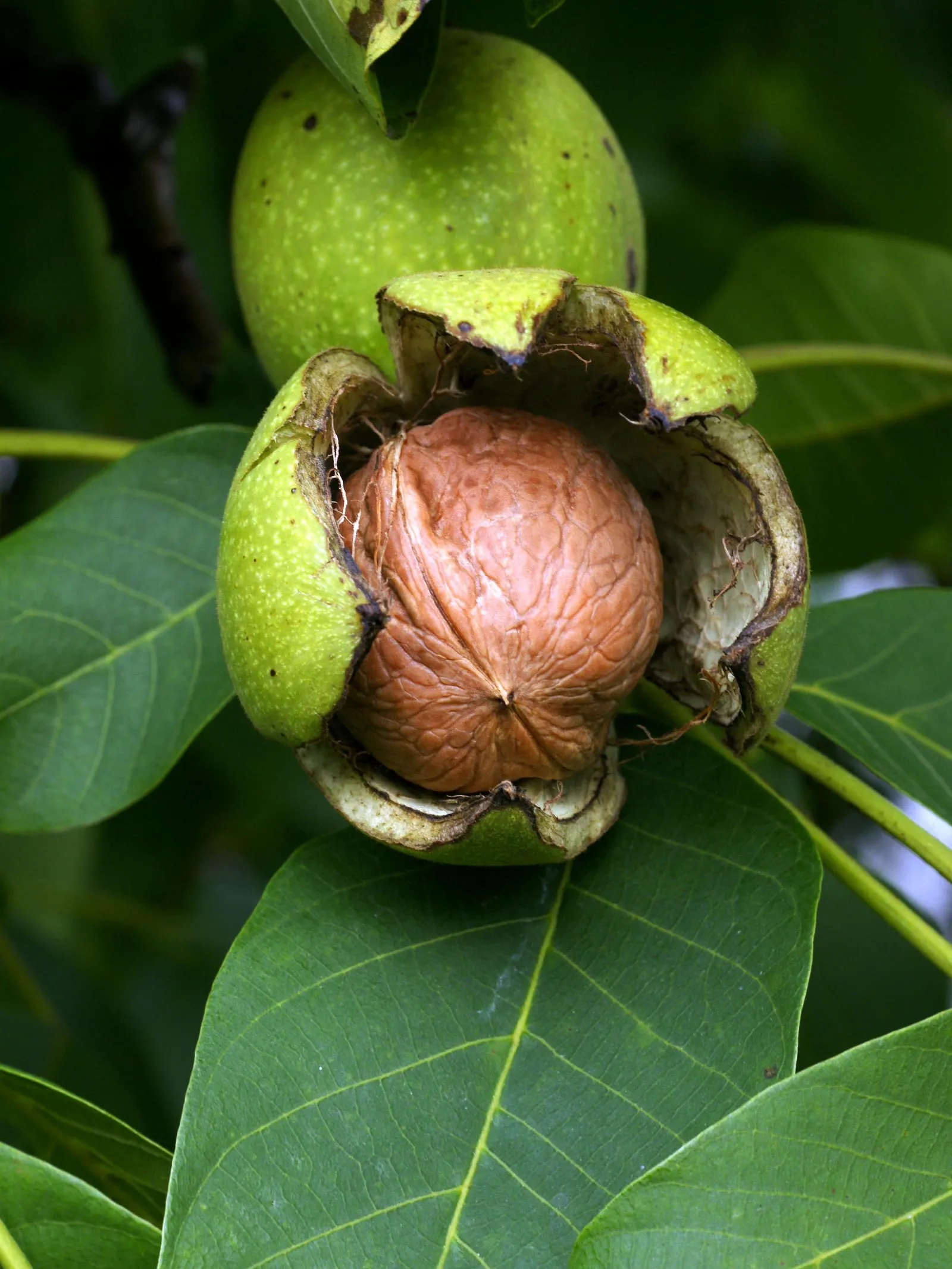
nut
English Walnut
Juglans regia
USDA hardiness range
- Zones
- 5a–9a
- Chill hours
- 500 to 800 below 45°F
- Days to harvest
- 150 to 200
- Sun
- Full
- Water
- Moderate
- Lifespan
- 75 to 100 years
Growing english walnut
English walnut (Juglans regia) produces the thin-shelled, mild-flavored nut found in commercial markets. It grows across zones 5a through 9a, but performance across that span varies enormously, and the zone rating alone understates the real risk. The tree's chill-hour requirement of 500 to 800 hours is satisfied across much of that range, but in zones 5 and 6 the binding constraint is late spring frost. English walnut breaks dormancy early in spring, pushing catkins and young growth while frost risk remains. A single event at or below 28°F after bud break can eliminate the entire crop for that year.
The solution, for northern growers, is Carpathian selections. Varieties like Carpathian, Lake, and Hansen originated in Polish mountain stock and break dormancy later than California commercial types. They are reliably productive in zones 5 through 7b where most English walnuts fail. In zones 8a through 9a, California-bred varieties perform well, and the climate matches what drives commercial production in the Central Valley.
This is also a long-commitment tree. With a productive lifespan of 75 to 100 years and a mature canopy spread reaching 40 to 60 feet, siting decisions made at planting are difficult to reverse. English walnut also produces juglone, which suppresses some understory plants, though at lower concentrations than black walnut. What separates successful plantings from failed ones is usually a combination of correct variety selection for the zone, a well-drained deep site, and realistic expectations about the years before meaningful production begins.
Recommended varieties
See all 4 →4 cultivars for home growers, with notes on flavor, ripening, and disease resistance.
| Variety | Notes | Zone fit | Disease resistance |
|---|---|---|---|
| Carpathian | Sweet, mild, easy-shelling thin shells; fresh, baking, oil. Cold-hardy strain (zones 5-7) with reliable cropping where most English walnuts fail. Originated in the Carpathian Mountains. | | none noted |
| Lake | Sweet, mild, large kernels with thin shells; fresh, baking. Wisconsin-bred Carpathian selection, productive and reliable in the upper Midwest. | | none noted |
| Hansen | Sweet, mild, large kernels; fresh and baking. Cold-hardy selection productive in zone 4 sites, the hardiest commercial English walnut available. | | none noted |
| Chandler | Sweet, mild, large light kernels; the California commercial standard for shelling and export. Productive late-leafing variety that dodges spring frost. | | none noted |
Soil and site requirements
English walnut requires deep, well-drained soil. The tap root can penetrate 10 feet or more in mature trees, and waterlogged conditions at any depth cause root rot and poor nut fill. Low spots, compacted subsoil, and sites with a high water table are poor choices regardless of surface drainage. A raised berm can compensate on marginally draining ground, but the tree will underperform compared to a naturally deep site.
Soil pH should fall between 6.0 and 7.0. Soils above 7.5 cause manganese deficiency, visible as interveinal chlorosis, which reduces leaf efficiency and ultimately nut quality. Soils below 5.5 lock out calcium and phosphorus. A soil test before planting is worthwhile; pH correction is straightforward but takes a season or two to fully take effect.
Full sun is required, at minimum 8 hours of direct exposure during the growing season. Shaded trees produce poorly filled kernels and are more susceptible to foliar disease. Spacing for standard-size trees is 40 to 60 feet; crowding the canopy within 15 to 20 years forces a choice between heavy pruning and declining yields.
In zones 5 and 6, microclimate selection matters as much as soil. North-facing slopes or sites with gentle cold-air drainage away from the tree can delay bud break by several days, reducing frost exposure during the critical early-growth window. Frost pockets and valley floors are the worst possible sites in those zones.
Common diseases
Common pests
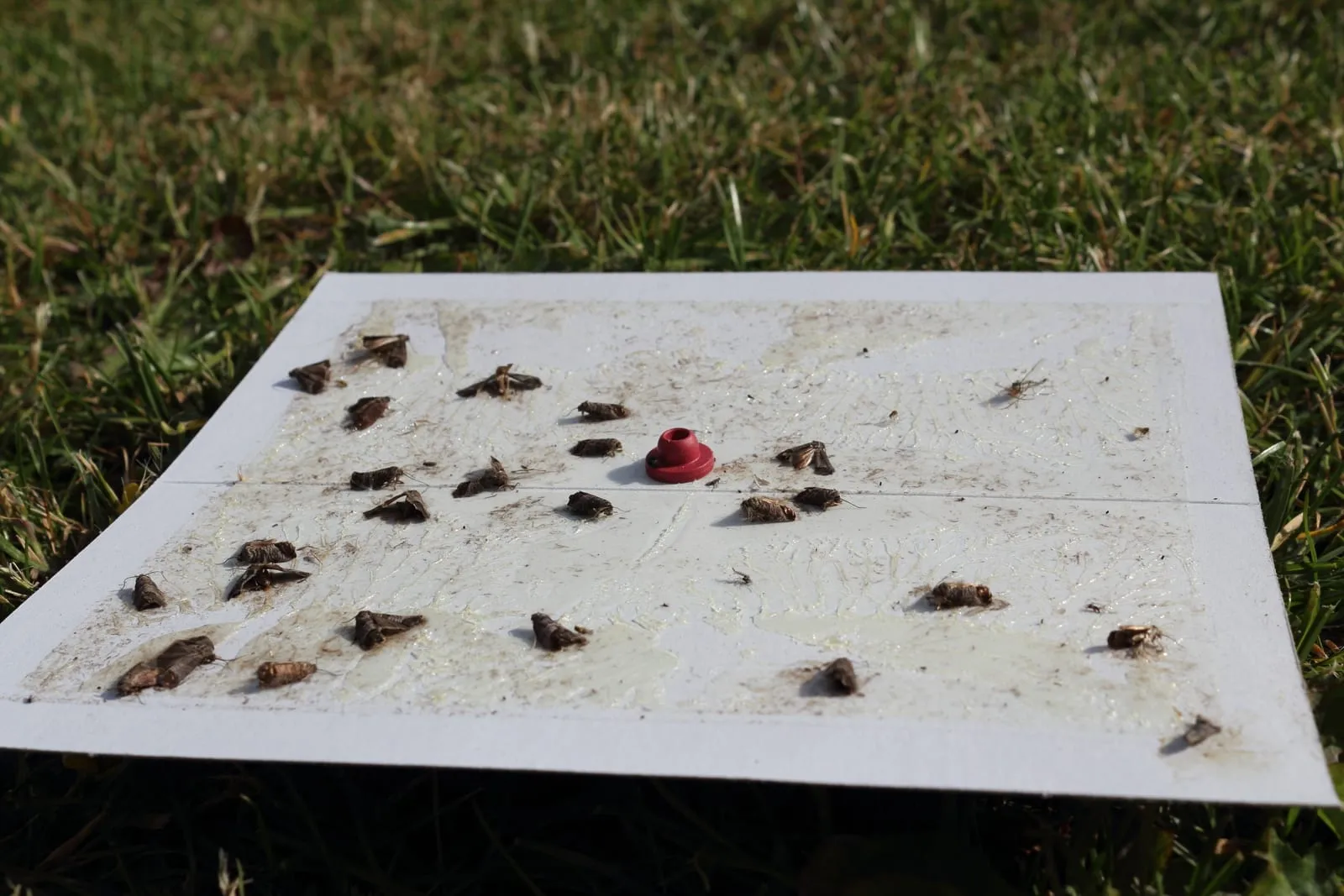
Cydia pomonella
The most damaging pest of apple worldwide. Larvae tunnel into developing fruit, ruining the crop.
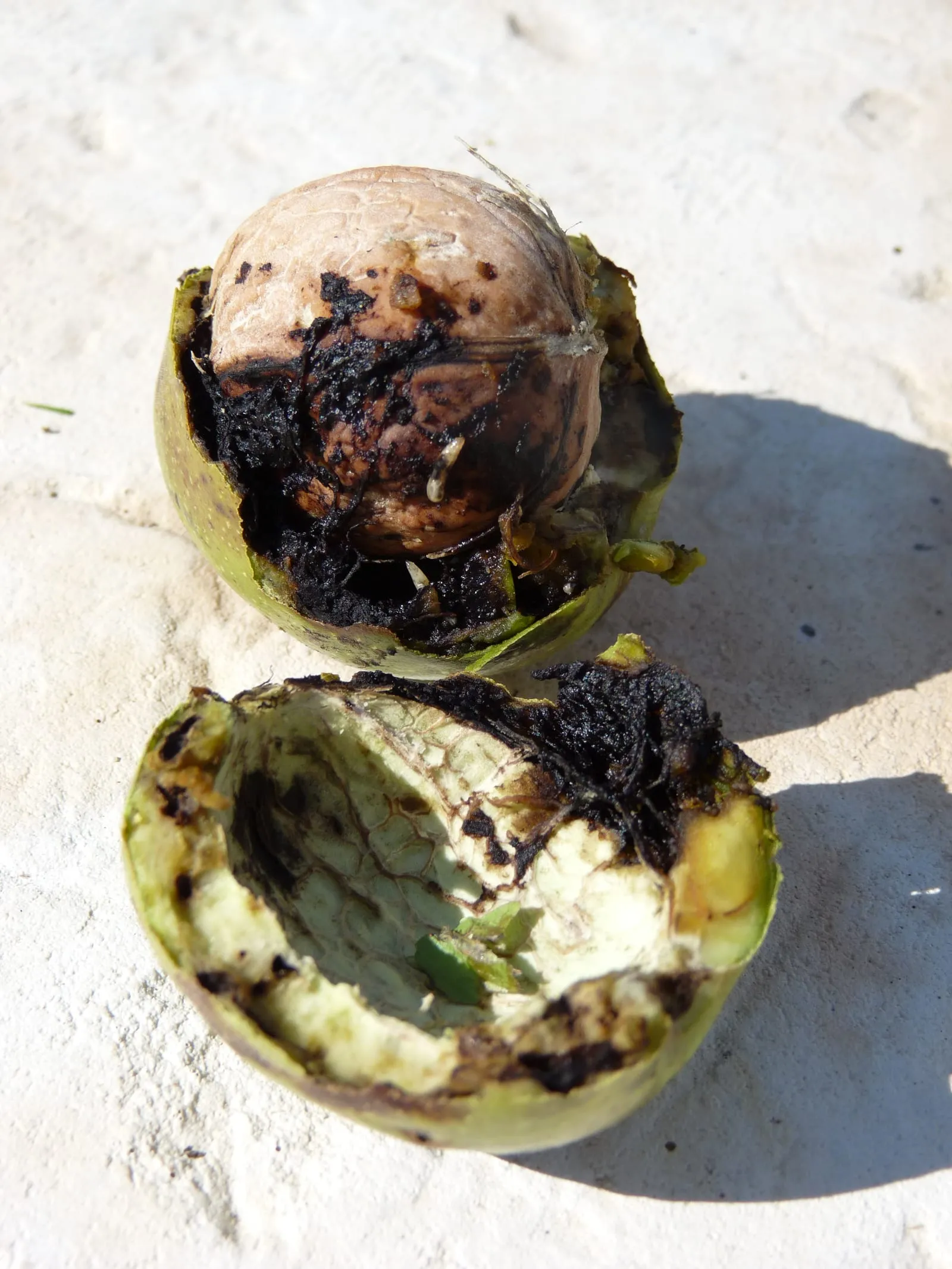
Rhagoletis completa
Tephritid fly whose larvae develop inside walnut husks, causing dark staining of the shell and reduced kernel quality.
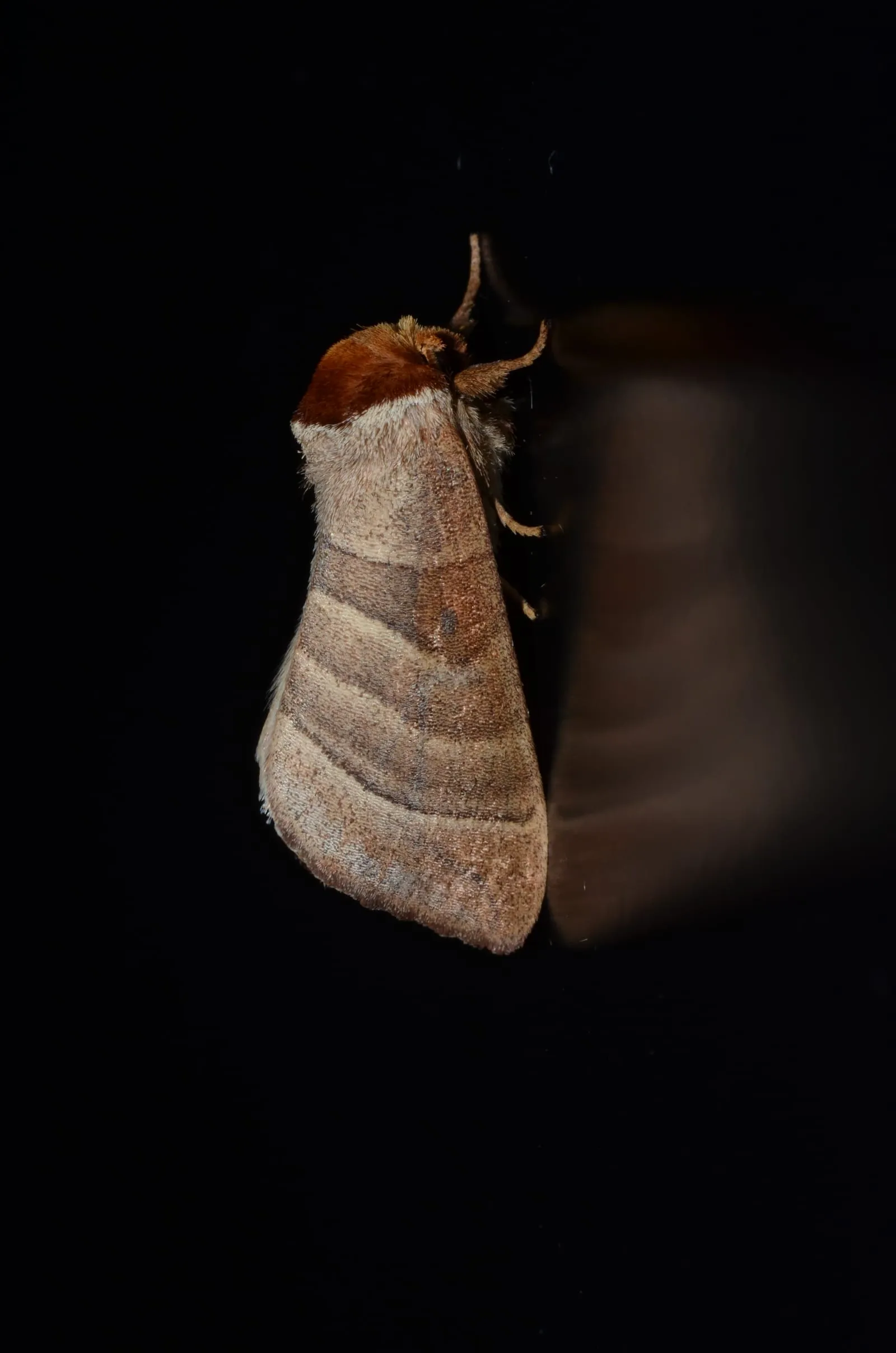
Datana integerrima
Gregarious caterpillar that feeds in dense colonies on walnut and pecan foliage, capable of defoliating entire branches in days.
Common challenges
Late spring frost is the leading cause of crop failure for English walnut in zones 5 through 7. The tree pushes growth early, and a frost at 28°F or colder after catkin emergence can wipe out the year's production without killing the tree itself. Growers in these zones should prioritize Carpathian varieties with later dormancy break and avoid planting in low-lying cold-air collection areas. Even with correct variety selection, a late-frost year is a no-crop year; the expectation should be set accordingly.
Walnut husk fly is a significant pest east of the Rockies. The adult fly deposits eggs in the developing husk during mid-summer; larvae feed inside the husk and cause dark staining that damages kernel quality and marketability. Prompt harvest once husks soften limits exposure. Kaolin clay applications beginning in late June and repeated through August reduce infestation rates for growers who prefer non-synthetic options.
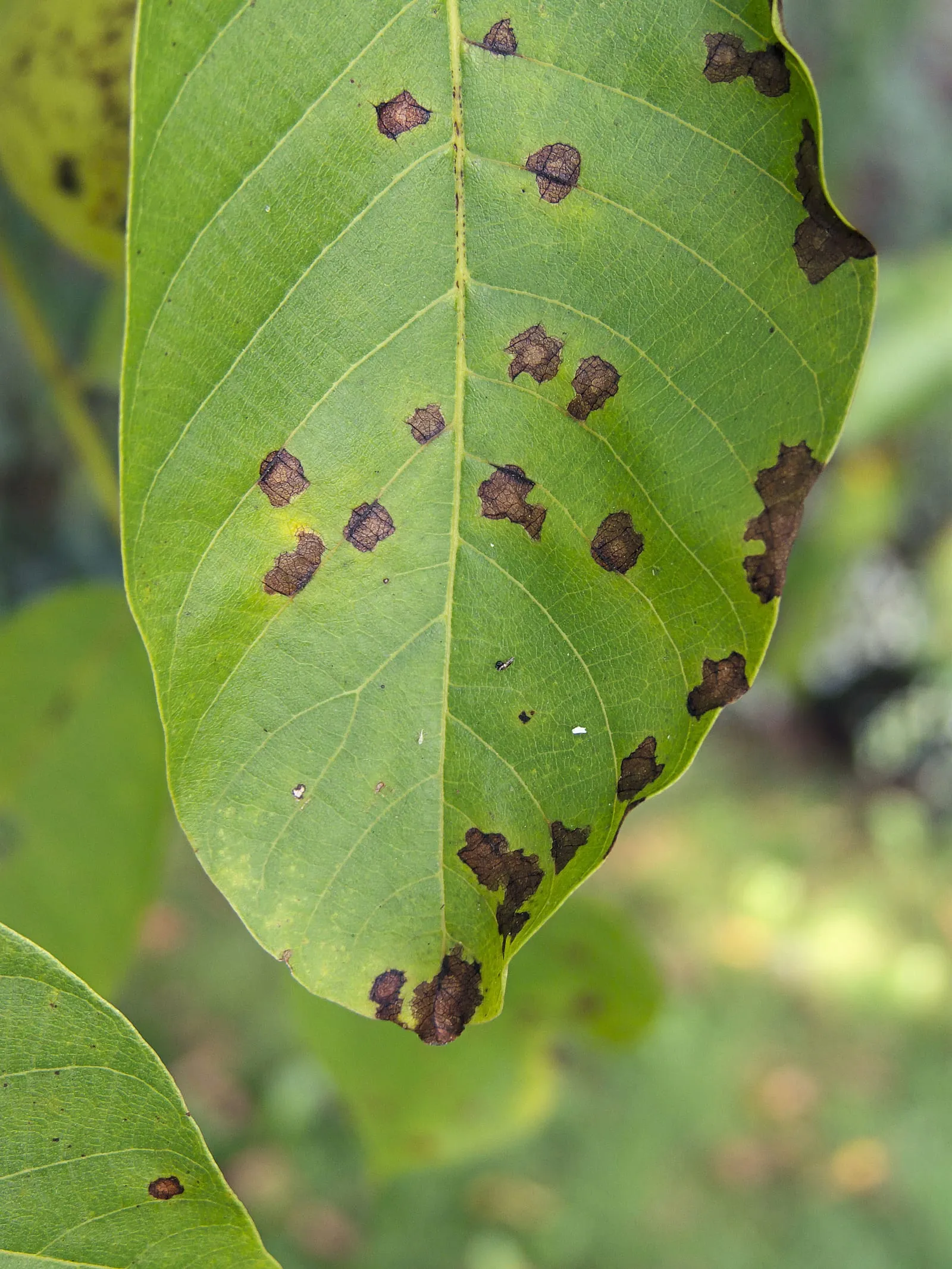
Walnut anthracnose, a fungal disease caused by Gnomonia leptostyla, is the most prevalent disease across the crop's range. Wet, humid springs drive heavy infection cycles: leaf blotches appear in early summer, defoliation can follow in severe years, and fruit lesions reduce nut quality. The pathogen overwinters in infected leaf litter and fallen husks. Thorough autumn cleanup disrupts the cycle substantially. Copper-based fungicide applied at bud break provides additional protection on sites with consistent spring rainfall, consistent with guidance from UC Davis Walnut Production and Cornell English Walnut.
Companion plants
Frequently asked questions
- How many chill hours does English walnut require?
English walnut needs 500 to 800 chill hours (hours below 45°F during dormancy). Standard California varieties typically require the upper end of that range. Carpathian selections bred for northern climates perform reliably at the lower end, making them the better choice for zones 5 and 6 where chill accumulation is variable year to year.
- What USDA zones can grow English walnut?
English walnut is rated for zones 5a through 9a. In zones 5 and 6, success depends heavily on variety: Carpathian, Lake, and Hansen are the reliable options there. Standard California-type varieties are better suited to zones 7 through 9, where late-spring frost pressure is lower.
- Does English walnut need a separate pollinator tree?
English walnut is monoecious (male and female flowers on the same tree), but dichogamy is common: catkins and pistillate flowers on a given tree often mature at different times. A single tree can produce some crop, but planting two different varieties improves cross-pollination timing and typically increases yield meaningfully. For serious production, two trees are the better approach.
- How long does it take from bloom to harvest?
English walnut requires 150 to 200 days from bloom to harvest, typically placing harvest between September and November depending on zone and variety. In colder zones, earlier-maturing varieties are preferable to ensure nuts reach full size before the first hard fall frost.
- When does an English walnut tree start producing nuts?
Grafted trees typically begin bearing in 4 to 6 years. Trees grown from seed may take 10 or more years and often produce inferior nuts compared to named varieties. Full production generally develops by year 10 to 15, and a well-sited tree can remain productive for 75 to 100 years.
- What is the most common disease of English walnut?
Walnut anthracnose, a fungal disease, is the most widespread problem across the crop's range. It causes leaf spots, defoliation in wet years, and surface lesions on developing fruit. Removing infected leaf litter and husks in autumn reduces overwintering inoculum. Copper fungicide at bud break helps in high-pressure, high-rainfall sites.
- Is English walnut suitable for small yards or containers?
No. Mature English walnut reaches 40 to 60 feet in canopy spread with a tap root exceeding 10 feet. It is not a small-space or container crop. The tree also produces juglone, which can suppress certain surrounding plants, so adequate spacing from vegetable gardens and sensitive ornamentals is a practical concern.
+−
+−
+−
+−
+−
+−
+−
Sources
Image: "Juglans regia Echte Walnussfrucht 1", by Böhringer Friedrich, via Wikimedia Commons, licensed under CC-BY. Source.

English Walnut by zone
Related