vegetable in zone 8a
Growing watermelon in zone 8a
Citrullus lanatus
- Zone
- 8a 10°F to 15°F
- Growing season
- 240 days
- Suitable varieties
- 5
- Days to harvest
- 75 to 100
The verdict
Zone 8a is a productive zone for watermelon, not a marginal one. The 240-day frost-free window far exceeds what most varieties need: standard slicers mature in 80 to 90 days from transplant, icebox types in 65 to 75 days. Summer heat drives sugar accumulation in the fruit, and zone 8a delivers reliably on that front.
Chill-hour requirements do not apply to watermelon. It is a warm-season annual, so the zone's minimum winter temperatures of 10 to 15°F are irrelevant to the crop itself. The practical constraints are soil moisture management during peak summer heat and disease pressure, particularly Fusarium wilt, which persists in soils where cucurbits have been grown before.
All five compatible varieties (Sugar Baby, Crimson Sweet, Charleston Gray, Yellow Doll, Moon and Stars) are well-matched to zone 8a conditions. Moon and Stars, a longer-season heirloom at 90 to 100 days, benefits from the extended frost-free period more here than it would in cooler zones.
Recommended varieties for zone 8a
5 cultivars suited to this zone, with disease-resistance and zone-fit annotations.
| Variety | Notes | Zone fit | Disease resistance |
|---|---|---|---|
| Sugar Baby fits zone 8a | Sweet, classic watermelon flavor; small round dark-green icebox melon (8-10 lb). Fresh out of hand, fruit salads. Short-season variety good for northern gardens. | | none noted |
| Crimson Sweet fits zone 8a | Very sweet, deep red flesh, the standard backyard watermelon flavor; oval green-striped fruit (15-25 lb). Fresh, picnics. Disease-tolerant, productive. | | none noted |
| Charleston Gray fits zone 8a | Sweet, tender, large oblong gray-green fruit (25-35 lb); the classic Southern watermelon. Fresh slicing, picnics. Heat-tolerant heritage variety. | | none noted |
| Yellow Doll fits zone 8a | Sweet, mild, golden-yellow flesh in a small round green melon; novelty home-garden choice. Fresh, fruit salads, photogenic for parties. | | none noted |
| Moon and Stars fits zone 8a | Sweet, classic flavor; dark green rind speckled with yellow stars and a moon, deep red flesh. Heritage Amish variety, ornamental and edible. | | none noted |
Critical timing for zone 8a
Soil temperatures in zone 8a reach the 70°F minimum watermelon requires for reliable germination by mid-April across most of the zone. Transplants started indoors 3 to 4 weeks earlier can go out in late March once the last frost clears, which falls roughly March 10 to 25 depending on location within the zone. Direct seeding outdoors is viable from mid-April through early May.
Flowering begins approximately 40 to 50 days after transplanting, placing the bloom window in May and early June for standard plantings. Harvest for most varieties follows in late June through early August. The long growing season also supports a second planting in early summer targeting a September harvest, though late-season fruit quality depends on whether adequate heat accumulates before night temperatures begin to drop.
Common challenges in zone 8a
- ▸ Insufficient chill hours for some apple varieties
- ▸ Pierce's disease in grapes
- ▸ Heat stress on cool-season crops
Disease pressure to watch for
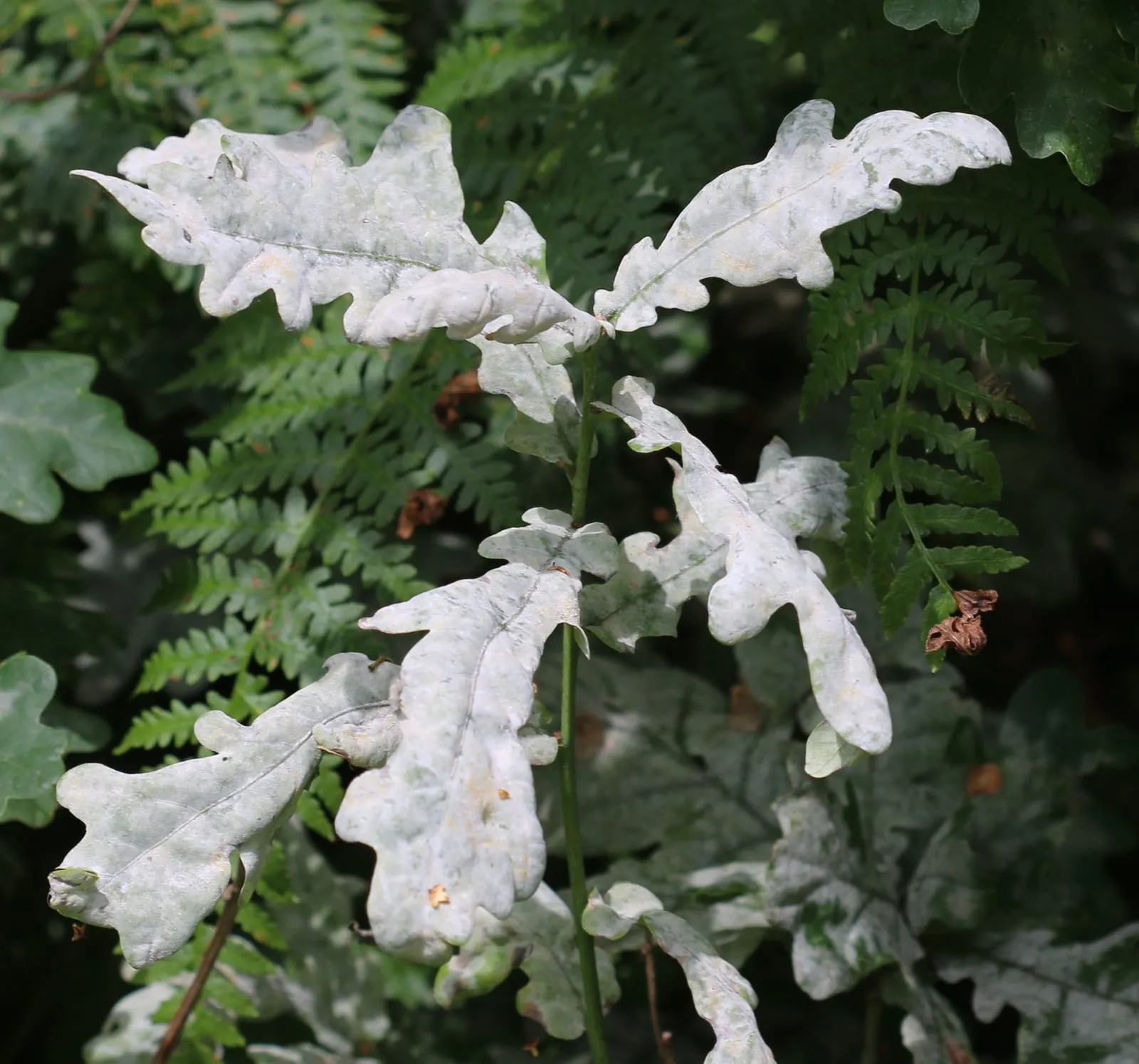
Multiple species (Erysiphales)
Surface-feeding fungal disease producing white powdery growth on leaves and stems. Reduces yield by stealing photosynthate and accelerating senescence.
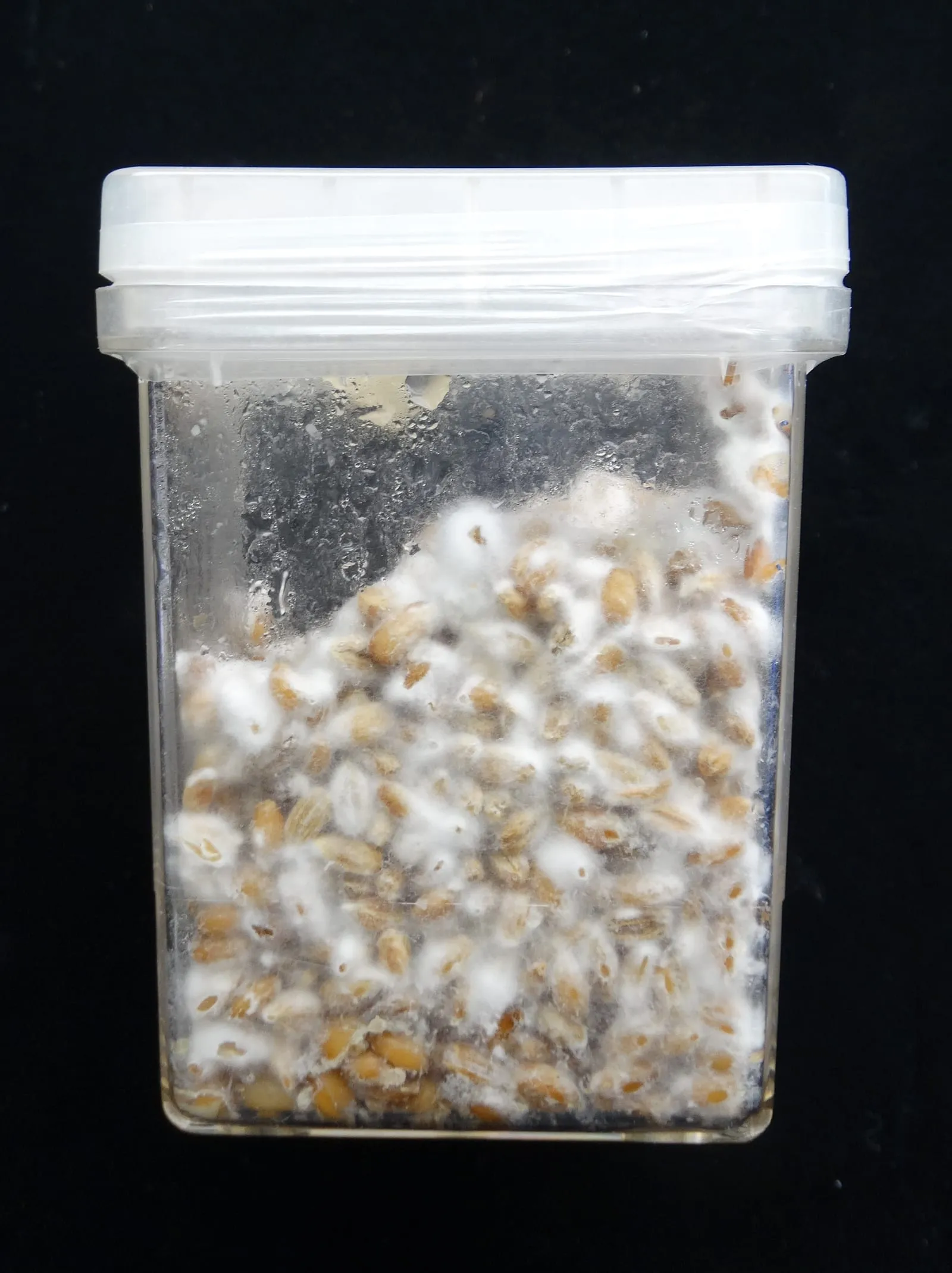
Fusarium oxysporum
Soil-borne fungal disease that plugs vascular tissue and kills affected plants. Persists in soil for many years; impossible to eliminate once established.
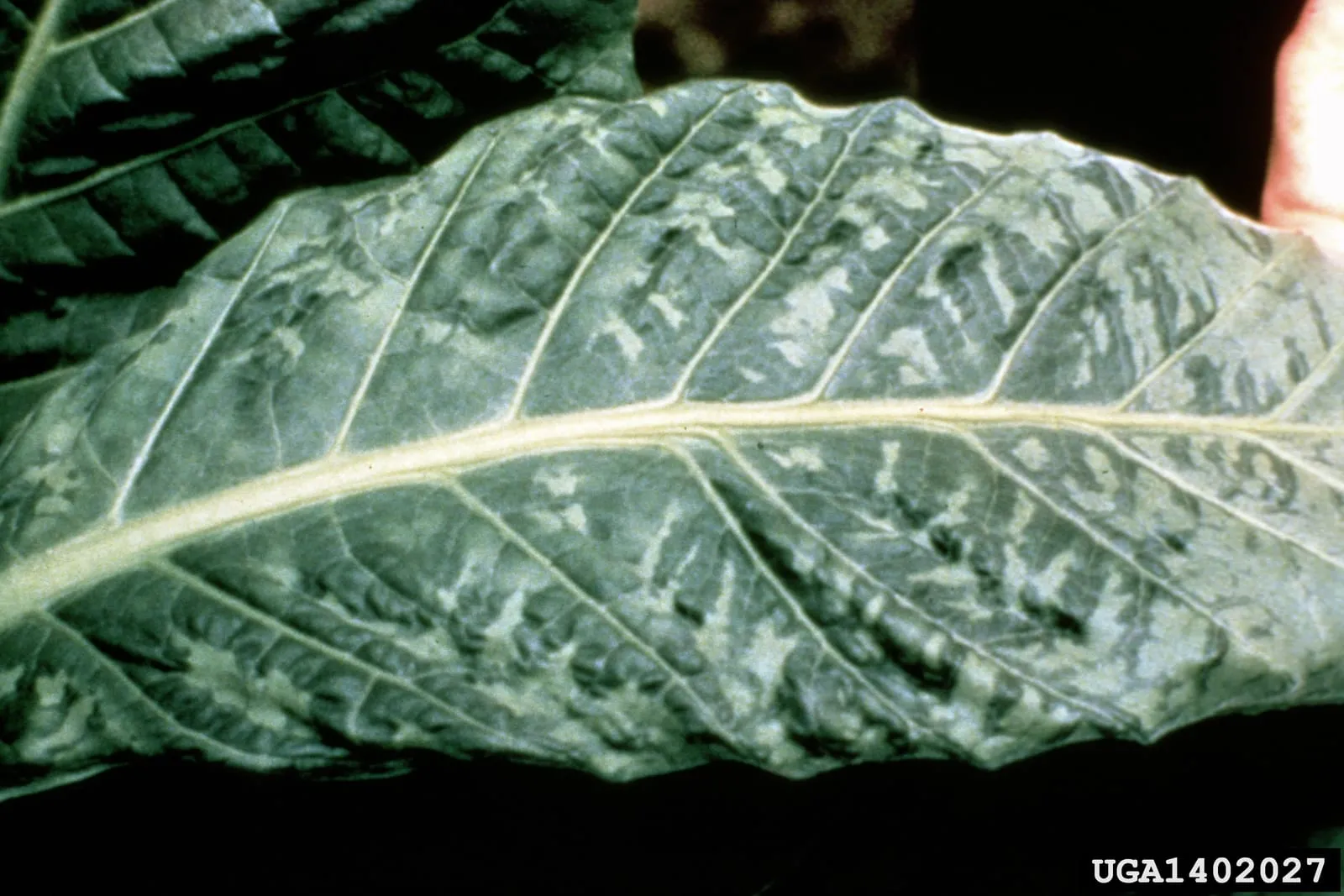
Cucumber mosaic virus, Tobacco mosaic virus, and others
Family of plant viruses producing mottled yellow-and-green leaf patterns. Vectored primarily by aphids; some are seed-transmitted or spread by handling tools and tobacco products.
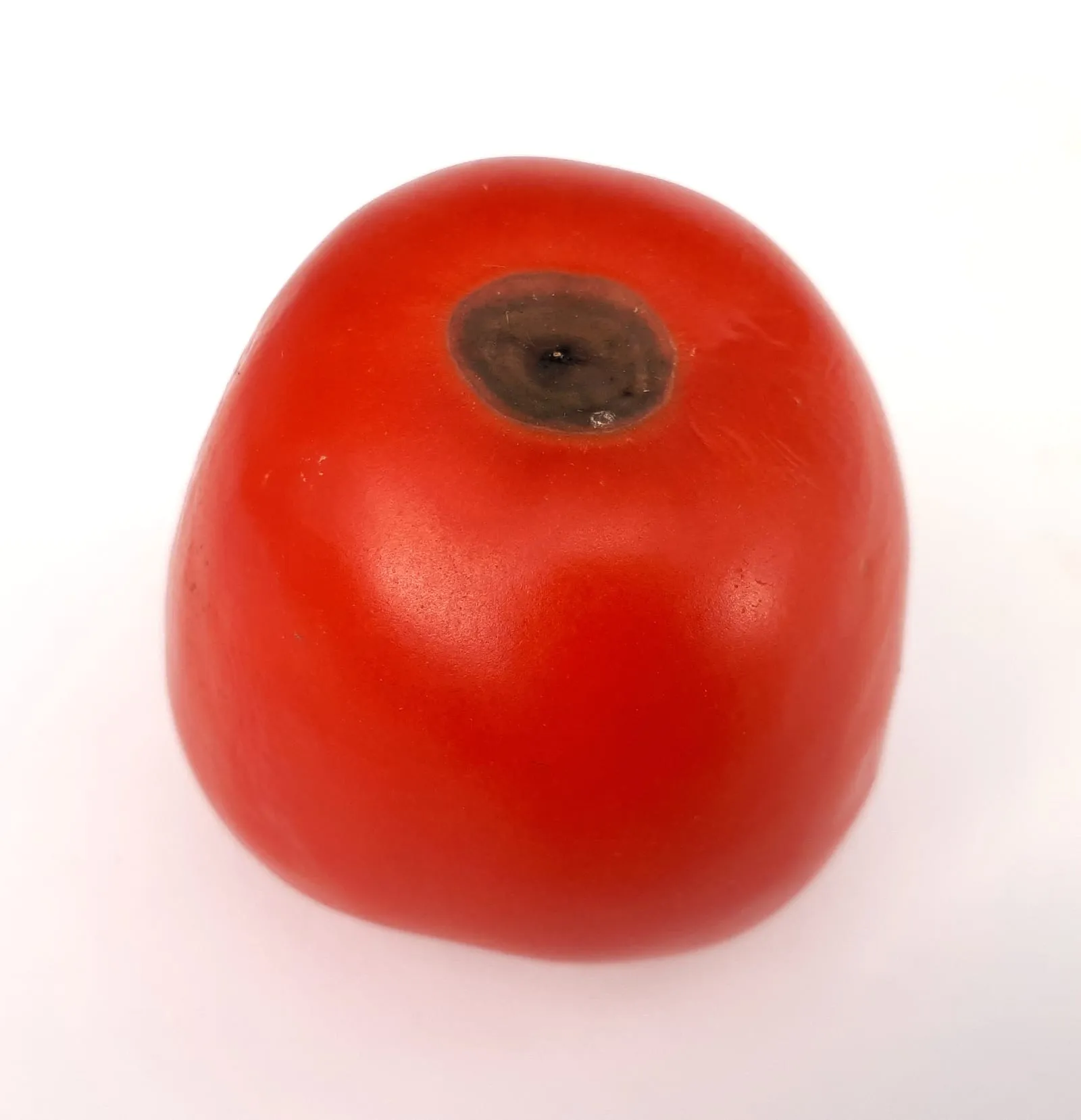
Calcium deficiency physiological disorder
Not a true disease but a calcium-uptake disorder caused by inconsistent soil moisture during fruit development. The dominant cause of damaged first-fruit on home tomato plantings.
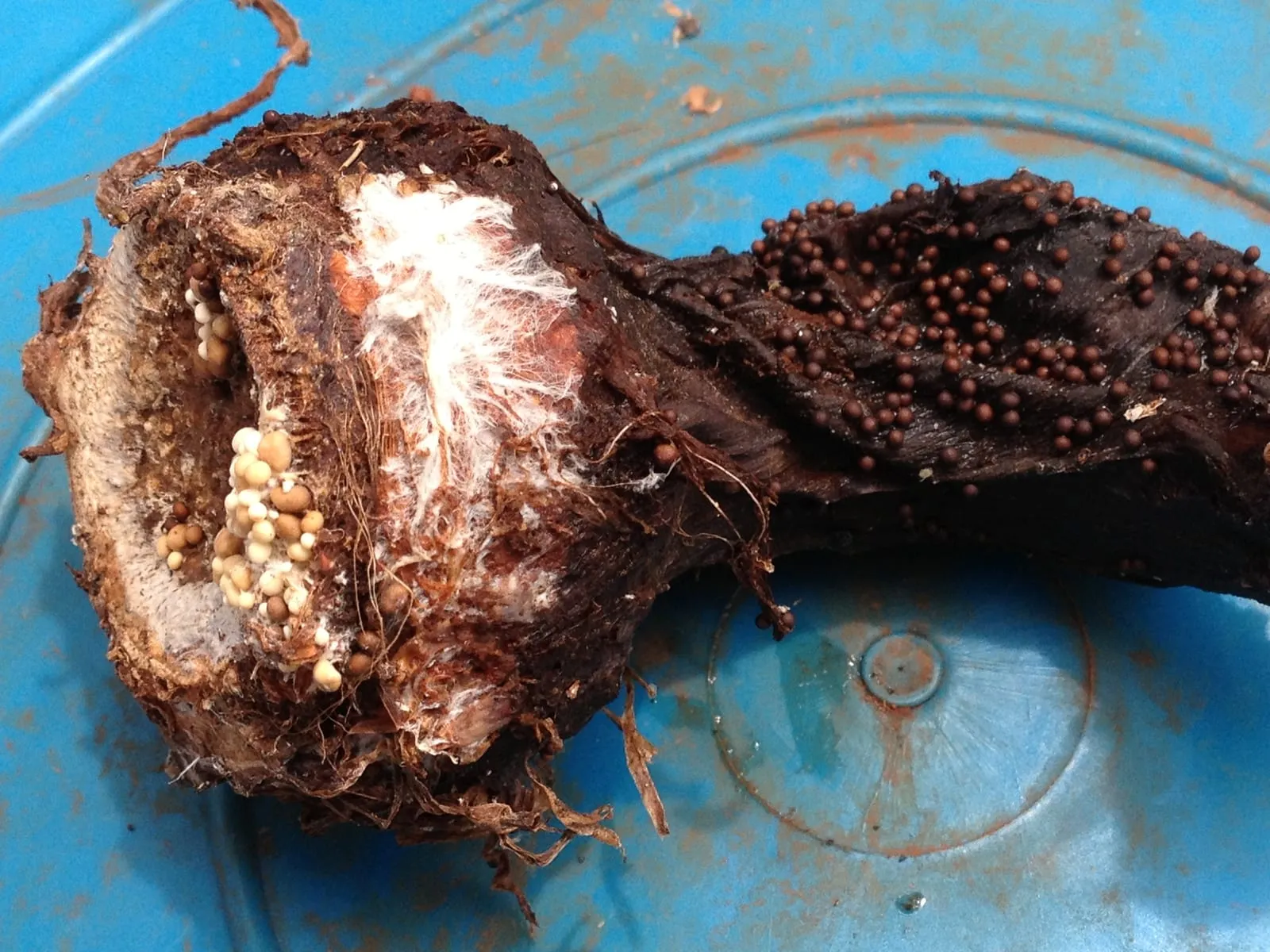
Sclerotium rolfsii
Soil-borne fungal disease most damaging in warm humid Southern conditions. White mycelial fans and small mustard-seed-sized sclerotia at the soil line are diagnostic.
Modified care for zone 8a
The primary adjustments in zone 8a center on heat and soil moisture. Once temperatures push above 90°F consistently, soil moisture loss accelerates sharply; a 3 to 4 inch layer of straw or black plastic mulch and consistent irrigation scheduling are more critical here than in cooler parts of the crop's range. Water stress during fruit set leads to irregular shapes and reduced sweetness.
Fusarium wilt is endemic across much of zone 8a and builds up in soils with a history of cucurbit production. A 3 to 4 year rotation away from cucurbits is the most effective mitigation; no commercially practical fungicide controls it once established. Powdery mildew and downy mildew pressure both increase in the humid eastern portions of the zone. Crimson Sweet carries field tolerance to powdery mildew and is a reasonable default where disease history is a concern. Row covers speed early establishment but must be removed at first flower to allow pollinator access.
Frequently asked questions
- When should watermelon transplants go in the ground in zone 8a?
Late March to mid-April is the target window for most zone 8a locations, once the last frost has passed and soil temperatures have reached 70°F at the 2-inch depth. Planting into cold soil delays establishment and increases disease susceptibility without meaningfully advancing harvest.
- Does watermelon need chill hours in zone 8a?
No. Chill-hour requirements apply to deciduous fruit trees and cane fruits, not warm-season vegetables. Watermelon is a frost-sensitive annual that needs heat, not cold accumulation. Zone 8a's winter minimum temperatures have no direct bearing on watermelon performance.
- How do I manage Fusarium wilt in zone 8a watermelon beds?
Crop rotation is the primary tool. Avoid planting any cucurbit (watermelon, cucumber, squash, cantaloupe) in the same ground more than once every 3 to 4 years. Fusarium persists in soil for years and is not controlled by fungicide applications after infection. Some newer hybrid varieties carry resistance; check seed catalog descriptions before purchasing.
- Can zone 8a growers get two watermelon harvests in one season?
It is possible but not guaranteed. A first planting in late March targets late June to late July harvest; a second direct-sown planting in late May or early June can mature by September. Success depends on whether September heat is sufficient for the variety to concentrate sugars before night temperatures drop below 55°F.
+−
+−
+−
+−
Watermelon in adjacent zones
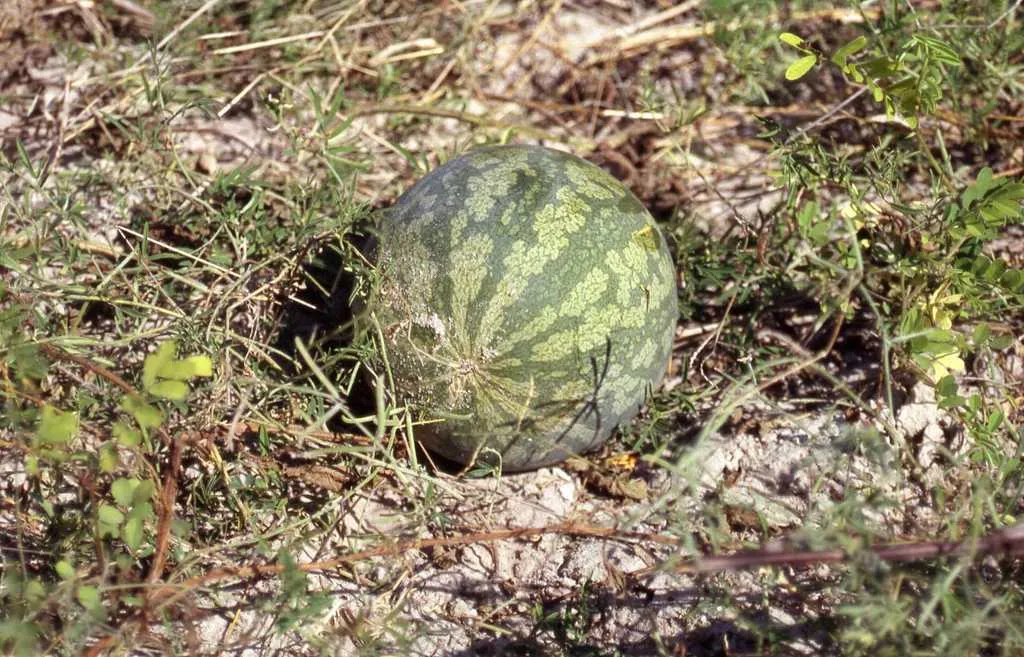
Image: "Fodder Melon", by no rights reserved, via iNaturalist, licensed under CC0 Source.
Related