Grafting pair
good compatibilityContender
on Citation rootstock
- Compatibility
- Good
- Tree size
- Semi Dwarf
- Mature height
- 10–14 ft
- Crop
- Peach
Compatibility and disease notes
Citation is a peach-plum hybrid rootstock that produces a smaller tree, suitable for backyard orchards. Reduced suckering compared to plum-based stocks.
Overview
Contender on Citation is a practical backyard orchard combination for growers in the Northeast, Mid-Atlantic, and Upper South who want a cold-hardy peach in a manageable package. Contender was bred specifically for late bloom, which reduces the odds of a frost hitting an open flower in regions where late freezes are a recurring problem. Citation, a peach-plum hybrid rootstock, keeps the tree at semi-dwarf size (10 to 14 feet), which suits fenced yards and small-scale plantings where full-standard trees would outgrow their space within a decade.
Compatibility between Contender and Citation is rated good. The graft union typically establishes cleanly, and early growth is vigorous without the excessive shoot production that some plum-based dwarfing stocks are known for. Citation's reduced suckering tendency is a practical advantage: fewer rootstock sprouts emerging below the union means less maintenance and less risk of the rootstock eventually dominating the planting.
UC Davis Stone Fruit Rootstocks notes Citation's semi-dwarfing effect and its suitability for heavier or wetter soils than seedling peach rootstocks tolerate, which matters in the clay-heavy Mid-Atlantic and Piedmont soils where Contender is commonly grown.
Best regions
Step-by-step grafting guide
For Contender on Citation, whip-and-tongue grafting is the standard approach when working with pencil-diameter scionwood and rootstock of similar caliper (roughly 3/8 to 5/8 inch diameter). Collect scionwood in late January or early February while Contender is fully dormant, before any bud swell. Scion sticks should carry three to four buds, cut to 6 to 8 inches. Wrap in damp paper towels, seal in a plastic bag, and refrigerate at 34 to 38 degrees Fahrenheit until grafting time.
Graft in late winter to early spring, targeting the window just before Citation rootstock breaks dormancy (typically late February to mid-March depending on region). Earlier grafts on still-dormant rootstock can succeed but callusing is slower. The ideal moment is when the rootstock shows the first signs of sap movement but scion buds remain tight.
Tools needed: sharp grafting knife (single-bevel, dedicated blade), grafting tape or Parafilm M, a clean flat surface for cutting, isopropyl alcohol for blade sterilization.
Cut matching tongues on both scion and rootstock at a 45-degree angle, approximately 1.5 to 2 inches long. Interlock the tongue cuts so the cambium layers align on at least one side. Wrap the union firmly with Parafilm M from below the cut to above it, overlapping each wrap by half. No wax is needed if Parafilm is used; it degrades on its own.
Success criteria: visible bud swell on the scion within three to four weeks, followed by shoot emergence. A union that fails will show shriveled buds and desiccated scionwood within two to three weeks of warmer temperatures.
Common failure modes
Cambium misalignment is the most common cause of failure with this combination when growers new to stone fruit grafting attempt whip-and-tongue cuts. Peach bark is thinner than apple or pear, and the cambium layer is narrow. A union where cambium contacts only on one side rather than both will often callus poorly and produce a weak attachment prone to wind breakage in the first growing season. Re-cutting to confirm alignment before wrapping is worth the extra two minutes.
Rootstock suckering, while less severe with Citation than with Myrobalan or Marianna plum-based stocks, still occurs if the graft union is set too low relative to soil grade. Suckers that emerge below the union are Citation tissue and will produce plum-like growth. Remove them promptly; if left for more than a season they can outcompete the grafted Contender top.
Bacterial canker (Pseudomonas syringae) is a realistic threat in the Northeast and Mid-Atlantic, particularly in wet springs. Fresh graft wounds are entry points. Avoid grafting during extended rainy periods, and inspect unions in early summer for sunken, oozing cankers at or just below the wrap.
Sources
Frequently asked questions
- How tall will a Contender peach on Citation rootstock grow?
Expect 10 to 14 feet at maturity without aggressive pruning. Annual heading cuts during dormancy can keep the tree closer to 10 feet, which suits most backyard situations and makes netting against birds practical.
- Does Citation rootstock perform well in clay soils?
Citation tolerates heavier and moderately wet soils better than seedling peach rootstock, which is one reason it appears frequently in Mid-Atlantic and Piedmont plantings. It is not suitable for sites with standing water, but it handles clay-loam better than most alternatives.
- When should I remove the grafting wrap?
If using Parafilm M, no removal is needed; it degrades on its own within four to eight weeks. Rubber budding strips or polyethylene tape should be cut on one side after the union has callused and shoot growth is underway, typically six to eight weeks post-graft, to prevent girdling.
- Is Contender a good peach for cold climates?
Yes. Contender was developed partly for cold-hardiness and late bloom, reducing the chance that a late spring frost damages the flowers. It performs reliably through zone 5 and is a common choice in the Northeast where earlier-blooming varieties like Reliance face repeated frost losses.
+−
+−
+−
+−
Related
Related grafts
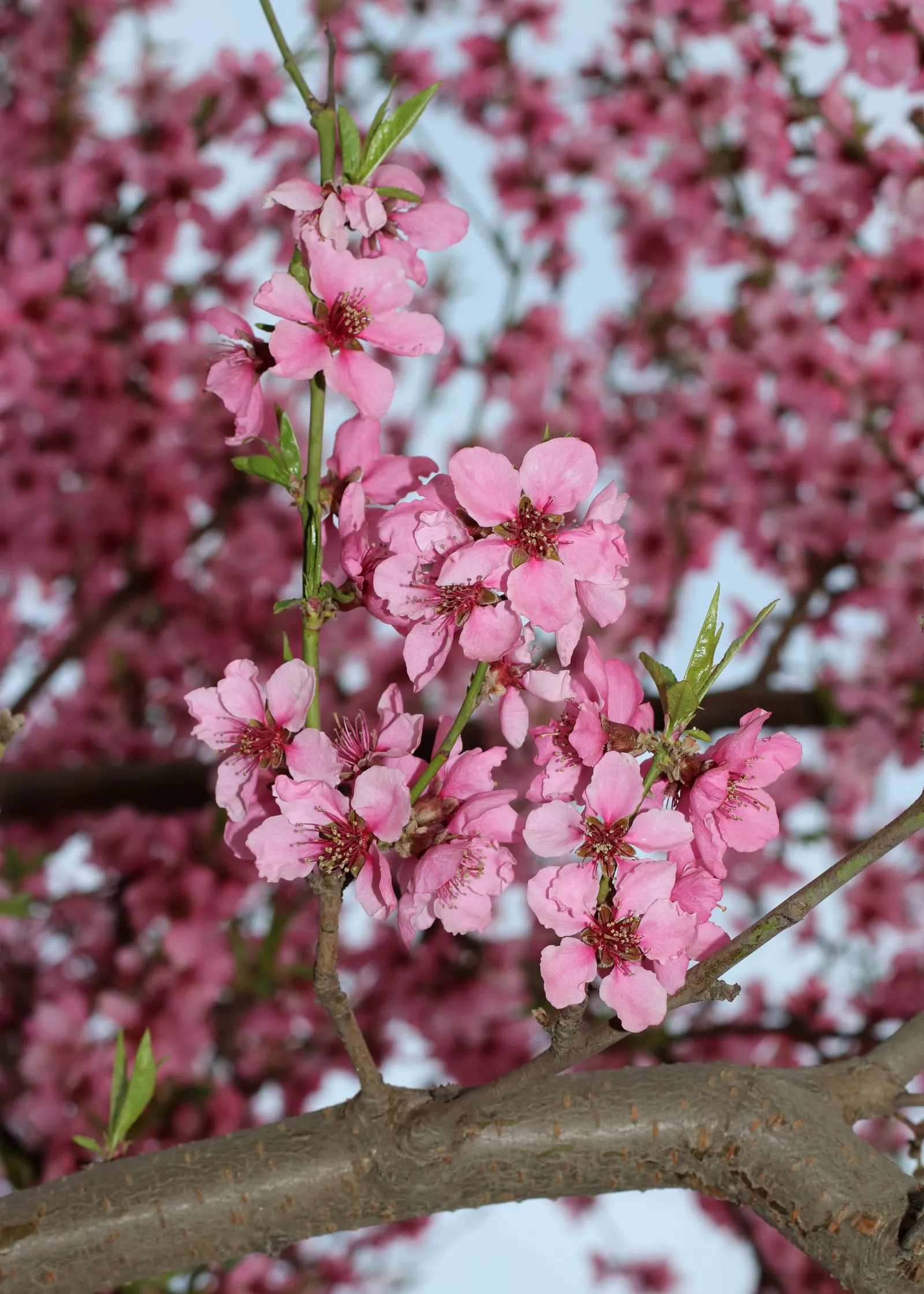
Image: "Peach flowers 2020 G1", by George Chernilevsky, via Wikimedia Commons, licensed under CC-BY. Source.
