Grafting pair
excellent compatibilityRedhaven
on Lovell rootstock
- Compatibility
- Excellent
- Tree size
- Standard
- Mature height
- 15–20 ft
- Crop
- Peach
Compatibility and disease notes
Lovell is the standard peach seedling rootstock; broadly adapted, tolerates wet feet better than Nemaguard. Suitable for most US peach regions.
Overview
Redhaven on Lovell is the broadly adapted standard for peach growers across the northeastern US, mid-Atlantic, and upper Midwest. Lovell is a peach seedling rootstock; deep rooted, vigorous, tolerates moderately heavy soils, and provides good cold hardiness. Redhaven is the industry standard yellow-fleshed peach with excellent eating quality and broad zone adaptation.
The combination produces a 15 to 20 foot tree with a typical 12 to 20 year productive life. It's not the highest-yielding peach system, but it's among the most reliable. See the Clemson Peach Rootstock Guide for regional adaptation data.
Best regions
Step-by-step grafting guide
Peach grafts use chip-budding more often than whip-and-tongue, performed in late summer (August) on dormant rootstock for spring growth.
- In August, select a Lovell rootstock that is established and growing actively. Cut a small chip from the scion shoot containing one good bud. The chip is roughly 1 inch long, with a thin sliver of wood attached.
- Cut a matching slot on the Lovell rootstock at the desired height (4 to 8 inches above soil line for low-graft training).
- Insert the chip, matching cambium layers on at least one side. Wrap with parafilm or budding rubber, leaving the bud exposed.
- Wait until the following spring. The bud will swell and break in March or April. Cut the rootstock above the new shoot once it's 6 inches long.
- Train the new shoot as your central leader; remove rootstock suckers throughout the first season.
Common failure modes
Three common issues. First, the budding window is short; September is too late in most zones. Stick to August.
Second, peach trees on Lovell are sensitive to wet soil. If your site has poor drainage, switch to Krymsk 86 or accept that you'll lose trees to crown rot in year 4 or 5.
Third, peach trees have shorter lives than apple. Lovell-grafted Redhaven typically peaks at year 7 or 8 and declines by year 15. Plan for replacement orchard plantings rather than expecting one tree to last 30 years.
Sources
Frequently asked questions
- Why chip-bud rather than whip-and-tongue for peach?
Peach is more challenging to graft in late winter than apple. Late-summer chip-budding has higher success rates because both rootstock and scion are actively growing and the union heals quickly while the bud waits dormant until spring.
+−
Related
Related grafts
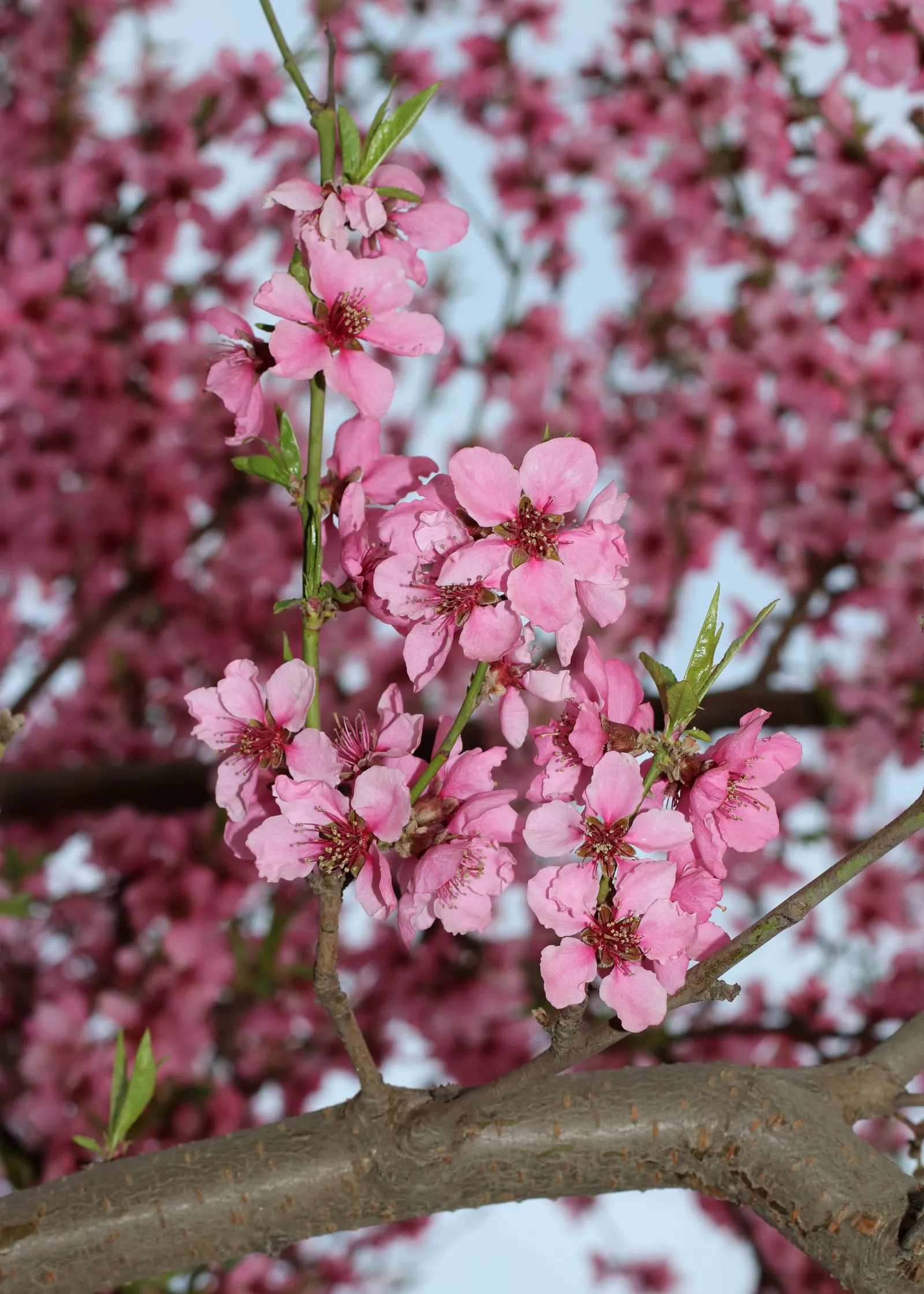
Image: "Peach flowers 2020 G1", by George Chernilevsky, via Wikimedia Commons, licensed under CC-BY. Source.
