vegetable in zone 7b
Growing asparagus in zone 7b
Asparagus officinalis
- Zone
- 7b 5°F to 10°F
- Growing season
- 220 days
- Suitable varieties
- 3
- Days to harvest
- 730 to 1095
The verdict
Zone 7b sits in the sweet spot for asparagus production. The crop requires a period of winter dormancy triggered by sustained cold, and zone 7b's minimum winter lows of 5 to 10°F deliver reliable dormancy without the extended deep freezes that can heave newly planted crowns. The 220-day growing season gives fern foliage ample time to build carbohydrate reserves before fall senescence, which directly determines spear production the following spring.
Jersey Knight and Mary Washington both perform consistently in the piedmont and upper South within this zone. Purple Passion offers good flavor but can show reduced vigor under the combination of summer heat and humidity characteristic of zone 7b. Fusarium wilt, present throughout this region, is a real limiting factor on long-term bed health, but variety selection largely controls the risk. Established beds in well-drained zone 7b soil regularly produce for 15 to 20 years.
Recommended varieties for zone 7b
3 cultivars suited to this zone, with disease-resistance and zone-fit annotations.
| Variety | Notes | Zone fit | Disease resistance |
|---|---|---|---|
| Jersey Knight fits zone 7b | Tender, sweet, large green spears; all-male hybrid. Steamed, grilled, roasted, fresh. Productive male hybrid puts energy into spears not seeds. Disease-resistant Rutgers release. | | none noted |
| Purple Passion fits zone 7b | Sweet, tender, distinctive deep purple spears that turn green when cooked; higher sugar content than green types. Steamed, grilled, fresh raw on platters. Productive heritage selection. | | none noted |
| Mary Washington fits zone 7b | Mild, classic asparagus flavor; thin to medium green spears. Heritage 1949 USDA release. Productive open-pollinated, has both male and female plants (some seed-set reduces yield). | | none noted |
Critical timing for zone 7b
Asparagus crowns in zone 7b typically break dormancy in late February, with the first spears emerging in early to mid-March. The average last spring frost in zone 7b falls between late March and mid-April depending on elevation and local topography, which means emerging spears frequently intersect with frost events. A light freeze in the 28 to 32°F range damages spear tips but rarely threatens the crown itself; a harder late frost can cause more significant tip dieback that reduces early-season yield.
Harvest on established beds runs roughly six to eight weeks, tapering off as daytime temperatures climb above 80°F and ferns begin to open and branch. Beds enter visible senescence in October or November, depending on the fall warm period.
Common challenges in zone 7b
- ▸ Cedar-apple rust pressure heavy in piedmont
- ▸ Japanese beetles
- ▸ Brown marmorated stink bug
- ▸ Late summer disease pressure
Disease pressure to watch for
Modified care for zone 7b
Fusarium wilt is the primary disease concern in zone 7b. The pathogen persists in soil and spreads through infected crowns; planting resistant varieties such as Jersey Knight substantially reduces long-term risk compared to Mary Washington, which shows moderate susceptibility. Raised or mounded beds with sharp drainage slow disease progression and are worth the extra prep work at planting time.
Japanese beetles feed heavily on asparagus ferns from late June through August. Significant defoliation during this window reduces the carbohydrate reserves the crown stores for the following season's spear production, so beetle pressure warrants management attention rather than tolerance. Brown marmorated stink bugs cause cosmetic damage to spears but are rarely production-limiting.
Beds should not be cut back until ferns have fully yellowed and senesced naturally in fall. Premature cutting shortens the photosynthetic window and weakens crowns over successive seasons. Drip or soaker irrigation at crown level is preferable to overhead watering, which promotes the humid soil surface conditions that favor Fusarium.
Frequently asked questions
- Is zone 7b too warm for asparagus?
No. Asparagus thrives in zone 7b. The crop needs winter cold to trigger dormancy, and zone 7b's minimum temperatures of 5 to 10°F provide that reliably. The main risk is not heat but Fusarium wilt in poorly drained soil; choose resistant varieties and site beds where water drains quickly.
- Which asparagus varieties perform best in zone 7b?
Jersey Knight is the most reliable choice in zone 7b because of its strong Fusarium wilt resistance, which matters in the humid piedmont and upper South. Mary Washington is widely available and performs adequately but carries moderate Fusarium susceptibility. Purple Passion is worth trying for flavor, though it can show reduced vigor in hot, humid summers.
- When should asparagus be harvested in zone 7b?
Spears typically emerge in early to mid-March in zone 7b. For new beds (year one or two), harvest should be minimal or skipped entirely to let crowns establish. For beds three years and older, harvest runs approximately six to eight weeks, ending when spear diameter shrinks noticeably or daytime highs consistently exceed 80°F.
- How do late spring frosts affect asparagus spears in zone 7b?
Emerging spears can experience frost damage in zone 7b since last frost dates often fall in late March to mid-April, overlapping with early spear emergence. A light freeze will tip-burn the spears but not harm the crown. Cut damaged spears at the soil line; the crown will push new ones. A hard frost below 28°F on open spears causes more significant dieback.
- How do Japanese beetles affect asparagus in zone 7b?
Japanese beetles feed on asparagus ferns from roughly late June through August. Heavy defoliation during this period reduces the photosynthesis the crown needs to build reserves for the following spring. Repeated severe defoliation over multiple seasons weakens beds noticeably. Managing beetle pressure during peak fern growth is more important than managing it on emerging spears.
+−
+−
+−
+−
+−
Asparagus in adjacent zones
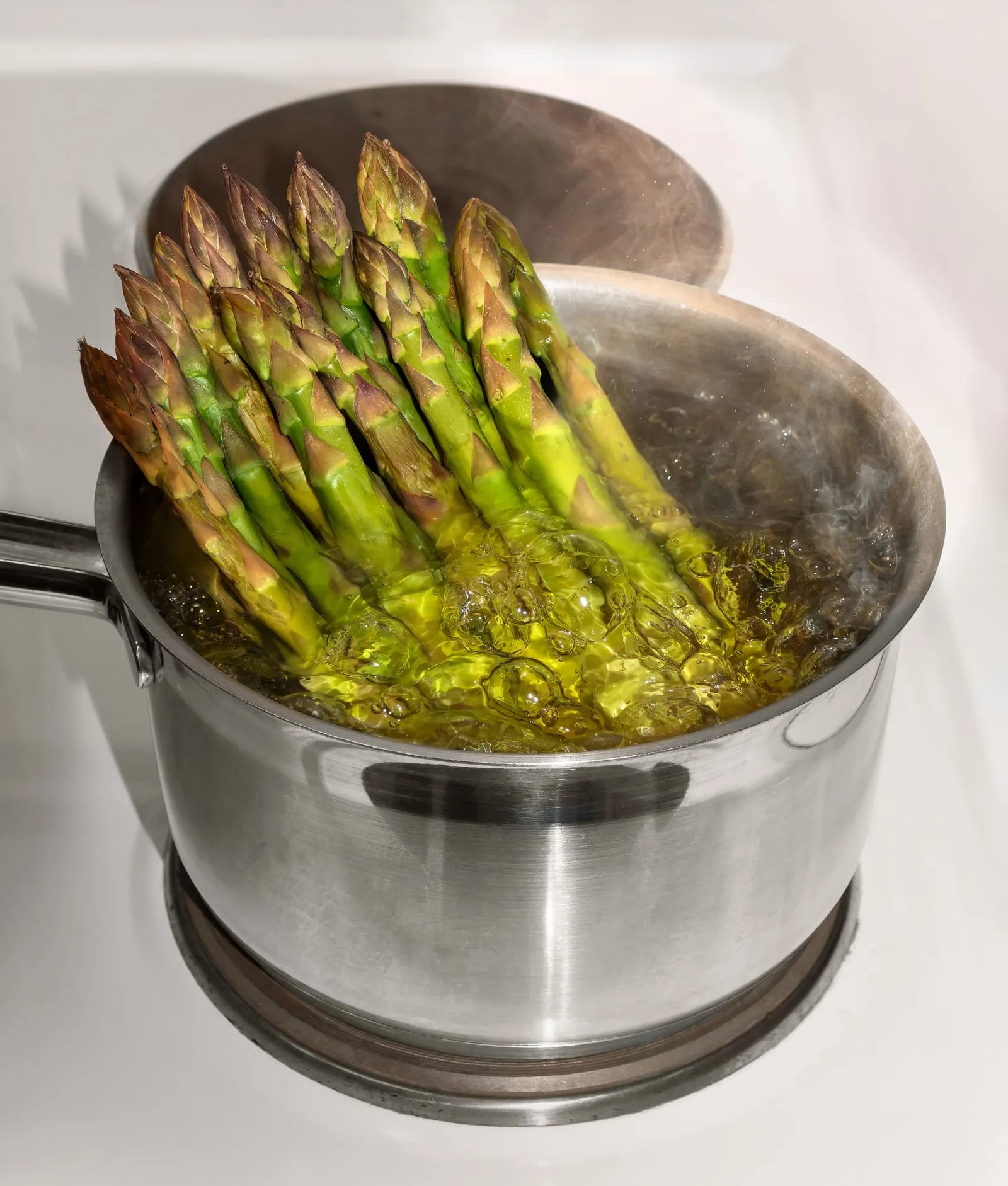
Image: "Steam-boiling green asparagus", by W.carter, via Wikimedia Commons, licensed under CC0 Source.

Related