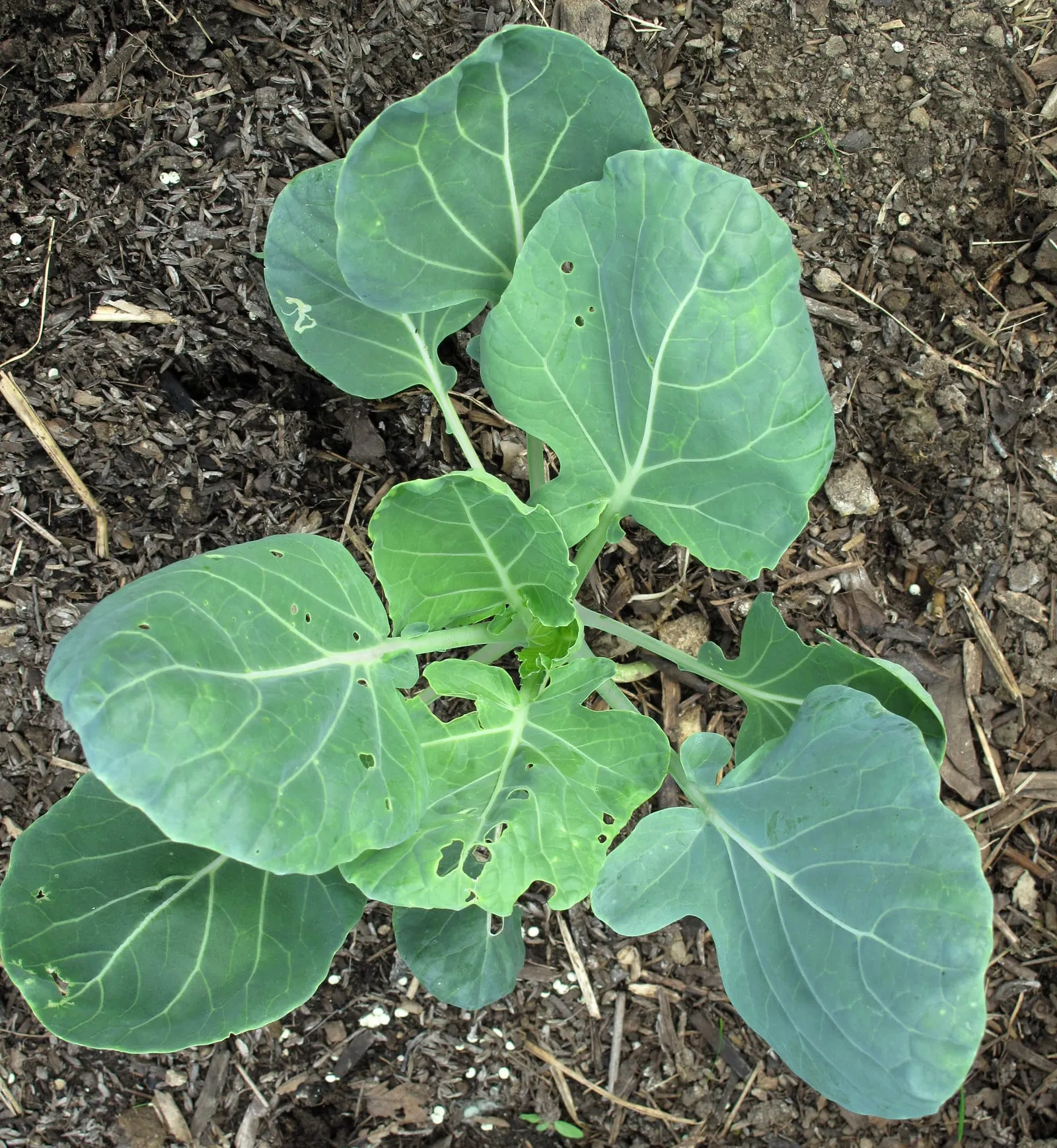
vegetable in zone 7b
Growing brussels sprouts in zone 7b
Brassica oleracea var. gemmifera
- Zone
- 7b 5°F to 10°F
- Growing season
- 220 days
- Suitable varieties
- 2
- Days to harvest
- 90 to 110
The verdict
Brussels sprouts are cool-season annuals, not perennials requiring chill hours, so the zone 7b question is really about temperature timing rather than winter cold accumulation. The crop needs roughly 80 to 100 days of frost-free growing time followed by sustained cool temperatures to size up and sweeten sprouts. Zone 7b's 220-day growing season provides plenty of calendar room, but the hot, humid summers that define piedmont summers create real challenges during establishment.
Zone 7b sits at the warm edge of reliable Brussels sprouts production. Zones 5 through 6 are the sweet spot, where cool falls arrive early and linger. In zone 7b, the margin is thinner: a fall warm spell extending into October can stall sprout development, while the same season's first frost in early November arrives just as lower sprouts are sizing. Diablo and Falstaff both handle variable fall conditions better than older open-pollinated types, which makes variety selection more consequential here than in cooler zones. This is a workable zone, but one where timing errors that would be recoverable in the Pacific Northwest often are not.
Recommended varieties for zone 7b
2 cultivars suited to this zone, with disease-resistance and zone-fit annotations.
| Variety | Notes | Zone fit | Disease resistance |
|---|---|---|---|
| Diablo fits zone 7b | Sweet-rich after frost, dense uniform sprouts; the commercial fresh-market hybrid. Roasting, halved with bacon, soups. High yield, holds in field through hard freezes. | | none noted |
| Falstaff fits zone 7b | Sweet, tender, deep purple-red sprouts that hold color when roasted; ornamental as well as edible. Roasting, fresh, raw on platters. | | none noted |
Critical timing for zone 7b
Fall is the only practical season for Brussels sprouts in zone 7b. A spring planting runs directly into summer heat before sprouts can develop, and quality suffers significantly above 80°F.
For fall harvest, transplants go into the ground in mid to late July. With 85 to 95 days to maturity for Diablo and Falstaff, the first harvestable sprouts arrive in mid to late October. Zone 7b's first fall frost typically falls between late October and mid November, and that frost is beneficial rather than threatening, converting starches to sugars and improving flavor. Lower sprouts are harvested progressively upward through November and into December, with mild winters occasionally extending harvest into January. Plants started after early August risk running out of warm days for proper sprout sizing before deep cold arrives.
Common challenges in zone 7b
- ▸ Cedar-apple rust pressure heavy in piedmont
- ▸ Japanese beetles
- ▸ Brown marmorated stink bug
- ▸ Late summer disease pressure
Disease pressure to watch for
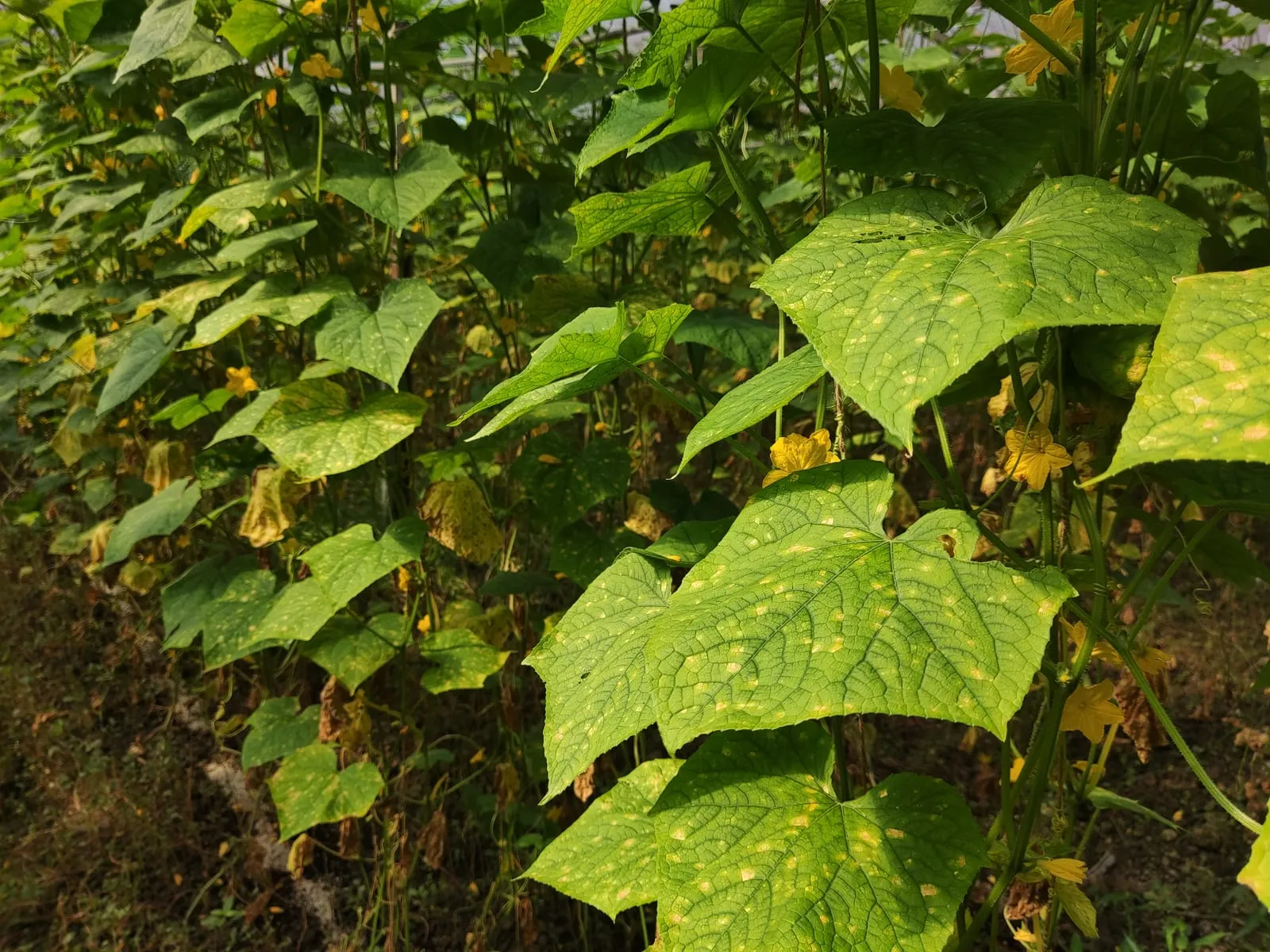
Pseudoperonospora cubensis (cucurbits) and others
Water mold (oomycete, not a true fungus) that thrives in cool damp conditions. Spreads rapidly through cucurbit and brassica plantings on wind-borne spores.
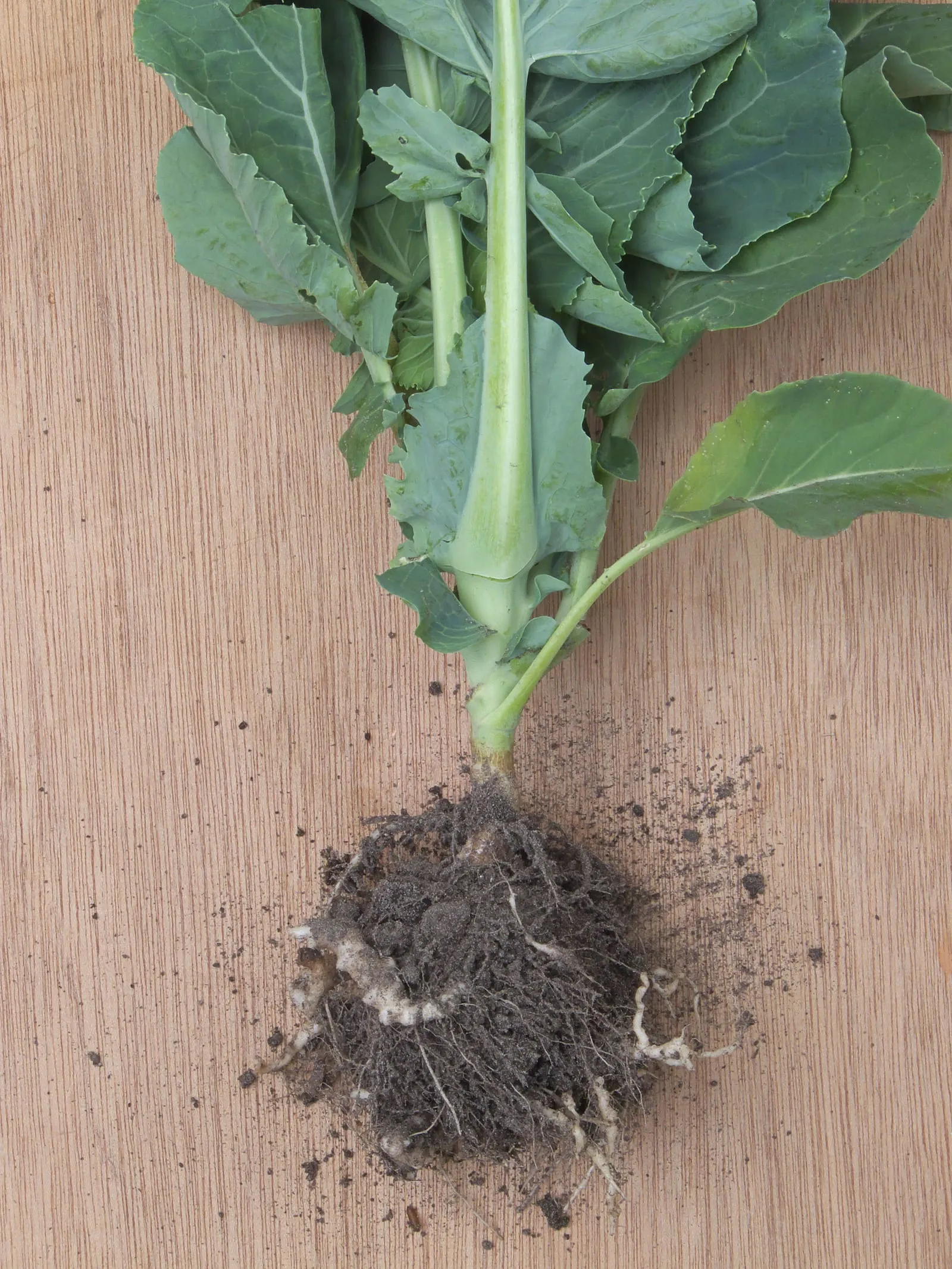
Plasmodiophora brassicae
Soil-borne disease causing characteristic distorted club-shaped roots on brassicas. Persists in soil for 10-20 years; the dominant brassica pathogen in acidic poorly-drained soils.
Modified care for zone 7b
Summer transplanting into zone 7b heat requires consistent moisture. Transplants set out in July need watering every one to two days until roots establish, which takes two to three weeks. Mulching immediately after transplanting reduces soil temperature and water loss.
Clubroot is the disease most likely to end a Brussels sprouts planting permanently in zone 7b. The pathogen persists in soil for 15 to 20 years and thrives in acidic conditions. Raising soil pH to 7.2 or above with lime before planting suppresses clubroot and should be done if the crop has not been grown in that bed recently. Downy mildew pressure intensifies during the humid stretches common in piedmont falls; Diablo carries better field tolerance than many alternatives, and drip irrigation rather than overhead watering reduces foliar wetness.
Brown marmorated stink bugs and Japanese beetles both peak in late summer, exactly when transplants are establishing. Floating row cover through August keeps feeding pressure manageable without pesticide applications.
Frequently asked questions
- Can Brussels sprouts overwinter in zone 7b?
Plants can survive zone 7b winters if they are well established by first frost, since the minimum temperature range of 5 to 10°F rarely persists long enough to kill mature plants outright. However, the spring warming that follows is too rapid and hot to produce a worthwhile second harvest. Most growers remove plants after the December harvest rather than carrying them through winter.
- Why do my Brussels sprouts produce loose, leafy sprouts instead of tight heads?
Loose sprouts are almost always a heat problem. If temperatures stay above 75 to 80°F during sprout development, the heads remain open and leafy. In zone 7b this typically means transplants went out too late in July or August, pushing sprout development into warm October weather instead of cool November conditions.
- Is clubroot a concern if I've never grown brassicas in that bed?
Lower risk, but not zero. Clubroot spores can arrive on transplants, tools, or even on boots. If the soil pH tests below 6.8, liming to 7.2 before planting is a low-cost precaution. Infected soil is not remediable, so prevention is the only practical strategy.
+−
+−
+−
Brussels Sprouts in adjacent zones
Image: "Young brussels sprouts plant", by Downtowngal, via Wikimedia Commons, licensed under CC-BY Source.

Related