vegetable in zone 7b
Growing carrot in zone 7b
Daucus carota subsp. sativus
- Zone
- 7b 5°F to 10°F
- Growing season
- 220 days
- Suitable varieties
- 5
- Days to harvest
- 60 to 80
The verdict
Carrots are a cool-season root crop, and zone 7b suits them well across two distinct planting windows. The 220-day growing season accommodates both a spring planting and a robust fall planting, with warm summers serving as the natural gap between them rather than a barrier.
Chill-hour requirements apply to perennial fruit and nut crops, not root vegetables. For carrots, what matters is soil temperature (germination begins around 45°F and peaks near 75°F) and air temperature during root development. Roots develop best when temperatures are consistently in the 60-70°F range, and they become bitter and fibrous when exposed to prolonged heat above 80°F.
Zone 7b's mild winters and long shoulder seasons are genuinely favorable. Fall-sown carrots can often be left in the ground well into December, and light frosts improve sweetness by triggering starch-to-sugar conversion in the root. This is not a marginal zone for carrots; it is a productive one with two reliable harvest windows per year.
Recommended varieties for zone 7b
5 cultivars suited to this zone, with disease-resistance and zone-fit annotations.
| Variety | Notes | Zone fit | Disease resistance |
|---|---|---|---|
| Nantes fits zone 7b | Sweet, crisp, very low bitterness; cylindrical orange roots with blunt tips. Fresh, juicing, salads, the snacking carrot standard. Heritage French variety, sweetens with frost. | | none noted |
| Danvers Half Long fits zone 7b | Sweet, slightly stronger flavor; tapered orange roots that handle heavier soil. Fresh, cooking, storage. Heritage 1870s American variety, the root-cellar standard. | | none noted |
| Chantenay Red Core fits zone 7b | Sweet, juicy, broad shoulders tapering to a stubby point; copes with shallow or rocky soil. Fresh, juicing, soups. Heritage stocky variety good for difficult soils. | | none noted |
| Cosmic Purple fits zone 7b | Sweet, mild, novelty deep purple skin with orange core; holds purple when cooked briefly. Fresh, salads. Anthocyanin-rich, ornamental, kid-friendly. | | none noted |
| Atomic Red fits zone 7b | Mild, slightly bitter raw, sweet when cooked; deep red roots that turn brighter with cooking. Roasting, soups. Lycopene-rich, novelty for color. | | none noted |
Critical timing for zone 7b
For spring production, direct sow 4 to 6 weeks before the last expected frost. In zone 7b, last frost typically falls between mid-March and early April depending on elevation and local topography. This puts the spring sowing window from late February through mid-March. At 70 to 80 days to maturity for most varieties, spring-sown carrots reach harvest in late May or early June, just ahead of sustained summer heat.
Fall plantings are often the more reliable window in zone 7b. Count back 70 to 80 days from the first expected fall frost (typically mid-October to early November in zone 7b) and add one to two weeks to account for slower germination in warm late-summer soil. This targets a sowing window of late July through mid-August. Fall carrots hold well in the ground through December, gaining flavor as temperatures drop.
Common challenges in zone 7b
- ▸ Cedar-apple rust pressure heavy in piedmont
- ▸ Japanese beetles
- ▸ Brown marmorated stink bug
- ▸ Late summer disease pressure
Modified care for zone 7b
The primary adjustment for zone 7b growers is planning precisely around the summer production gap. Carrots sown too late in spring or too early for fall will stall or develop off-flavors in July and August heat; the shoulder-season windows are narrower here than in zones 5 or 6, so timing is worth tracking closely.
Mulching spring plantings with a light layer of straw extends the harvest window by moderating soil temperatures as warm weather arrives. For fall plantings, germination in late July can be slow and uneven when soil temperatures remain above 85°F; shading seed rows with row cover or a board for the first week often improves germination rates.
Japanese beetles and brown marmorated stink bugs can damage carrot foliage but rarely compromise root yield unless populations are severe. Late-summer disease pressure on the tops is worth monitoring in fall plantings, though root quality typically remains unaffected unless the canopy is fully defoliated before roots have sized up.
Carrot in adjacent zones
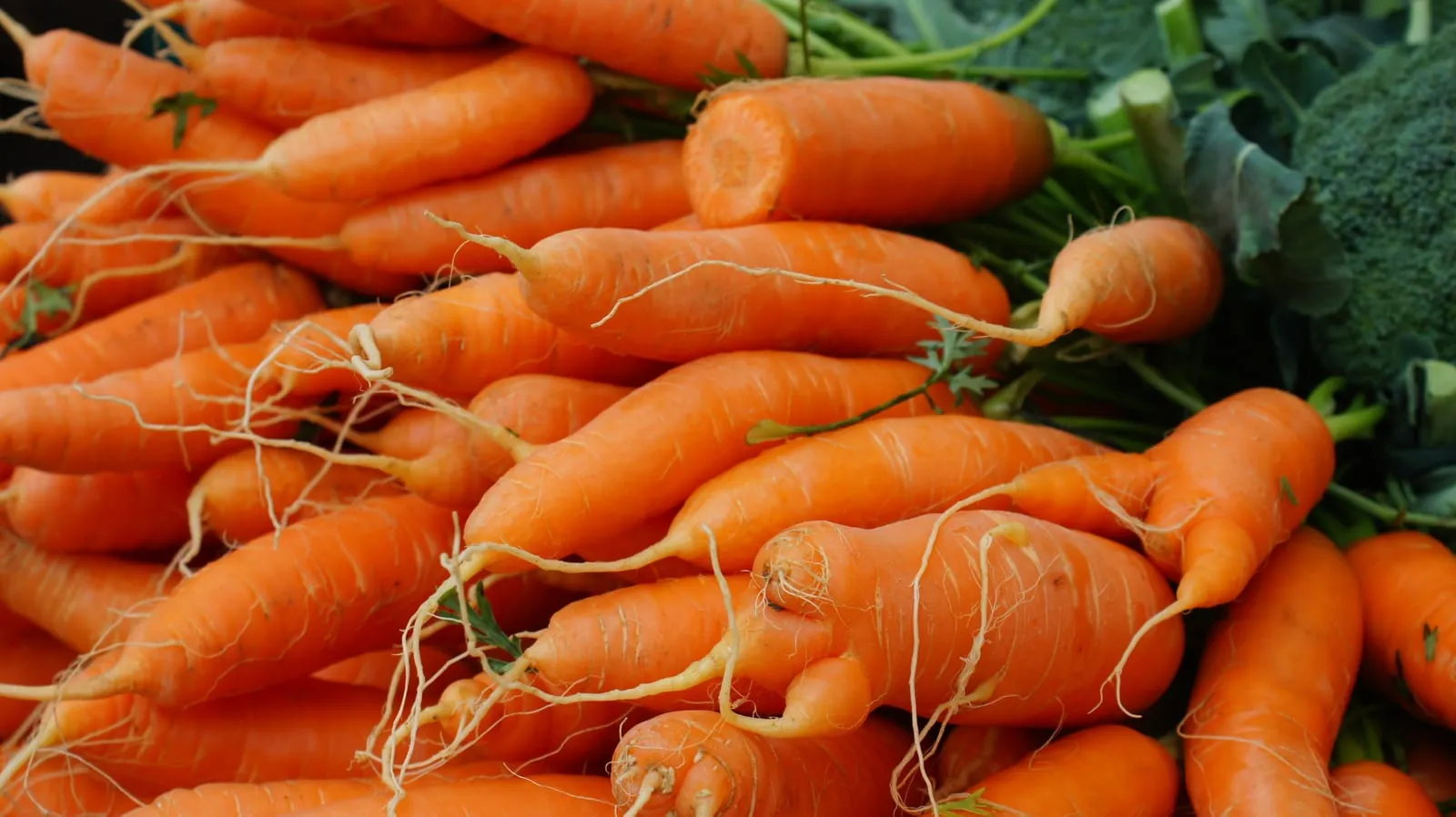
Image: "Carrots at Ljubljana Central Market", by domdomegg, via Wikimedia Commons, licensed under CC-BY Source.

Related