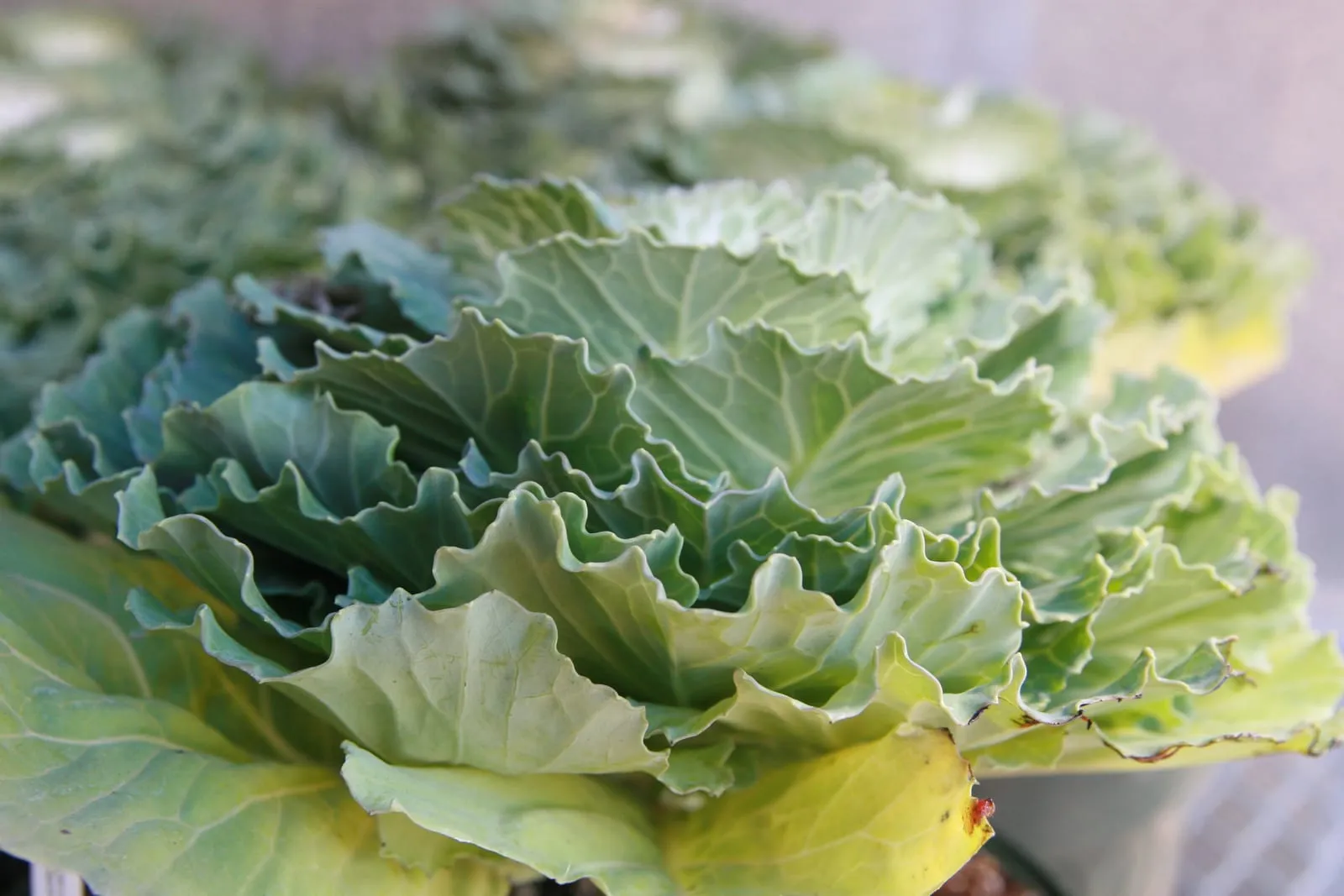
vegetable in zone 9a
Growing collards in zone 9a
Brassica oleracea var. acephala
- Zone
- 9a 20°F to 25°F
- Growing season
- 290 days
- Suitable varieties
- 2
- Days to harvest
- 55 to 80
The verdict
Collards are well-suited to zone 9a, arguably better suited than they are to cooler regions with harsher winters. Unlike stone fruits and cane berries, collards carry no chill-hour requirement, so the zone's mild winters are not a limiting factor. The 290-day growing season supports two distinct production windows per year: a long fall-through-spring run and a shorter early-spring push before summer heat sets in.
The main constraint in zone 9a is summer, not winter. Collards tolerate heat better than most brassicas, but sustained temperatures above 90°F degrade leaf quality and accelerate bolting. Georgia Southern and Morris Heading both handle warm conditions reasonably well, but neither will produce usable greens through a zone 9a August. Plan around the heat rather than fighting it. Fall and winter production is where zone 9a growers have a real advantage: extended mild conditions allow harvests through months when collard production shuts down entirely farther north.
Recommended varieties for zone 9a
2 cultivars suited to this zone, with disease-resistance and zone-fit annotations.
| Variety | Notes | Zone fit | Disease resistance |
|---|---|---|---|
| Georgia Southern fits zone 9a | Sweet, mild, classic tender Southern flavor; large blue-green flat leaves. Long-cooked with smoked meats, stews, ham hocks. Heritage Southern variety, heat-tolerant. | | none noted |
| Morris Heading fits zone 9a | Sweet, classic Southern flavor; compact heading-type collard. Long-cooked traditional preparations. Heritage variety with self-blanching tender inner leaves. | | none noted |
Critical timing for zone 9a
In zone 9a, the primary planting window opens in late August through September for a fall and winter harvest. Plants started then will be producing by October and can continue through March in most years, given zone 9a's minimal hard-freeze risk. A second, shorter window opens in late January through February for a spring crop, though summer heat will end that run by May or June.
Collards do not bloom as part of a productive harvest cycle the way fruiting crops do; the goal is foliage, not fruit. The crop will bolt and flower when day length increases and temperatures rise in spring. Zone 9a's warm springs compress this window slightly compared to zones 7 or 8, so spring plantings get fewer productive weeks before the plants shift energy toward seed production. Frost actually improves flavor, and zone 9a's occasional light frosts pose no risk to established plants.
Common challenges in zone 9a
- ▸ Limited stone fruit options due to insufficient chill
- ▸ Hurricane and tropical storm exposure
- ▸ Citrus disease pressure
Disease pressure to watch for
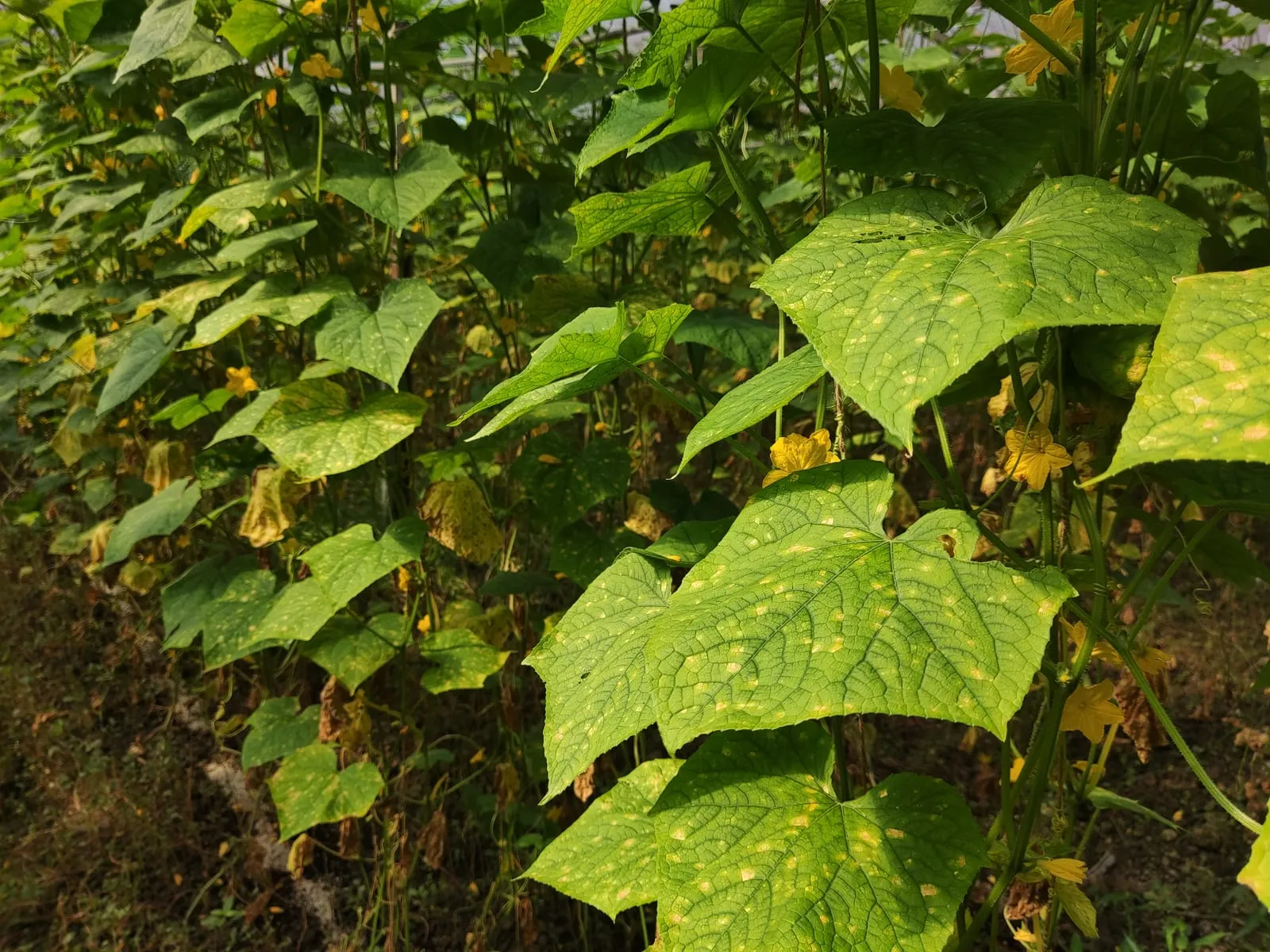
Pseudoperonospora cubensis (cucurbits) and others
Water mold (oomycete, not a true fungus) that thrives in cool damp conditions. Spreads rapidly through cucurbit and brassica plantings on wind-borne spores.
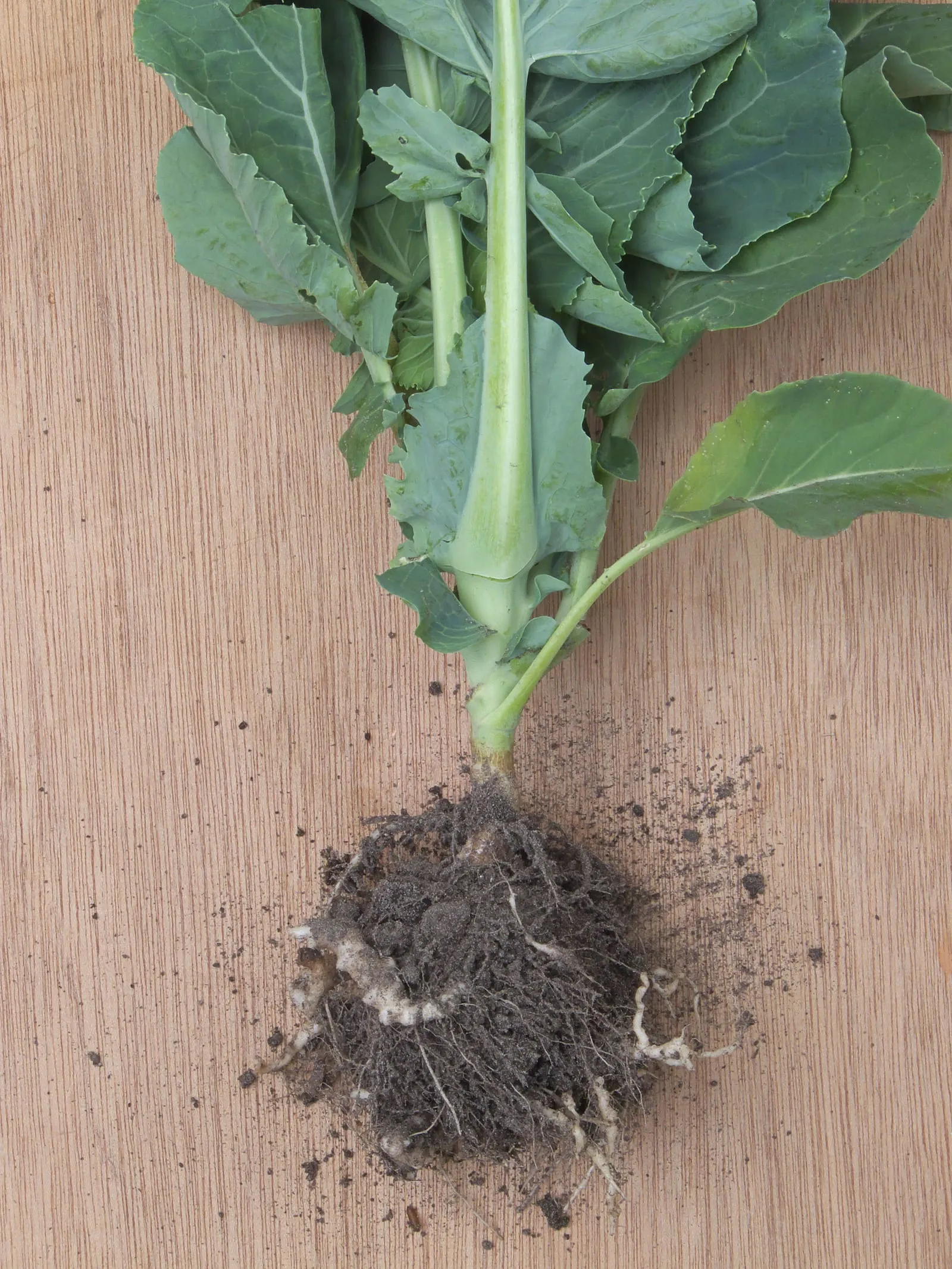
Plasmodiophora brassicae
Soil-borne disease causing characteristic distorted club-shaped roots on brassicas. Persists in soil for 10-20 years; the dominant brassica pathogen in acidic poorly-drained soils.
Modified care for zone 9a
The primary adjustment in zone 9a is timing: skip summer planting entirely. Transplanting into August heat requires shade cloth or drip irrigation to prevent stress during establishment, and even well-irrigated starts may stall until temperatures drop below 85°F consistently.
Downy mildew is the more pressing disease concern in humid parts of zone 9a. Warm nights combined with high humidity create conditions where the pathogen spreads quickly across dense plantings. Increase row spacing beyond the standard 18 inches to improve airflow, and avoid overhead irrigation in the evening. Clubroot is a soil-borne problem that persists for years; raising soil pH to 7.0 or above with lime before planting reduces infection pressure significantly. Hurricane season overlaps with the fall planting window, so delay transplanting in coastal areas until the peak storm risk passes, typically after early October.
Frequently asked questions
- Can collards survive summer in zone 9a?
Collards will struggle through a zone 9a summer rather than thrive. Sustained heat above 90°F reduces leaf quality and triggers bolting. Most growers pull plants by June and replant in late August. Attempting a summer crop is rarely worth the irrigation cost and the resulting leaf quality.
- Do collards taste better after frost in zone 9a?
Yes. Cold temperatures convert starches to sugars in collard leaves, reducing bitterness. Zone 9a's occasional light frosts in December and January provide this benefit without harming established plants, which tolerate temperatures well below 28°F.
- Which variety performs better in zone 9a, Georgia Southern or Morris Heading?
Georgia Southern is the more widely recommended variety for the South and tends to be more heat tolerant at the edges of the growing season. Morris Heading forms a denser, more cabbage-like head and suits gardeners who prefer a compact plant, but it offers no particular advantage in zone 9a conditions specifically.
- How do I manage clubroot in zone 9a soil?
Clubroot spores persist in soil for 20 years or more, so prevention matters more than treatment. Raise soil pH to 7.0 to 7.2 before planting using agricultural lime, avoid working wet soil, and rotate brassicas to different beds on a minimum three-year cycle. Remove and dispose of infected plants away from the garden.
+−
+−
+−
+−
Collards in adjacent zones
Image: "Brassica oleracea var. acephala Victoria Pigeon 0zz", by Photo by David J. Stang, via Wikimedia Commons, licensed under CC-BY Source.

Related