vegetable in zone 7b
Growing kale in zone 7b
Brassica oleracea var. acephala
- Zone
- 7b 5°F to 10°F
- Growing season
- 220 days
- Suitable varieties
- 4
- Days to harvest
- 50 to 75
The verdict
Zone 7b sits squarely in kale's comfort zone. The winter minimum of 5 to 10°F is cold enough to trigger the sweetening effect most gardeners associate with fall harvests (light frost converts leaf starches to sugars) but not cold enough to kill established plants outright. Unlike fruiting crops, kale carries no chill-hour requirement, so zone 7b's temperature profile poses no compatibility problem on that front.
The 220-day growing season creates two productive windows: a spring run before summer heat triggers bolting, and a fall-through-winter run that often extends well past the first hard freeze. The binding constraint in zone 7b is summer heat, not winter cold. July and August temperatures push kale toward premature flowering and cut the spring planting short. Growers who time plantings correctly, and accept that midsummer is a gap period for this crop, can realistically harvest kale for nine or ten months of the year from the same garden space.
Recommended varieties for zone 7b
4 cultivars suited to this zone, with disease-resistance and zone-fit annotations.
| Variety | Notes | Zone fit | Disease resistance |
|---|---|---|---|
| Lacinato fits zone 7b | Earthy, sweet after frost, tender enough for salads; long blue-green dimpled strap leaves. Italian Tuscan classic, salads, soups, kale chips. Most cold-tolerant, sweetens with frost. | | none noted |
| Red Russian fits zone 7b | Mild, tender, red-purple veins on flat oak-leaf shape; the most salad-friendly kale. Salads, sauteing, smoothies. Hardy, productive, beautiful in mixed beds. | | none noted |
| Curly Vates fits zone 7b | Strong, slightly bitter, the classic curly-leaf kale; deep frilled leaves. Soups, smoothies, kale chips, sautes. Very cold-hardy, holds through hard freezes. | | none noted |
| Redbor fits zone 7b | Mild, sweet, deep purple-red curly leaves that intensify in color with cold. Salads, ornamental edible plantings. Hardy, ornamental, slow to bolt. | | none noted |
Critical timing for zone 7b
Spring kale transplants go into the ground 6 to 8 weeks before the average last frost, which falls between late March and mid-April across most of zone 7b depending on elevation. Transplants set out in early March typically yield from April through June before bolting. Fall is the more reliable season in this zone: direct-seed or transplant between late July and mid-August for harvests that begin in September and continue through winter.
Kale tolerates hard freezes down to approximately 10°F, aligning well with zone 7b's coldest nights. Established fall plants generally survive the winter open to the air, making October through February the most productive and lowest-maintenance part of the growing cycle. Spring plants bolt in response to lengthening days combined with heat, not simply heat alone, so timing transplants to finish harvest before June reduces bolting losses.
Common challenges in zone 7b
- ▸ Cedar-apple rust pressure heavy in piedmont
- ▸ Japanese beetles
- ▸ Brown marmorated stink bug
- ▸ Late summer disease pressure
Disease pressure to watch for
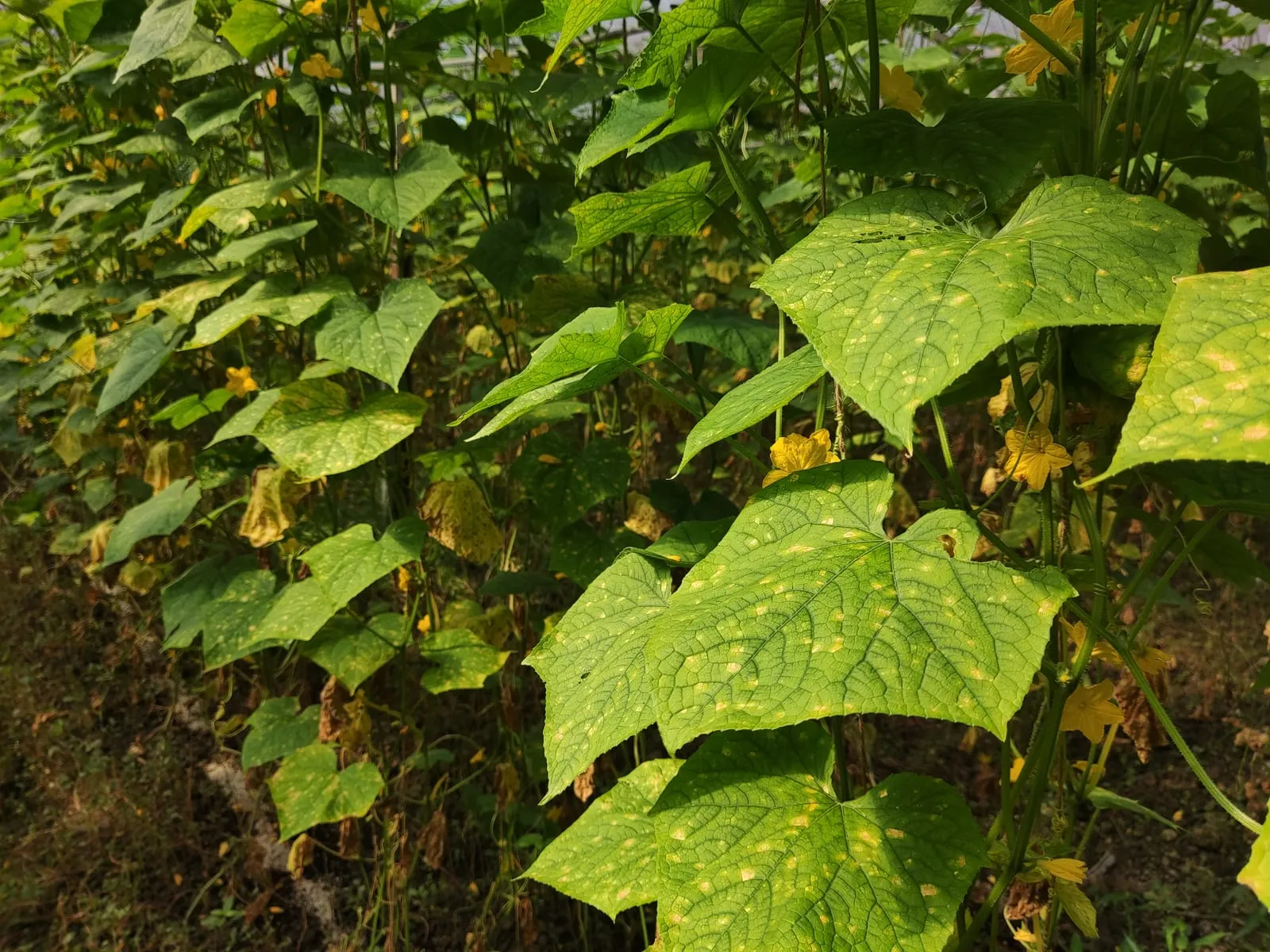
Pseudoperonospora cubensis (cucurbits) and others
Water mold (oomycete, not a true fungus) that thrives in cool damp conditions. Spreads rapidly through cucurbit and brassica plantings on wind-borne spores.
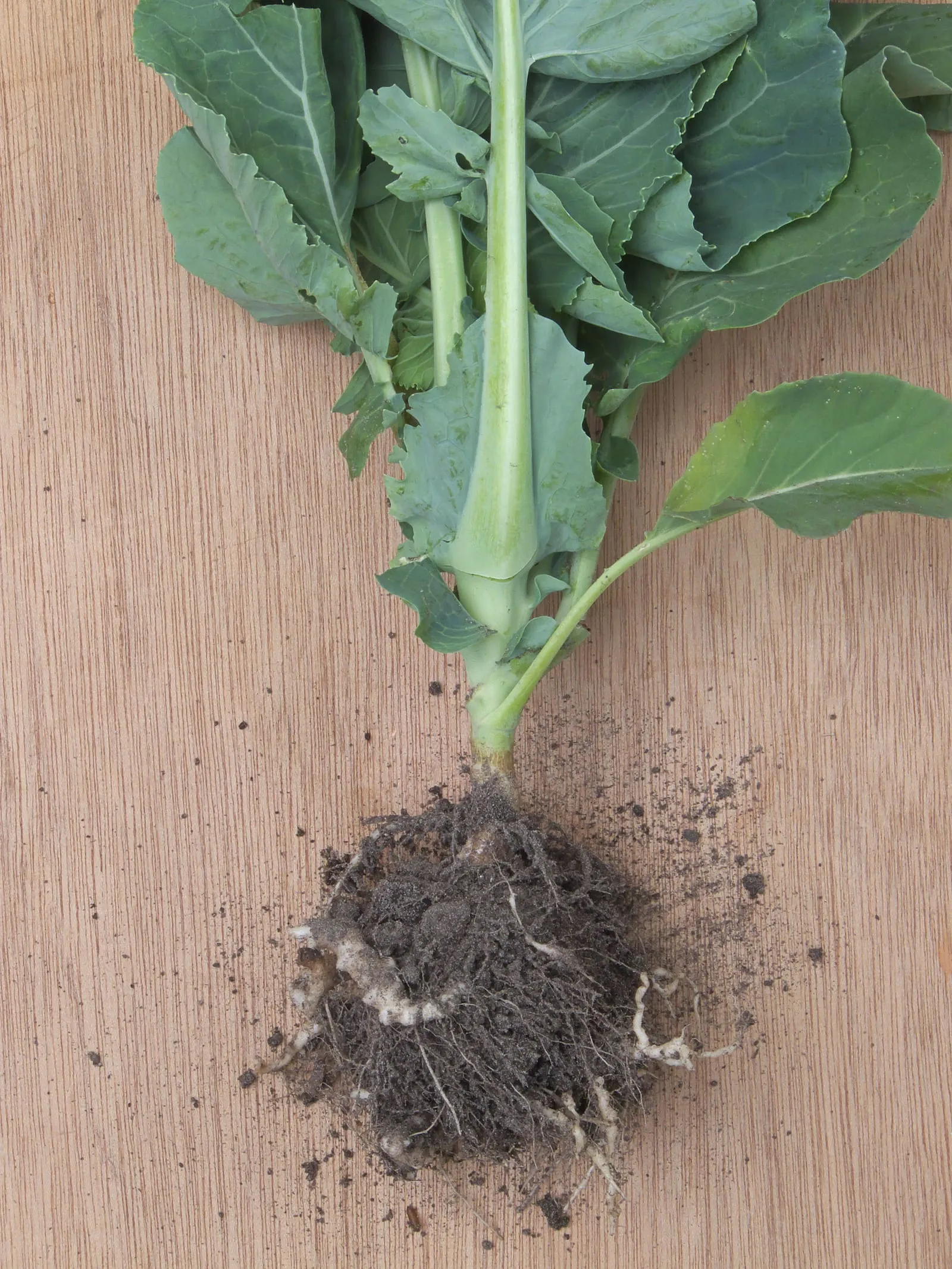
Plasmodiophora brassicae
Soil-borne disease causing characteristic distorted club-shaped roots on brassicas. Persists in soil for 10-20 years; the dominant brassica pathogen in acidic poorly-drained soils.
Modified care for zone 7b
The most significant adjustment for zone 7b growers is planning around the summer heat gap rather than fighting it. Spring plantings can be extended a few weeks with 30 to 40 percent shade cloth, but the practical approach is to treat July and early August as a fallow period for this crop and rely on fall succession.
Japanese beetles and brown marmorated stink bugs cause feeding damage from late June through August. Row cover and hand removal are the most effective responses at garden scale; no rescue sprays provide complete control against stink bugs once populations are high.
Downy mildew pressure increases during humid late-summer conditions, particularly in dense Curly Vates plantings. Spacing plants at least 18 inches apart and removing outer leaves with early lesions slows spread. Clubroot, once present in the soil, persists for years, so rotating brassicas to a different bed each season is worth enforcing even before disease symptoms appear.
Frequently asked questions
- Does kale overwinter in zone 7b without row cover?
Established plants tolerate temperatures down to about 10°F, which aligns with zone 7b's typical winter minimum. Most winters, kale survives without protection. In years when temperatures drop below that threshold, a single layer of floating row cover prevents foliage damage and keeps plants productive.
- Which kale varieties perform best in zone 7b?
Lacinato and Red Russian tend to bolt more slowly than Curly Vates in warm spring conditions, making them slightly better choices for the spring planting window. Redbor and Curly Vates excel in fall plantings where heat is no longer a factor and their cold hardiness is the relevant trait.
- Why does kale taste bitter after a warm spell in zone 7b?
Heat stress and water deficit increase glucosinolate concentrations in the leaves, contributing to bitterness. Consistent irrigation and harvesting in the cooler morning hours reduce the effect. The sweetest leaves in zone 7b typically follow the first light frosts of October and November.
- How do I manage clubroot once it appears in my zone 7b beds?
No chemical cure eliminates clubroot from established soil. Raising pH to 7.0 or above with lime suppresses its activity. Strict rotation, keeping all brassica-family crops out of an affected bed for at least four years, is the most reliable long-term control. Avoid moving soil or transplants from an affected area to a clean bed.
+−
+−
+−
+−
Kale in adjacent zones
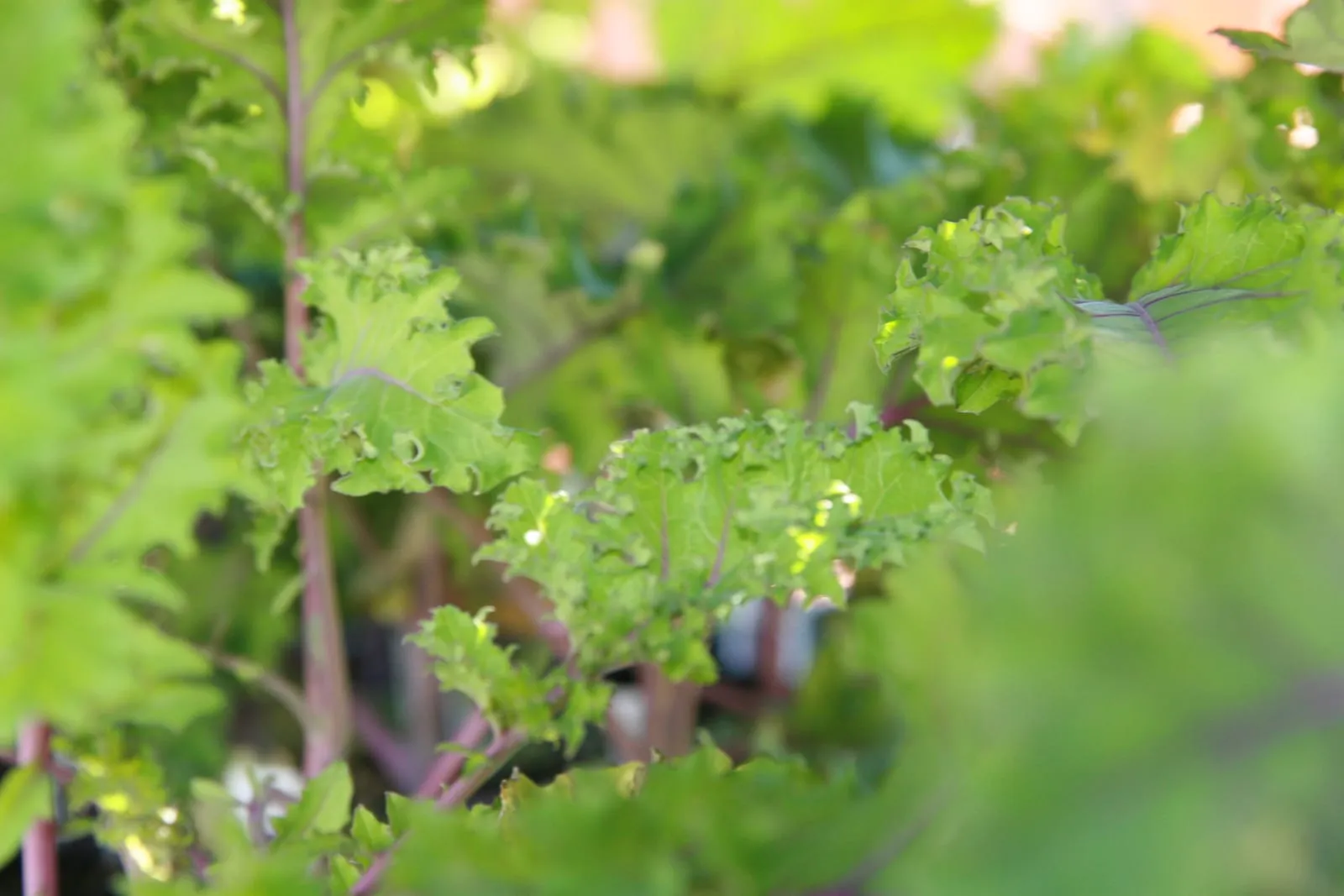
Image: "Brassica oleracea var. acephala Redbor 0zz", by Photo by David J. Stang, via Wikimedia Commons, licensed under CC-BY Source.

Related