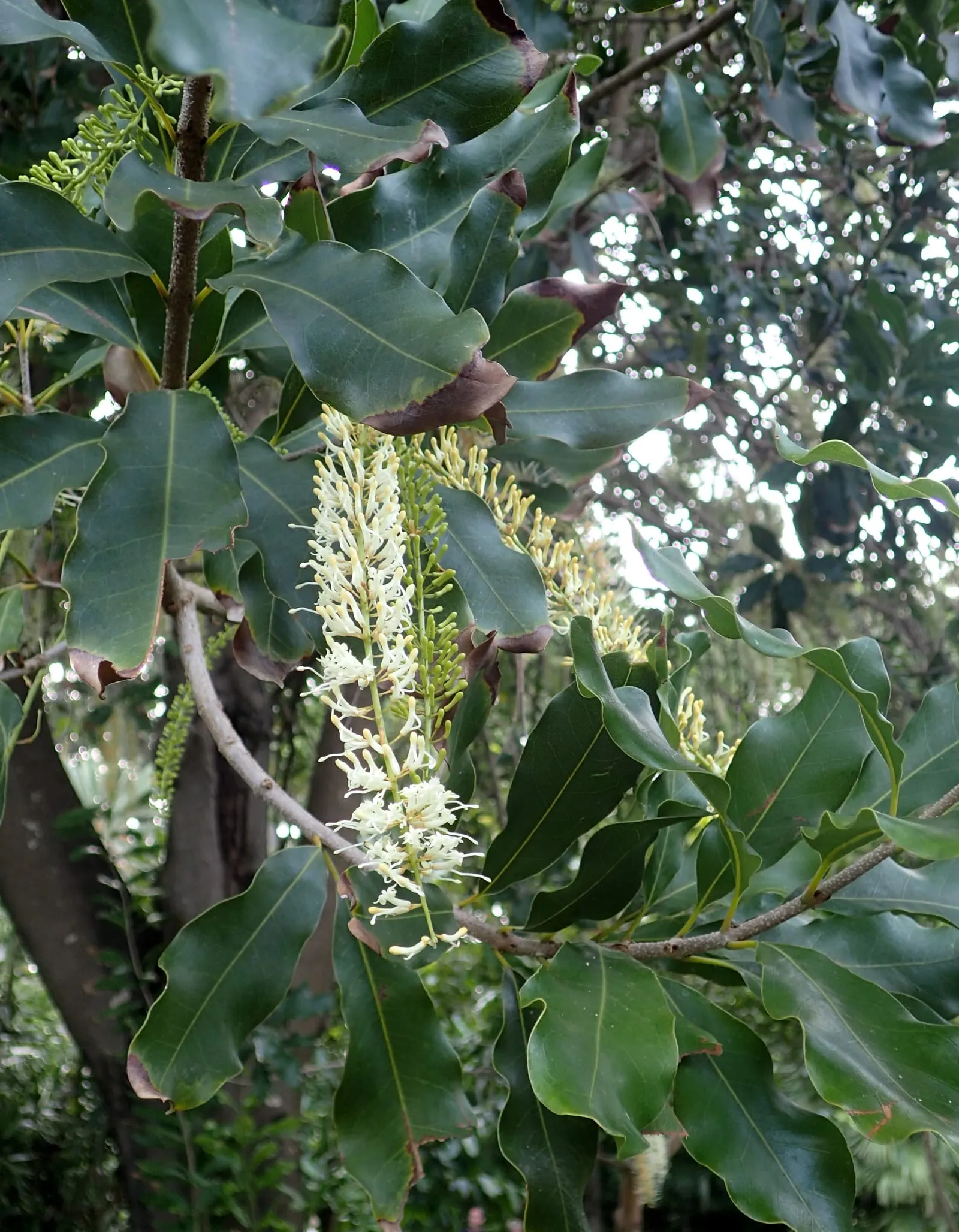
nut in zone 12a
Growing macadamia in zone 12a
Macadamia integrifolia
- Zone
- 12a 50°F to 55°F
- Growing season
- 365 days
- Chill needed
- 0 to 100 below 45°F
- Suitable varieties
- 2
- Days to harvest
- 180 to 240
The verdict
Zone 12a, with minimum temperatures holding between 50 and 55°F year-round, is well within macadamia's preferred range. Macadamia (Macadamia integrifolia and M. tetraphylla) is a tropical evergreen that requires essentially no chilling to initiate flowering. With a chill-hour requirement of 0 to 100 hours, zone 12a carries no risk of inadequate dormancy accumulation. Cold is simply not a limiting factor here.
This is not a marginal zone for macadamia. It is a target zone. The 365-day growing season allows continuous vegetative and reproductive cycling, and established trees face no meaningful frost threat at any point in the year. Commercial macadamia production in Hawaii occurs in conditions that closely parallel zone 12a, and varieties like Beaumont and Keaau were selected for exactly this kind of climate.
The real constraints in zone 12a are tropical in character: pest and disease pressure, hurricane exposure, and potential water stress during dry periods. These are manageable through site selection and attentive care, not fundamental obstacles to production.
Recommended varieties for zone 12a
2 cultivars suited to this zone, with disease-resistance and zone-fit annotations.
| Variety | Notes | Zone fit | Disease resistance |
|---|---|---|---|
| Beaumont fits zone 12a | Smooth-shelled prolific macadamia with sweet rich kernel; the most productive variety for home growers. Self-pollinating. | | none noted |
| Keaau fits zone 12a | Hawaiian commercial variety with high oil content and excellent kernel quality; the standard for export production. Vigorous tree. | | none noted |
Critical timing for zone 12a
In zone 12a, macadamia lacks a hard frost trigger to synchronize its flowering, so bloom timing tends to be distributed rather than sharply defined. The primary flush typically occurs between February and April, driven more by a slight seasonal temperature dip and shorter days than by any true dormancy break. Trees that are well-established and well-watered may produce a secondary flush later in the year.
Nut development from pollination to maturity takes roughly six to nine months, placing the main harvest window between September and February. Nuts do not need to be harvested from the branch. The most reliable harvest signal is self-drop: mature nuts release from the husk and fall. In zone 12a's humid conditions, fallen nuts should be collected promptly, as sooty mold and fungal decay move quickly on damaged shells left on moist ground.
Common challenges in zone 12a
- ▸ No temperate species
- ▸ Tropical pest and disease pressure
- ▸ Hurricane exposure
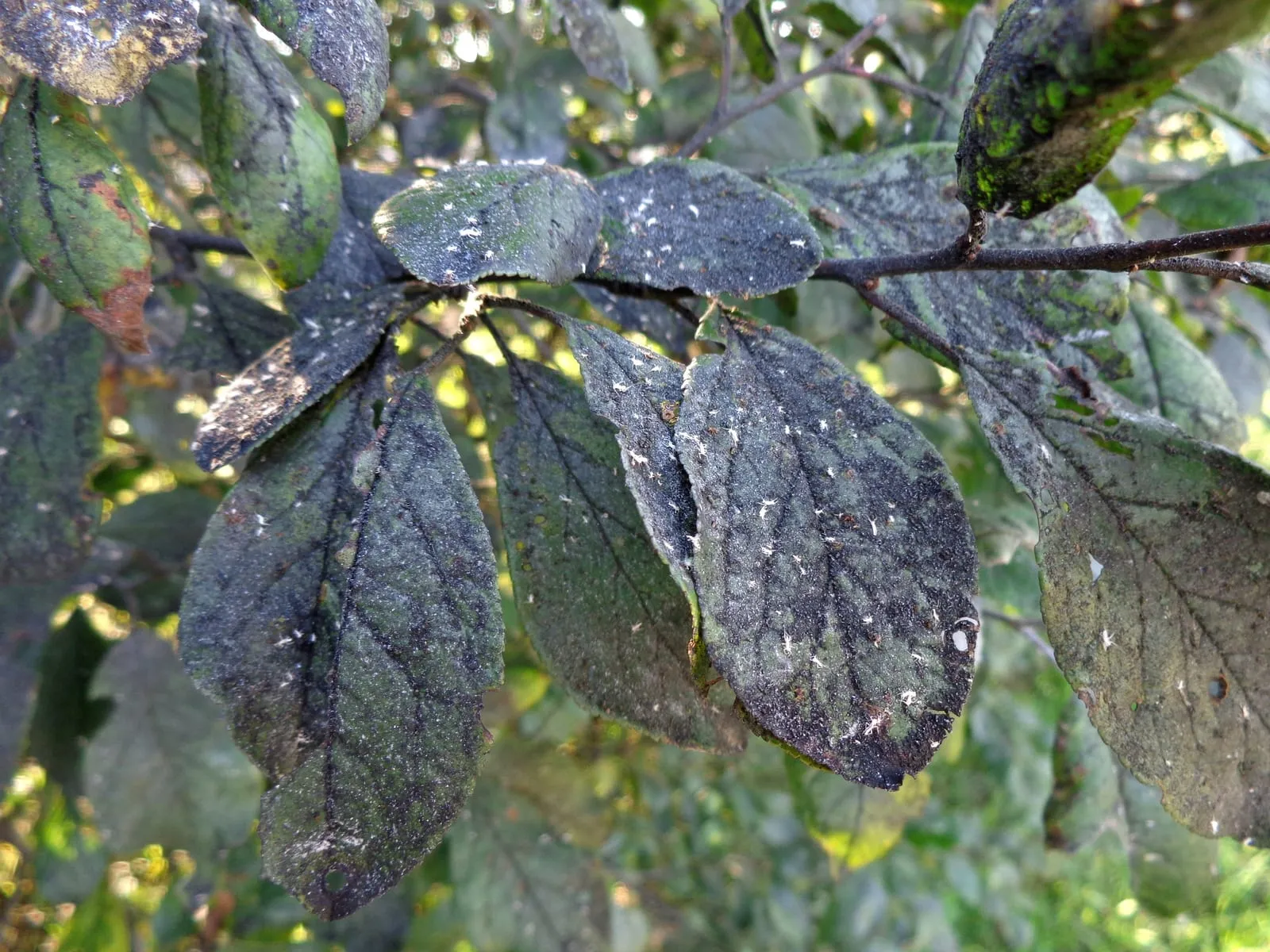
Disease pressure to watch for
Modified care for zone 12a
The care adjustments for macadamia in zone 12a center on tropical pest management and structural resilience rather than anything related to cold.
Sooty mold, the primary disease concern for this combination, is a secondary problem: it colonizes the sticky honeydew secreted by scale insects, mealybugs, and aphids. Controlling the underlying pest population with horticultural oil or neem-based sprays is more effective than treating the mold directly. Improving canopy airflow through selective pruning also reduces the humid microclimate that favors mold establishment.
Hurricane exposure is a site-level and structural concern. Beaumont and Keaau both have moderate wind tolerance, but young trees under three to five years old benefit from staking and, where possible, placement behind a windbreak. Pruning to an open vase shape reduces wind resistance without meaningfully cutting into yield once trees reach bearing age.
Consistent irrigation during the three to five months of active nut fill reduces premature drop and supports shell density.
Frequently asked questions
- How many years before a macadamia tree bears nuts in zone 12a?
Grafted trees typically begin producing small crops at three to five years and reach meaningful yields by seven to ten years. Seedling-grown trees take longer and produce inconsistent results. The 365-day growing season in zone 12a does not substantially accelerate this timeline compared to other tropical production regions.
- Will macadamia survive a cold snap that drops into the 40s in zone 12a?
Established macadamia trees can tolerate brief exposure to temperatures in the low 40s°F without lasting damage, though young trees are more sensitive. Zone 12a minimum temperatures of 50 to 55°F make such events uncommon, but unusually cool nights do occur. Prolonged chilling below 40°F causes leaf drop and dieback in sensitive varieties.
- Do Beaumont and Keaau macadamia varieties differ in hurricane resistance?
Both varieties show moderate wind tolerance, with neither considered definitively superior for hurricane resistance. Tree training and pruning practices have more influence on structural resilience than variety selection alone. An open, balanced canopy reduces wind load more effectively than any varietal trait.
- Is hand pollination necessary for macadamia in zone 12a?
No. Macadamia is primarily insect-pollinated, and zone 12a's year-round warm conditions support active pollinator populations. Maintaining flowering plants near the orchard to support bee activity improves fruit set, but hand pollination is not a standard practice in commercial or home-scale production.
+−
+−
+−
+−
Macadamia in adjacent zones
Image: "Macadamia integrifolia kz2", by Krzysztof Ziarnek, Kenraiz, via Wikimedia Commons, licensed under CC-BY Source.

Related