nut
Macadamia
Macadamia integrifolia
USDA hardiness range
- Zones
- 10a–12b
- Chill hours
- 0 to 100 below 45°F
- Days to harvest
- 180 to 240
- Sun
- Full
- Water
- Moderate
- Lifespan
- 60 to 100 years
Growing macadamia
Macadamia (Macadamia integrifolia) is one of the few true tropical nut trees that can be grown in the continental United States, and only in the warmest fringe zones. It thrives in USDA zones 10a through 12b, which in practice means coastal Southern California, South Florida, and Hawaii. Zone 9b and colder sites see frost damage or outright tree death in most winters.
The appeal is considerable: macadamia nuts command premium prices, trees are long-lived (60 to 100 years with proper care), and a mature specimen in a favorable site is genuinely low-maintenance. The challenge is getting there. Trees are slow to bear, typically requiring 7 to 10 years from planting to a meaningful harvest, and the first several seasons demand careful attention to soil moisture and frost protection.
What separates productive plantings from failed ones is almost always site selection. Macadamia needs deep, well-drained acidic soil, protection from sustained winds, and reliable warmth year-round. Coastal California sites with marine influence and minimal frost risk are well-suited. Inland sites that seem warm enough on average often have frost pockets or periodic cold snaps that repeatedly set trees back. Matching the variety to the specific microclimate matters as much as matching it to the zone.
Recommended varieties
See all 3 →3 cultivars for home growers, with notes on flavor, ripening, and disease resistance.
| Variety | Notes | Zone fit | Disease resistance |
|---|---|---|---|
| Beaumont | Smooth-shelled prolific macadamia with sweet rich kernel; the most productive variety for home growers. Self-pollinating. | | none noted |
| Cate | Cold-hardier variety with smaller kernel and slightly more bitter finish; the best choice for marginal-climate California sites. Tolerates 28°F. | | none noted |
| Keaau | Hawaiian commercial variety with high oil content and excellent kernel quality; the standard for export production. Vigorous tree. | | none noted |
Soil and site requirements
Macadamia roots are shallow and fine-textured, making them particularly sensitive to soil compaction and poor drainage. The target pH is 5.5 to 6.5; alkaline soils cause iron and manganese deficiencies that are difficult to correct once a tree is established. Raised beds or mounded planting sites can compensate for borderline drainage, but clay-heavy hardpan is rarely worth working around.
Full sun is non-negotiable. Trees planted in partial shade produce significantly less and are more susceptible to fungal issues. Space trees at least 20 to 25 feet apart; commercial orchards in Hawaii typically use 20-foot by 20-foot spacing, though a single home specimen can be allowed more room for a rounder canopy habit.
Wind protection is often underestimated. Macadamia branches are brittle relative to their nut load, and sustained trade winds or Santa Ana conditions cause significant limb breakage and nut drop. A windbreak on the prevailing-wind side of the planting improves both yield and fruit retention.
Microclimate matters more than zone designation. A zone 10a garden with a south-facing wall that stores daytime heat will outperform an exposed zone 10b site with cold air drainage from an adjacent slope. Before planting, observe where frost collects in the landscape and avoid those spots entirely.
Common diseases
Common pests
Common challenges
The most common reason macadamia plantings fail in marginal-climate zones is underestimating frost sensitivity. Young trees can be damaged at 30°F; established trees typically tolerate brief dips to 28°F but not sustained freezes. Frost cloth and trunk wraps help during the first three winters. After that, cold hardiness depends heavily on variety choice. Cate is the most frost-tolerant of the commonly available varieties, rated to 28°F, and is the better choice for sites that see occasional cold snaps.
Slow establishment and late bearing often lead growers to conclude a tree is failing when it is simply behaving normally. Macadamia trees typically begin producing harvestable quantities around year 7 to 10. Overwatering during this period, particularly in poorly draining soils, promotes root rot and delays establishment further.
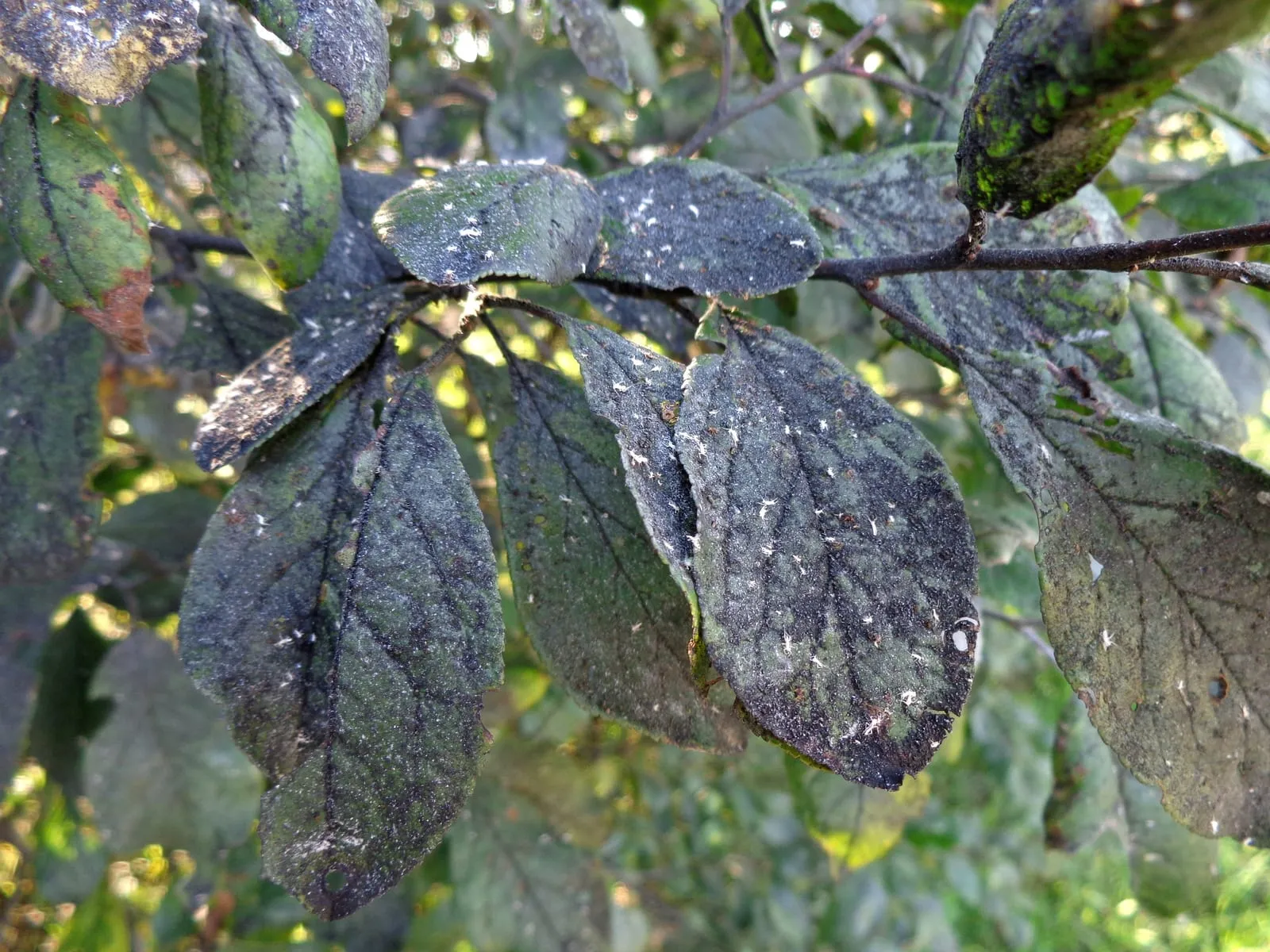
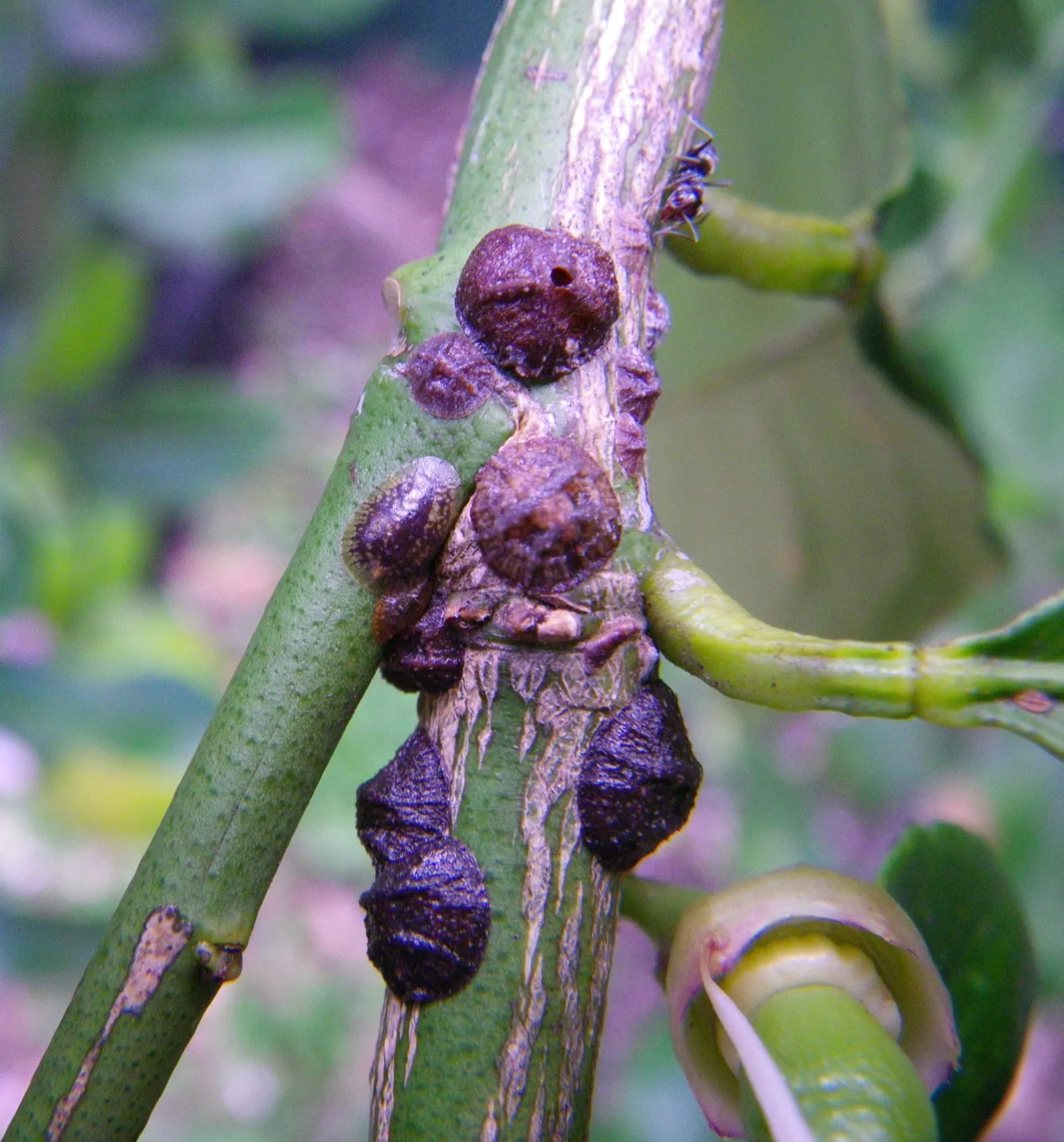
Pest pressure from scale insects and mealybugs is common in California and Florida. Both pests excrete honeydew that feeds the sooty mold fungus, coating leaves and reducing photosynthesis. Keeping ant populations controlled is a practical first step; ants farm scale and mealybugs and protect them from natural predators. Horticultural oil sprays in the dormant season reduce scale populations effectively. Brown marmorated stink bug damage causes kernel discoloration and abort; exclusion netting over ripening clusters is effective but labor-intensive.
Frequently asked questions
- How many chill hours does macadamia require?
Macadamia requires very few chill hours, between 0 and 100 hours below 45°F. This makes it suitable only for warm, essentially frost-free climates. In Hawaii and coastal Southern California, winter temperatures rarely accumulate meaningful chilling, which suits the tree well.
- How long does it take a macadamia tree to bear nuts?
Expect 7 to 10 years from planting to first meaningful nut production, though some trees bear a small quantity by year 5. After flowering, nuts require 180 to 240 days to mature. Overwatering or transplanting stress during the establishment period can delay bearing further.
- What USDA zones can grow macadamia?
Macadamia grows reliably in USDA zones 10a through 12b. Zone 9b sites may succeed with careful microclimate selection and a frost-tolerant variety like Cate, but sustained freezes below 28°F will cause serious damage or tree death. Outside these zones, macadamia is a container specimen that must be overwintered indoors.
- Is macadamia self-pollinating?
The Beaumont variety is self-pollinating and produces well as a single specimen. Planting a second variety nearby generally improves nut set and yield even in self-fertile types and can extend the effective harvest window. Cross-pollination is beneficial but not strictly required with Beaumont.
- What is sooty mold and how is it managed on macadamia?
Sooty mold is a fungal coating that grows on honeydew excreted by scale insects and mealybugs. It does not infect plant tissue directly but blocks sunlight from leaves and reduces photosynthesis. Managing the underlying pest populations by controlling the ants that protect them is the primary strategy; horticultural oil sprays reduce scale populations effectively.
- When are macadamia nuts ready to harvest?
Macadamia nuts drop to the ground when ripe and are collected from the ground rather than picked from the tree. Harvest in Hawaii runs from August through February depending on variety and elevation; in California it generally peaks in fall. Nuts left on the ground for more than a week begin to deteriorate.
- How large does a macadamia tree get?
Mature macadamia trees typically reach 25 to 40 feet tall with a similar spread when unconstrained. Home growers often prune to maintain 15 to 20 feet for easier harvest access. Beaumont tends toward a spreading, open habit; Keaau is more upright and vigorous.
+−
+−
+−
+−
+−
+−
+−
Sources
- [1] University of Hawaii: Macadamia Production Manual
- [2] UC ANR: Macadamia Production in California
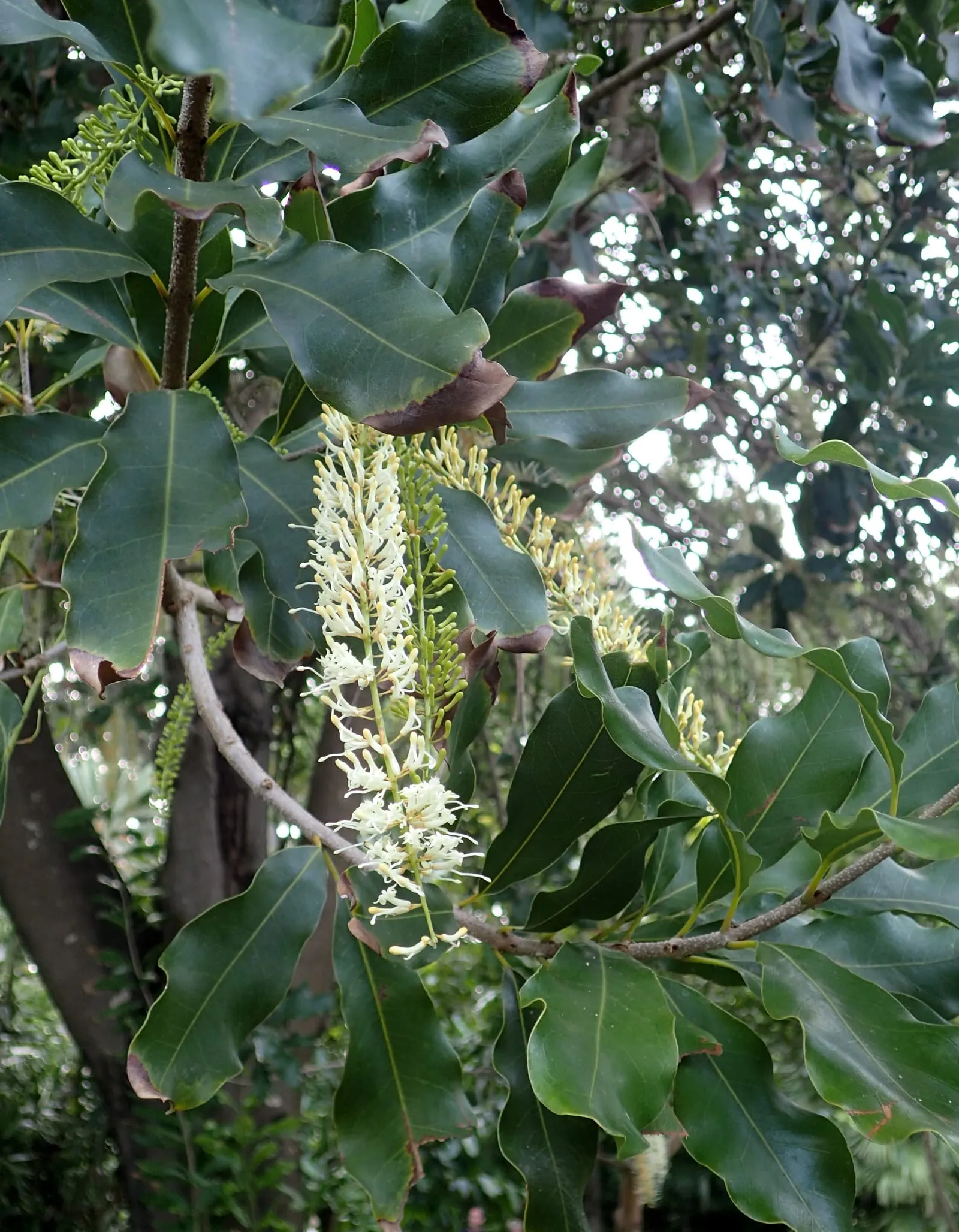
Image: "Macadamia integrifolia kz2", by Krzysztof Ziarnek, Kenraiz, via Wikimedia Commons, licensed under CC-BY. Source.

Macadamia by zone
Related