vegetable in zone 7b
Growing melon in zone 7b
Cucumis melo
- Zone
- 7b 5°F to 10°F
- Growing season
- 220 days
- Suitable varieties
- 4
- Days to harvest
- 75 to 100
The verdict
Zone 7b sits squarely in the sweet spot for melon production. Unlike tree fruits with specific chill-hour requirements, melons are heat-accumulation crops: they need warm soil, high daytime temperatures, and a long frost-free window. Zone 7b delivers all three. The 220-day growing season provides far more time than most varieties require (typically 75 to 90 days from transplant to harvest), leaving room to start seeds indoors, harden off transplants, and still capture peak summer heat for sugar development.
Hale's Best and Galia are well-matched to the region's heat profile. Charentais, a French muskmelon type, performs reliably in zone 7b but benefits from attentive irrigation during dry spells, which are common in piedmont summers. Honeydew requires the longest heat accumulation of the four and does better in sites with full sun and good air drainage. None of these varieties is a marginal fit; the zone's climate is more limiting for cool-season crops than for melons.
Recommended varieties for zone 7b
4 cultivars suited to this zone, with disease-resistance and zone-fit annotations.
| Variety | Notes | Zone fit | Disease resistance |
|---|---|---|---|
| Hale's Best fits zone 7b | Sweet, perfumed, deep cantaloupe flavor; classic salmon-fleshed netted melon. Fresh slicing, fruit salads. Heritage variety, productive, the home-garden cantaloupe standard. | | none noted |
| Charentais fits zone 7b | Intensely sweet, perfumed, complex; small French green-fleshed melon. Fresh out of hand, with prosciutto. Connoisseur's choice, picky about ripening but unmatched in flavor. | | none noted |
| Honeydew fits zone 7b | Sweet, cool, mild; smooth pale-skinned green-fleshed melon. Fresh slicing, fruit salads. Late-ripening, needs warm climate, stores longer than cantaloupe. | | none noted |
| Galia fits zone 7b | Sweet, perfumed, complex banana-pineapple notes; pale green flesh under netted skin. Fresh slicing, salads. Israeli-bred, productive in warm gardens. | | none noted |
Critical timing for zone 7b
Direct sowing outdoors is viable once soil temperatures reach 65 to 70°F, typically in mid to late May in zone 7b. Starting transplants indoors 3 to 4 weeks before the last frost date (average last frost falls between April 10 and April 25 depending on location within the zone) allows harvest to begin in late July or August, well ahead of the first fall frost in mid-October.
Bloom typically occurs 35 to 50 days after transplanting, placing pollination in late June to mid-July when native bee activity is strong. The gap between last spring frost and first fall frost in zone 7b runs roughly 175 to 185 days at the cooler end of the zone, which is ample buffer for even the slower-maturing varieties. Late plantings (transplanted in June) can still reach maturity before frost, though disease pressure increases as summer heat and humidity peak.
Common challenges in zone 7b
- ▸ Cedar-apple rust pressure heavy in piedmont
- ▸ Japanese beetles
- ▸ Brown marmorated stink bug
- ▸ Late summer disease pressure
Disease pressure to watch for
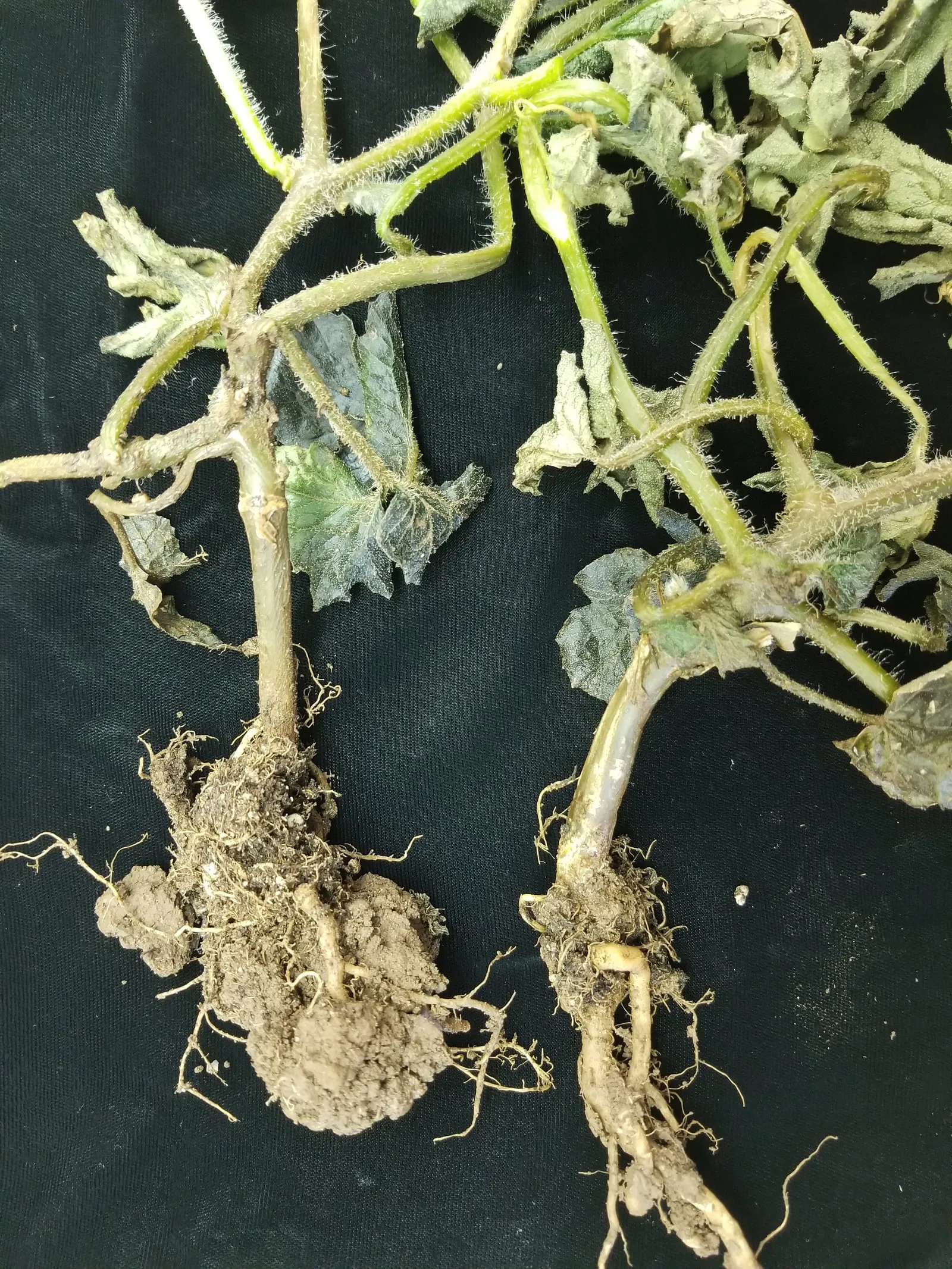
Erwinia tracheiphila
Bacterial disease vectored exclusively by cucumber beetles. Once a plant is infected there is no recovery; whole-plant collapse follows.
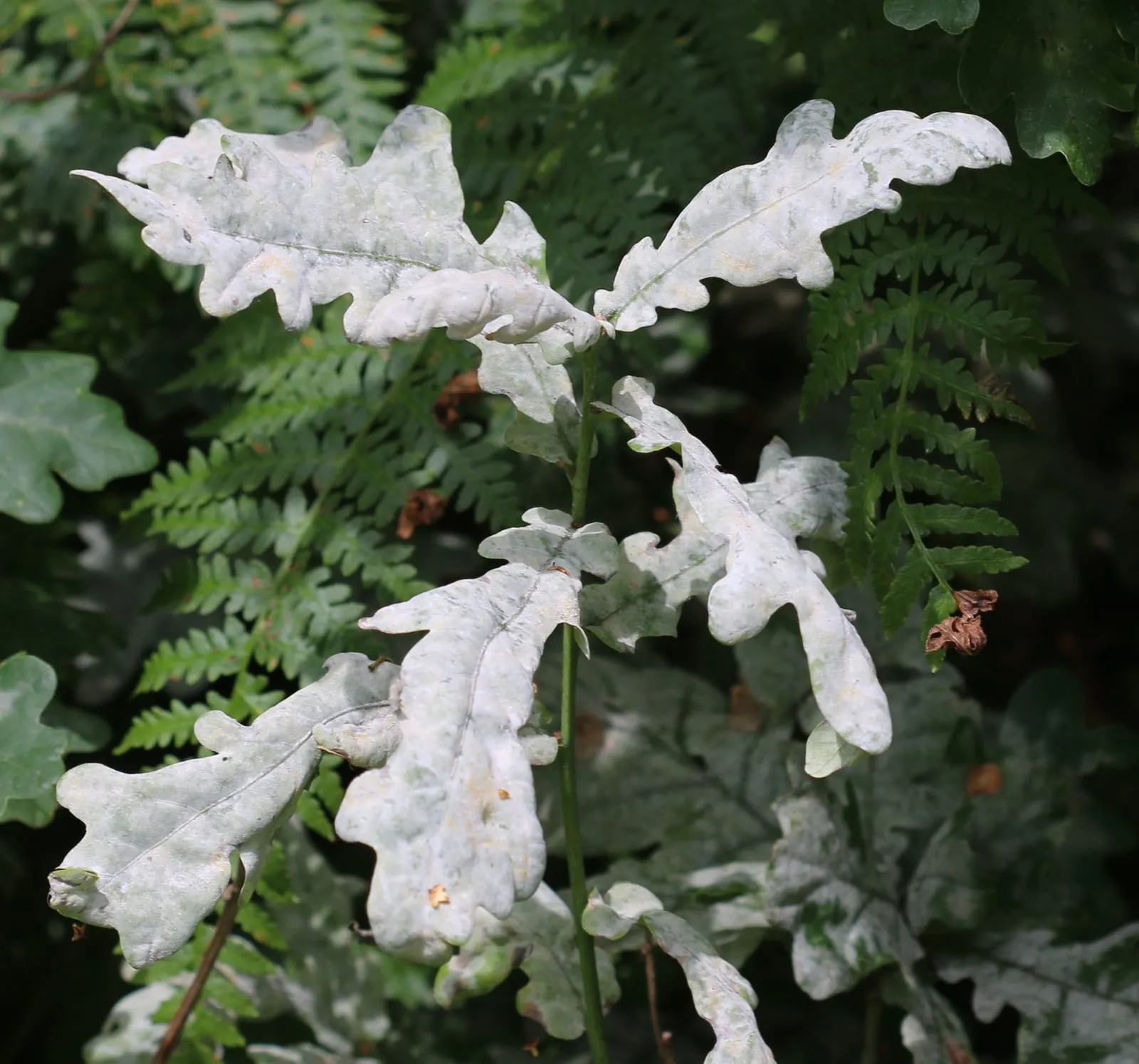
Multiple species (Erysiphales)
Surface-feeding fungal disease producing white powdery growth on leaves and stems. Reduces yield by stealing photosynthate and accelerating senescence.
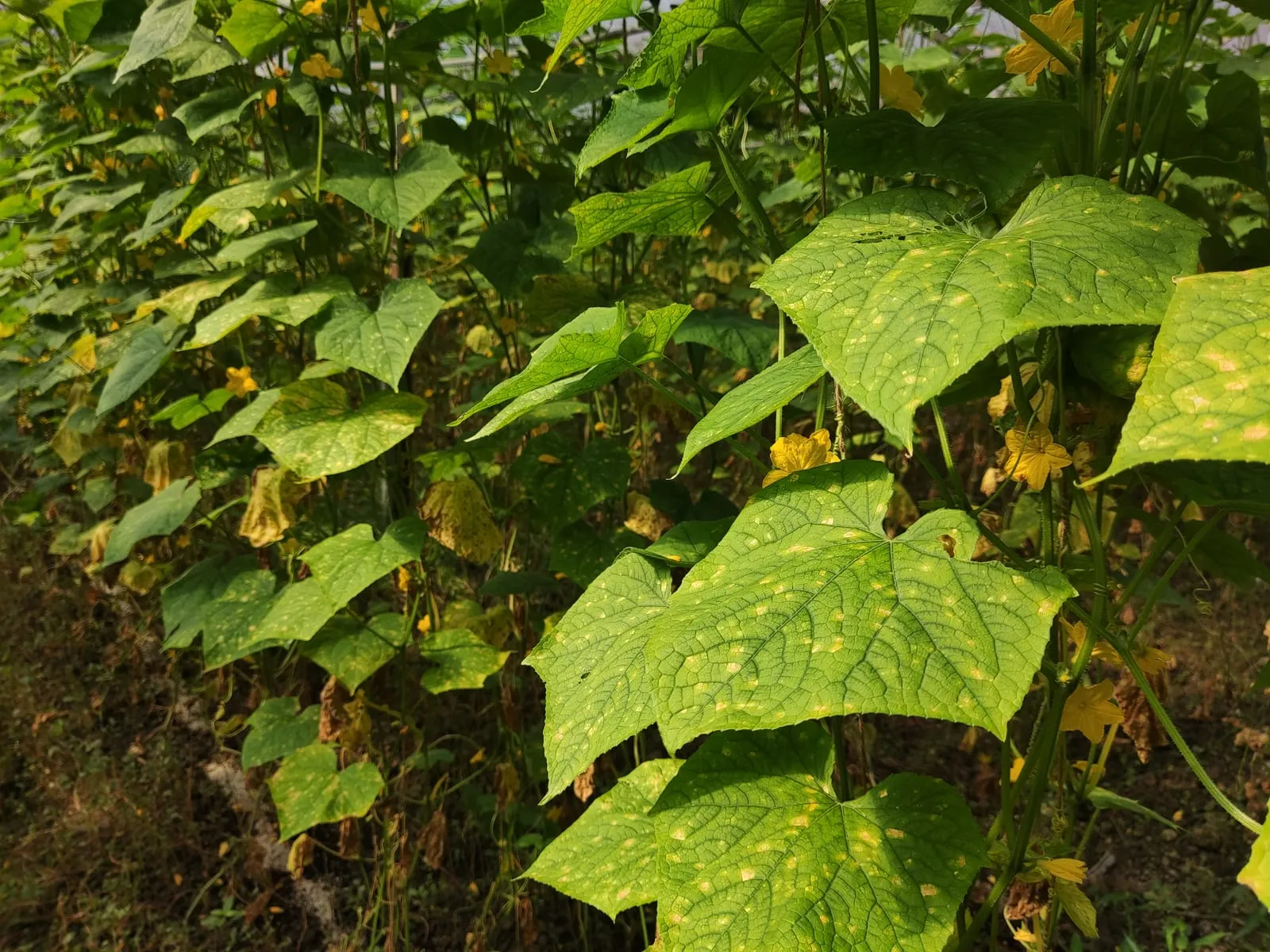
Pseudoperonospora cubensis (cucurbits) and others
Water mold (oomycete, not a true fungus) that thrives in cool damp conditions. Spreads rapidly through cucurbit and brassica plantings on wind-borne spores.
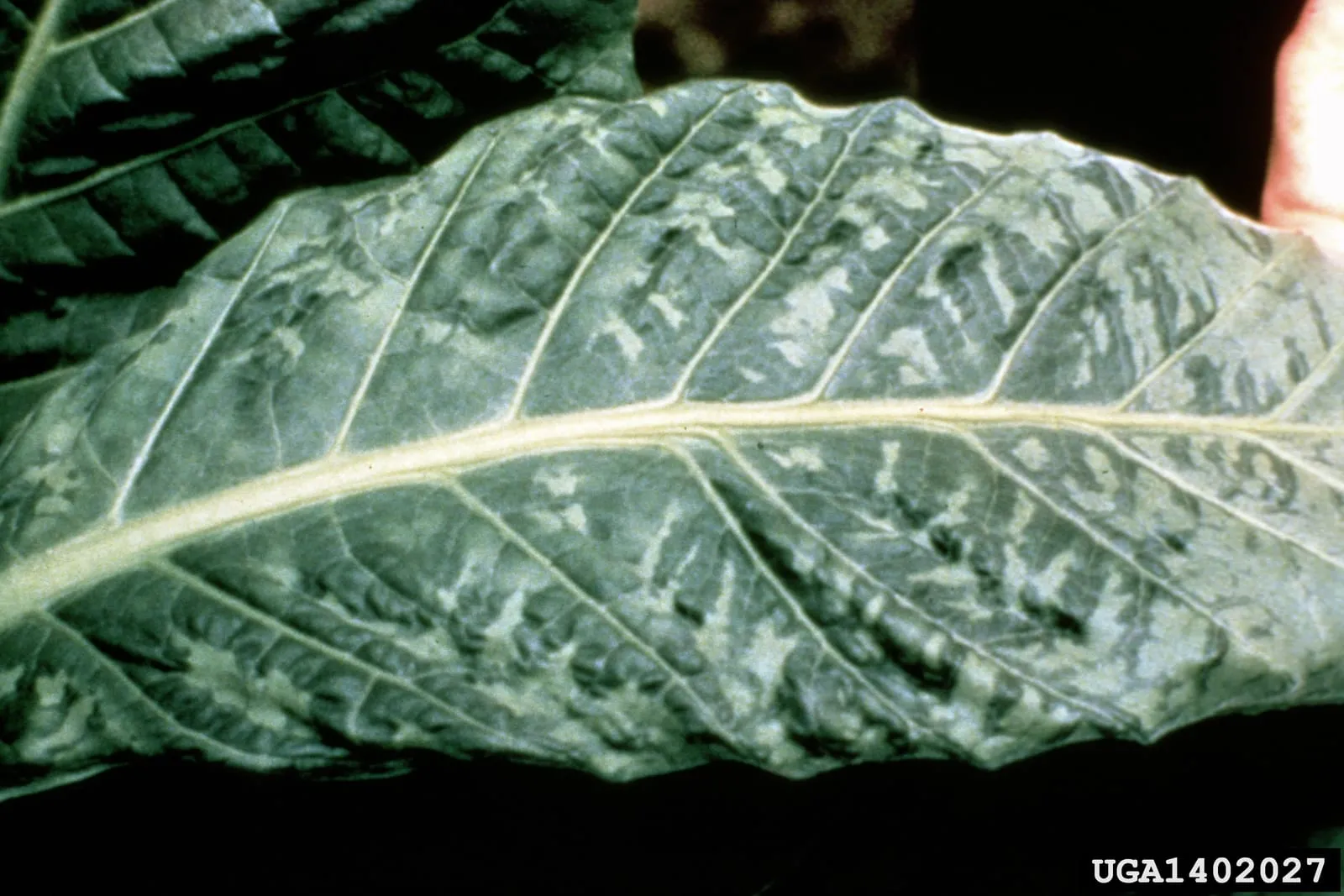
Cucumber mosaic virus, Tobacco mosaic virus, and others
Family of plant viruses producing mottled yellow-and-green leaf patterns. Vectored primarily by aphids; some are seed-transmitted or spread by handling tools and tobacco products.
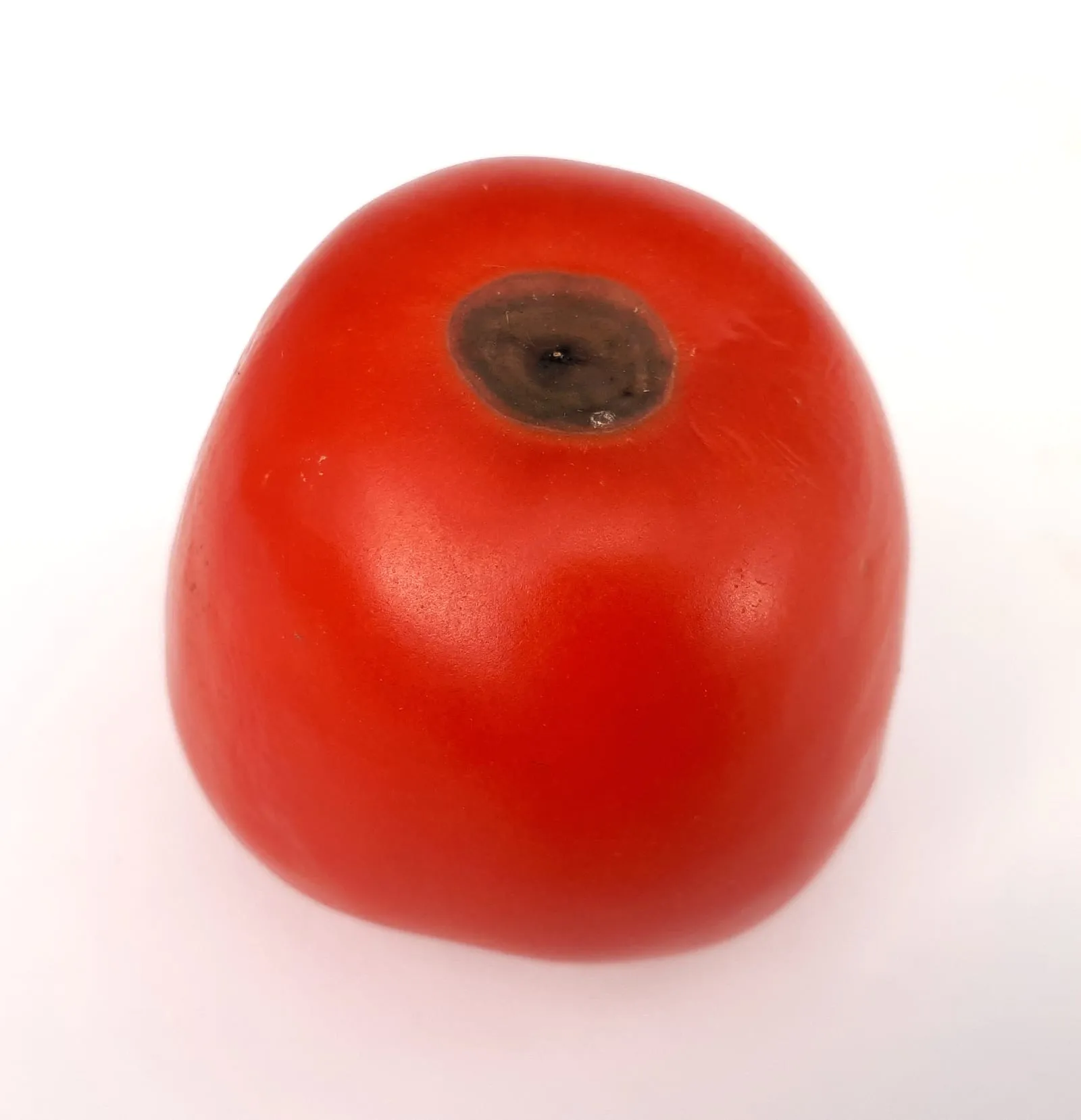
Calcium deficiency physiological disorder
Not a true disease but a calcium-uptake disorder caused by inconsistent soil moisture during fruit development. The dominant cause of damaged first-fruit on home tomato plantings.
Modified care for zone 7b
Bacterial wilt, spread by cucumber beetles, is the primary threat to melon crops in zone 7b and across the Southeast. Row covers over transplants until flowering excludes beetles during the most vulnerable window; removing covers at first bloom allows pollination. Scouting for adult beetles after cover removal and acting quickly on threshold populations reduces wilt incidence meaningfully.
Brown marmorated stink bugs feed on maturing fruit, causing corky internal damage that is not visible from the outside. Perimeter plantings and physical exclusion are limited options; monitoring and targeted intervention as fruit approaches maturity are more practical. Powdery mildew and downy mildew both intensify in late summer when humidity is high and nights cool. Selecting varieties with some disease tolerance and maintaining good canopy airflow through consistent vine management reduces, but does not eliminate, late-season foliar losses.
Frequently asked questions
- Can melons be grown in zone 7b without a greenhouse?
Yes. Zone 7b's 220-day frost-free season is more than adequate for open-field melon production. Starting transplants indoors 3 to 4 weeks before the last frost date and moving them out after mid-May is the standard approach. No season extension structures are required.
- What is the biggest disease risk for melons in zone 7b?
Bacterial wilt, transmitted by cucumber beetles, is the most damaging disease in the region. Infected plants wilt suddenly and do not recover. Excluding beetles with row covers during early growth and scouting aggressively after covers come off at bloom are the most effective management steps.
- Which melon varieties do best in zone 7b's summer heat?
Hale's Best and Galia are reliable performers that handle zone 7b heat well. Charentais produces high-quality fruit but needs consistent moisture. Honeydew requires the longest season of the four and performs best at the warmer end of the zone with full-day sun exposure.
+−
+−
+−
Melon in adjacent zones
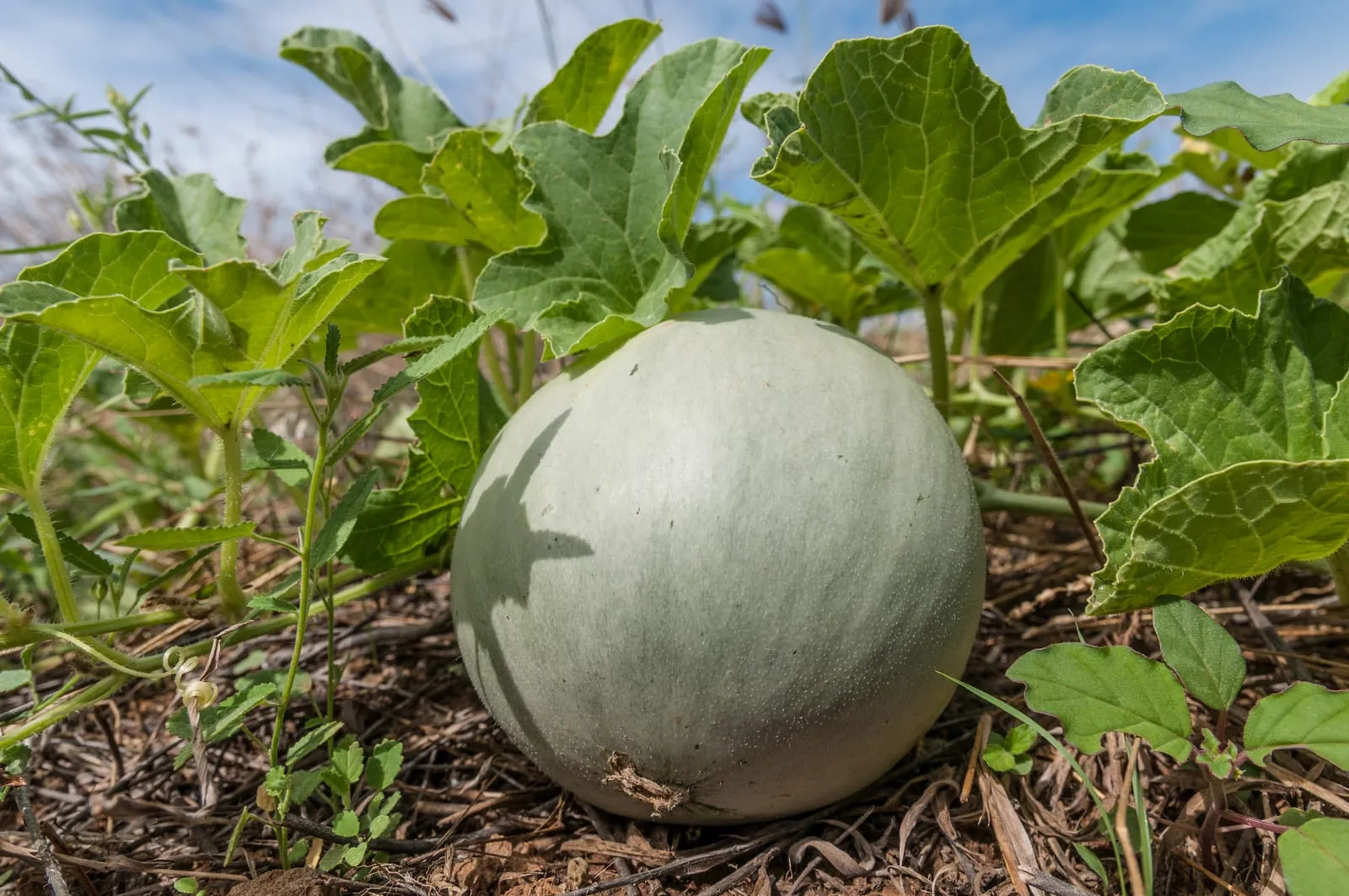
Image: "Cucumis melo 34", by Wilfredor, via Wikimedia Commons, licensed under CC0 Source.

Related