vegetable in zone 7b
Growing onion in zone 7b
Allium cepa
- Zone
- 7b 5°F to 10°F
- Growing season
- 220 days
- Suitable varieties
- 3
- Days to harvest
- 90 to 130
The verdict
Zone 7b sits in the latitude range (roughly 35 to 37 degrees N) that suits short-day onion varieties well. Unlike fruit trees, onions have no chill-hour requirement; bulb formation is triggered by day length. Short-day varieties begin bulbing when days reach around 12 hours, which arrives in spring across zone 7b before summer heat sets in. Red Burgundy and Vidalia (Yellow Granex) are well matched to that timing. The zone's mild winters also allow fall transplanting of seedlings without the hard kills that would stall early root development.
Walla Walla is the outlier here. Bred for the long summer days of the Pacific Northwest, it requires closer to 14 to 16 hours to bulb reliably. At zone 7b latitudes, day length rarely reaches that threshold before heat arrives, and results tend toward smaller, less developed bulbs. For consistent yields, short-day types are the practical choice. Zone 7b is not a marginal climate for onions; for the short-day class, it is close to optimal.
Recommended varieties for zone 7b
3 cultivars suited to this zone, with disease-resistance and zone-fit annotations.
| Variety | Notes | Zone fit | Disease resistance |
|---|---|---|---|
| Walla Walla fits zone 7b | Very sweet, juicy, mild; large flat-topped pale yellow onion. Fresh, salads, burgers, onion rings. Short-day storage minimal (2-3 months); eat early. Classic Pacific Northwest variety. | | none noted |
| Red Burgundy fits zone 7b | Sweet-mild, deep magenta rings; the classic red salad onion. Fresh, burgers, pickling, salsa. Stores 3-4 months when cured properly. | | none noted |
| Vidalia (Yellow Granex) fits zone 7b | Very sweet, juicy, mild; the famous Georgia sweet onion. Fresh, onion rings, salsa. Short-day variety only true to type in low-sulfur soil; storage minimal. | | none noted |
Critical timing for zone 7b
In zone 7b, onions are a cool-season crop planted ahead of the main growing season, not in it. Transplants started from seed in October or purchased sets go into beds between late January and early March, bracketing the zone's average last frost (typically mid-March to early April across the piedmont and coastal plain). Bulbing begins as days lengthen past 12 hours, generally in April.
Harvest runs from late May through June. Allowing plants to flower reduces bulb quality significantly; the cue to harvest is the tops falling over naturally. The zone's 220-day frost-free window is longer than the crop needs. The binding constraint is summer heat and humidity, not the fall frost calendar. Getting transplants in by early March and harvesting by mid-June keeps the crop in its productive window.
Common challenges in zone 7b
- ▸ Cedar-apple rust pressure heavy in piedmont
- ▸ Japanese beetles
- ▸ Brown marmorated stink bug
- ▸ Late summer disease pressure
Disease pressure to watch for
Modified care for zone 7b
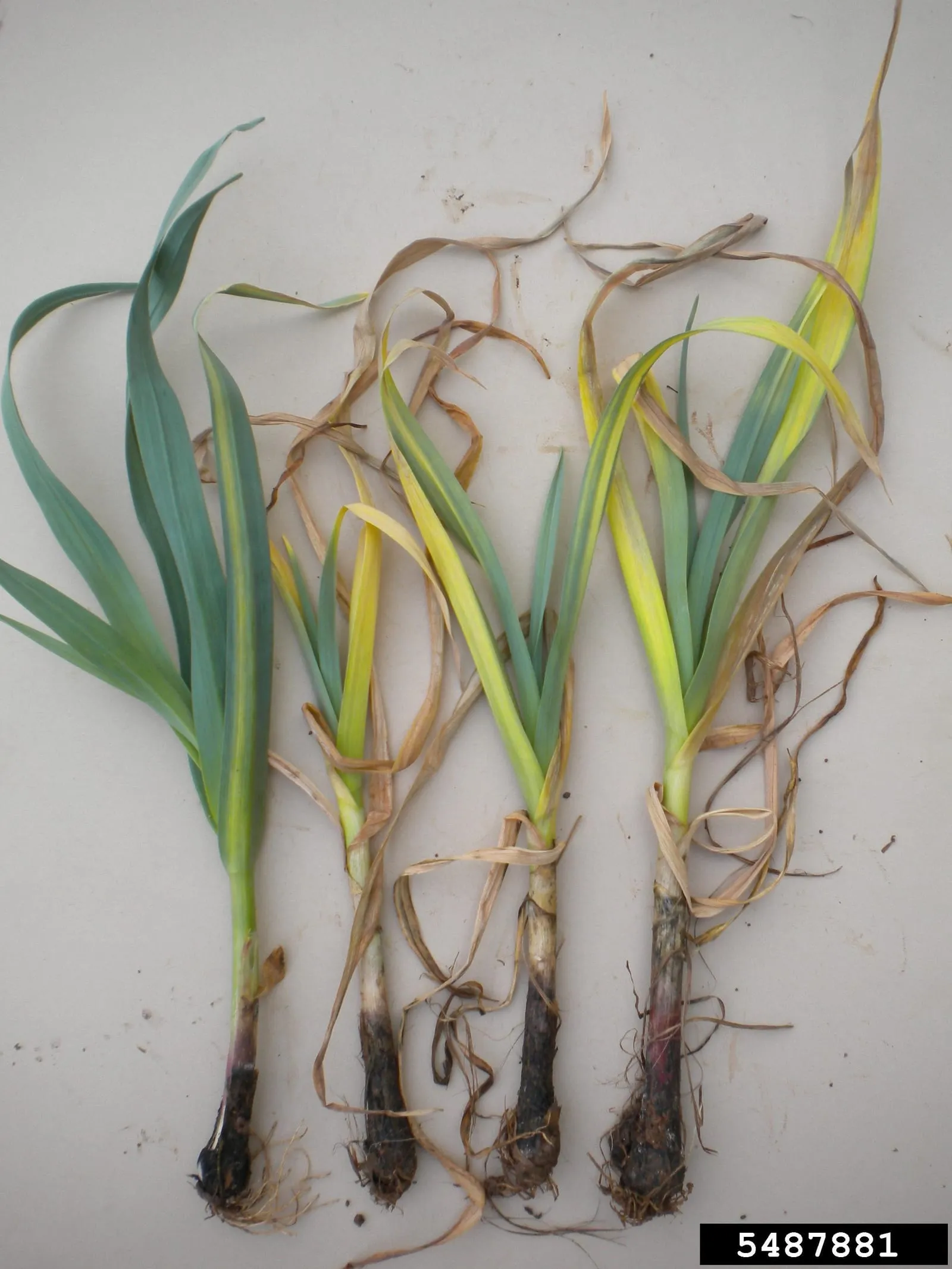
The primary adjustment in zone 7b is managing Onion White Rot (Sclerotium cepivorum), a soilborne fungal pathogen that thrives in cool, moist conditions and can persist in soil for 20 or more years. Infected beds require aggressive rotation; standard short rotations do not reduce sclerotial populations. Overhead irrigation during the cool, wet months of February through April raises infection risk and is worth avoiding where drip or furrow options exist.
Japanese beetles and brown marmorated stink bug can damage onion foliage in summer, but harvesting in May and June largely sidesteps peak pressure from both. Late summer disease pressure, a significant concern for other zone 7b crops, is less relevant for onions finished by mid-June. In the zone's humid climate, curing harvested bulbs thoroughly in a dry, well-ventilated location is important; inadequate curing leads to storage rot even from bulbs that looked clean at harvest.
Onion in adjacent zones
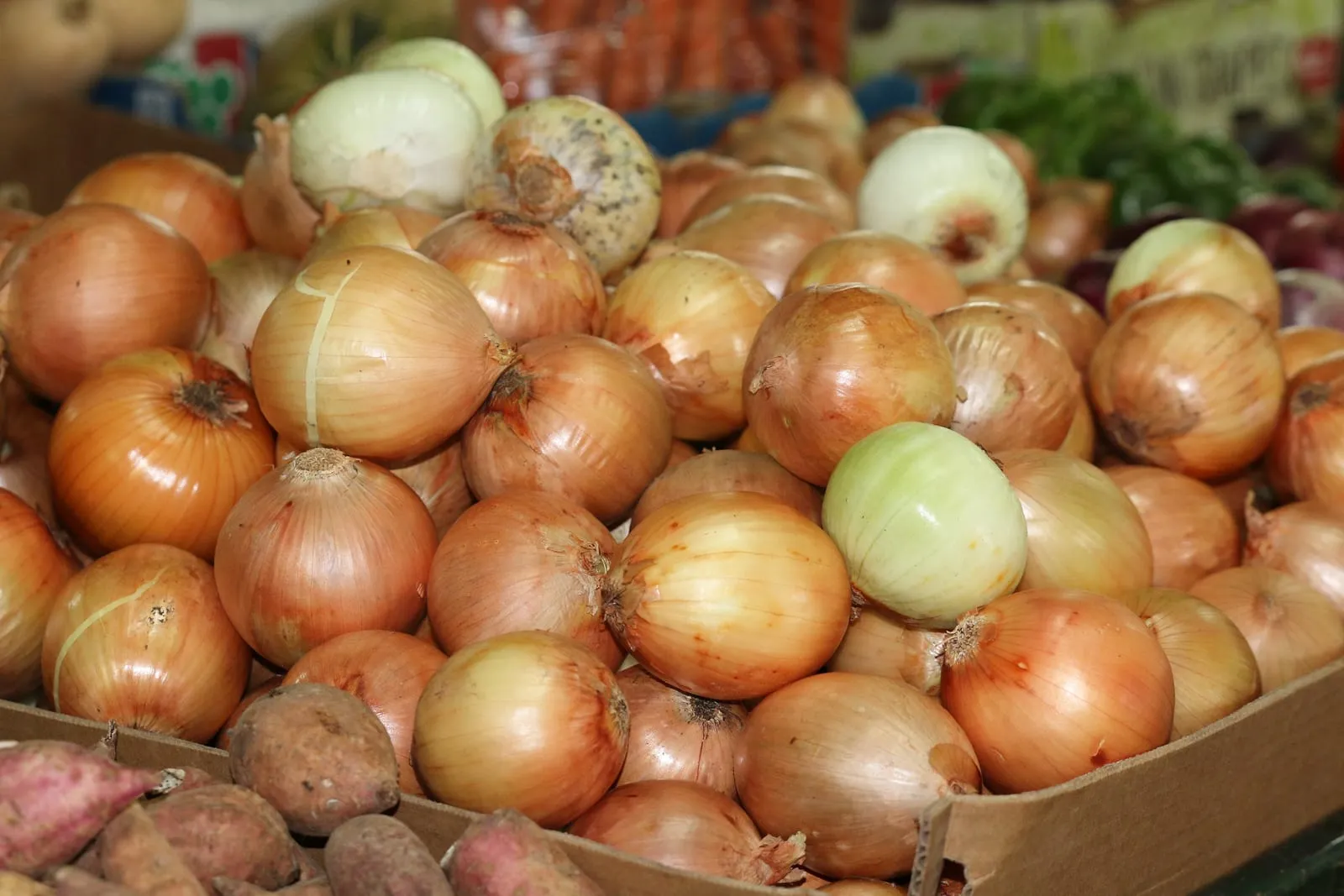
Image: "Zwiebeln auf Antigua", by CHK46, via Wikimedia Commons, licensed under CC-BY Source.

Related