herb in zone 4b
Growing sage in zone 4b
Salvia officinalis
- Zone
- 4b -25°F to -20°F
- Growing season
- 130 days
- Suitable varieties
- 2
- Days to harvest
- 75 to 90
The verdict
Common garden sage (Salvia officinalis) is listed as hardy to USDA zone 4, placing zone 4b at the colder boundary of reliable perennial performance. Winter lows of -25 to -20°F can kill stems to the ground in harsh years, though established plants with deep root systems typically regenerate from the crown in spring. Sage has no chill-hour requirement, so the cold is not a trigger for dormancy break or flowering the way it is for fruit crops; the concern is outright tissue damage during extended cold snaps.
Berggarten, a broad-leafed cultivar with particularly dense foliage, performs similarly to common garden sage in cold tolerance and may recover more reliably from stem dieback due to its compact growth habit. In zone 4b, both varieties are viable but should be treated as semi-reliable perennials rather than guaranteed ones. Losing plants in a severe winter is not a grower failure; that outcome falls within the expected range for this zone.
Recommended varieties for zone 4b
2 cultivars suited to this zone, with disease-resistance and zone-fit annotations.
| Variety | Notes | Zone fit | Disease resistance |
|---|---|---|---|
| Common Garden Sage fits zone 4b | Strong, slightly camphorous, classic Thanksgiving sage flavor; gray-green pebbled leaves. Stuffing, sausages, pork, brown butter. The cook's sage, productive perennial. | | none noted |
| Berggarten fits zone 4b | Classic sage flavor with rounded leaf shape; broader gray-green leaves than common sage. Same culinary use, more ornamental in beds. Slow to flower, longer leafy season. | | none noted |
Critical timing for zone 4b
Zone 4b's last spring frost typically arrives in mid-May, and sage should not be divided or cut back hard until frost risk has largely passed. Bloom occurs in late May through June on established plants, with purple flower spikes emerging on second-year and older growth. Culinary harvest is best timed in the weeks just before bloom, when leaf oils are most concentrated.
The 130-day growing season is sufficient for sage to put on strong growth before the first autumn frost, which generally arrives in late September. First-year transplants often skip blooming entirely; that is normal and no cause for concern. Harvest lightly in the first season to allow the root system to establish before winter.
Common challenges in zone 4b
- ▸ Spring frost timing
- ▸ Apple scab pressure
- ▸ Cane berry winter dieback
Modified care for zone 4b
The most important adaptation in zone 4b is protecting the crown through winter. After the ground firms in late autumn, apply 3 to 4 inches of straw or shredded leaves over the plant base. Leave some stem structure intact rather than cutting to the ground in fall; the stems provide modest insulation and help trap snow cover, which is effective insulation on its own.
Well-drained soil is not optional. Wet soil combined with repeated freeze-thaw cycles causes crown rot more reliably than cold alone. Raised beds or gently sloped sites with good drainage substantially improve survival rates in zone 4b. In spring, wait until new basal growth is visible before removing dead wood; stems that appear completely dead in April may show budbreak by mid-May.
Sage in adjacent zones
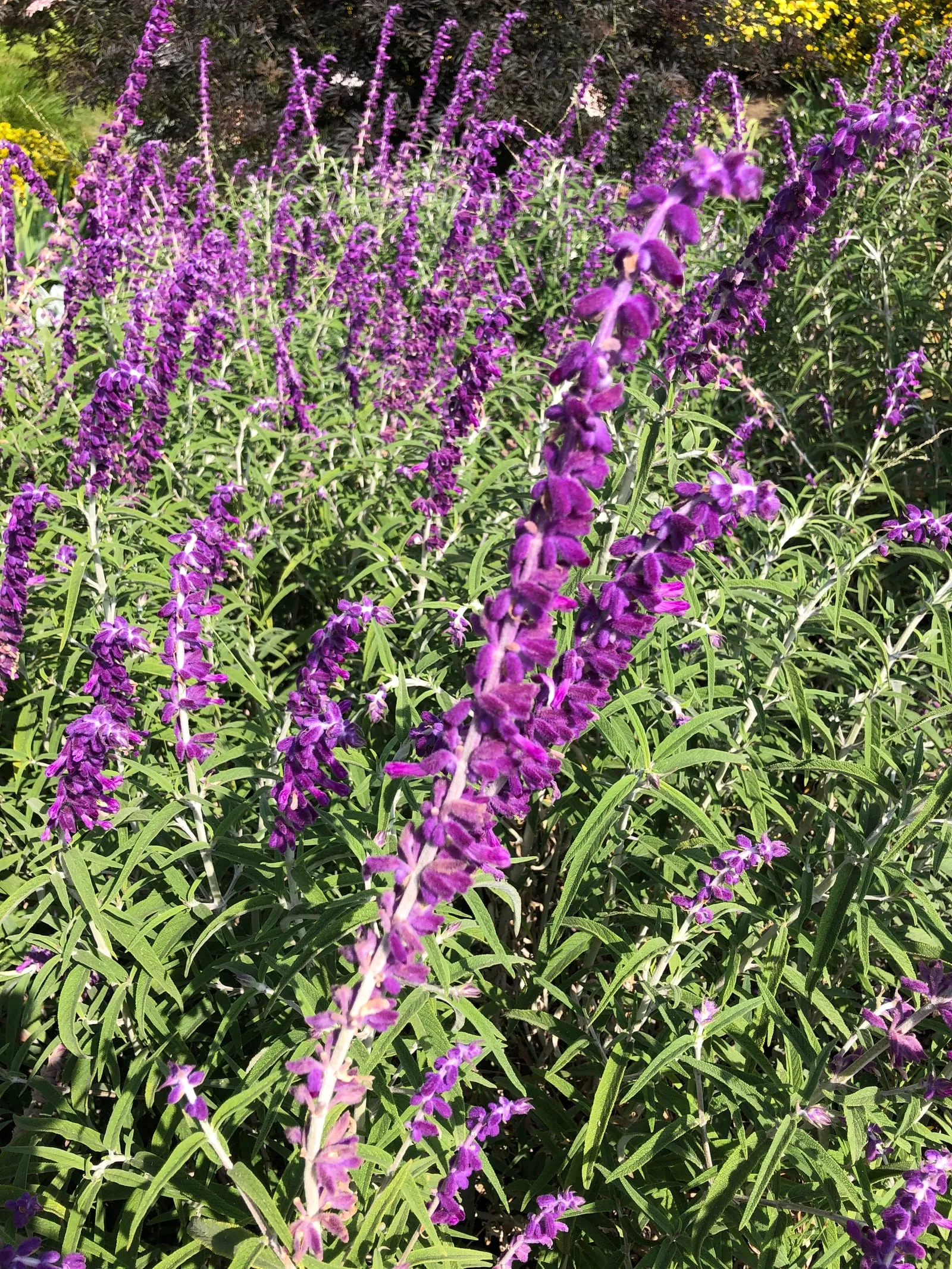
Image: "Salvia leucantha (Mexican Bush Sage)", by Netherzone, via Wikimedia Commons, licensed under CC-BY Source.
.jpg)
Related