vegetable in zone 7b
Growing swiss chard in zone 7b
Beta vulgaris subsp. vulgaris
- Zone
- 7b 5°F to 10°F
- Growing season
- 220 days
- Suitable varieties
- 3
- Days to harvest
- 50 to 60
The verdict
Swiss chard is well-suited to zone 7b, which offers a 220-day growing season and the mild shoulder seasons that leafy greens prefer. Unlike fruiting crops, chard has no chill-hour requirement; what matters instead is temperature tolerance at both ends of the season.
Zone 7b's winter lows of 5 to 10°F will kill unprotected seedlings outright, but established plants hardened into fall can sometimes carry through under row cover or a cold frame. The more important windows are spring and fall: last frost lands in late March to early April across most of the piedmont, and first fall frost arrives in late October to early November. That span gives chard two productive seasons per year.
The main limitation is midsummer heat. Swiss chard tolerates warm conditions better than spinach, but sustained temperatures above 85 to 90°F accelerate bolting and reduce leaf quality. Growers should expect a reduced harvest from July through mid-August, regardless of variety.
Recommended varieties for zone 7b
3 cultivars suited to this zone, with disease-resistance and zone-fit annotations.
| Variety | Notes | Zone fit | Disease resistance |
|---|---|---|---|
| Bright Lights fits zone 7b | Mild, slightly earthy, tender; mixed-color stems (yellow, orange, pink, red, white). Sauteing, soups, fresh salads, ornamental edible. AAS winner, productive, beautiful in mixed beds. | | none noted |
| Fordhook Giant fits zone 7b | Mild, slightly sweet; classic white-stemmed dark green-leaf chard. Sauteing, soups, lasagna. Heritage productive variety, very heat- and cold-tolerant. | | none noted |
| Rhubarb Chard fits zone 7b | Slightly earthy, mild; deep red stems and dark green leaves. Sauteing, soups, fresh in salads. Productive heritage variety, ornamental enough for borders. | | none noted |
Critical timing for zone 7b
For spring plantings, direct-seeding can begin 4 to 6 weeks before the last expected frost, putting the earliest safe outdoor sowings in late February to early March for most zone 7b locations. Germination is reliable at soil temperatures of 50°F and above. Harvest begins 50 to 60 days after sowing; cut-and-come-again harvesting extends productive life through late June before heat pressure builds.
The fall window opens with a late July to mid-August sowing. Plants established by late September carry through first frost without protection; light row cover extends harvest into November and sometimes December. Chard does not require a bloom event for harvest, so the relevant timing concern is bolting. Flower stalk emergence signals the end of quality leaf production and is typically triggered by sustained heat or lengthening days in early summer.
Common challenges in zone 7b
- ▸ Cedar-apple rust pressure heavy in piedmont
- ▸ Japanese beetles
- ▸ Brown marmorated stink bug
- ▸ Late summer disease pressure
Disease pressure to watch for
Modified care for zone 7b
Zone 7b growers face two challenges less common in cooler regions: summer pest pressure and warm-soil disease.
Japanese beetles and brown marmorated stink bugs both feed on chard foliage from late June through August. Row cover provides physical exclusion during peak beetle season but must be vented during heat to prevent leaf scorch. Stink bug feeding leaves stippled, discolored patches; early-morning removal reduces populations but rarely eliminates them.
Fusarium wilt persists in zone 7b soils and is exacerbated by warm, wet conditions. A minimum three-year rotation away from beet-family crops reduces soil inoculum. Raised beds with good drainage help considerably.
Providing 30 to 40% shade cloth during the hottest weeks extends the productive window for plantings that bridge the heat peak. Bright Lights and Fordhook Giant both tolerate partial shade without significant yield loss, making them the practical choices for summer carry-over plantings.
Swiss Chard in adjacent zones
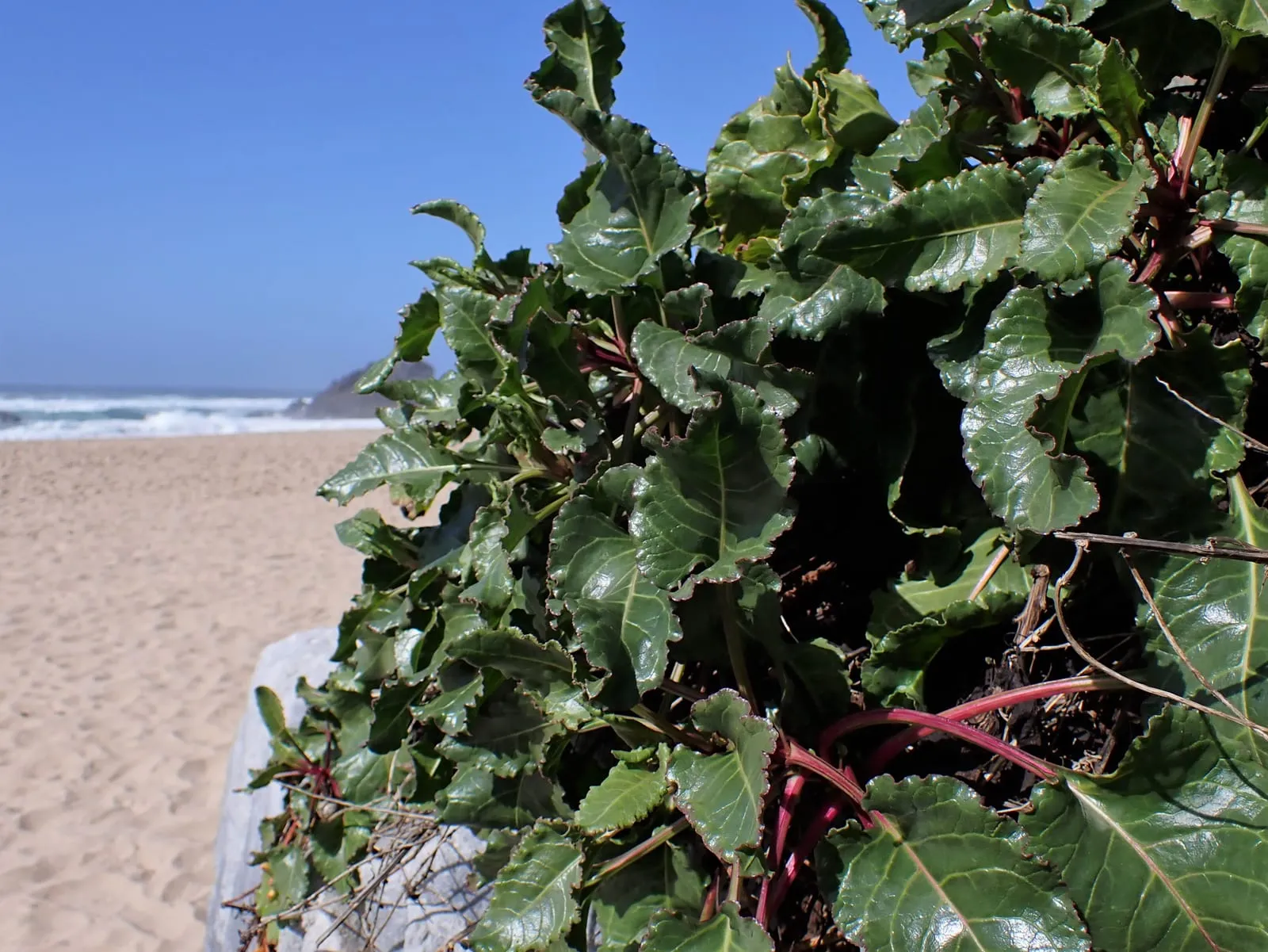
Image: "Beta vulgaris subsp. maritima kz05", by Krzysztof Ziarnek, Kenraiz, via Wikimedia Commons, licensed under CC-BY Source.

Related