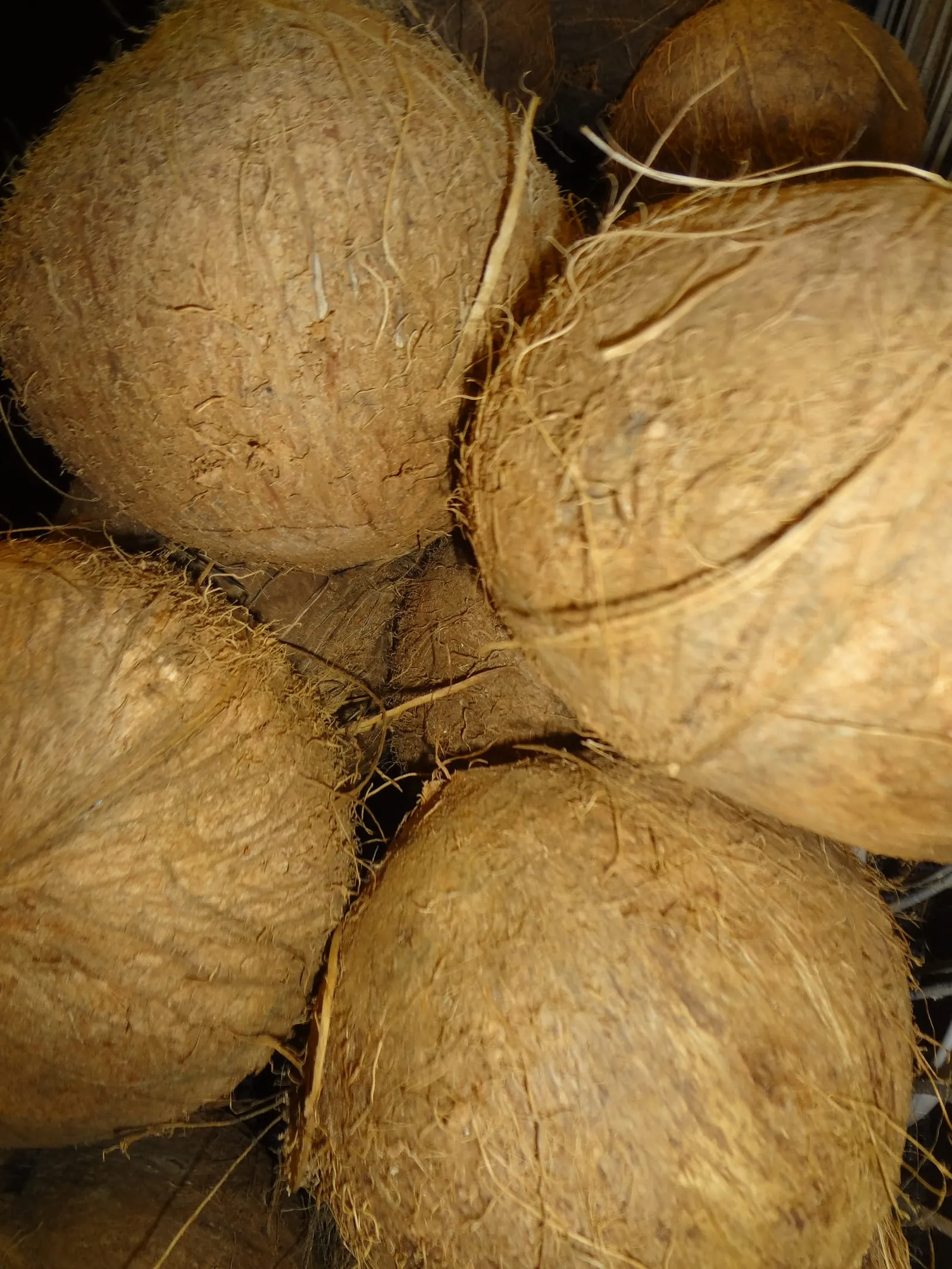
fruit tree
Coconut
Cocos nucifera
USDA hardiness range
- Zones
- 11a–13b
- Chill hours
- 0 below 45°F
- Days to harvest
- 365
- Sun
- Full
- Water
- High
- Lifespan
- 60 to 80 years
Growing coconut
Coconut (Cocos nucifera) is among the most productive long-lived tropical palms for home landscapes in zones 11a through 13b, but it is unforgiving of cold. A single frost event can damage or kill an established tree; sustained temperatures below 32°F will almost certainly do so. Within its viable range, including coastal South Florida, Hawaii, and Puerto Rico, a well-sited coconut palm can produce fruit continuously over a lifespan of 60 to 80 years, making early variety selection one of the most consequential decisions a grower will make.
Fruit takes roughly 365 days to mature from pollination to harvest. Newly planted dwarf varieties typically begin bearing in 5 to 6 years; slower varieties can take 8 or more years. What separates a productive planting from a stalled one is usually a combination of three factors: choosing a disease-tolerant variety (lethal yellowing has eliminated non-resistant palms across much of Florida and the Caribbean), providing consistently adequate moisture during establishment, and siting the palm where it receives unobstructed full sun throughout the day.
The species tolerates salt spray better than most fruiting trees, which makes it a practical choice for coastal properties where other crops fail. Inland growers in marginal zones should plan around the coldest microclimate on their property, not the zone average.
Recommended varieties
See all 3 →3 cultivars for home growers, with notes on flavor, ripening, and disease resistance.
| Variety | Notes | Zone fit | Disease resistance |
|---|---|---|---|
| Malayan Dwarf | Compact 30-40 foot palm with consistent fruit set and good lethal-yellowing tolerance; the home-yard standard. Bears in 5-6 years from planting. | | none noted |
| Maypan | Hybrid (Malayan x Panama Tall) with the disease tolerance of Malayan and the larger fruit of Panama. Industry workhorse in Caribbean replanting. | | none noted |
| Fiji Dwarf | Highly resistant to lethal yellowing with sweet water and good kernel; the recovery variety after disease wiped out other dwarfs. Slow to bear (8+ years). | | none noted |
Soil and site requirements
Coconut palms are native to sandy tropical coastlines, and that origin defines the core site requirement: sharp drainage. Waterlogged or heavy clay soils cause root rot, stunt growth, and eventually kill the palm regardless of zone. A deep, sandy or loamy soil with rapid drainage is ideal. The species tolerates a wide pH range, roughly 5.0 to 8.0, and adapts to the mildly alkaline soils common in coastal limestone areas of South Florida, according to UF/IFAS.
Full sun is not negotiable. Partial shade delays bearing and reduces fruit set; canopy competition from nearby trees is a common cause of underperformance in otherwise well-sited home yards. Plant dwarf varieties such as Malayan Dwarf and Fiji Dwarf at minimum 15 feet from structures and other palms. Hybrid types like Maypan need at least 25 to 30 feet of clearance to develop properly.
Microclimates matter considerably at the margins of zone 11a. A south-facing wall, elevated ground away from low spots where cold air pools, or proximity to a large body of water can add several degrees of frost protection during an anomalous cold event. Young palms under 3 feet tall are especially vulnerable and warrant frost cloth if temperatures are forecast below 35°F.
Common challenges
The most serious threat to coconut in the United States is lethal yellowing, a phytoplasma disease spread by planthoppers that caused widespread die-offs across Florida and the Caribbean beginning in the 1970s. Susceptible cultivars can be eliminated within months of infection. The only reliable response is variety selection: Malayan Dwarf, Maypan, and Fiji Dwarf all carry meaningful resistance, which is the primary reason home growers in affected areas should plant these rather than tall heritage types. There is no curative treatment once a palm is infected.
Cold damage is the second most common reason home plantings fail. Temperatures below 32°F, even briefly, can cause frond death and tip damage. Multiple freeze events or a hard freeze below 28°F can kill an established palm outright. Zone 11a represents the marginal edge of the coconut's reliable range; growers there should treat every winter as a potential threat and plan accordingly.
Scale insects and mealybugs are the primary pest concerns. Both build to damaging populations on stressed or undernourished palms, and their honeydew secretions foster sooty mold, a fungal growth that coats fronds and reduces photosynthetic efficiency. Regular inspection and horticultural oil applications manage these pests without systemic pesticides. Keeping palms adequately watered and fertilized reduces stress-related susceptibility to both pest and disease pressure.
Frequently asked questions
- How many chill hours does coconut require?
Coconut requires zero chill hours. It is a strictly tropical species that grows and fruits in continuous warm conditions. Winter dormancy triggered by chilling does not occur, and extended exposure to temperatures below 50°F can cause cold stress even without a frost.
- How long does it take a coconut palm to produce fruit?
Individual coconut fruits require approximately 365 days to mature from pollination to harvest. A newly planted dwarf such as Malayan Dwarf typically begins bearing in 5 to 6 years. Fiji Dwarf is slower, often taking 8 or more years to reach first harvest.
- What USDA zones can coconut grow in?
Coconut grows reliably in USDA zones 11a through 13b. Zone 10b is occasionally attempted in protected coastal microclimates, but frost events in that zone occur regularly enough to pose a serious ongoing risk to established palms.
- Does coconut need a second tree for pollination?
No. Coconut palms are monoecious, producing both male and female flowers on the same tree. Wind carries pollen from male to female flowers on the same or adjacent palms, and most trees fruit without a second tree nearby. Planting more than one tree can improve fruit set, but it is not required.
- What is lethal yellowing and how serious is it?
Lethal yellowing is a phytoplasma disease spread by the planthopper Myndus crudus that has killed millions of coconut palms in Florida and the Caribbean. Susceptible varieties show progressive frond yellowing, premature nut drop, and death within months of infection. There is no cure; prevention depends entirely on planting resistant varieties such as Malayan Dwarf, Maypan, or Fiji Dwarf.
- How long does a coconut palm live?
A coconut palm lives 60 to 80 years under good conditions. Productive bearing continues for most of that lifespan, though fruit yields typically peak during the middle decades. The longevity is a strong argument for getting variety selection right at planting.
- What causes sooty mold on coconut fronds?
Sooty mold is a fungal growth that colonizes honeydew secreted by scale insects and mealybugs. It does not infect the palm directly but coats fronds and reduces photosynthesis. Controlling the underlying pest population with horticultural oil applications typically resolves the mold without separate fungicide treatment.
+−
+−
+−
+−
+−
+−
+−
Sources
- [1] University of Hawaii: Coconut Production
- [2] UF/IFAS: Coconut Palm in the Florida Home Landscape
Image: "Coconut (Cocos nucifera)", by David Adam Kess, via Wikimedia Commons, licensed under CC-BY. Source.
.JPG)
Coconut by zone
Related