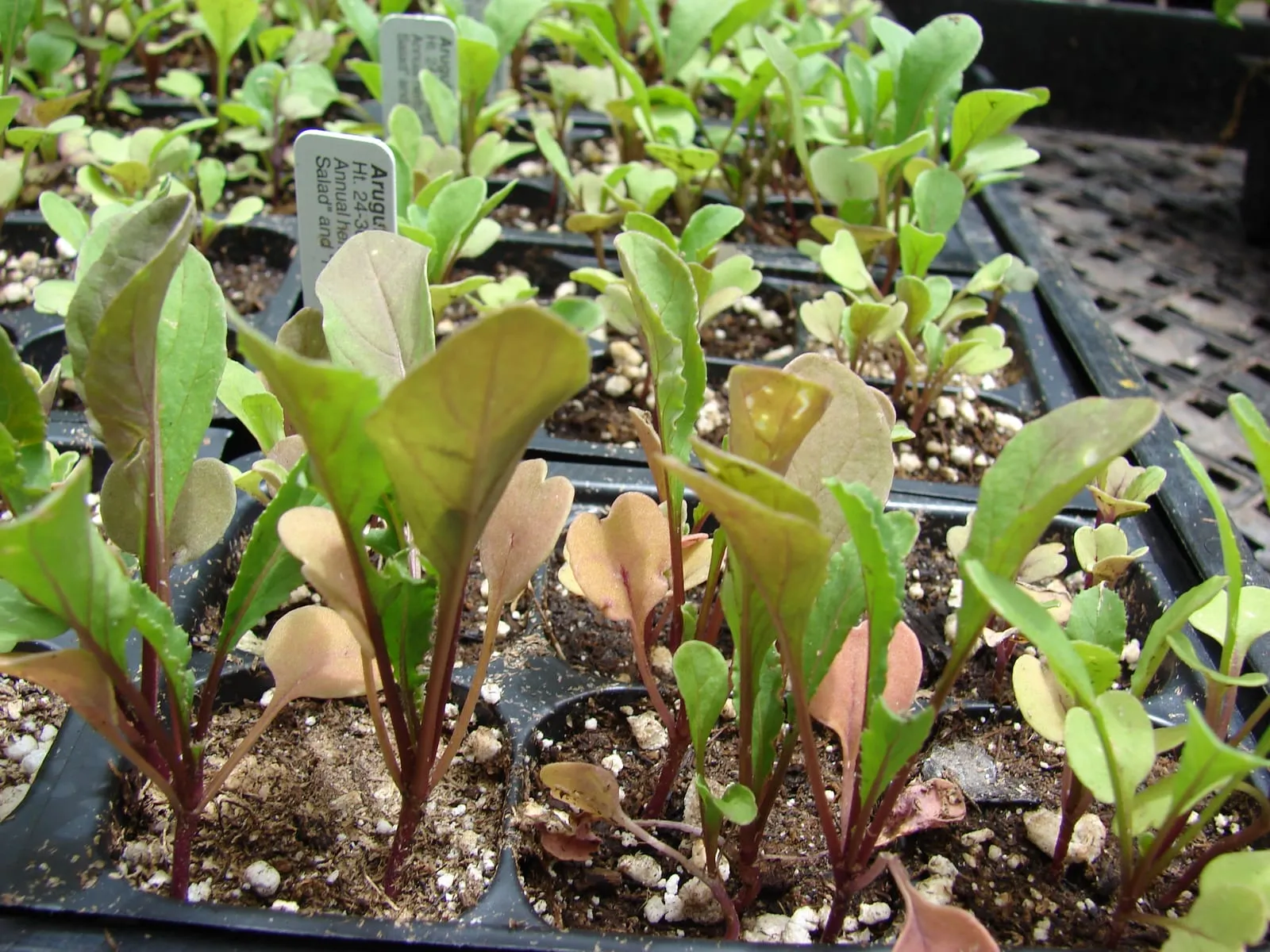
vegetable
Arugula
Eruca vesicaria
USDA hardiness range
- Zones
- 3b–9a
- Days to harvest
- 25 to 40
- Sun
- Partial
- Water
- Moderate
- Lifespan
- annual
Growing arugula
Arugula (Eruca vesicaria) is a fast-maturing cool-season green that delivers harvests in as few as 25 days from sowing. Its practical appeal is straightforward: it establishes quickly, tolerates light frost, and produces a distinctive peppery bite that sets it apart from milder salad greens.
The crop is viable across a wide hardiness range, from Zone 3b through 9a, but success depends more on temperature timing than hardiness zone. Arugula thrives below roughly 75°F and deteriorates quickly once daytime temperatures push into the upper 70s and 80s. In zones 8b and 9a, the productive window is limited to fall through early spring; reliable summer production in those zones is largely impractical. In zones 3b through 6b, both spring and fall plantings work well, with fall often yielding better flavor as the harvest period coincides with steady cooling temperatures.
The most consistent predictor of a productive planting is timing. Spring sowings that catch warming days too late bolt before harvestable leaves develop. Fall sowings planted while soil temperatures still exceed 80°F struggle to establish cleanly. Succession sowing every two to three weeks manages this risk and extends the harvest window considerably. Partial shade becomes a useful tool as temperatures rise, delaying bolting by a few critical days. Given the short days-to-harvest window of 25 to 40 days, arugula rewards frequent replanting more than careful coaxing of a single crop.
Recommended varieties
See all 2 →2 cultivars for home growers, with notes on flavor, ripening, and disease resistance.
| Variety | Notes | Zone fit | Disease resistance |
|---|---|---|---|
| Astro | Mild peppery, tender, fast-growing; the salad-mix arugula. Salads, pizza topping, pesto. Less spicy than wild types, slow to bolt for an arugula. | | none noted |
| Wild Rocket / Sylvetta | Sharp, intense pepper bite, deeply lobed leaves; the connoisseur's arugula. Salads, pasta toss, pizza. Slow-growing perennial-style, holds longer in heat. | | none noted |
Soil and site requirements
Arugula is not demanding about soil chemistry but performs best in well-drained, moderately fertile ground with a pH between 6.0 and 7.0. Heavy clay soils that retain excess moisture and restrict root development slow establishment and increase susceptibility to downy mildew, particularly in cool wet springs. Raised beds or loosened in-ground beds with added compost improve drainage without requiring significant amendment.
Spacing is flexible. Direct-sown arugula in broadcast beds can be thinned to roughly 3 to 4 inches for leaf harvests. Rows spaced 6 to 8 inches apart work in most garden layouts; tighter spacing is usable for cut-and-come-again baby leaf production, though it reduces airflow and raises disease risk.
Sun exposure should match the season. Full sun suits early spring and fall plantings when temperatures are consistently below 70°F. As spring temperatures climb, a site that receives afternoon shade, from a trellis, a taller neighboring crop, or a building edge, can extend the productive period by a week or two before bolting becomes unmanageable. North-facing slopes and the shade cast by taller brassicas or trellised cucumbers function as natural cooling tools in zones 7b and warmer. In zones 3b through 6a, shade management is less critical given naturally shorter warm periods.
Common diseases
Common pests
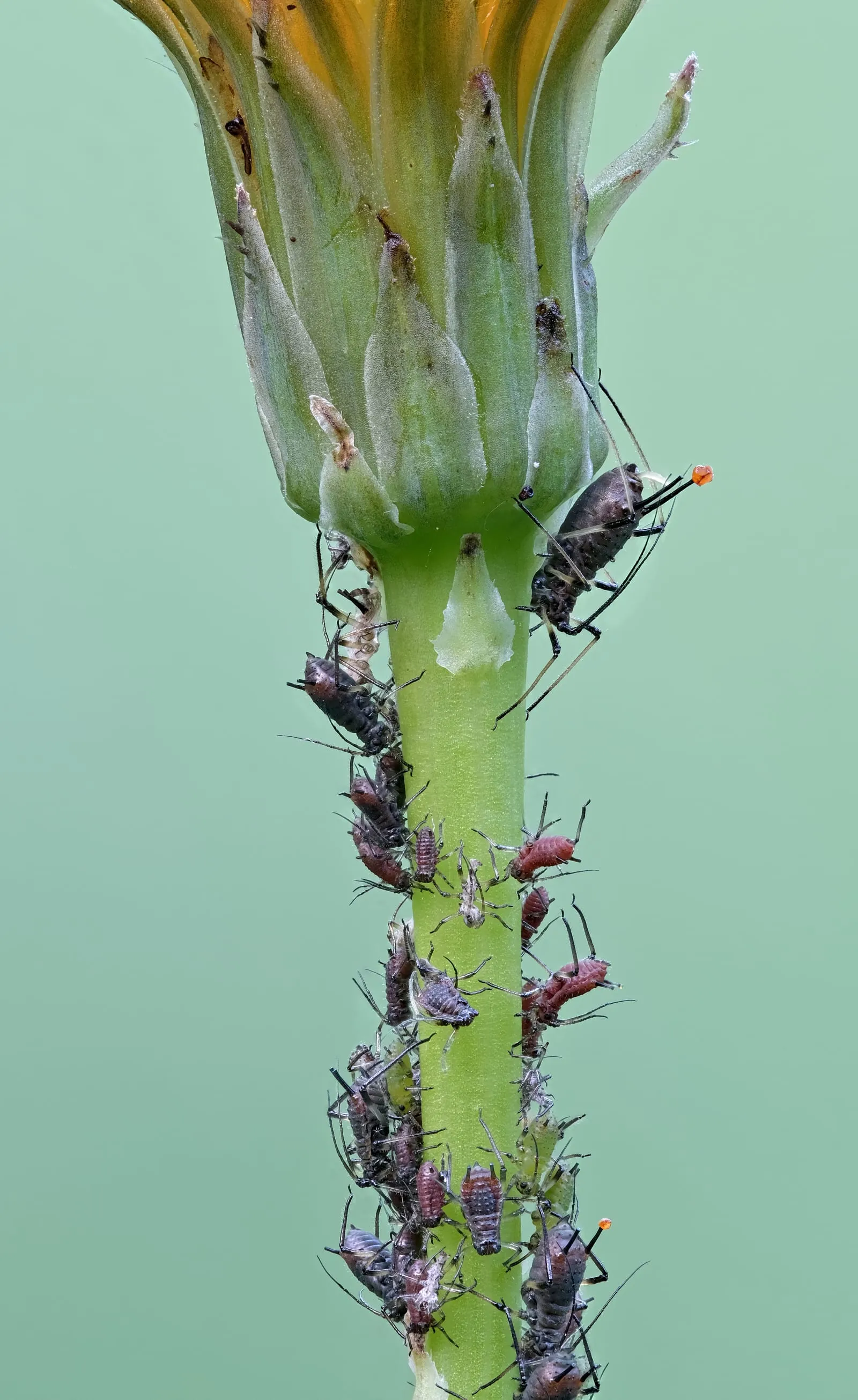
Multiple species (Aphididae)
Small soft-bodied sap-sucking insects that reproduce explosively in spring. Excrete honeydew that supports sooty mold and attracts ants. Transmit viral diseases.
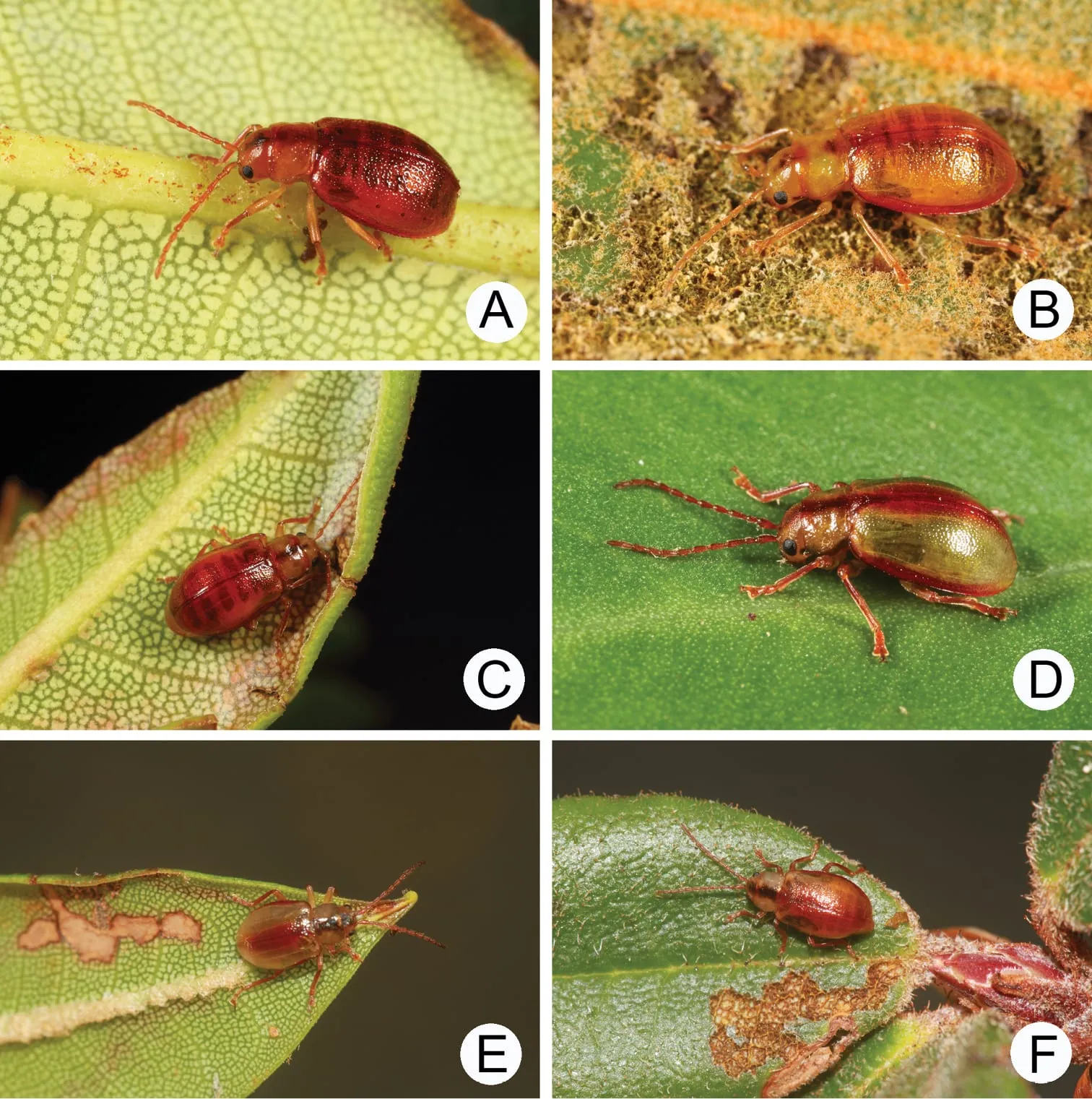
Multiple species (Chrysomelidae)
Tiny black or bronze jumping beetles that put hundreds of small holes in seedling leaves. Most damaging on direct-seeded brassicas and young eggplant.
Common challenges
Bolting is the dominant challenge and the primary reason home plantings underperform. Arugula transitions from vegetative growth to flower production rapidly once day length and temperatures pass critical thresholds. Once bolting begins, leaves become increasingly bitter and fibrous. The practical response is planning around this tendency: start spring plantings as early as soil can be worked and replant at two-week intervals rather than maintaining a single long-running crop.
Flea beetles are the most damaging pest in most regions. These small, jumping beetles chew distinctive shothole patterns in leaves, reducing quality and, in heavy infestations, significantly setting back young plants. Row cover applied at sowing provides effective protection while also offering minor frost protection in early spring. Uncovered plants in gardens with established flea beetle populations rarely escape noticeable damage.
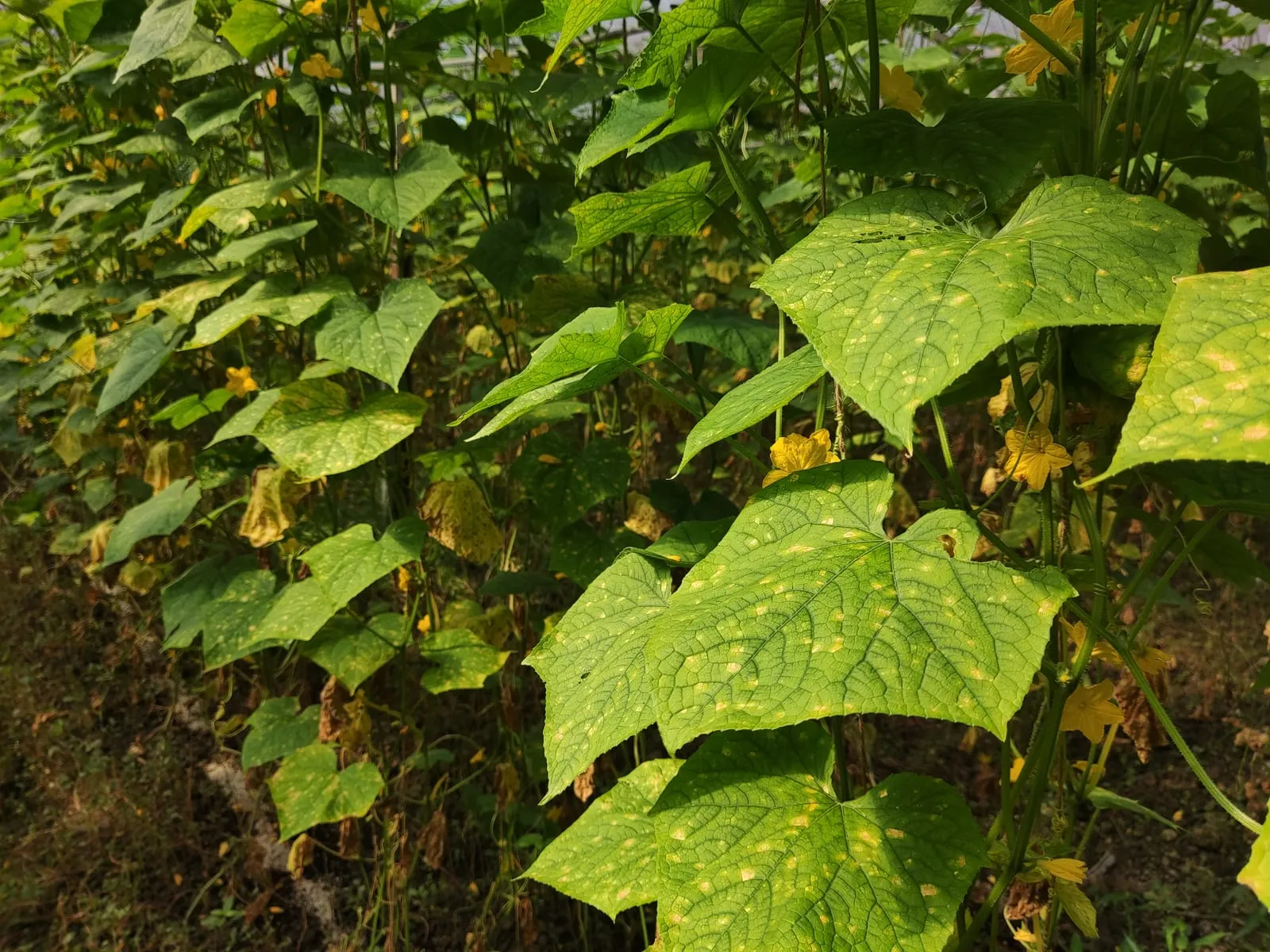
Downy mildew becomes problematic in cool, wet conditions, appearing as yellow patches on upper leaf surfaces with gray-purple sporulation on the undersides. It spreads rapidly in crowded plantings with poor air circulation. Thinning plants, avoiding overhead irrigation, and rotating planting locations season to season limit its spread. Cornell Arugula Production provides guidance on managing brassica-family diseases in home settings. Aphids are a secondary concern, typically manageable with a firm water spray before populations establish.
Frequently asked questions
- Does arugula require a chill period or specific chill hours before it will grow?
No. Arugula is a cool-season annual with no chill-hour requirement. Seeds germinate in soil temperatures as low as 40°F and as high as 85°F, with optimal germination between 55°F and 65°F. No vernalization period is needed before planting.
- How many days from sowing to first harvest?
Arugula is typically ready for baby-leaf harvest in 25 to 30 days and full-sized leaves in 35 to 40 days. Timing shifts with temperature: cool conditions slow growth toward the higher end of the range, while warm conditions push it lower and simultaneously accelerate bolting.
- What USDA hardiness zones support arugula?
Arugula grows across zones 3b through 9a, but the productive season length varies substantially by zone. In zones 3b through 6b, both spring and fall plantings work reliably. In zones 8b and 9a, production is largely limited to the cooler months, typically October through March.
- Does arugula require pollinators to produce leaves?
No. Arugula is self-fertile and does not require pollinators for leaf production. Pollination becomes relevant only when saving seed for future planting. For table use, the presence or absence of pollinators has no effect on harvest.
- What is the most common disease affecting arugula?
Downy mildew is the most frequently encountered disease, presenting as yellow patches on upper leaf surfaces with gray-purple sporulation on the undersides. It spreads in cool, humid conditions with poor airflow. Improving plant spacing, avoiding overhead watering, and rotating planting locations each season reduce incidence.
- Why do arugula leaves turn bitter after a few weeks?
Bitterness intensifies as the plant shifts toward flowering, a process called bolting. Warmer temperatures, lengthening days, and plant maturity all accelerate the transition. Harvesting leaves young before flower stalks appear, and timing plantings to avoid warm weather, limits this. Once a plant bolts, the window for mildly flavored leaves closes quickly.
- Can arugula survive frost?
Arugula tolerates light frosts down to roughly 28°F without significant damage. Mature plants handle cold better than seedlings. In zones 6b and warmer, fall-planted arugula often persists through light winter frosts with minimal protection. Row cover extends the season further in borderline conditions.
+−
+−
+−
+−
+−
+−
+−
Sources
Image: "Starr 070906-8899 Eruca vesicaria subsp. sativa", by Forest & Kim Starr, via Wikimedia Commons, licensed under CC-BY. Source.

Arugula by zone
Related