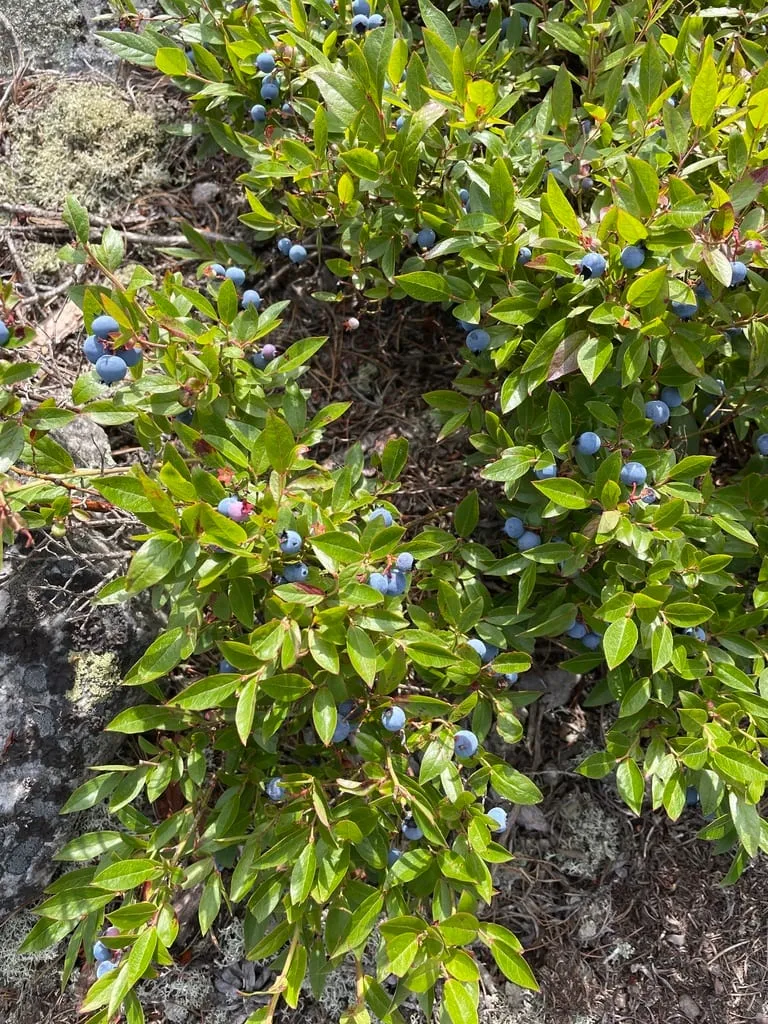
berry
Lowbush Blueberry
Vaccinium angustifolium
USDA hardiness range
- Zones
- 3a–6b
- Chill hours
- 1000 to 1200 below 45°F
- Days to harvest
- 70 to 100
- Sun
- Full
- Water
- Moderate
- Lifespan
- 50 years
Growing lowbush blueberry
Lowbush blueberry (Vaccinium angustifolium) is the species behind the wild blueberries harvested commercially across Maine and Atlantic Canada. Its natural range maps almost exactly to USDA zones 3a through 6b, and it is genuinely suited to cold northern climates with acidic, lean soils and 1,000 to 1,200 chill hours per winter. Below zone 6b, summer heat accumulation is generally sufficient for good ripening; above it, insufficient chilling leads to irregular bloom and eventually plant decline.
What separates a productive planting from a marginal one is rarely variety selection. The more common determinants are soil pH management and willingness to wait through a slow establishment period. Meaningful fruit production typically takes three to four years from planting. The trade-off is longevity: well-managed colonies persist for 50 years or more.
The plant spreads by underground rhizomes, forming an expanding colony rather than staying as a discrete shrub. In commercial production in Maine, scheduled pruning cycles keep plantings vigorous by forcing new cane growth; home growers can replicate this effect with aggressive cutback every two to three years. Skipping this step allows older canes to dominate, which reduces fruit size and total yield over time. University of Maine Wild Blueberries
Recommended varieties
See all 4 →4 cultivars for home growers, with notes on flavor, ripening, and disease resistance.
| Variety | Notes | Zone fit | Disease resistance |
|---|---|---|---|
| Top Hat | Sweet-tart, intensely flavored small berries with classic wild-blueberry punch; fresh, baking, jam. Compact 1-2 ft mound, also ornamental. Self-fertile. | | none noted |
| Ruby Carpet | Tart-sweet, intense flavor, small dark blue berries; classic Maine wild-blueberry character. Spreading rhizomatous habit, brilliant red fall foliage. | | none noted |
| Burgundy | Tart, complex, deep wild-blueberry flavor; small premium berries. Spreading groundcover habit, deep burgundy fall color. | | none noted |
| Brunswick | Sweet-tart, intense flavor; selected from Maine wild stands. Compact spreading habit, productive and reliable in northern climates. | | none noted |
Soil and site requirements
Soil pH is the single most critical site factor. Lowbush blueberry requires pH 4.0 to 4.5; at pH 5.5 or above, iron and manganese become unavailable and plants yellow and stagnate regardless of other inputs. Test the intended bed before planting and amend with elemental sulfur well in advance, noting that sulfur acidification takes months to register and that native soils above pH 6.0 are difficult to correct reliably without raised-bed construction. Sandy, well-drained soils with high organic matter produce the best results. Heavy clay soils that hold water through spring snowmelt invite root rot and should be avoided or substantially amended with coarse material before planting.
Full sun is necessary. Less than six hours of direct light per day substantially reduces fruit set even in otherwise ideal conditions.
For a spreading groundcover colony, space plants 18 to 24 inches apart and allow rhizomes to fill in over three to five years. Avoid low-lying frost pockets: lowbush blueberry blooms early, and blossoms are frost-sensitive at the flower-bud stage. A gentle slope with cold-air drainage outperforms a low-lying flat site within the same zone. Cornell Berry Production Guide
Common diseases
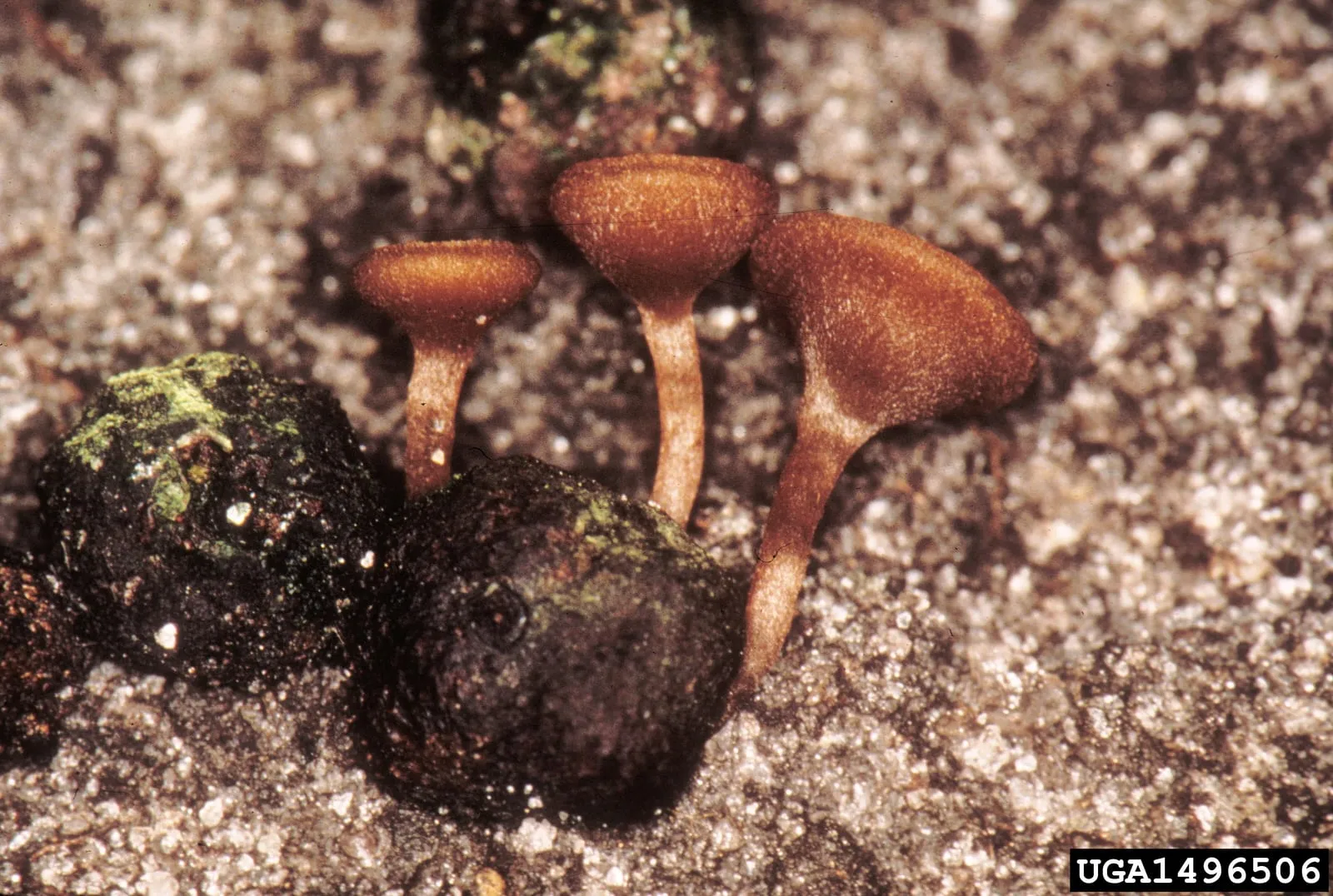
Monilinia vaccinii-corymbosi
The most damaging blueberry disease in the eastern US, killing shoots in spring and mummifying fruit later in the season.
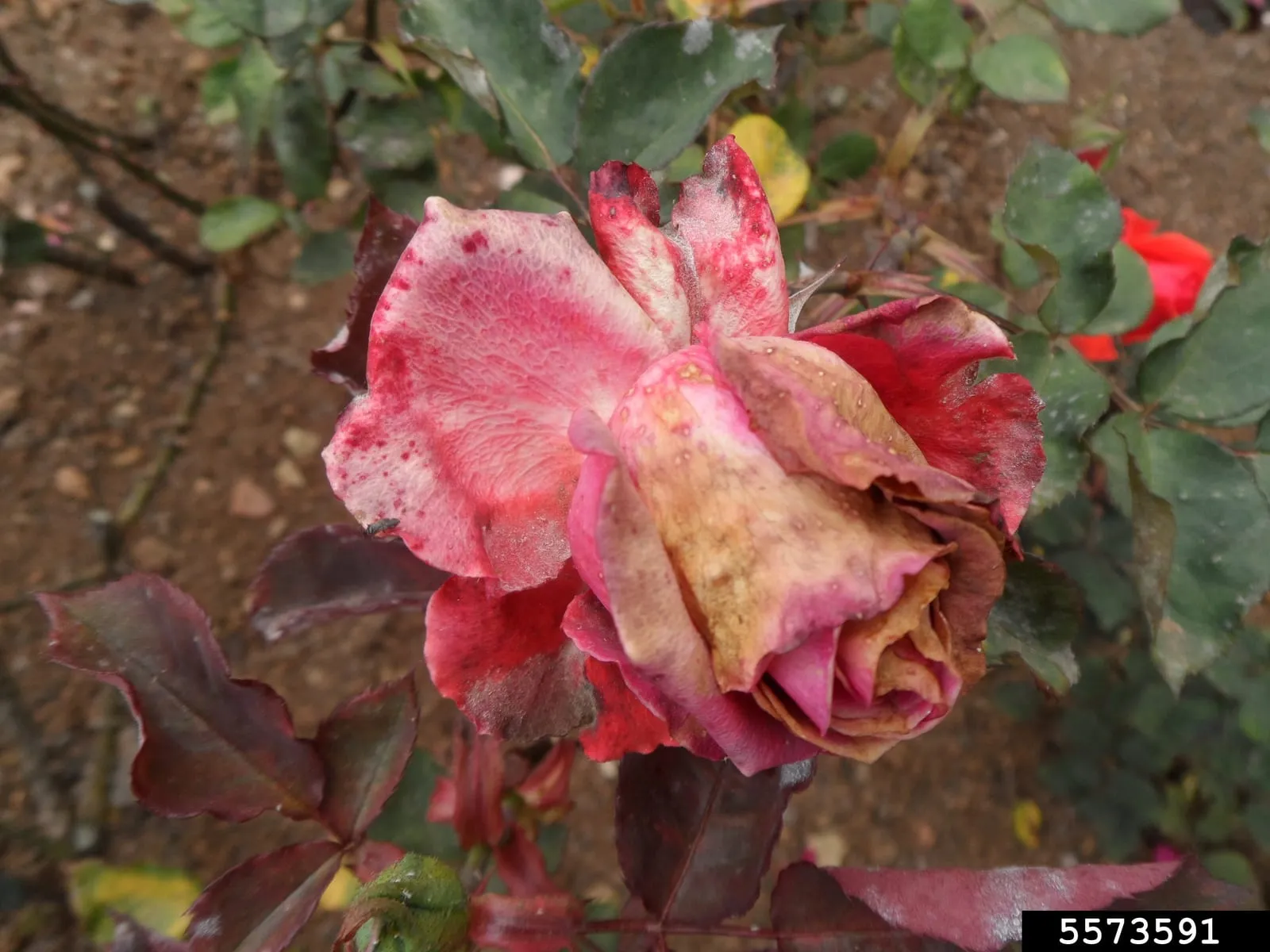
Botrytis cinerea
Ubiquitous fungal disease that causes fruit rot during cool wet weather, often the dominant berry disease in humid regions.
Common pests
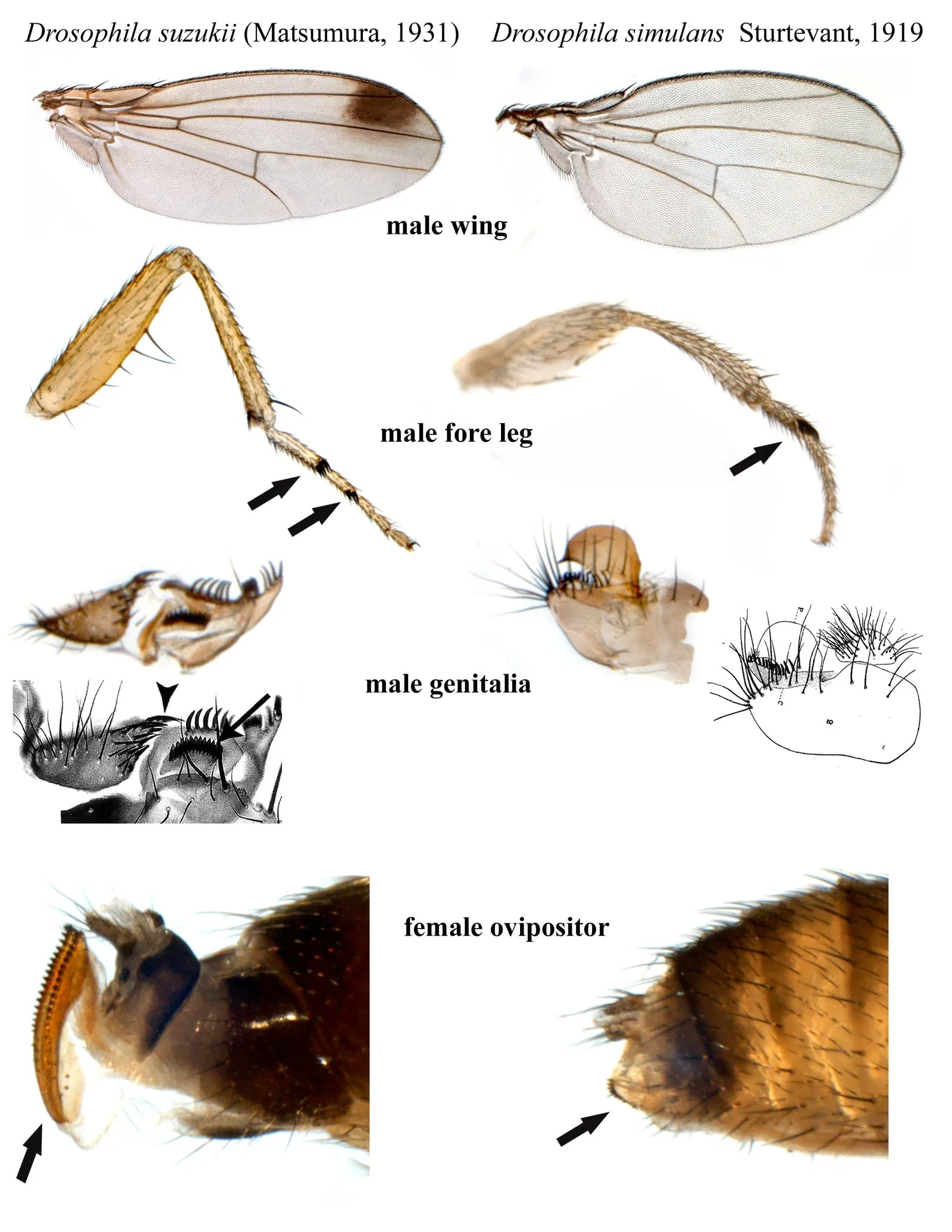
Drosophila suzukii
Invasive vinegar fly that attacks ripening soft fruit, unlike native Drosophila species which target overripe fruit. Now the dominant berry-and-cherry pest across the US.
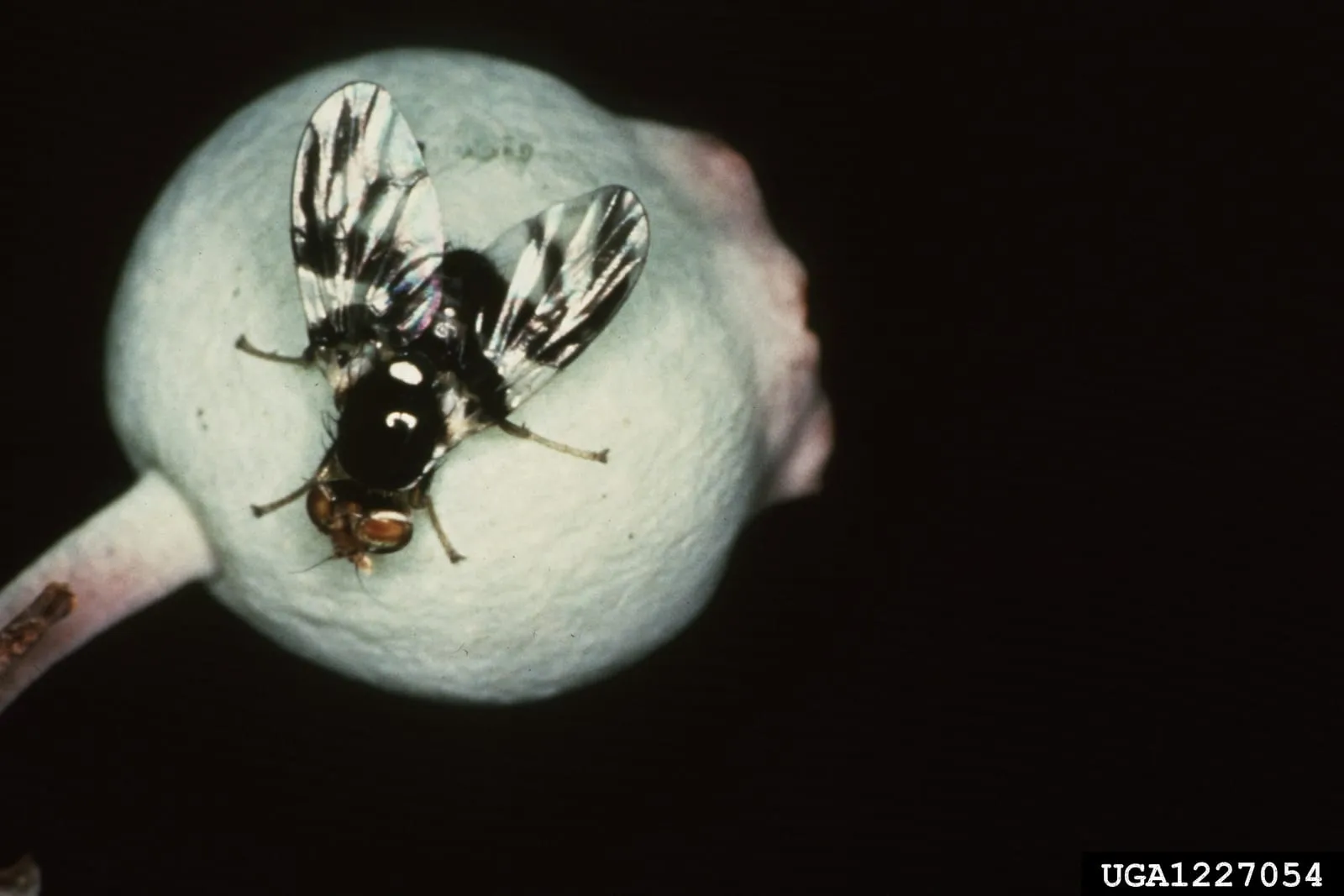
Rhagoletis mendax
Native fruit fly whose larvae develop inside blueberries, the primary fresh-market quality concern in eastern North America.
Multiple species
Robins, catbirds, mockingbirds, starlings, cedar waxwings and other songbirds can strip ripening berry and fruit crops in days. Crows and blackbirds also damage fresh sweet corn ears in milk stage. The single biggest yield-loss factor in unprotected home plantings.
Common challenges
Soil pH drift is the most persistent long-term problem. Even in initially acidic beds, pH climbs over years from irrigation water, decomposing organic matter, and ambient mineral weathering. Annual pH testing and sulfur top-dressing are not optional maintenance steps; they are the practical difference between plants that produce reliably and plants that slowly decline without obvious cause.
Mummy berry (Monilinia vaccinii-corymbosi) is the primary fungal disease across zones 4 through 6. The fungus overwinters in shriveled mummified berries on the soil surface and releases spores during bloom, infecting emerging shoots and flowers. Prevention centers on removing mummified fruit at harvest and raking or deep-mulching beds in fall to bury overwintering spores. In high-pressure sites, a protectant fungicide application at bud break reduces infection. Allowing the disease to go unmanaged through a single season lets inoculum build to levels that are difficult to recover from without intensive follow-up.
Underestimated pollination needs trip up growers who plant a single self-fertile variety and expect full crops. Self-fertile selections like Top Hat do set fruit alone, but berry size and total load improve substantially with a second variety nearby. For plantings of fewer than ten plants, mixing two varieties is worth the minor complexity, particularly in gardens with limited native bee populations. University of Maine Wild Blueberries
Frequently asked questions
- How many chill hours does lowbush blueberry require?
Lowbush blueberry needs 1,000 to 1,200 chill hours (hours below 45°F) to complete dormancy and produce a reliable crop. This high requirement is the primary reason the species performs best in zones 3a through 6b and struggles in warmer regions where winter chilling is inconsistent from year to year.
- How long does lowbush blueberry take to produce fruit?
Newly planted lowbush blueberries typically take three to four years to establish before producing meaningful yields. Once established, fruit ripens 70 to 100 days after bloom in a given season. The slow establishment period is a trade-off for a plant that can remain productive for 50 years or more.
- What USDA hardiness zones suit lowbush blueberry?
Lowbush blueberry is reliably hardy in zones 3a through 6b. It tolerates extreme cold better than most blueberry species and is the preferred type for northern gardens where highbush varieties fail to meet their chilling requirements or suffer winter dieback.
- Does lowbush blueberry need a pollinator plant?
Several lowbush varieties, including Top Hat, are self-fertile and will set fruit without a companion plant. Even so, planting two or more varieties improves berry size and total yield, particularly in gardens with limited native bee activity. For small plantings, mixing two varieties is a low-cost way to increase production.
- What is mummy berry and how is it prevented?
Mummy berry is a fungal disease caused by Monilinia vaccinii-corymbosi that overwinters in shriveled berries left on the soil surface. Prevention relies on removing mummified fruit at harvest, raking and deep-mulching beds in fall to bury overwintering spores, and applying a protectant fungicide at bud break in high-pressure sites. Skipping cleanup in a single season allows inoculum to build substantially.
- How does lowbush blueberry differ from highbush blueberry?
Lowbush blueberry (Vaccinium angustifolium) grows as a low spreading groundcover, typically under 2 feet tall, and spreads by rhizomes. Berries are smaller but more intensely flavored than most highbush types. The species requires 1,000 to 1,200 chill hours and is considerably more cold-hardy, making it the better choice for zones 3 through 5 where highbush often underperforms.
- How long do lowbush blueberry plantings remain productive?
Well-managed lowbush blueberry plantings are exceptionally long-lived, persisting for 50 years or more. Regular pruning cycles, which force new cane growth and prevent older wood from dominating the colony, are the primary management practice that maintains vigor and fruit quality over decades.
+−
+−
+−
+−
+−
+−
+−
Sources
Image: "lowbush blueberry", by no rights reserved, via iNaturalist, licensed under CC0. Source.
Lowbush Blueberry by zone
Related