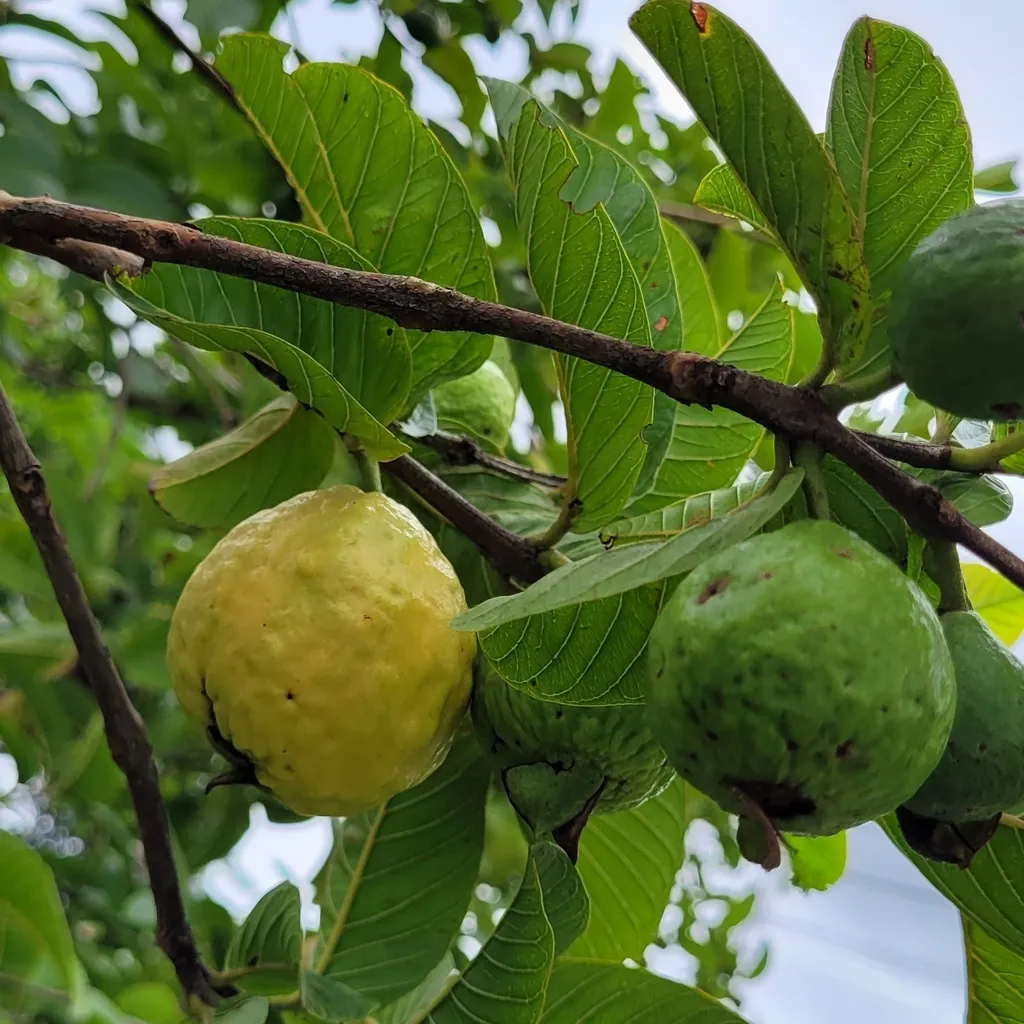
fruit tree
Guava
Psidium guajava
USDA hardiness range
- Zones
- 9b–12b
- Chill hours
- 0 to 100 below 45°F
- Days to harvest
- 120 to 240
- Sun
- Full
- Water
- Moderate
- Lifespan
- 30 to 50 years
Growing guava
Guava (Psidium guajava) is a fast-maturing tropical that earns its place in zones 9b through 12b with reliable fruit production, minimal chill-hour requirements (0 to 100 hours below 45°F), and a lifespan stretching 30 to 50 years. In South Florida, coastal Southern California, Hawaii, and Puerto Rico, a well-situated tree begins fruiting within 2 to 4 years and can produce multiple flushes annually in the warmest zones.
The failure point for most home plantings is cold exposure. Guava tolerates brief dips to around 28°F when mature, but sustained freezes damage or kill the canopy. Zone 9b growers face real risk in severe winters; zone 10a offers substantially greater reliability. Even in zones 10 and above, trees under two years old are vulnerable to temperatures that a mature specimen would survive. Site selection and frost protection during the first two winters often determine whether a planting succeeds or gets cut back to the ground and restarted.
Beyond frost, productivity depends on drainage and sun. Guava roots are highly susceptible to waterlogging, and trees in poorly drained sites decline steadily even in otherwise suitable climates. Full sun is not optional; shaded trees produce sparse, lackluster fruit. Given those two requirements, a guava in the right microclimate with well-drained soil and consistent moisture is a genuinely low-maintenance long-term investment (according to UF/IFAS Extension: Guava Growing in the Florida Home Landscape and University of Hawaii: Guava Production).
Recommended varieties
See all 3 →3 cultivars for home growers, with notes on flavor, ripening, and disease resistance.
| Variety | Notes | Zone fit | Disease resistance |
|---|---|---|---|
| Ruby Supreme | Pink-fleshed sweet aromatic guava with a perfumed musky note; the dessert standard. Reliable producer of large fruit on a manageable tree. | | none noted |
| White Indian | White flesh with a milder cleaner sweet flavor and fewer seeds; the choice for fresh eating without the perfumed funk. Old Florida heirloom. | | none noted |
| Strawberry Guava | Smaller red-skinned fruit with a strawberry-like sweet-tart flavor; technically a different species (Psidium cattleyanum). Cold-hardier and invasive in Hawaii. | | none noted |
Soil and site requirements
Guava tolerates a wide soil pH range (4.5 to 8.0) but performs best between 5.0 and 7.0. Drainage is the single most critical site factor. Trees in clay, compacted, or low-lying soils develop root rot and decline regardless of zone. Raised beds or sloped sites with naturally fast internal drainage consistently outperform flat, heavy locations.
Full sun is non-negotiable for reliable fruiting. Trees receiving fewer than 6 hours of direct sun per day fruit poorly and become more susceptible to fungal disease due to reduced air circulation and slower canopy drying.
Spacing depends on variety and management intent. Standard guava trees reach 15 to 20 feet unpruned; most home growers maintain them at 8 to 12 feet through regular heading cuts. Plant at least 10 to 12 feet from structures and other trees to allow for canopy spread and adequate airflow.
Microclimate matters most at the zone margins. In zone 9b, south-facing walls, courtyard plantings, and locations near thermal mass (concrete, masonry) provide meaningful frost protection. Avoid low-lying areas where cold air pools during radiation frost events. A tree on a gentle slope with overhead protection from a structure or canopy will consistently outperform an identical tree planted in a frost pocket during marginal winters.
Common diseases
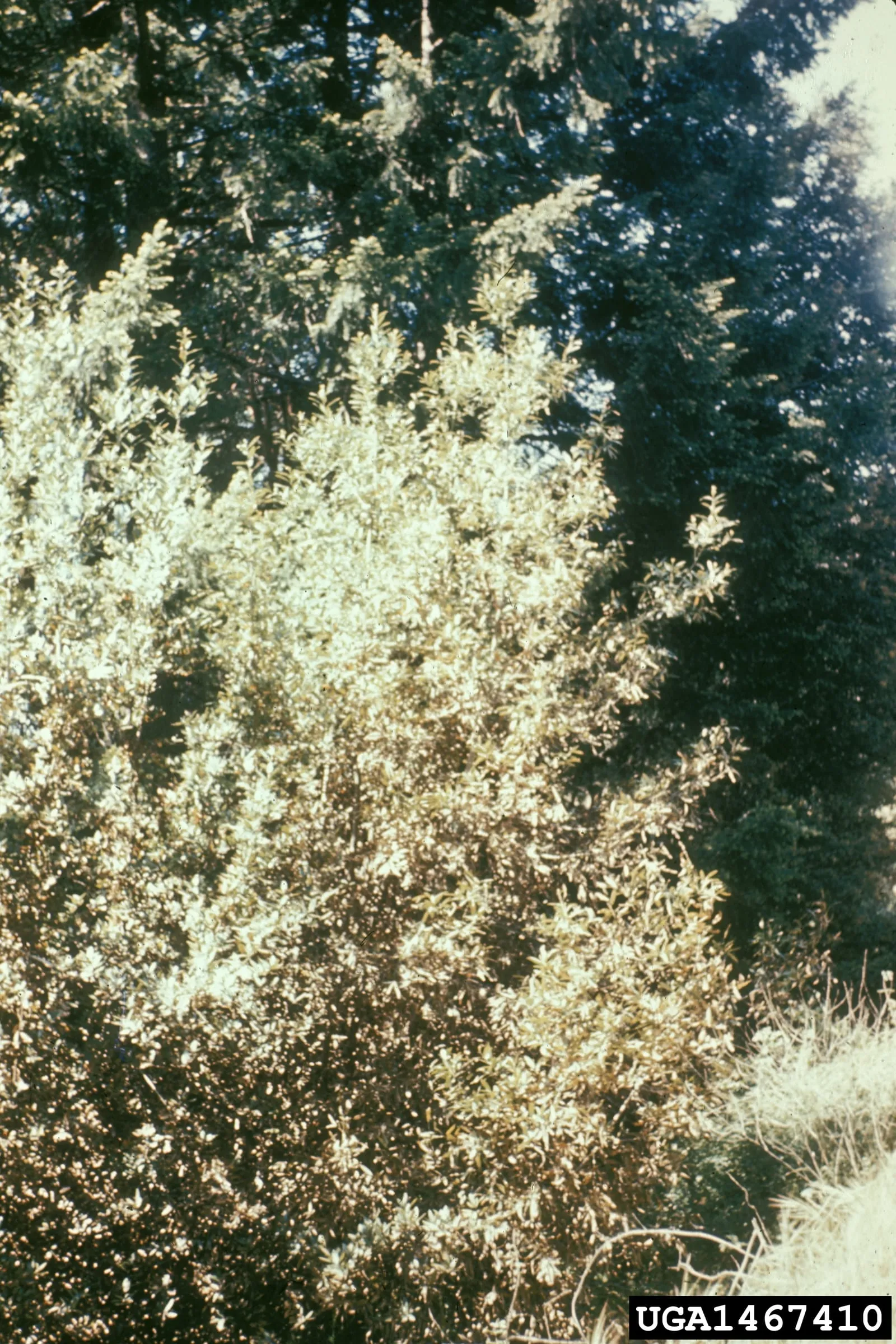
Colletotrichum gloeosporioides
Most damaging mango disease worldwide. Fungal spores infect blossoms and developing fruit during humid weather, producing black sunken lesions that expand on ripening fruit.
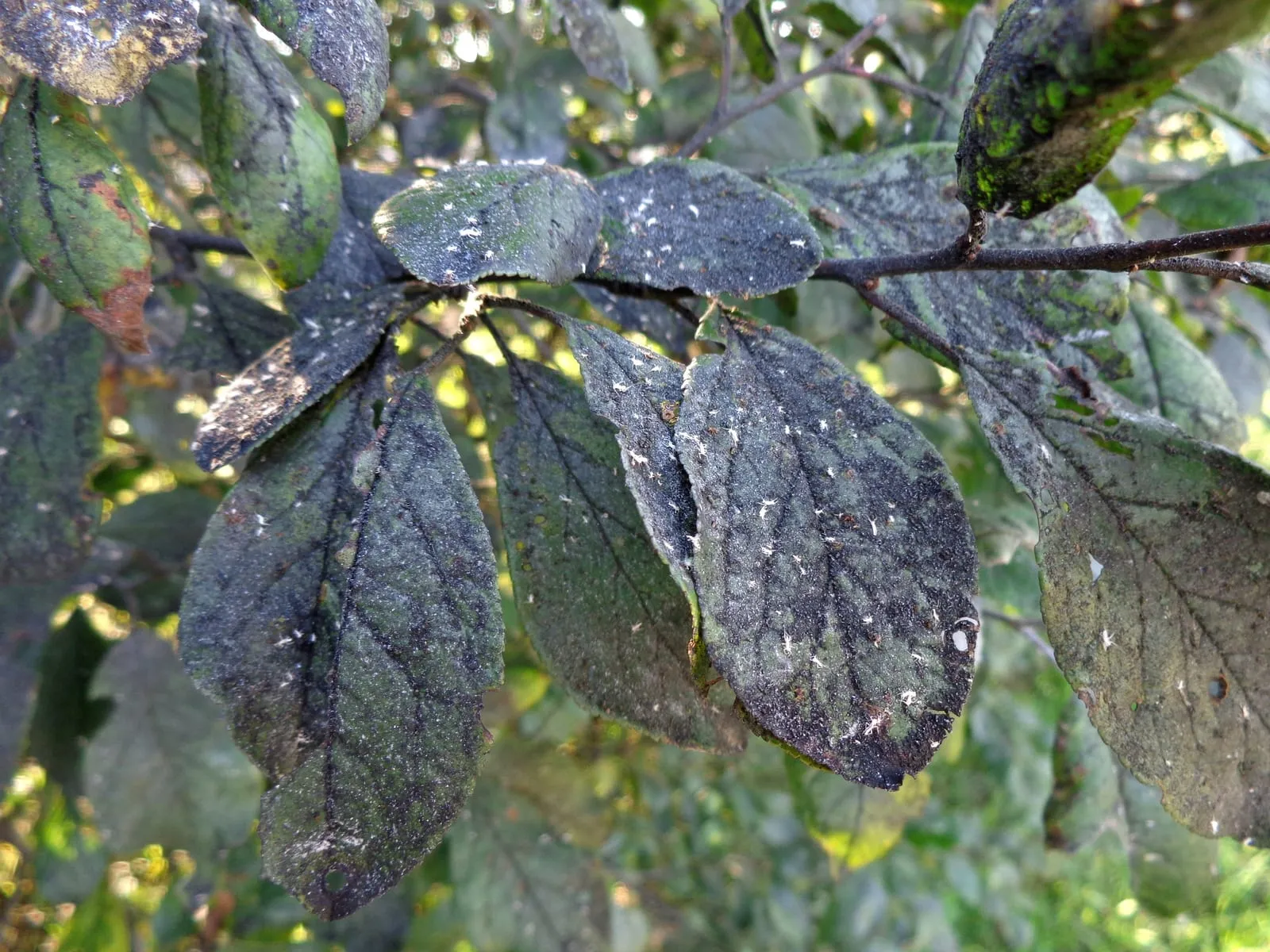
Capnodium spp.
Black fungal coating that grows on honeydew secreted by aphids, scale, mealybugs, and whiteflies. Doesn't infect plant tissue directly but blocks photosynthesis and disfigures fruit.
Common pests
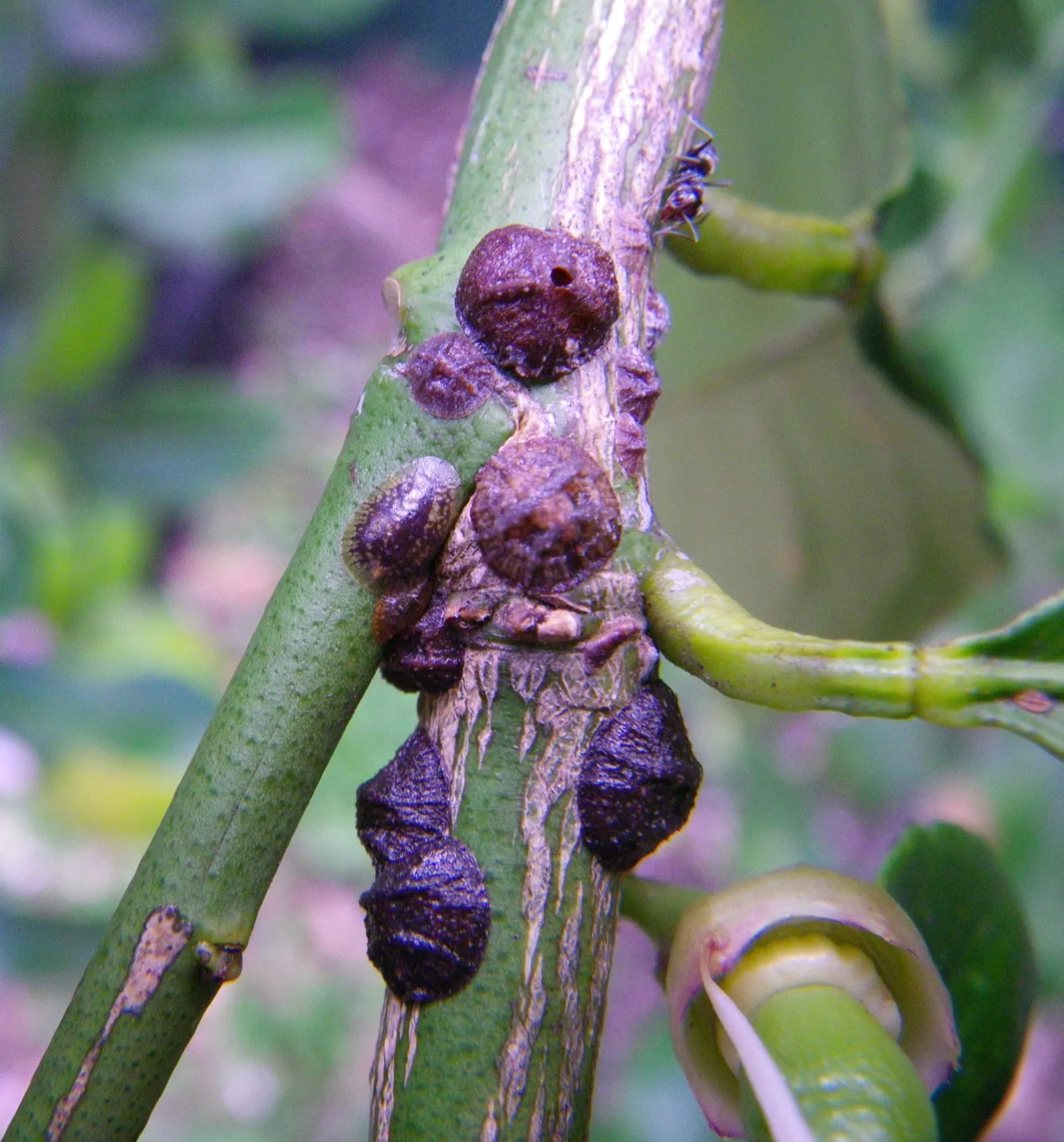
Coccoidea spp.
Sap-sucking insects that attach to bark, leaves, and fruit, secreting honeydew that fuels sooty mold. Heavy infestations weaken trees and cause leaf yellowing.
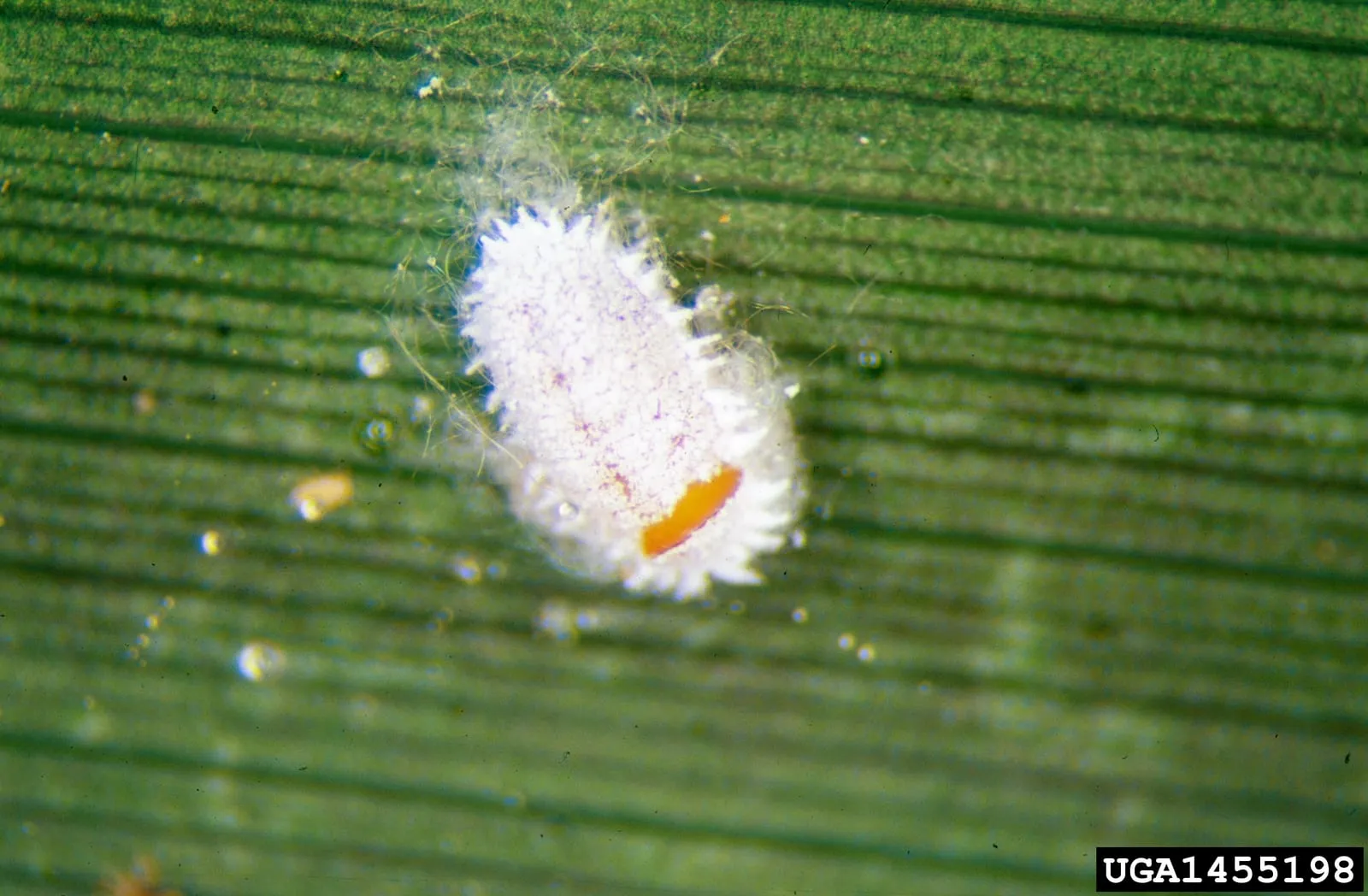
Pseudococcidae spp.
Soft white waxy insects that cluster at leaf joints, fruit stems, and root crowns. Honeydew secretion supports sooty mold; root mealybugs cause decline that mimics drought.
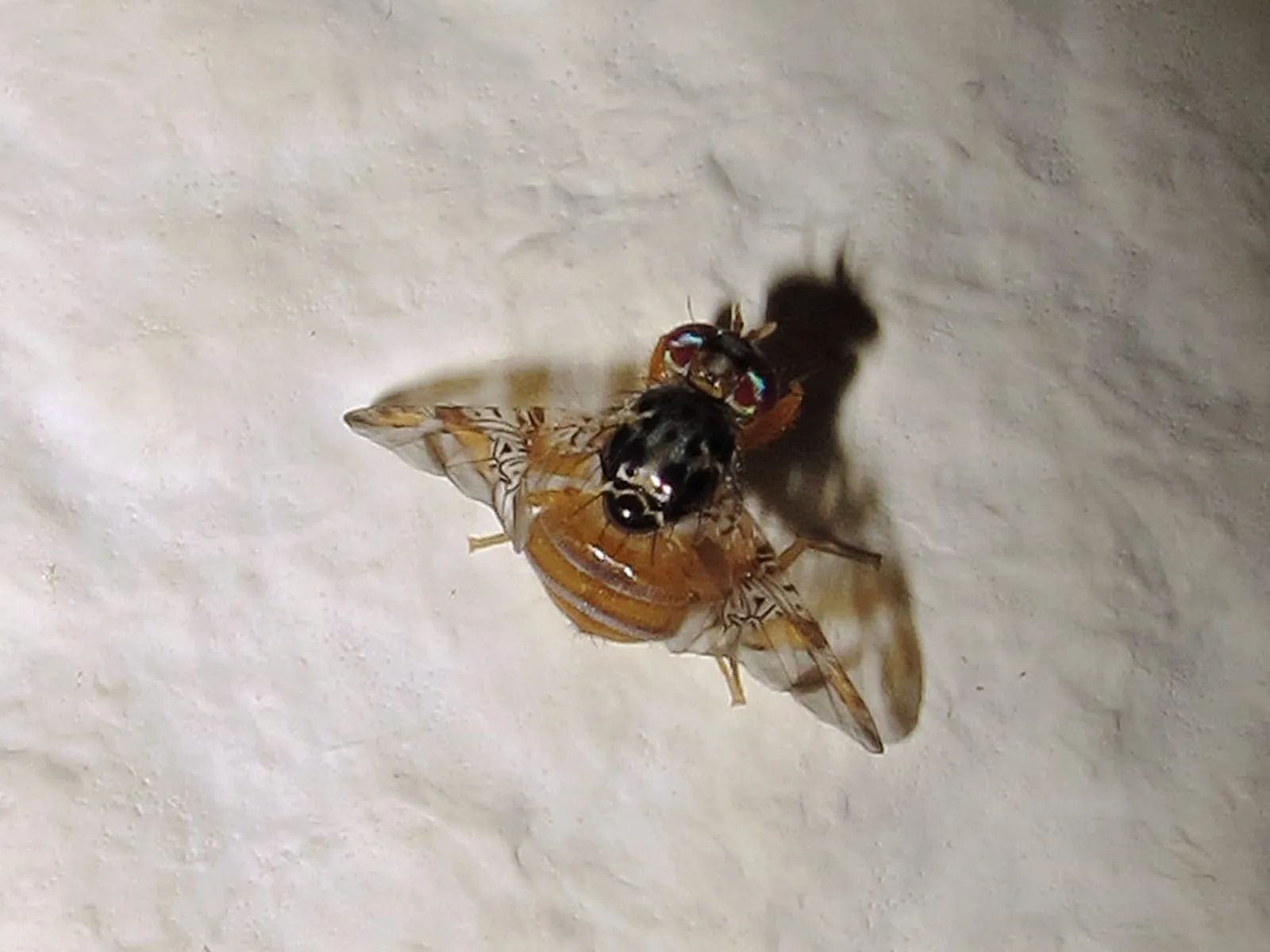
Ceratitis capitata
Quarantine pest in many regions. Adult females puncture ripening fruit to lay eggs; larvae tunnel through the flesh, causing premature drop and rot.
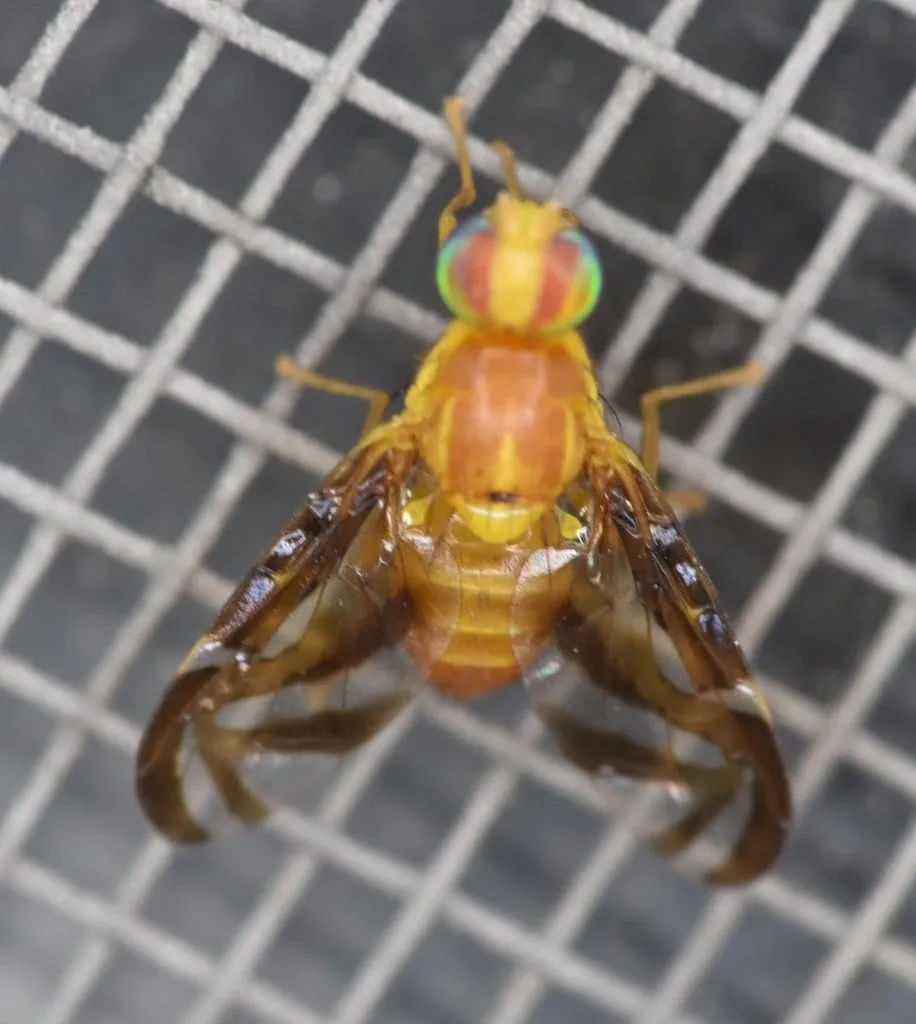
Anastrepha suspensa
Tropical fruit fly endemic to Florida and the Caribbean. Less aggressive on commercial citrus than Mediterranean fruit fly, but devastating on guava, carambola, and other thin-skinned tropicals.
Common challenges
Frost damage is the primary cause of failure at the northern edge of guava's range. Zone 9b growers lose trees or experience significant dieback during cold winters, and repeated freeze events can reduce a mature planting to a perennial shrub that never reaches full production. The practical mitigation is site selection combined with frost cloth or temporary structure protection during forecast freezes below 28°F. Young trees (under two years) need protection even in zone 10a.
Fruit fly pressure is severe across most Florida and Hawaii plantings. Both Mediterranean fruit fly (Ceratitis capitata) and Caribbean fruit fly (Anastrepha suspensa) use guava as a preferred host, with larvae rendering fruit inedible at harvest. Management options include protein bait traps, exclusion bags placed over developing fruit, and prompt removal of dropped fruit. UF/IFAS Extension recommends consistent sanitation as the baseline practice; exclusion bags are the most reliable approach for small plantings where hand labor is feasible.
Anthracnose (the same fungal pathogen that affects mango) causes fruit spotting, blossom blight, and post-harvest rot in humid coastal climates. Severity peaks during wet seasons. Copper-based fungicides applied at bloom and again at fruit set reduce incidence. Air circulation through the canopy is the most durable long-term defense; dense plantings and overhead irrigation both amplify anthracnose pressure and should be avoided.
Frequently asked questions
- How many chill hours does guava need?
Guava is one of the most low-chill tropical fruits available, requiring between 0 and 100 hours below 45°F. This minimal requirement is why it fruits reliably in zones 10 and above, where winters are brief and mild. Growers in zone 9b can grow guava, but cold damage rather than insufficient chill hours is the limiting factor there.
- How long does it take guava to produce fruit after planting?
Grafted or air-layered trees typically begin fruiting 2 to 4 years after planting. Once in production, fruit reaches harvest 120 to 240 days from bloom depending on variety and climate. Trees started from seed take longer to reach bearing age and may show greater variability in fruit quality.
- What USDA zones can guava grow in?
Guava grows reliably in zones 10a through 12b. It can survive in zone 9b with protected siting and frost precautions, but repeated cold events below 28°F cause cumulative damage that limits long-term productivity. In zones 9b, growers should treat guava as a medium-risk planting and site it accordingly.
- Does guava require a pollinator tree?
Most common guava varieties are self-fertile and will produce fruit from a single tree without a companion planting. Bee activity improves fruit set and yield, particularly during dry or cool flowering periods, but it is not required for fruiting.
- What is the most common disease problem on guava?
Anthracnose is the most frequently encountered disease issue, especially in humid coastal climates. It causes fruit spotting, blossom blight, and post-harvest rot. Copper fungicide applications at bloom and fruit set reduce severity. Good air circulation around the canopy is the most effective long-term prevention.
- Is Strawberry Guava the same as common guava?
No. Strawberry guava (Psidium cattleyanum) is a distinct species that produces smaller red-skinned fruit with a sweet-tart flavor. It is somewhat cold-hardier than common guava (Psidium guajava) but is classified as invasive in Hawaii and parts of Florida. Growers in those areas should check local regulations before planting it.
- Can guava be grown in containers for cold-climate protection?
Guava adapts reasonably well to container culture, making it a viable strategy for growers in borderline zone 9b who want to move trees into a protected structure during freeze events. Container trees require consistent watering, a well-draining mix, and periodic root pruning or repotting to sustain long-term productivity.
+−
+−
+−
+−
+−
+−
+−
Sources
- [1] UF/IFAS Extension: Guava Growing in the Florida Home Landscape
- [2] University of Hawaii: Guava Production
Image: "Goiabeira", by Daniel Dias, via iNaturalist, licensed under CC-BY. Source.
Guava by zone
Related